




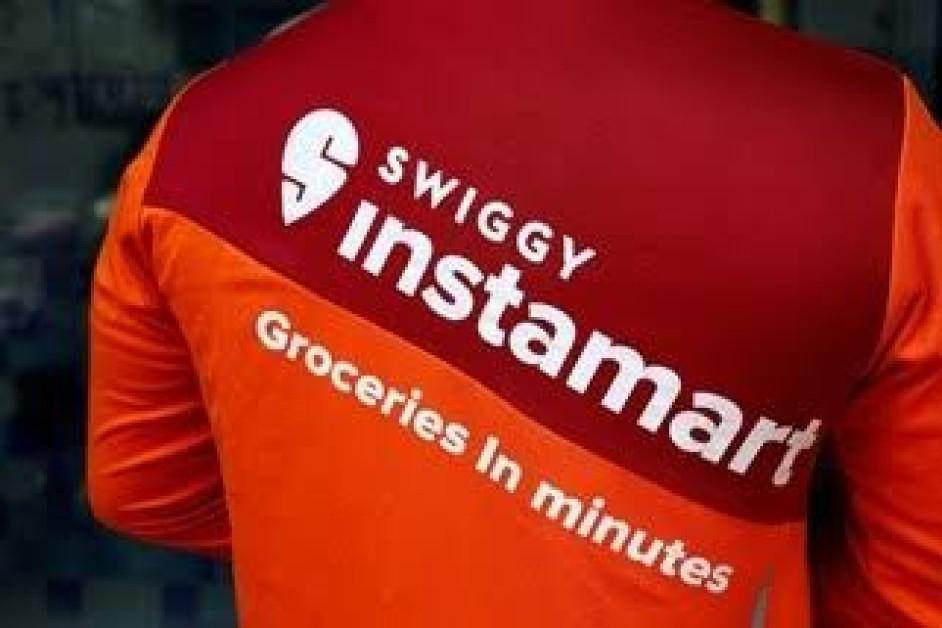
Swiggy Instamart Expands to 1,240 Dark Stores Across 133 Cities as Quick-Commerce Losses Widen
Swiggy Instamart expanded its quick-commerce network to 1,240 dark stores across 133 Indian cities during the second quarter of FY27, even as its adjusted EBITDA loss widened to ₹895 crore amid continued investments in customer acquisition, pricing and operational expansion. The September-quarter results highlight the growing scale of Swiggy's rapid-delivery business alongside persistent pressure on profitability.
The company added 69 net dark stores during the quarter ended September 30, 2026, strengthening its delivery infrastructure in existing and newer markets.
Instamart's gross order value increased 31.4% year-on-year to ₹9,230 crore, while net order value grew 34.8% to ₹6,594 crore.
The number of orders rose 29.3% to approximately 130 million, reflecting continued growth in customer activity.
However, the business reported an adjusted EBITDA loss of ₹895 crore, compared with ₹849 crore in the corresponding quarter of FY26 and ₹778 crore in the preceding June quarter.
The results underline the challenge facing India's quick-commerce operators as they balance rapid expansion, competitive pricing and the need to achieve sustainable profitability.
Swiggy Instamart Expands Dark Store Network to 1,240 Locations

Swiggy reported that Instamart's dark store network reached 1,240 locations across 133 cities as of September 30, 2026.
The company added 69 net stores during the September quarter.
Dark stores are specialised fulfilment facilities designed to process online orders rather than serve walk-in customers.
They allow quick-commerce platforms to store inventory closer to consumers and support rapid delivery of groceries, household products and other everyday essentials.
The expansion strengthens Instamart's operational presence in India's quick-commerce market.
However, a larger network also increases costs associated with infrastructure, staffing, inventory handling and logistics.
For Swiggy, improving utilisation across its existing dark stores will be important as the company seeks to reduce losses.
Key Highlights of Swiggy Instamart Q2 FY27 Results
|
Particulars |
Q2 FY27 Performance |
|---|---|
|
Dark Store Network |
1,240 Stores |
|
Cities Covered |
133 |
|
Net Dark Stores Added |
69 |
|
Gross Order Value |
₹9,230 Crore |
|
GOV Growth |
31.4% YoY |
|
Net Order Value |
₹6,594 Crore |
|
NOV Growth |
34.8% YoY |
|
Total Orders |
Approximately 130 Million |
|
Order Growth |
29.3% YoY |
|
Monthly Transacting Users |
14.8 Million |
|
User Growth |
23% YoY |
|
Adjusted EBITDA Loss |
₹895 Crore |
|
Q2 FY26 Adjusted EBITDA Loss |
₹849 Crore |
|
Q1 FY27 Adjusted EBITDA Loss |
₹778 Crore |
|
Contribution Margin |
-1.0% of GOV |
The figures show strong growth in Instamart's operating scale, although profitability remained under pressure during the quarter.
Quick-Commerce Adjusted EBITDA Loss Widens to ₹895 Crore
Swiggy Instamart reported an adjusted EBITDA loss of ₹895 crore in Q2 FY27.
The loss widened from ₹849 crore in the corresponding quarter of the previous financial year.
On a sequential basis, the adjusted EBITDA loss increased from ₹778 crore in Q1 FY27.
The deterioration reflects continued investment in customer acquisition, competitive pricing and expansion of fulfilment infrastructure.
Adjusted EBITDA is an operating performance measure used by companies to assess earnings before certain expenses and adjustments.
For Instamart, the metric provides an indication of the operating losses associated with its quick-commerce business.
The latest figures show that revenue and order growth have not yet translated into positive adjusted operating earnings.
Swiggy expects the September quarter to represent the peak of Instamart's adjusted EBITDA losses, although achieving the anticipated improvement will depend on operating performance in subsequent quarters.
Gross Order Value Rises 31.4% to ₹9,230 Crore
Instamart's gross order value increased to ₹9,230 crore during the September quarter.
This represents year-on-year growth of 31.4%.
Gross order value measures the value of transactions placed through the platform before certain adjustments.
It is an important indicator of business scale and customer spending activity.
The increase reflects expansion in transaction value across Instamart's quick-commerce operations.
However, gross order value should not be confused with the company's recognised revenue.
The financial relationship between customer spending and platform revenue depends on the operating model, discounts, commissions and other accounting factors.
Investors therefore assess GOV alongside net order value, revenue and profitability.
Net Order Value Increases 34.8% to ₹6,594 Crore
Instamart reported net order value of ₹6,594 crore during Q2 FY27.
The figure represents year-on-year growth of 34.8%.
On a sequential basis, net order value increased approximately 13.4%.
Net order value provides a measure of transaction value after applicable discounts and adjustments.
It is particularly relevant in quick commerce because promotional spending and discounting can influence the difference between gross and net transaction values.
The increase indicates that Instamart continued expanding customer transaction activity despite competitive market conditions.
However, stronger net order value does not automatically result in improved profitability.
The company must also manage fulfilment costs, marketing expenditure and the economics of individual orders.
Instamart Processes Approximately 130 Million Orders
Swiggy Instamart processed approximately 130 million orders during the September quarter.
The number represents year-on-year growth of 29.3%.
Order growth is an important operating indicator because quick-commerce profitability depends partly on the number of transactions processed through its fulfilment network.
Higher order volumes can improve the utilisation of dark stores and delivery infrastructure.
When fixed operating costs are distributed across more orders, the average cost per transaction may decline.
However, the benefits depend on delivery distances, staffing efficiency, inventory availability and promotional expenditure.
Instamart's higher order volume demonstrates growing platform activity, but the wider adjusted EBITDA loss indicates that operating costs and growth investments remained substantial.
Monthly Transacting Users Reach 14.8 Million
Instamart's monthly transacting user base increased to approximately 14.8 million during Q2 FY27.
This represents year-on-year growth of around 23%.
The company added approximately 1.3 million monthly transacting users during the quarter.
Monthly transacting users measure the number of customers completing transactions within the relevant period.
Growth in this metric indicates expansion in the platform's active customer base.
However, customer acquisition can require significant marketing and promotional expenditure.
The financial value of customer growth depends on retention, purchase frequency, average order value and contribution margins.
For Instamart, improving the economics of its growing customer base will remain an important objective.
Contribution Margin Declines Sequentially to Negative 1%
Instamart reported a contribution margin of approximately negative 1% of gross order value during Q2 FY27.
The figure represented an improvement of 157 basis points compared with the corresponding quarter of the previous year.
However, it deteriorated by approximately 82 basis points compared with Q1 FY27.
Contribution margin is used to assess the profitability of transactions after accounting for specified variable costs.
A negative contribution margin indicates that the business continues to incur losses at the contribution level under the company's reporting methodology.
The sequential deterioration reflects pressure from pricing investments, customer acquisition and service improvements.
Swiggy expects contribution margins to remain between zero and negative 100 basis points of GOV during Q3 FY27, followed by improvement.
The guidance indicates that the company anticipates a gradual recovery rather than an immediate transition to positive contribution margins.
Dark Store Utilisation Becomes a Key Priority
Swiggy's expansion strategy increasingly focuses on improving the efficiency of its existing quick-commerce infrastructure.
The company has invested substantially in dark stores and related fulfilment facilities.
These investments create capacity to process additional orders.
However, underutilised facilities can increase average operating costs.
Improving order density and warehouse utilisation can help spread fixed expenses across a larger transaction base.
Higher utilisation may also support delivery efficiency and inventory productivity.
For Instamart, the challenge is to generate sufficient order volume from its existing network while maintaining service quality.
Management has indicated that strengthening the economics of the current network will be an important priority.
Competitive Pricing Adds Pressure to Profitability
India's quick-commerce industry has become increasingly competitive.
Major platforms are investing in customer acquisition, product availability, delivery speed and pricing.
Promotional offers and discounts can encourage customers to place orders, but they may also reduce contribution margins.
Instamart's September-quarter results reflect the financial consequences of competing for market share while expanding operations.
Swiggy has continued investing in differentiated product assortment, availability and service quality.
These investments may support customer retention and order growth.
However, their financial benefits depend on whether higher transaction volumes eventually offset the associated expenses.
The latest adjusted EBITDA loss indicates that this balance has not yet been achieved.
Blinkit Competition Highlights Differences in Scale
Instamart competes with Blinkit, operated by Eternal Limited, as well as Zepto and emerging rapid-delivery services.
The September-quarter results demonstrate differences in operating scale among major platforms.
Blinkit reported approximately 2,751 dark stores at the end of Q2 FY27, compared with Instamart's 1,240.
Blinkit also reported a positive EBITDA figure of approximately ₹184 crore, while Instamart recorded an adjusted EBITDA loss of ₹895 crore.
These results highlight differences in network size and reported profitability.
However, direct comparisons require consideration of accounting methodologies, operating models and the definitions of adjusted financial metrics.
Swiggy management has acknowledged the importance of developing a more resilient operating model rather than focusing exclusively on expanding store count.
Swiggy Plans Transition Toward Inventory-Led Quick Commerce
Swiggy is preparing to transition Instamart toward an inventory-led operating model.
The proposed change is intended to provide greater control over procurement, inventory and product pricing.
Under an inventory-led structure, the business can take a more direct role in purchasing and managing goods.
This may create opportunities to improve sourcing efficiency, product availability and inventory management.
However, the model can also introduce additional working-capital requirements and inventory-related risks.
The company expects the transition to support improvements in contribution margins.
The actual financial impact will depend on implementation, supplier arrangements and operating efficiency.
The planned change represents an important strategic development as Swiggy seeks to improve Instamart's economics.
Swiggy Reports Consolidated Revenue Growth of 36%
At the group level, Swiggy reported consolidated revenue from operations of approximately ₹7,571 crore during Q2 FY27.
This compares with ₹5,561 crore in the corresponding quarter of FY26.
Revenue increased approximately 36.1% year-on-year.
However, the company continued to report a consolidated net loss.
The net loss narrowed to approximately ₹922 crore from ₹1,092 crore in the year-earlier quarter.
On a sequential basis, the loss widened from approximately ₹791 crore in Q1 FY27.
The results indicate stronger annual revenue growth and a narrower year-on-year net loss, alongside deterioration in sequential profitability.
The performance reflects differences between Swiggy's established food delivery business and its investment-intensive quick-commerce operations.
Key Highlights of Swiggy Consolidated Q2 FY27 Results
|
Financial Particulars |
Q2 FY27 |
Q2 FY26 |
|---|---|---|
|
Revenue from Operations |
₹7,571 Cr |
₹5,561 Cr |
|
Revenue Growth |
36.1% |
— |
|
Consolidated Net Loss |
₹922 Cr |
₹1,092 Cr |
|
Total Expenses |
₹8,703 Cr |
₹6,711 Cr |
|
Advertising and Promotion Expenses |
₹1,298 Cr |
₹1,039 Cr |
|
Consolidated Adjusted EBITDA Loss |
₹760 Cr |
₹695 Cr |
The financial results show that Swiggy's revenue growth was accompanied by continued expenditure on expansion, marketing and customer acquisition.
Food Delivery Business Reports Record Adjusted EBITDA
While Instamart continued reporting losses, Swiggy's food delivery business recorded stronger profitability.
The food delivery segment reported adjusted EBITDA of ₹341 crore during Q2 FY27.
This compares with approximately ₹240 crore in the corresponding quarter of the previous year.
Food delivery gross order value increased 17.7% year-on-year to ₹10,054 crore.
The segment's adjusted EBITDA margin reached approximately 3.4% of GOV.
The improvement was supported by operating efficiency and advertising revenue.
The contrast between the two businesses is significant.
Food delivery has developed a profitable adjusted operating model, while quick commerce continues to require substantial investment.
Swiggy's ability to improve Instamart's profitability will be important for its consolidated financial performance.
Advertising and Promotion Expenses Rise 25%
Swiggy's consolidated advertising and sales promotion expenses increased approximately 24.9% year-on-year to ₹1,298 crore.
This compares with ₹1,039 crore in Q2 FY26.
The expenditure also increased sequentially from approximately ₹1,160 crore in the June quarter.
Marketing investments are important for digital consumer platforms because they support customer acquisition, engagement and retention.
However, high promotional expenditure can delay profitability.
As a proportion of consolidated revenue, advertising and sales promotion expenses declined to approximately 17.1% from 18.7% a year earlier.
This indicates that marketing expenditure grew more slowly than reported revenue.
Nevertheless, the absolute increase in spending demonstrates the continued cost of competing across Swiggy's consumer businesses.
What the Results Mean for India's Quick-Commerce Industry
Instamart's results highlight the central challenge facing India's quick-commerce industry.
Platforms are expanding rapidly to capture customer demand for convenient delivery of everyday products.
However, rapid growth requires investment in fulfilment infrastructure, delivery networks, inventory systems and customer acquisition.
The economics of quick commerce depend on order density, average order value, delivery efficiency and operating costs.
A larger network can create competitive advantages through wider coverage and faster delivery.
However, scale alone does not guarantee profitability.
Companies must generate sufficient contribution from customer transactions to cover fixed expenses and ongoing investments.
Instamart's widening adjusted EBITDA loss demonstrates that this transition remains challenging.
What Investors Will Monitor Going Forward
Investors evaluating Swiggy's performance will focus on whether Instamart can reduce its operating losses.
The company's guidance for approximately 100 basis points of sequential margin improvement in the December quarter will be an important benchmark.
Dark store utilisation and order density will also remain key indicators.
Growth in net order value, monthly transacting users and order frequency will provide information about customer demand.
The planned inventory-led operating model may influence procurement efficiency and contribution margins.
Investors will also monitor the competitive environment, particularly the pace of expansion and profitability improvements among rival platforms.
At the consolidated level, Swiggy's ability to balance profitable food delivery operations with quick-commerce investments will remain central to its financial outlook.
Conclusion
Swiggy Instamart's Q2 FY27 results demonstrate substantial expansion in India's quick-commerce market.
The platform increased its dark store network to 1,240 locations across 133 cities, while gross order value rose 31.4% to ₹9,230 crore.
Net order value increased 34.8% to ₹6,594 crore, supported by growth in order volumes and active customers.
However, adjusted EBITDA losses widened to ₹895 crore as Swiggy continued investing in pricing, customer acquisition and operational expansion.
The company expects profitability indicators to improve in subsequent quarters as it focuses on network utilisation and transitions toward an inventory-led operating model.
For Swiggy, the next phase of Instamart's development will depend on converting growing transaction volumes into stronger contribution margins and sustainable operating profitability.
 Swiggy Instamart Reaches 1,240 Dark Stores as Q2 FY27 Losses Rise FAQs

POST A COMMENT (0)
All Comments (0)
Replies (0)