




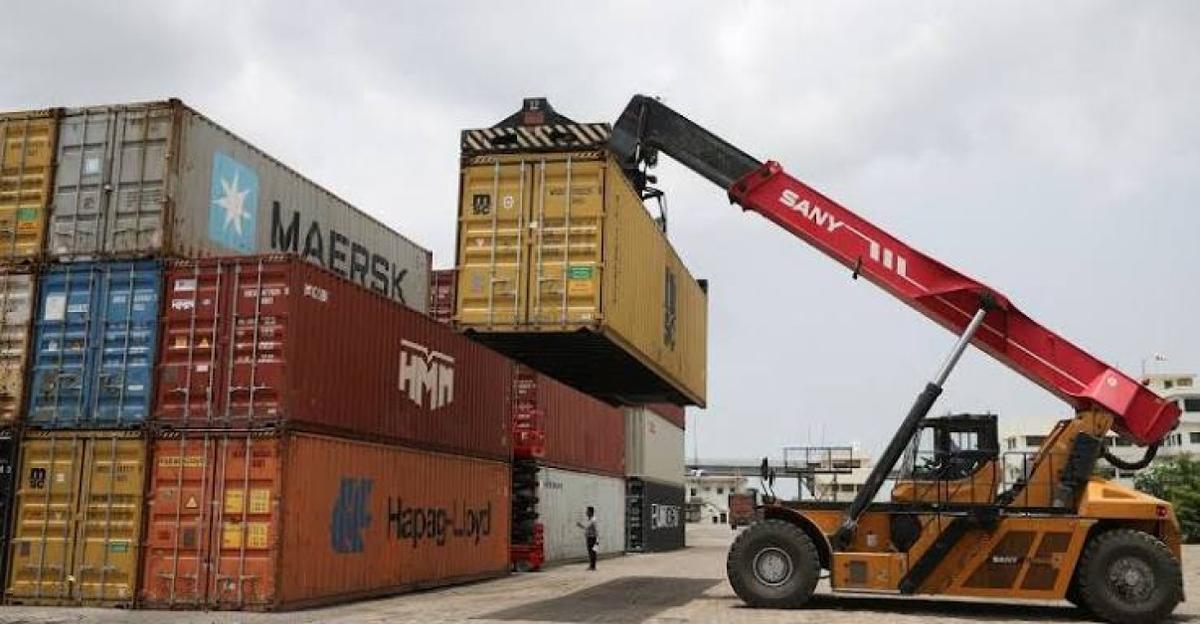
India's October Merchandise Trade Deficit Widens to $39.88 Billion as Gold and Oil Imports Surge
New Delhi, November 14, 2026: India's merchandise trade deficit widened to a one-year high of $39.88 billion in October 2026, as a sharp increase in imports of gold, petroleum and other goods outweighed record merchandise exports, according to trade data released by the Ministry of Commerce and Industry on November 13.
The deficit increased from $30.21 billion in September, marking a rise of approximately 32% in a single month.
Merchandise imports reached a record $89.35 billion, compared with $74.61 billion in September, while exports climbed to an all-time monthly high of $49.47 billion.
The widening trade gap reflects a combination of festive-season gold demand, elevated energy import costs and increased purchases of industrial inputs.
Gold imports more than tripled month-on-month to $5.51 billion, compared with approximately $1.8 billion in September, as jewellers and consumers increased purchases ahead of Diwali.
Petroleum imports also rose sharply, reaching $22.82 billion, an increase of 54.31% from a year earlier.
Despite the larger deficit, India's export performance remained strong, with growth across petroleum products, electronics, engineering goods, chemicals and gems and jewellery.
The latest figures highlight the contrasting forces shaping India's external trade position: improving export competitiveness alongside continued dependence on imported energy, precious metals and industrial materials.
India's October 2026 Trade Data: Key Highlights

| Indicator | October 2026 | September 2026 |
|---|---|---|
| Merchandise exports | $49.47 billion | $44.40 billion |
| Merchandise imports | $89.35 billion | $74.61 billion |
| Merchandise trade deficit | $39.88 billion | $30.21 billion |
| Gold imports | $5.51 billion | Approximately $1.80 billion |
| Services exports | $40.51 billion | — |
| Services imports | $20.72 billion | — |
| Services trade surplus | $19.79 billion | — |
| Combined goods and services exports | $89.99 billion | — |
| Combined goods and services imports | $110.07 billion | — |
October services figures are estimates and may be revised.
Merchandise Trade Deficit Widens Nearly 32% in One Month
India's merchandise trade deficit increased by $9.67 billion between September and October.
The rise was primarily driven by a sharp increase in imports.
Merchandise imports climbed approximately 19.8% month-on-month, while exports increased approximately 11.4%.
Although both exports and imports recorded strong growth, the absolute increase in imports was substantially larger.
This resulted in a wider trade gap.
The October deficit also exceeded the $32.25 billion forecast in a Reuters survey of economists.
The larger-than-expected figure drew attention to the impact of imported energy costs and seasonal demand for precious metals.
However, the deficit remained below the record $42.58 billion recorded in October 2025.
This distinction is important: the October 2026 trade deficit reached a one-year high on a sequential basis but was smaller than the unusually large deficit recorded a year earlier.
India's Merchandise Exports Reach Record $49.47 Billion
India's merchandise exports increased to $49.47 billion in October, compared with $34.11 billion in October 2025.
This represented year-on-year growth of approximately 45%.
The figure was also higher than September's $44.40 billion.
Commerce Secretary Rajesh Agrawal described October as India's strongest month for merchandise exports.
The increase was supported by several sectors rather than a single product category.
Petroleum products, engineering goods, electronics, chemicals and gems and jewellery contributed to the expansion.
The performance indicates that Indian exporters continued increasing overseas shipments despite uncertainty in international trade.
However, part of the growth reflected a relatively low comparison base in October 2025.
The sustainability of export momentum will depend on global demand, product competitiveness and international trade conditions.
Gold Imports More Than Triple Ahead of Diwali
Gold imports increased sharply during October as demand strengthened ahead of the festive season.
India imported approximately $5.51 billion worth of gold, compared with around $1.8 billion in September.
The increase was associated with jewellery purchases and seasonal demand linked to Diwali.
Gold holds cultural and financial importance in India, particularly during festivals and weddings.
Jewellers often increase inventory ahead of periods of stronger retail demand.
However, India relies heavily on imports to meet domestic gold consumption.
Higher gold purchases therefore increase merchandise imports and can widen the trade deficit.
The October increase was substantial on a month-on-month basis, although gold imports remained lower than the unusually high level recorded in October 2025.
Gold Imports Decline Sharply Compared With October 2025
Despite the monthly surge, gold imports were approximately 62.6% lower than in October 2025.
This highlights the importance of distinguishing sequential and annual comparisons.
The October 2026 increase reflects a recovery from September's lower import level.
It does not represent an increase over the exceptionally high purchases recorded a year earlier.
During April–October 2026, India's gold imports declined to approximately $24.78 billion from $41.24 billion in the corresponding period of the previous financial year.
This represented a decline of nearly 40%.
The figures suggest that the October surge was partly seasonal rather than evidence of sustained year-on-year growth in gold imports.
Nevertheless, the monthly increase contributed to the wider trade deficit.
Petroleum Imports Jump 54.31% to $22.82 Billion
Petroleum imports were another major contributor to India's October trade imbalance.
The value of petroleum imports increased 54.31% year-on-year to $22.82 billion.
India is among the world's largest oil consumers and depends on overseas supplies for most of its crude oil requirements.
Approximately 85% of the country's crude oil needs are met through imports.
This makes India's trade balance sensitive to changes in international oil prices.
Higher crude prices can increase the import bill even when physical import volumes remain relatively stable.
Disruptions in West Asian energy markets have also affected international shipping and supply conditions.
The increase in petroleum imports therefore reflects broader pressures on India's energy-dependent economy.
West Asia Conflict Adds Pressure to Energy Costs
Disruptions linked to the conflict in West Asia have contributed to volatility in global energy markets.
India imports substantial quantities of crude oil and other energy products from international suppliers.
Higher shipping costs, longer transport routes and insurance premiums can increase the effective cost of imports.
These expenses can affect refiners, fuel distributors and industrial consumers.
The impact may extend beyond the petroleum sector because energy is an important input across manufacturing and transportation.
However, the financial effect depends on international prices, exchange rates and domestic pricing arrangements.
The October trade data demonstrate the vulnerability of India's import bill to changes in global energy conditions.
Electronics Imports Reflect Manufacturing Demand
Electronics and related components also contributed to India's higher merchandise imports.
India has been expanding electronics manufacturing, including the assembly and export of smartphones and other devices.
However, domestic manufacturing operations continue to depend on imported components and specialised materials.
This creates a situation in which stronger electronics exports can be accompanied by higher imports of intermediate goods.
The relationship is important when evaluating the trade deficit.
Not all imports represent final consumer purchases.
Some imports support production, investment and future exports.
Investors and policymakers will therefore examine whether rising electronics imports are linked to higher-value domestic manufacturing activity.
Engineering Goods Exports Rise 36%
Engineering goods were among the strongest contributors to October's export performance.
Exports increased 36.01% year-on-year to $12.74 billion, compared with $9.37 billion in October 2025.
Engineering goods include a broad range of manufactured products, machinery and industrial components.
The sector is an important indicator of India's manufacturing competitiveness.
Higher exports can support industrial production, employment and investment.
However, performance depends on demand in overseas markets and the availability of competitively priced inputs.
The October increase indicates strong shipment growth.
Maintaining this momentum will require continued demand from international customers.
Gems and Jewellery Exports Increase 40%
India's gems and jewellery exports increased to $3.21 billion in October.
This compared with $2.29 billion in the corresponding month of 2025.
The increase represented approximately 40.06% year-on-year growth.
The sector includes jewellery manufacturing, diamond processing and other precious-metal products.
India has an established position in global gems and jewellery supply chains.
However, the industry is sensitive to international consumer demand, precious-metal prices and trade regulations.
Higher exports can help offset part of the country's gold import bill.
Nevertheless, gold imports and jewellery exports are recorded separately in merchandise trade statistics.
Their respective movements must be evaluated within the broader trade balance.
Chemical Exports Record Strong Growth
Exports of organic and inorganic chemicals increased 36.20% year-on-year during October.
Shipments reached $2.89 billion, compared with $2.12 billion a year earlier.
Chemical exports serve multiple industries, including pharmaceuticals, manufacturing and industrial processing.
The sector benefits from India's established chemical manufacturing capabilities.
However, export profitability depends on raw material prices, energy costs and international competition.
Higher shipment values do not automatically indicate equivalent growth in profit margins.
The October figures nevertheless demonstrate strong demand for Indian chemical products.
The performance contributed to the country's record merchandise export total.
Non-Petroleum Exports Show Broader Strength
India's non-petroleum merchandise exports reached $40.58 billion in October.
This compared with $30.40 billion in October 2025.
The increase indicates that export growth was not limited to petroleum products.
Non-petroleum and non-gems-and-jewellery exports reached $37.38 billion, compared with $28.11 billion a year earlier.
This broader measure helps assess the performance of sectors outside major commodity-linked categories.
The figures suggest that several manufacturing and merchandise export segments contributed to growth.
However, international prices and the previous year's comparison base also influence the value of exports.
Sustained growth will depend on competitiveness and overseas demand.
Services Exports Provide Support to India's External Balance
India's services sector continued to generate a substantial trade surplus.
Services exports were estimated at $40.51 billion in October.
Services imports were estimated at $20.72 billion.
This resulted in a services trade surplus of approximately $19.79 billion.
India's services exports include information technology, business services and other internationally traded activities.
The surplus helps offset part of the deficit in merchandise trade.
However, services estimates are subject to revision.
The combined goods and services trade position therefore provides a broader perspective than merchandise figures alone.
Combined Goods and Services Trade Deficit Stands at $20.08 Billion
India's total exports of goods and services were estimated at $89.99 billion during October.
Combined imports were estimated at $110.07 billion.
The difference resulted in an overall trade deficit of approximately $20.08 billion.
This was smaller than the merchandise deficit because services exports exceeded services imports.
The distinction matters when evaluating India's external economic position.
Merchandise trade reflects physical goods crossing international borders.
Services trade includes activities such as software exports, consulting and business services.
Both contribute to the country's balance of payments.
However, the overall trade balance should not be confused with the current account balance, which also includes other income and transfer flows.
April–October Merchandise Deficit Reaches $218.15 Billion
The cumulative merchandise trade deficit also widened during the first seven months of FY27.
Between April and October 2026, merchandise exports reached $309.06 billion.
This compared with $253.40 billion in the corresponding period of FY26.
Merchandise imports increased to $527.21 billion from $452.86 billion.
The resulting trade deficit stood at $218.15 billion, compared with $199.46 billion a year earlier.
The figures indicate that strong export growth has not fully offset India's rising import requirements.
The cumulative position is important because it provides a broader view than a single month's trade data.
India April–October FY27 Trade Performance
| Indicator | April–October FY27 | April–October FY26 |
|---|---|---|
| Merchandise exports | $309.06 billion | $253.40 billion |
| Merchandise imports | $527.21 billion | $452.86 billion |
| Merchandise trade deficit | $218.15 billion | $199.46 billion |
| Combined goods and services exports | $568.84 billion | Approximately $487.6 billion |
| Combined goods and services imports | $662.19 billion | Approximately $570.9 billion |
| Overall goods and services deficit | $93.35 billion | Approximately $83.25 billion |
Combined goods and services figures include estimates for services trade.
Total Exports Rise 16.66% During April–October
India's combined merchandise and services exports increased to $568.84 billion during April–October 2026.
This represented year-on-year growth of approximately 16.66%.
Combined imports increased approximately 16% to $662.19 billion.
The overall trade deficit widened to $93.35 billion from $83.25 billion a year earlier.
The figures demonstrate that export growth remained strong across the first seven months of FY27.
However, India's import requirements also increased.
The external trade position therefore depends on whether export growth can continue while energy and other import costs remain manageable.
Trade Deficit Could Influence India's Current Account
A merchandise trade deficit occurs when the value of imported goods exceeds the value of exported goods.
A sustained increase in the deficit can place pressure on a country's external balance.
However, the current account includes additional components beyond merchandise trade.
These include services, investment income and transfers such as remittances.
India's services surplus and remittance inflows help offset its merchandise deficit.
Consequently, the October merchandise trade deficit should not be interpreted as the country's current account deficit.
The current account position will depend on the combined performance of these components.
Higher Imports Could Affect the Rupee
A larger merchandise trade deficit can increase demand for foreign currency because importers must pay overseas suppliers.
This can influence foreign exchange market conditions.
However, the rupee's value depends on several additional factors.
These include foreign investment flows, global interest rates, market sentiment and Reserve Bank of India operations.
A single month's trade deficit does not determine the currency's direction.
Nevertheless, sustained pressure from higher import costs can become an important consideration for currency markets.
Investors will monitor whether India's export earnings and capital inflows remain sufficient to support external financing requirements.
Imported Inflation Remains an Economic Risk
Higher import costs can affect domestic prices.
Energy is particularly important because it influences transportation, manufacturing and electricity-related expenses.
When international oil prices increase, businesses may face higher operating costs.
Some companies may pass these costs on to consumers.
Others may absorb them through lower profit margins.
The effect depends on competition, pricing power and government policies.
Gold imports have a different economic impact because they are primarily linked to jewellery and investment demand.
The October trade data therefore reflect multiple sources of import pressure rather than a single inflationary factor.
Reserve Bank of India Monitors External-Sector Risks
The Reserve Bank of India monitors developments in trade, capital flows and the balance of payments.
A sustained rise in the import bill can influence external financing requirements.
However, India's services exports and remittance receipts provide important support.
The central bank's assessment also considers international commodity prices and financial market conditions.
The October merchandise deficit may become relevant to future external-sector projections.
Nevertheless, monetary policy decisions depend on a broader assessment of inflation, growth and financial stability.
The trade deficit alone does not determine the direction of interest rates.
Trade Agreements Could Support Export Growth
India has been pursuing trade agreements to improve market access for domestic exporters.
The government has implemented trade arrangements with the United Kingdom and New Zealand during 2026.
It is also pursuing closer trade relationships with other major economies.
Trade agreements can reduce tariffs, simplify market access and improve commercial opportunities.
However, their impact depends on product competitiveness and implementation.
The benefits may also emerge gradually rather than immediately.
India's October export performance demonstrates growth across several sectors, but sustained expansion will depend on demand conditions and the effectiveness of trade relationships.
India–US Trade Negotiations Remain Important
The United States remains an important destination for Indian exports.
During April–October 2026, India's exports to the United States reached approximately $59.52 billion.
Trade negotiations between the two countries have continued.
Indian officials indicated that discussions were progressing, although some issues remained unresolved.
A trade agreement could influence market access and tariff conditions for Indian exporters.
However, the commercial impact will depend on the final terms.
Businesses in sectors such as engineering goods, electronics, textiles and chemicals will monitor developments closely.
The October trade figures provide a backdrop for these negotiations.
What the October Trade Data Mean for Indian Businesses
The October figures have different implications across industries.
Export-oriented manufacturers may benefit from stronger overseas demand.
Engineering, electronics, chemicals and jewellery exporters recorded substantial growth.
However, businesses dependent on imported energy or raw materials may face higher costs.
Refiners, chemical producers, transport companies and manufacturers are particularly sensitive to international energy prices.
Jewellery businesses may experience higher working-capital requirements during periods of strong gold demand.
The overall impact depends on each company's revenue mix, input costs and ability to manage pricing.
What Investors Will Monitor Next
The next trade releases will help determine whether October's wider deficit was primarily seasonal or part of a sustained trend.
Investors will monitor gold imports after the festive period.
Petroleum prices and import volumes will remain important.
The performance of engineering goods, electronics and other manufacturing exports will also be closely watched.
Services export growth will help assess the broader external balance.
Currency movements and foreign investment flows may influence market sentiment.
The key question is whether India's export momentum can continue while the import bill stabilises.
Outlook for India's External Trade in FY27
India's external trade outlook reflects both opportunities and risks.
The country is benefiting from growth in merchandise exports across several manufacturing sectors.
Services exports continue to provide a substantial surplus.
However, dependence on imported crude oil remains a structural vulnerability.
Gold purchases can also cause significant monthly fluctuations in merchandise imports.
Global commodity prices, shipping conditions and international demand will influence trade performance.
Trade agreements may support longer-term export growth, but their impact will depend on implementation and business competitiveness.
The October data suggest that India's export performance is strengthening, although rising imports continue to place pressure on the merchandise trade balance.
Conclusion
India's merchandise trade deficit widened to a one-year high of $39.88 billion in October 2026 as imports increased sharply despite record exports.
Merchandise imports reached $89.35 billion, supported by higher petroleum purchases, a festive-season surge in gold imports and demand for other goods.
Gold imports more than tripled month-on-month to $5.51 billion, while petroleum imports rose 54.31% year-on-year to $22.82 billion.
At the same time, merchandise exports reached a record $49.47 billion, with strong growth in engineering goods, electronics, chemicals and gems and jewellery.
The figures demonstrate that India's trade challenge is not simply weak exports.
Instead, the country is experiencing strong export growth alongside substantial import requirements.
The services trade surplus continues to offset part of the merchandise deficit.
For policymakers, businesses and investors, the central issue will be whether export momentum remains strong while energy costs and seasonal import pressures ease.
The coming months will provide a clearer indication of whether October's wider trade gap represents a temporary increase or a more persistent challenge for India's external balance.
 India's October 2026 Trade Deficit Hits $39.88 Billion as Imports Surge FAQs

POST A COMMENT (0)
All Comments (0)
Replies (0)