




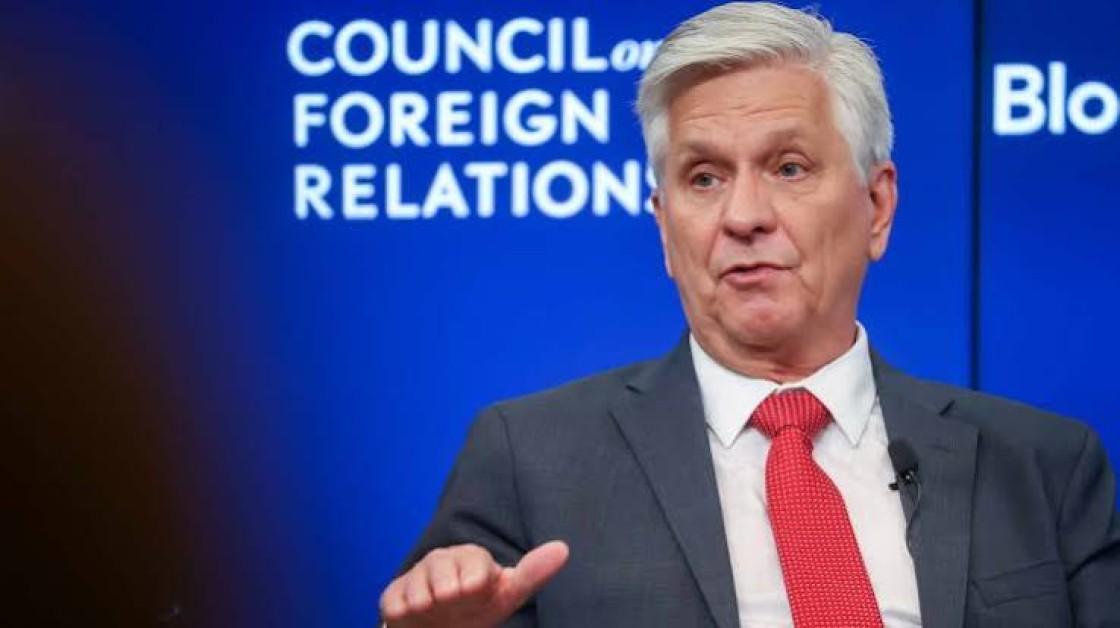
Federal Reserve Governor Christopher Waller Backs December Rate Hike as US Inflation Raises Prospect of Larger Move
Washington, November 12, 2026: Federal Reserve Governor Christopher Waller has signalled support for another US interest rate increase in December, arguing that persistent inflation requires additional monetary tightening and raising the possibility of a larger-than-usual half-percentage-point increase.
Speaking at a conference in London on November 10, Waller indicated that he would support a 25-basis-point increase at the Federal Open Market Committee's December meeting even if inflation showed some improvement.
He also said policymakers should consider a 50-basis-point increase if underlying consumer prices continued rising at an elevated pace.
His remarks came as new US inflation data showed that price pressures remained persistent in October, prompting investors to reassess the likely pace of Federal Reserve tightening.
The US Consumer Price Index increased 0.4% month-on-month in October, while core consumer prices rose 0.3% for the third consecutive month.
The inflation report strengthened expectations of a December rate increase and brought the possibility of a larger move into market discussions.
The developments represent an important shift in monetary policy expectations as the Federal Reserve attempts to bring inflation back toward its 2% target without causing an excessive slowdown in economic activity.
Waller Supports at Least a Quarter-Point Increase in December

Waller's November 10 remarks established his preference for another increase in the federal funds rate.
He argued that inflation remained too high and that the central bank needed to maintain its commitment to restoring price stability.
The governor indicated that even an improvement in the October inflation data would not necessarily change his support for a quarter-percentage-point increase.
His position reflects concern that underlying price pressures have remained persistent despite previous monetary tightening.
The Federal Reserve's December meeting is scheduled for December 8–9, 2026.
However, Waller's comments represent the position of an individual policymaker rather than a final decision by the Federal Open Market Committee.
The committee will evaluate inflation, employment, economic growth and financial conditions before determining its next policy move.
October Inflation Data Strengthens Case for Tightening
The US inflation report released on November 10 added urgency to the monetary policy debate.
The Consumer Price Index increased 0.4% in October from the previous month.
This was lower than September's 0.6% monthly increase, partly because energy inflation moderated.
However, core CPI, which excludes food and energy prices, increased 0.3%.
The core measure has now risen 0.3% for three consecutive months.
The persistence of underlying inflation suggests that price pressures remain embedded across parts of the economy.
For the Federal Reserve, this raises questions about whether existing interest rates are sufficiently restrictive.
The October data also met the threshold Waller had identified when discussing the possibility of a larger December increase.
However, meeting that threshold does not guarantee that the central bank will approve a 50-basis-point move.
Federal Reserve December 2026: Key Developments
| Indicator | Latest Development |
|---|---|
| Next FOMC meeting | December 8–9, 2026 |
| Waller's preferred minimum increase | 25 basis points |
| Larger increase under consideration | 50 basis points |
| October headline CPI | 0.4% month-on-month |
| October core CPI | 0.3% month-on-month |
| September PCE inflation | 3.7% year-on-year |
| September core PCE inflation | 3.1% year-on-year |
| Federal Reserve inflation target | 2% |
| Market expectation | December rate increase increasingly anticipated |
The indicators demonstrate why inflation has become central to expectations for the December policy decision.
Why Waller Raised the Possibility of a 50-Basis-Point Increase
A 50-basis-point increase would be twice the size of a conventional quarter-point adjustment.
Such a move would signal a more aggressive response to inflation.
Waller indicated that stronger action should be considered if core inflation remained elevated.
His argument centres on the risk that persistent inflation could weaken confidence in the Federal Reserve's ability to restore price stability.
He also expressed concern that insufficient policy action could cause financial markets to reduce expectations for future tightening.
That adjustment could lower market interest rates and ease financial conditions before inflation had been brought under control.
For Waller, maintaining credible expectations of tighter monetary policy is an important part of the inflation-fighting process.
However, the decision to adopt a larger increase would require support from the broader policy committee.
Federal Reserve Faces a Credibility Challenge
Central banks rely partly on public expectations to influence economic behaviour.
Businesses make pricing and investment decisions based on expectations about inflation and interest rates.
Households also consider borrowing costs and future prices when making spending decisions.
If inflation remains elevated for an extended period, expectations of future inflation may become less firmly anchored.
This can make price stability more difficult to restore.
Waller's remarks highlighted the importance of maintaining confidence in the Federal Reserve's commitment to its inflation objective.
He argued that policymakers should follow through with appropriate tightening rather than allow market expectations to shift toward easier financial conditions prematurely.
The challenge is to maintain credibility without raising borrowing costs more than necessary.
US Inflation Remains Above the Federal Reserve's Target
The Federal Reserve targets inflation of 2% over time, measured using the personal consumption expenditures price index.
September PCE inflation stood at 3.7% year-on-year.
Core PCE inflation, which excludes food and energy, reached 3.1%.
Both measures remained above the central bank's target.
Waller also pointed to the broad distribution of inflation across service categories.
He indicated that more than 70% of components within core PCE services inflation had recorded price increases of at least 3% in September.
This suggests that inflation was not confined to a small number of goods or services.
Broad-based price pressures can be more difficult to address because they may reflect persistent demand and cost conditions.
Services Inflation Becomes a Major Concern
Services account for a substantial portion of household spending in the United States.
They include housing-related services, transportation, healthcare and other activities.
Services inflation can be influenced by labour costs, operating expenses and consumer demand.
Persistent increases across service categories may indicate that underlying inflation remains elevated.
For monetary policymakers, broad services inflation can justify maintaining restrictive financial conditions.
However, the relationship between interest rates and service prices is not immediate.
Higher borrowing costs may reduce demand gradually.
The full effects can take time to appear in economic activity and inflation.
This creates uncertainty about how quickly additional tightening would influence prices.
Energy Prices Add to Inflation Risks
Energy prices remain another important consideration for US inflation.
Oil and refined petroleum products influence transportation, manufacturing and distribution costs.
Higher energy prices can affect the cost of goods and services throughout the economy.
Waller expressed concern that energy-related price pressures could persist longer than previously expected.
He referred to Federal Reserve staff analysis suggesting that energy shocks may have more persistent effects on inflation than during certain earlier periods.
The governor also noted that reduced refining capacity could keep some petroleum product prices elevated even when crude oil prices decline.
For policymakers, the concern is that energy-related costs could spread into broader consumer prices.
However, the scale and duration of those effects remain uncertain.
Artificial Intelligence Investment Adds a New Inflation Dimension
Waller also identified technology-related investment as a potential source of price pressure.
Rapid expansion in artificial intelligence infrastructure has increased demand for computing equipment, data centres and associated technologies.
Large-scale investment can create additional demand for specialised hardware, electricity and construction capacity.
When demand increases faster than supply, prices may rise.
The Federal Reserve is monitoring whether these developments are contributing to broader inflation.
However, investment in technology can also improve productivity over time.
The economic impact therefore depends on the balance between near-term demand pressures and longer-term efficiency gains.
For policymakers, the immediate question is whether investment-related price increases are becoming persistent.
US Labour Market Remains Relatively Stable
Waller's support for additional tightening also reflects his assessment of labour market conditions.
He described the US labour market as relatively solid, although not necessarily as dynamic as the unemployment rate alone might suggest.
The unemployment rate stood at approximately 4.1%.
He indicated that labour supply and demand appeared broadly balanced.
This assessment suggests that the economy may be able to withstand some additional monetary tightening.
However, labour market conditions can change as borrowing costs affect business investment and consumer spending.
The Federal Reserve must therefore monitor employment alongside inflation.
A significant deterioration in labour conditions could complicate the case for further rate increases.
Economic Growth Provides Room for Policy Tightening
The US economy expanded at an annualised rate of approximately 3.4% during the third quarter of 2026.
The performance reflected strong investment activity, including spending associated with artificial intelligence infrastructure.
Consumer spending also supported economic growth.
Waller indicated that growth could moderate during the current quarter as household spending becomes more closely aligned with income and wealth conditions.
However, he expected economic activity to continue expanding at a solid pace.
The outlook is important because resilient economic growth can provide policymakers with greater flexibility to address inflation.
Nevertheless, additional rate increases could gradually reduce demand.
The Federal Reserve must balance these competing considerations.
Treasury Yields Rise as Investors Reprice Fed Expectations
US Treasury yields increased following Waller's remarks and the October inflation report.
Short-term government bond yields are particularly sensitive to expectations about Federal Reserve policy.
The two-year Treasury yield recorded its largest increase since early April 2025.
The movement reflected stronger expectations of additional interest rate increases.
Bond prices generally move inversely to yields.
When investors anticipate higher policy rates, yields on shorter-maturity securities often rise.
However, Treasury yields are also influenced by economic growth, inflation expectations and demand for government securities.
The market reaction demonstrates how central bank communication can affect financial conditions before a formal policy decision.
Dollar Outlook Becomes Sensitive to Fed Policy
Expectations of higher US interest rates can influence the dollar's value against other currencies.
Higher yields may increase the relative attractiveness of dollar-denominated assets.
However, currency movements depend on several factors, including global risk sentiment and monetary policy in other economies.
The dollar steadied following Waller's remarks.
A more restrictive Federal Reserve outlook can support the currency under some market conditions.
However, it does not guarantee appreciation.
Investors will monitor upcoming inflation and employment data alongside developments in other major economies.
Wall Street Faces Higher Borrowing-Cost Expectations
Interest rate expectations influence US equity markets through several channels.
Higher borrowing costs can increase financing expenses for businesses.
They may also affect the valuation of future corporate earnings.
Growth-oriented companies can be particularly sensitive to changes in discount rates.
However, market reactions depend on earnings expectations and economic conditions.
Waller played down the significance of recent stock-market declines unless they became sufficiently large and persistent to weaken consumer demand.
His comments suggest that temporary market volatility alone would not necessarily change his monetary policy assessment.
The Federal Reserve's primary considerations remain inflation, employment and broader economic conditions.
December Meeting Becomes a Major Market Event
The Federal Open Market Committee is scheduled to meet on December 8–9.
The meeting will determine whether the Federal Reserve increases interest rates and by how much.
Ahead of the October inflation report, futures markets had assigned approximately an 85% probability to a December rate increase.
The latest inflation data strengthened expectations of tightening.
Investors are now evaluating the possibility of a larger adjustment.
However, market-implied probabilities can change rapidly as new information becomes available.
They represent trading-based expectations rather than official Federal Reserve guidance.
The committee's final decision will depend on the information available at the time of the meeting.
A Quarter-Point Increase Remains the Conventional Option
A 25-basis-point increase would raise the federal funds target range by 0.25 percentage points.
Such adjustments are commonly used when central banks seek to tighten policy gradually.
A quarter-point increase allows policymakers to respond to inflation while observing how the economy adjusts.
Waller has indicated that he would support this level of tightening even if inflation improved somewhat.
However, other policymakers may place different weight on economic growth, employment and financial stability.
The final decision will reflect the committee's collective assessment.
A Half-Point Increase Would Signal Greater Urgency
A 50-basis-point increase would represent a more forceful tightening measure.
It could influence borrowing costs, bond yields and market expectations more sharply than a smaller move.
The argument for a larger increase rests on the persistence and breadth of inflation.
However, aggressive tightening also carries economic risks.
Higher borrowing costs can reduce household spending, business investment and credit demand.
These effects may emerge gradually.
The Federal Reserve must therefore consider whether a larger increase is necessary to restore price stability.
Waller's comments have brought the option into the policy discussion, but they do not establish it as the committee's preferred outcome.
Other Federal Reserve Officials Also Signal Concern
Waller is not the only Federal Reserve policymaker expressing concern about inflation.
Dallas Federal Reserve President Lorie Logan has also indicated that a faster pace of rate increases could become appropriate.
The remarks reflect growing attention to the persistence of inflation.
However, policymakers may differ on the appropriate size and timing of future adjustments.
Some may favour gradual tightening to reduce the risk of an economic slowdown.
Others may argue that stronger action is needed to prevent inflation expectations from becoming less stable.
These differences will be important as the committee approaches its December meeting.
Global Financial Markets Monitor US Monetary Policy
Federal Reserve decisions influence financial conditions beyond the United States.
Changes in US interest rates can affect global capital flows, bond yields and exchange rates.
Emerging-market economies may experience changes in foreign investment flows when US yields rise.
Dollar strength can also influence the cost of imported commodities and foreign-currency borrowing.
However, the effects vary across countries.
Domestic economic conditions and central bank policies remain important.
For global investors, the December Federal Reserve meeting will therefore be relevant to asset allocation and risk management.
Implications for India and Emerging Markets
India's financial markets can be influenced by changes in US monetary policy.
Higher US interest rates may affect foreign portfolio investment flows and the relative attractiveness of emerging-market assets.
Currency movements can also influence import costs.
A stronger dollar may increase the rupee cost of dollar-denominated imports, depending on exchange-rate movements.
However, India's economic outlook also depends on domestic demand, inflation, fiscal conditions and Reserve Bank of India policy.
The RBI makes monetary policy decisions based on Indian economic conditions.
Consequently, Federal Reserve tightening does not automatically require an equivalent interest rate increase in India.
Investors will monitor global financial conditions alongside domestic developments.
Inflation Data Will Remain Central to the Outlook
The October CPI report has strengthened the argument for additional tightening.
However, the Federal Reserve will continue evaluating incoming economic information.
Inflation measures, employment data and consumer spending indicators will help shape expectations.
Policymakers will also monitor financial conditions and the effects of previous rate increases.
A sustained moderation in inflation could support a more gradual approach.
Conversely, persistent price pressures could strengthen arguments for larger adjustments.
The challenge is that monetary policy affects the economy with a delay.
This makes it difficult to determine the precise level of interest rates required to restore price stability.
Outlook for US Monetary Policy in 2027
The debate over December's rate decision has implications for monetary policy in 2027.
If inflation remains elevated, policymakers may need to maintain restrictive interest rates for longer.
Additional increases could also be considered.
However, the future path will depend on inflation, employment and economic growth.
A slowdown in consumer demand could reduce inflationary pressure.
At the same time, persistent energy costs or broader price increases could complicate the outlook.
The Federal Reserve will need to assess these developments as they emerge.
Waller's remarks indicate that at least some policymakers are prepared to support further tightening if inflation does not improve sufficiently.
Conclusion
Federal Reserve Governor Christopher Waller has signalled support for an interest rate increase at the December 8–9 meeting, placing renewed attention on the persistence of US inflation.
His preference for at least a 25-basis-point increase and willingness to consider a 50-basis-point move have influenced market expectations.
The October inflation report strengthened the case for tightening after core consumer prices increased 0.3% for the third consecutive month.
US Treasury yields rose as investors reassessed the likely path of monetary policy.
However, Waller's position does not constitute a final Federal Reserve decision.
The central bank must balance inflation risks against the potential effects of higher borrowing costs on employment and economic growth.
For financial markets, the December meeting has become a significant event that could influence US interest rates, the dollar, bond markets and global investment flows.
The central question is no longer simply whether the Federal Reserve will tighten monetary policy, but how aggressively it will respond to inflation that remains above its target.
 Fed's Christopher Waller Backs December Rate Hike as Inflation Persists FAQs

POST A COMMENT (0)
All Comments (0)
Replies (0)