




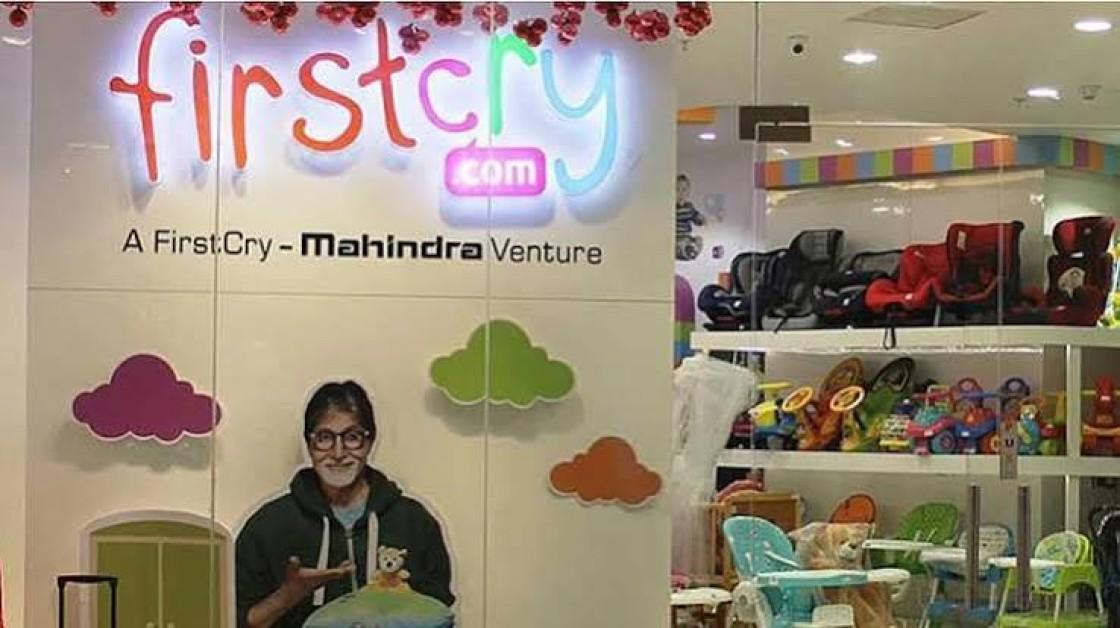
FirstCry Parent Brainbees Solutions Q2 FY27 Results in Focus as Investors Assess Omnichannel Growth and Profitability
Pune, November 14, 2026: Brainbees Solutions Limited, the parent company of children's products retailer FirstCry, is scheduled to review its financial results for the second quarter of FY2026–27 on Saturday, November 14, putting omnichannel retail growth, consumer demand, operating costs and profitability under investor scrutiny.
The company's board is scheduled to consider and approve its unaudited standalone and consolidated financial results for the quarter and six months ended September 30, 2026.
The announcement comes as FirstCry continues operating across online retail, physical stores, international markets and its GlobalBees portfolio of consumer brands.
Investors will assess whether the company has maintained revenue growth while improving operating efficiency and reducing losses.
Demand for baby and childcare products, customer acquisition costs, store productivity and inventory management will be particularly important.
Brainbees Solutions has also scheduled an earnings conference call for November 16, when management is expected to discuss the results and business outlook.
Brainbees Solutions Q2 FY27 Results: Key Highlights

| Indicator | Details |
|---|---|
| Company | Brainbees Solutions Limited |
| Principal consumer brand | FirstCry |
| NSE symbol | FIRSTCRY |
| BSE code | 544226 |
| Reporting quarter | July–September 2026 |
| Financial year | FY2026–27 |
| Board meeting | November 14, 2026 |
| Results under consideration | Unaudited standalone and consolidated |
| Core business | Baby, maternity and children's products |
| Retail model | Online and physical stores |
| Other business exposure | International retail and GlobalBees |
| Major investor focus | Revenue growth and profitability |
| Earnings conference call | November 16, 2026, at 4:00 p.m. IST |
| Trading window closure | October 1–November 16, 2026 |
The company's September-quarter revenue, earnings and operating margins will be established by the financial results announcement.
FirstCry's Omnichannel Retail Performance Takes Centre Stage
FirstCry operates through a combination of digital platforms and physical retail stores.
This omnichannel model allows customers to purchase products online while also accessing stores for in-person shopping.
The business serves parents and families purchasing products for infants, young children and expectant mothers.
Its product categories include clothing, footwear, toys, feeding products, diapers, baby care essentials and maternity merchandise.
The combination of online and offline channels creates opportunities to reach customers with different shopping preferences.
However, it also introduces operational complexity.
Physical stores involve rental, staffing and other operating expenses, while online retail requires investment in technology, fulfilment and customer acquisition.
Investors will examine whether Brainbees Solutions has improved the efficiency of this combined retail network.
Consumer Demand Will Be a Key Indicator
Demand for baby and children's products is central to FirstCry's financial performance.
The company sells a combination of essential products and discretionary merchandise.
Essential categories, including diapers and feeding supplies, can generate recurring purchases.
Other categories, such as clothing, toys and accessories, may be more sensitive to household spending patterns.
Consumer demand can also vary with promotional campaigns, festive shopping and seasonal purchasing.
The July–September quarter provides an opportunity to assess purchasing trends before the later stages of India's festive retail season.
Investors will examine whether sales growth reflects higher order volumes, changes in average order value or shifts in product mix.
These factors can influence both revenue and profitability.
Online Sales Growth Remains Important
FirstCry's digital platform is an important part of its retail business.
Online sales provide access to customers across a wide geographic market without requiring a physical store in every location.
However, e-commerce growth involves costs associated with advertising, technology, payment processing, warehousing and delivery.
Customer acquisition expenses can be particularly important.
Retailers must balance spending on attracting new shoppers with the revenue generated from repeat purchases.
For FirstCry, recurring demand for childcare essentials creates opportunities to develop long-term customer relationships.
Investors will look for evidence that the company is improving customer retention and order economics.
Growth accompanied by lower acquisition and fulfilment costs would strengthen the case for improved profitability.
Physical Store Expansion and Productivity Under Scrutiny
FirstCry's physical retail network provides another important growth channel.
Stores allow customers to examine products before purchasing, which can be valuable for categories involving quality, sizing and safety considerations.
They also support brand visibility and customer engagement.
However, store expansion requires capital and ongoing operating expenditure.
New locations may take time to reach efficient sales levels.
Investors will therefore assess store productivity alongside network expansion.
Same-store sales growth, where disclosed, can provide insight into demand at existing locations.
Higher sales per store can improve the ability to absorb rental and staffing costs.
The earnings announcement may offer additional information about store additions, closures and operating efficiency.
Profitability Remains a Major Question for Brainbees Solutions
The company's path toward sustainable profitability will be one of the central themes of the second-quarter results.
Retail businesses can generate strong revenue growth while continuing to report accounting losses.
Expenses may include marketing, fulfilment, employee costs, technology investments, depreciation and financing charges.
For a company operating across multiple business segments, consolidated profitability can also be affected by the performance of subsidiaries.
Investors will assess whether Brainbees Solutions has improved its operating margins and reduced losses.
The distinction between operating earnings and net profit is important.
A company may report positive EBITDA while remaining loss-making after depreciation, interest, taxes and other expenses.
The September-quarter financial statements will provide a clearer view of these trends.
EBITDA Margins Will Show Progress in Operating Efficiency
Earnings before interest, taxes, depreciation and amortisation, or EBITDA, is commonly used to evaluate operating performance.
For FirstCry, EBITDA margins can be influenced by merchandise margins, promotional spending, logistics expenses and store operating costs.
An improvement may indicate better procurement, pricing or cost management.
However, the impact of individual factors depends on the company's business mix.
Online and offline retail can have different operating economics.
International operations and the GlobalBees business may also affect consolidated margins.
Investors will therefore examine segment-level performance where available.
A sustained improvement in operating profitability would be an important development for the company.
Product Mix Could Influence Retail Margins
FirstCry sells products across several categories with different pricing and margin characteristics.
Branded merchandise, private-label products and essential childcare goods may contribute differently to profitability.
Higher sales of lower-margin products can support revenue while limiting margin expansion.
Conversely, a favourable product mix may improve gross margins.
Discounting and promotional activity also influence profitability.
Retailers frequently use promotions to attract customers, increase order volumes and manage inventory.
However, aggressive discounting can reduce earnings per transaction.
Investors will assess whether FirstCry maintained pricing discipline while expanding sales.
The balance between revenue growth and merchandise profitability will remain important.
Private Labels Offer Opportunities for Margin Improvement
Private-label products are an important part of many retail business models.
These products are developed or sourced for sale under brands controlled by the retailer.
Private labels can provide greater control over pricing, product design and supply arrangements.
They may also offer opportunities to improve merchandise margins.
However, developing successful private-label products requires investment in quality, inventory and brand recognition.
Retailers must ensure that products meet customer expectations, particularly in sensitive categories involving infants and young children.
For FirstCry, the contribution of private-label products could influence profitability over time.
Investors will look for management commentary on product mix and sourcing efficiencies.
GlobalBees Portfolio Adds Another Dimension to Earnings
Brainbees Solutions also has exposure to consumer brands through its GlobalBees subsidiary.
GlobalBees operates a portfolio model involving investments in and acquisitions of consumer businesses.
These businesses may operate across categories beyond FirstCry's core baby and childcare retail market.
The portfolio creates opportunities for revenue diversification.
However, it also introduces additional complexity into consolidated financial reporting.
Different consumer brands can have different growth rates, operating margins and capital requirements.
Investors will assess whether GlobalBees is contributing positively to the group's financial performance.
The segment's profitability and cash requirements will be important considerations.
GlobalBees Increases Stakes in Consumer Brands
Recent corporate disclosures indicate continued changes within the GlobalBees portfolio.
On October 30, 2026, GlobalBees acquired an additional 14.23% stake in JW Brands Private Limited for approximately ₹18.68 crore.
On November 3, the subsidiary acquired the remaining 42% stake in Better & Brighter Homecare Private Limited for approximately ₹16.26 crore.
The latter transaction increased GlobalBees' ownership of Better & Brighter to 100%.
These transactions occurred after the September quarter ended.
Consequently, they should not be assumed to have affected Q2 FY27 earnings.
However, they are relevant to the group's broader investment and portfolio management strategy.
Investors will examine how acquisitions and ownership changes influence future earnings and capital allocation.
Previous Quarter Results Provide a Benchmark
Brainbees Solutions reported consolidated revenue from operations of approximately ₹2,106 crore during April–June 2026, compared with ₹1,863 crore a year earlier.
This represented growth of approximately 13.1%.
The company's consolidated net loss narrowed to approximately ₹44 crore from ₹66.5 crore in the corresponding quarter of FY26.
However, adjusted EBITDA declined slightly to approximately ₹89.3 crore from ₹92.8 crore.
The adjusted EBITDA margin fell to 4.24% from 4.98%, indicating pressure on operating profitability despite revenue growth.
| Consolidated Indicator | Q1 FY27 | Q1 FY26 |
|---|---|---|
| Revenue from operations | ₹2,106.2 crore | ₹1,862.6 crore |
| Adjusted EBITDA | ₹89.3 crore | ₹92.8 crore |
| Adjusted EBITDA margin | 4.24% | 4.98% |
| Net loss | ₹44 crore | ₹66.5 crore |
| Gross margin | 36.5% | 38.5% |
The figures highlight the importance of distinguishing between improving net losses and pressure on adjusted operating margins.
The September-quarter results will help establish whether the company has achieved a more consistent improvement in profitability.
India Omnichannel Business Shows Stronger Growth
Brainbees Solutions' India multichannel business recorded approximately 17.7% year-on-year revenue growth during Q1 FY27.
This was stronger than the consolidated revenue growth rate.
The performance reflected demand across the company's online and offline retail operations.
However, growth in the core Indian business must also be evaluated against operating costs.
Retail expansion can increase expenses associated with stores, fulfilment and customer acquisition.
The company must therefore maintain a balance between market expansion and profitability.
Investors will examine whether India business growth continued during July–September.
The performance of this segment will be particularly important because it represents a substantial share of consolidated revenue.
International Operations Remain an Important Consideration
FirstCry also operates in international markets, including the Middle East.
These operations provide exposure to consumer demand beyond India.
However, international expansion can involve significant costs related to logistics, marketing, local operations and customer acquisition.
Foreign exchange movements may also influence reported financial performance.
The company's international business recorded revenue growth in the June quarter while reducing its adjusted EBITDA losses.
Investors will monitor whether this improvement continued during the September quarter.
Progress toward operating profitability would strengthen the group's overall financial outlook.
However, the timing will depend on revenue growth, cost efficiency and local market conditions.
Inventory Management Could Affect Margins
Inventory management is particularly important for retailers selling products across multiple categories.
FirstCry must maintain sufficient inventory to meet customer demand while avoiding excessive stock accumulation.
Some products, including clothing and seasonal merchandise, may require discounting when demand is weaker than expected.
Other categories involve more predictable repeat purchases.
Inventory turnover influences working capital requirements and cash flow.
Slow-moving inventory can increase storage expenses and reduce profitability.
The company must also coordinate inventory across online fulfilment facilities and physical stores.
Investors will assess whether improvements in inventory planning have supported margins and cash generation.
Customer Retention and Repeat Purchases Support Business Economics
FirstCry's customer base includes parents purchasing products for children across different stages of development.
This creates opportunities for repeat transactions.
A customer may initially purchase newborn essentials and later buy clothing, toys, footwear and educational products.
Long-term customer relationships can reduce dependence on continuous advertising expenditure.
However, retention depends on pricing, product availability, service quality and customer satisfaction.
The company must also compete with general e-commerce platforms and other retailers.
Investors will monitor customer activity metrics where disclosed.
An improvement in repeat purchases and customer acquisition efficiency could support operating profitability.
Working Capital and Cash Flow Remain Important
Brainbees Solutions' financial performance depends not only on reported earnings but also on cash generation.
Retail operations require investment in inventory, fulfilment facilities, technology and stores.
The GlobalBees business may also require capital for acquisitions and brand development.
These activities can affect the group's liquidity and working capital.
Investors will examine whether revenue growth has translated into stronger operating cash flow.
They will also monitor capital expenditure and other investment commitments.
A reduction in losses accompanied by improved cash generation would indicate progress toward financial sustainability.
However, profitability and cash flow can move differently because of inventory movements, payment terms and other factors.
Competition in India's Baby and Childcare Retail Market
FirstCry operates in a competitive retail environment.
Its competitors include online marketplaces, specialist retailers, local stores and consumer brands selling directly to customers.
Competition can influence pricing, promotional spending and customer acquisition costs.
FirstCry's specialised product assortment and omnichannel network provide a distinct business model.
However, maintaining customer loyalty requires reliable product availability, competitive pricing and service quality.
The company's ability to manage competition without excessive discounting will be important for profitability.
Investors will assess whether growth is being achieved through sustainable customer demand rather than promotional spending alone.
November 16 Earnings Call Will Be Important for Guidance
Brainbees Solutions has scheduled its earnings conference call for Monday, November 16, 2026, at 4:00 p.m. IST.
The discussion will follow the board's scheduled consideration of the September-quarter results.
Investors will look for management commentary on India retail growth, international operations and GlobalBees.
Profitability and operating efficiency will be major areas of attention.
The company may also discuss store expansion, inventory management and customer demand.
Management's outlook for the second half of FY27 will be particularly relevant.
The call will provide an opportunity to assess whether the company expects continued revenue growth alongside improving margins.
What Investors Will Watch in Brainbees Solutions' Q2 FY27 Results
| Key Indicator | Why It Matters |
|---|---|
| Consolidated revenue | Measures overall business growth |
| India multichannel revenue | Tracks performance of FirstCry's core retail operations |
| Adjusted EBITDA | Indicates operating profitability |
| Adjusted EBITDA margin | Measures cost efficiency relative to revenue |
| Net loss | Shows progress toward consolidated profitability |
| Gross margin | Reflects product mix, pricing and sourcing |
| Customer activity | Provides insight into demand and retention |
| Store productivity | Measures physical retail efficiency |
| International operations | Tracks overseas growth and losses |
| GlobalBees performance | Shows contribution from consumer brand investments |
| Operating cash flow | Indicates financial sustainability |
| FY27 outlook | Provides management expectations for future performance |
The most important issue will be whether the company can sustain revenue growth while improving its profitability.
Investors will also assess whether improvements are occurring across the group's businesses rather than being concentrated in a single segment.
Outlook for the Second Half of FY27
Brainbees Solutions' performance during the remainder of FY27 will depend on consumer demand, retail execution and operating efficiency.
The company's omnichannel network provides opportunities to reach customers through multiple shopping formats.
However, continued growth requires effective inventory management and disciplined spending.
The international business and GlobalBees portfolio may influence consolidated profitability.
Improved margins would strengthen the company's financial outlook, particularly if accompanied by better cash generation.
The September-quarter results and management's November 16 commentary will help clarify whether the company is progressing toward sustainable profitability.
Conclusion
Brainbees Solutions' November 14, 2026, earnings announcement comes as investors assess the performance of FirstCry's omnichannel retail business and its progress toward profitability.
The company reported approximately 13.1% consolidated revenue growth during the June quarter, while its net loss narrowed to around ₹44 crore.
However, adjusted EBITDA margins declined, highlighting the continuing challenge of balancing expansion with operating efficiency.
The September-quarter results will provide an updated picture of consumer demand, India retail growth, international operations and GlobalBees.
Investors will also monitor inventory management, store productivity and cash generation.
Recent transactions within the GlobalBees portfolio add another dimension to the group's capital allocation strategy.
The November 16 earnings conference call will provide further insight into management's expectations.
For investors, the central question is whether Brainbees Solutions can translate its growing retail operations into sustained margin improvement and a clearer path toward consolidated profitability.
 FirstCry Parent Brainbees Solution Q2 FY27 Results: Retail Growth, Consumer Demand and Profitability FAQs

POST A COMMENT (0)
All Comments (0)
Replies (0)