




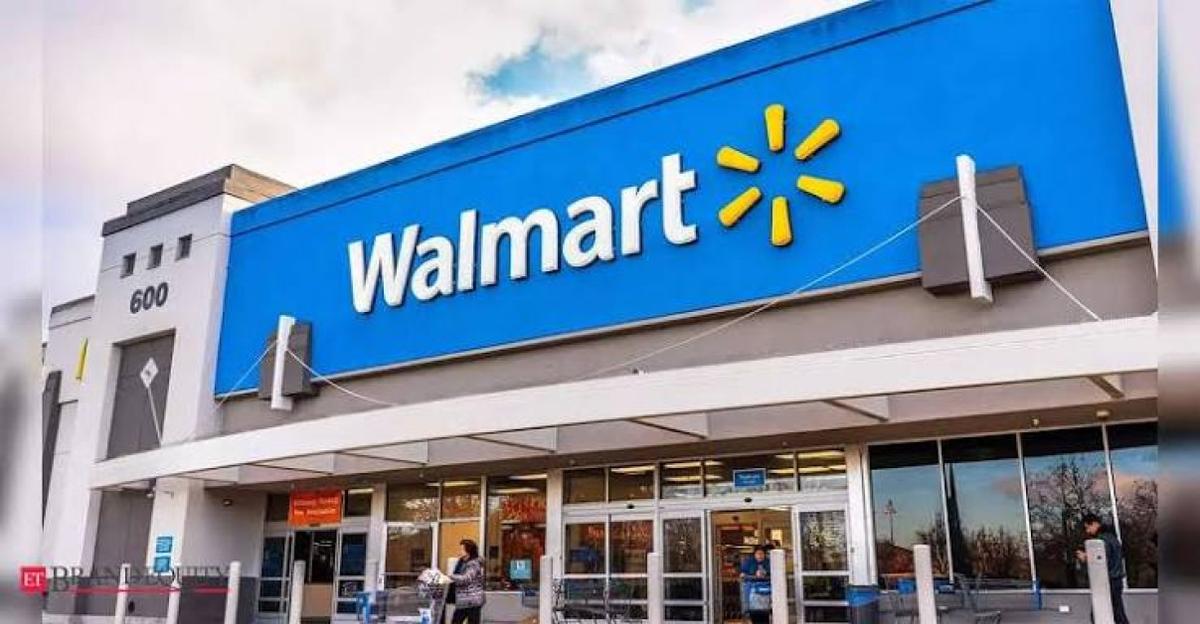
Walmart Earnings in Focus as Investors Assess the Strength of US Consumer Spending
Walmart's upcoming quarterly earnings announcement is set to provide an important assessment of American consumer spending ahead of the 2026 holiday shopping season, with investors focusing on grocery demand, discretionary purchases, e-commerce growth and the retailer's ability to protect profit margins.
The US retail giant's results will offer insight into how households are responding to inflation, borrowing costs and changes in the broader economic environment.
As one of the world's largest retailers, Walmart serves customers across income groups and sells a wide range of essential and discretionary products.
Its performance is therefore closely monitored as an indicator of consumer purchasing patterns, although the company's results cannot be treated as a complete measure of the US economy.
Investors will examine comparable sales growth, customer traffic, average transaction values and operating profitability.
Walmart's digital businesses, including e-commerce, advertising and membership services, will also attract attention because they are increasingly important to its earnings strategy.
The company's outlook for the holiday shopping season could prove particularly significant.
Black Friday falls on November 27, 2026, followed by Cyber Monday on November 30, creating an important promotional period for retailers competing for household spending.
Walmart's management commentary will help investors assess whether consumers are maintaining purchasing activity or becoming more selective about non-essential goods.
The results will also provide information about how the company is managing inventory, promotional discounts and operating expenses during a competitive retail environment.
Walmart Confirms November 19 Earnings Announcement

Walmart will release its fiscal third-quarter 2027 results on Thursday, November 19, 2026, before US stock markets open.
The company has scheduled its earnings release for 6:00 a.m. Central Standard Time, followed by a conference call at 7:00 a.m. Central Standard Time.
President and Chief Executive Officer John Furner and Chief Financial Officer John David Rainey will discuss the results and answer questions from investors.
The reporting period covers the quarter ended October 31, 2026.
Walmart Q3 FY2027 Earnings: Key Details
|
Particulars |
Details |
|---|---|
|
Company |
Walmart Inc. |
|
Stock exchange |
Nasdaq |
|
Ticker symbol |
WMT |
|
Reporting period |
Third quarter, fiscal 2027 |
|
Quarter ended |
October 31, 2026 |
|
Earnings date |
November 19, 2026 |
|
Earnings release |
6:00 a.m. CST |
|
Conference call |
7:00 a.m. CST |
|
Expected quarterly revenue |
Approximately $186.5 billion–$187.3 billion |
|
Expected adjusted earnings per share |
Approximately $0.64 |
|
Company EPS guidance |
$0.62–$0.64 |
|
Company net sales growth guidance |
3%–3.75% in constant currency |
|
Company adjusted operating income growth guidance |
2%–4% in constant currency |
|
Earnings status |
Results pending |
The market forecasts are estimates and may differ among financial data providers.
Analysts Expect Walmart Revenue to Approach $187 Billion
Wall Street expects Walmart to report another quarter of revenue growth, supported by grocery sales, digital commerce and demand for competitively priced products.
Analyst estimates generally place quarterly revenue between $186.5 billion and $187.3 billion, with adjusted earnings of approximately $0.64 per share.
The company previously projected third-quarter net sales growth of 3%–3.75% in constant currency.
It also guided for adjusted operating income growth of 2%–4%.
Why the Revenue Forecast Matters
Walmart's revenue reflects sales across several major businesses, including Walmart U.S., Walmart International and Sam's Club.
Investors will examine whether revenue growth is supported by higher customer traffic, increased transaction values or changes in product prices.
A rise in revenue does not necessarily indicate that customers are purchasing more individual products.
Inflation can increase sales values even when unit volumes remain relatively unchanged.
Earnings Growth Versus Revenue Growth
Profitability will be an equally important measure.
Walmart can increase revenue while experiencing pressure on earnings if operating costs or promotional expenses rise faster than sales.
Conversely, improvements in productivity, digital advertising and higher-margin services can support earnings growth.
The relationship between sales and profitability will therefore be central to the market's assessment.
Walmart's Previous Quarter Provides a Strong Comparison
Walmart reported revenue of approximately $187.9 billion for its fiscal second quarter, representing year-over-year growth of 5.9%.
The company also reported adjusted earnings of $0.81 per share.
Global e-commerce sales increased 23%, while Walmart U.S. comparable sales rose 2.6%.
The results demonstrated continued growth across its physical and digital retail operations.
Walmart Q2 FY2027 Performance
|
Financial indicator |
Reported result |
|---|---|
|
Revenue |
$187.9 billion |
|
Revenue growth |
+5.9% |
|
Adjusted earnings per share |
$0.81 |
|
GAAP earnings per share |
$0.80 |
|
Walmart U.S. comparable sales growth |
+2.6% |
|
Global e-commerce sales growth |
+23% |
|
Global advertising growth |
+38% |
|
Global membership fee revenue growth |
+17% |
|
Reported operating income growth |
+28.8% |
The company raised its full-year outlook following those results.
However, management also highlighted timing differences and pricing investments that could influence third-quarter performance.
Comparable Sales Will Be a Major Indicator of Consumer Demand
Comparable sales, also known as same-store sales, measure sales performance at established retail operations under the company's reporting methodology.
They help investors distinguish growth at existing locations from expansion through new stores.
For Walmart, comparable sales are particularly important because the company operates an extensive US retail network.
Analysts Expect Continued Comparable Sales Growth
Market estimates indicate that Walmart U.S. comparable sales could increase approximately 2.9%, excluding fuel.
That would represent an improvement from the 2.6% growth recorded in the preceding quarter.
However, the actual result will depend on consumer traffic, spending per transaction and online sales associated with existing operations.
Customer Traffic
Higher transaction counts can indicate that more customers are shopping at Walmart.
This may reflect the retailer's competitive pricing and convenience.
Average Transaction Value
Changes in average transaction value can result from customers purchasing more products, buying higher-priced goods or paying higher prices for similar products.
Investors will examine both traffic and transaction values to understand the underlying sales trend.
Grocery Sales Remain Central to Walmart's Business
Grocery is a major component of Walmart's US operations.
Food and household essentials attract recurring customer visits and provide relatively stable demand.
During periods of economic uncertainty, consumers may continue purchasing essential goods while reducing spending on discretionary products.
Why Grocery Performance Matters
Strong grocery sales can support customer traffic.
Frequent visits also create opportunities for customers to purchase products from other categories.
However, grocery retailing generally operates with relatively narrow profit margins.
This means revenue growth in groceries does not necessarily translate into equivalent profit growth.
Inflation and Food Prices
Higher food prices can influence reported sales values.
Consumers may respond by changing brands, purchasing smaller quantities or choosing lower-priced alternatives.
Walmart's private-label products and value-oriented positioning may influence these purchasing decisions.
The upcoming results will help show whether grocery growth is being driven primarily by transaction volumes, pricing or a combination of factors.
Discretionary Spending Will Test Consumer Confidence
Walmart also sells apparel, electronics, home furnishings, toys and other general merchandise.
These categories are particularly relevant ahead of the holiday shopping season.
Consumers facing financial pressure may prioritise groceries and household essentials over non-essential purchases.
Why General Merchandise Matters
Discretionary product categories can contribute meaningfully to retail profitability.
They also provide opportunities for seasonal promotions.
A recovery in general merchandise sales could indicate stronger consumer willingness to make non-essential purchases.
Continued weakness could suggest that households remain cautious.
Consumer Spending Differences
Purchasing behaviour can vary significantly across income groups.
Higher-income households may be better positioned to maintain discretionary spending.
Lower-income consumers may face greater pressure from food, housing, transportation and debt servicing costs.
Walmart's results could provide insight into these differences, particularly if management discusses customer behaviour by income group.
Higher-Income Shoppers Could Support Walmart's Growth
Walmart has been attracting customers across a broad range of income levels.
Its combination of competitive prices, convenience and expanding delivery services has strengthened its appeal beyond traditional discount retail customers.
Why Higher-Income Customers Matter
Higher-income households may contribute additional spending in general merchandise and digital services.
They may also be more willing to pay for convenience-oriented delivery and membership offerings.
However, attracting higher-income customers does not automatically improve profitability.
The financial outcome depends on product mix, fulfilment expenses and customer retention.
Value Remains Important Across Income Groups
Price sensitivity is not limited to lower-income consumers.
Households across income categories may compare prices and seek discounts.
Walmart's ability to offer competitive pricing while maintaining service quality will remain important during the holiday season.
E-Commerce Growth Becomes a Major Earnings Driver
Walmart's digital business has expanded rapidly.
Global e-commerce sales increased 23% in the previous quarter.
Growth was supported by store-fulfilled pickup and delivery services, marketplace activity and international operations.
How Walmart's Omnichannel Model Works
Walmart combines physical stores with online shopping services.
Customers can order products through digital platforms and choose home delivery or store pickup.
The company's extensive store network allows many locations to function as fulfilment centres.
This model can improve convenience and delivery coverage.
However, fulfilment costs remain an important consideration.
Digital Profitability
Investors will examine whether e-commerce growth is translating into improved profitability.
Online retail operations involve costs related to technology, delivery, packaging and customer service.
Efficiency improvements can help offset these expenses.
The company's expanding advertising and membership businesses may also support the economics of digital commerce.
Walmart's Advertising Business Attracts Investor Attention
Walmart's advertising operations have become an increasingly important part of its business strategy.
Global advertising revenue grew 38% in the fiscal second quarter.
The company's US advertising business also recorded growth of approximately 38%.
How Retail Advertising Generates Revenue
Walmart allows brands and sellers to promote products through its digital platforms and other advertising channels.
Advertisers pay to reach consumers who are shopping for relevant products.
This creates a revenue stream beyond traditional merchandise sales.
Why Advertising Matters for Profitability
Advertising can have different margin characteristics from physical retailing.
As the business expands, it may contribute to Walmart's overall earnings mix.
However, the exact financial contribution depends on operating costs and how advertising revenue is recognised.
Investors will look for evidence that advertising growth remains strong.
Walmart+ Membership Revenue Remains in Focus
Membership services are another component of Walmart's digital strategy.
Global membership fee revenue increased 17% in the preceding quarter.
Walmart+ offers eligible customers benefits that can include delivery and other services.
Why Membership Matters
Membership programmes can encourage customers to shop more frequently.
They may also improve retention by making the retailer's services more convenient.
Recurring membership fees provide a revenue stream that differs from individual product sales.
However, membership growth must be considered alongside the cost of providing benefits.
Key Questions for Investors
The upcoming earnings may provide further information about membership revenue growth and customer engagement.
Investors will also assess whether membership services support e-commerce and advertising activity.
The interaction among these businesses is an important part of Walmart's longer-term strategy.
Retail Profitability Faces Pressure From Costs and Discounts
Maintaining profit margins will be one of the central challenges for Walmart during the quarter.
Retailers face expenses associated with labour, transportation, inventory, technology and store operations.
Competitive pricing can also limit the amount of cost increases passed on to customers.
Pricing Investments
Walmart has emphasised its commitment to competitive prices.
The company previously indicated that tariff-related refunds received during the second quarter would help fund customer experience and pricing investments in the second half of the fiscal year.
These investments may support sales growth.
However, they can also influence short-term operating margins.
Operating Efficiency
Productivity improvements can help retailers control costs.
Walmart has invested in automation, supply chain technology and digital fulfilment.
These initiatives may support efficiency over time.
However, the financial benefits depend on implementation costs and operational performance.
Flipkart's Big Billion Days Timing Could Affect Quarterly Growth
An important factor in Walmart's third-quarter outlook is the timing of Flipkart's Big Billion Days shopping event in India.
Walmart previously indicated that the shift in the event's timing between fiscal quarters would create a headwind of more than one percentage point to third-quarter sales growth.
Why the Timing Matters
Large promotional events can generate substantial sales within a short period.
When an event moves from one fiscal quarter to another, reported quarterly revenue can change even without a corresponding deterioration in underlying demand.
Interpreting Walmart International Results
Investors will need to distinguish timing effects from changes in customer spending.
A weaker reported growth rate may partly reflect the movement of promotional sales between reporting periods.
Management commentary will be important in explaining the effect.
The company has encouraged investors to assess the second and third quarters together when evaluating underlying business performance.
Holiday Shopping Outlook Could Be More Important Than Quarterly Earnings
Walmart's third-quarter results cover the period ending October 31.
The peak US holiday shopping season falls primarily in November and December.
Consequently, the earnings report will not include most Black Friday and Christmas shopping activity.
However, management's outlook may provide valuable information about demand expectations.
Major Holiday Shopping Dates
|
Event |
Date |
|---|---|
|
Thanksgiving |
November 26, 2026 |
|
Black Friday |
November 27, 2026 |
|
Cyber Monday |
November 30, 2026 |
|
Christmas |
December 25, 2026 |
|
Walmart fiscal fourth-quarter end |
January 31, 2027 |
The fourth quarter is therefore especially important for assessing holiday sales performance.
US Holiday Retail Sales Forecast to Exceed $1 Trillion
The National Retail Federation expects US holiday retail sales to reach approximately $1.01 trillion during November and December 2026.
That would represent growth of around 4.2% compared with the previous year.
However, inflation is expected to account for a meaningful portion of the increase.
This means the growth in the actual quantity of goods purchased may be more modest than the increase in dollar sales.
What the Forecast Means for Walmart
The industry forecast suggests that consumers are expected to continue spending during the holiday season.
However, competition for those purchases may remain intense.
Retailers will need to balance promotional activity with profitability.
Walmart's pricing strategy and fulfilment capabilities could influence its ability to attract customers.
Nevertheless, the company's performance will depend on actual demand and execution.
Black Friday Promotions Will Test Walmart's Pricing Strategy
Black Friday remains an important shopping event for Walmart and other major retailers.
Consumers often use the period to purchase electronics, toys, appliances and other seasonal products.
Competitive Pricing
Retailers may introduce discounts to attract customers.
However, aggressive promotional activity can reduce margins.
Inventory Availability
Retailers must ensure that popular products are available when customers want to purchase them.
Stock shortages can result in lost sales.
Online and Store Integration
Customers increasingly compare prices and shop across multiple channels.
Walmart's ability to coordinate online orders, delivery and physical store inventory will be important.
Fulfilment Costs
Higher delivery volumes can increase operating expenses.
Efficient fulfilment can help protect profitability during periods of heavy demand.
Inflation and Household Costs Remain Important Risks
American consumers continue to face financial pressures from essential expenses.
Higher food, fuel and housing costs can reduce discretionary purchasing power.
Borrowing costs also influence household budgets.
How Inflation Affects Walmart
Walmart may benefit when customers seek lower prices.
However, inflation can also increase the retailer's own operating expenses.
These include transportation, labour and product procurement costs.
Consumer Trade-Down Behaviour
Trade-down occurs when consumers shift toward lower-priced alternatives.
This may involve choosing private-label products or shopping at discount retailers.
Walmart's value-oriented positioning can attract customers making these decisions.
However, trade-down behaviour may also change product mix and margins.
Federal Reserve Policy Could Influence Retail Spending
The Federal Reserve's monetary policy outlook remains relevant to the retail sector.
Interest rates influence borrowing costs for households and businesses.
Higher rates can increase the cost of credit card balances and other consumer financing.
They may also affect housing-related spending and discretionary purchases.
Why Walmart Investors Monitor Interest Rates
Changes in borrowing costs can influence consumer purchasing behaviour.
They can also affect business financing expenses and investment decisions.
However, the relationship between interest rates and Walmart's sales is indirect.
Employment, wages, prices and consumer confidence are also important.
Walmart Earnings Join a Busy Week for US Retailers
Several major retailers are scheduled to report earnings during the same week.
Their results will provide different perspectives on consumer spending.
|
Company |
Earnings date |
Main investor focus |
|---|---|---|
|
Home Depot |
November 17, 2026 |
Home improvement and housing demand |
|
Target |
November 18, 2026 |
Discretionary spending and retail margins |
|
Walmart |
November 19, 2026 |
Grocery demand, e-commerce and holiday outlook |
|
Lowe's |
November 18, 2026 |
Home improvement demand and profitability |
The companies serve different customer segments and product categories.
Their results should therefore be considered together rather than treated as interchangeable measures of consumer demand.
Walmart's Competitive Position in US Retail
Walmart competes with traditional retailers, warehouse clubs, online marketplaces and specialised businesses.
Its major advantages include scale, extensive store coverage and a broad product assortment.
Physical Store Network
Walmart operates thousands of retail locations.
Its store network supports customer access and fulfilment services.
Supply Chain Infrastructure
The company has invested substantially in distribution and logistics capabilities.
These systems help manage inventory and product availability.
Digital Expansion
E-commerce, advertising and membership services are becoming more important to Walmart's business model.
Pricing Strategy
Competitive pricing remains central to Walmart's appeal.
However, maintaining low prices while protecting profitability requires operational efficiency.
Walmart Stock Could React to Earnings and Guidance
Walmart shares trade on Nasdaq under the ticker symbol WMT.
The stock's reaction to the earnings announcement will depend on how reported results compare with market expectations.
Potential Positive Factors
Revenue growth exceeding expectations could support sentiment.
Stronger comparable sales may indicate resilient consumer demand.
Improved operating margins and digital profitability could also attract investor interest.
Higher full-year guidance may strengthen expectations for future earnings.
Potential Negative Factors
Weaker sales growth could raise concerns about consumer spending.
Higher operating costs may pressure profitability.
Heavy promotional activity could reduce margins.
A cautious holiday outlook may also influence investor expectations.
However, stock price movements cannot be predicted from any single financial metric.
Full-Year Guidance Will Be Closely Watched
Walmart previously raised its fiscal 2027 outlook following its second-quarter results.
The company projected full-year net sales growth of 4%–5% in constant currency.
Adjusted operating income was expected to increase 7%–8.5%.
Adjusted earnings per share were projected at $2.80–$2.87.
Walmart FY2027 Guidance Before Q3 Results
|
Financial measure |
Previous company guidance |
|---|---|
|
Net sales growth |
4%–5% |
|
Adjusted operating income growth |
7%–8.5% |
|
Adjusted earnings per share |
$2.80–$2.87 |
The November 19 earnings announcement will show whether management maintains, raises or lowers these expectations.
Changes in guidance could be particularly important because they incorporate management's assessment of the remaining fiscal year.
Key Indicators Investors Should Monitor
|
Indicator |
Why it matters |
|---|---|
|
Total revenue |
Measures overall business growth |
|
Adjusted earnings per share |
Indicates profitability relative to expectations |
|
Walmart U.S. comparable sales |
Measures established US retail operations |
|
Customer transactions |
Provides information about shopping activity |
|
Average transaction value |
Indicates spending per purchase |
|
Grocery sales |
Reflects demand for essential products |
|
General merchandise sales |
Offers insight into discretionary spending |
|
E-commerce growth |
Measures digital business momentum |
|
Advertising revenue |
Indicates progress in alternative revenue streams |
|
Membership revenue |
Reflects recurring service income |
|
Operating margin |
Measures profitability |
|
Inventory levels |
Helps assess demand planning |
|
Holiday sales guidance |
Indicates expectations for the fourth quarter |
|
Full-year outlook |
Provides management's financial expectations |
No single metric will provide a complete assessment.
Investors will need to examine how revenue growth, profitability and forward guidance interact.
What Walmart Earnings Mean for the US Economy
Walmart's earnings will offer a significant perspective on household purchasing behaviour.
Its broad customer base and extensive product range provide exposure to multiple consumer categories.
However, company-specific factors can influence results.
For example, Walmart may gain market share even when overall retail demand is slowing.
Similarly, promotional activity can support sales without necessarily indicating stronger consumer purchasing power.
The results should therefore be considered alongside official retail sales figures, inflation data and employment trends.
Outlook for Walmart Ahead of the Holiday Season
Walmart enters the holiday shopping period with several important growth drivers.
Its grocery operations provide recurring customer demand.
E-commerce and delivery services offer additional shopping convenience.
Advertising and membership services create revenue streams beyond traditional retail sales.
However, the company also faces risks.
Inflation may constrain consumer spending.
Competitive promotions could pressure margins.
Operating costs and inventory management will remain important.
The company's ability to balance low prices, sales growth and profitability will be a central factor in its holiday performance.
The November 19 earnings report will provide a clearer picture of how these factors are affecting the business.
Conclusion
Walmart's fiscal third-quarter earnings announcement on November 19, 2026, will be an important event for investors assessing the strength of American consumer demand ahead of the holiday shopping season.
Analysts expect quarterly revenue of approximately $187 billion and adjusted earnings of around $0.64 per share.
The company previously projected third-quarter net sales growth of 3%–3.75% and adjusted operating income growth of 2%–4% in constant currency.
Investors will focus on comparable sales, grocery demand, discretionary purchases, e-commerce growth and operating profitability.
Walmart's advertising and membership businesses will also attract attention as the retailer continues expanding beyond traditional merchandise sales.
The results arrive shortly before Black Friday and Cyber Monday, when promotional activity and consumer spending become particularly important.
Management's outlook for the fourth quarter may therefore carry as much significance as the third-quarter financial figures.
For the broader US economy, Walmart's earnings will provide insight into whether households are maintaining spending despite inflation and financial pressures.
For investors, the central question will be whether Walmart can sustain sales growth while protecting margins in an increasingly competitive retail environment.
 Walmart Earnings Preview: US Consumer Spending, Holiday Sales and Retail Profitability in Focus FAQs

POST A COMMENT (0)
All Comments (0)
Replies (0)