





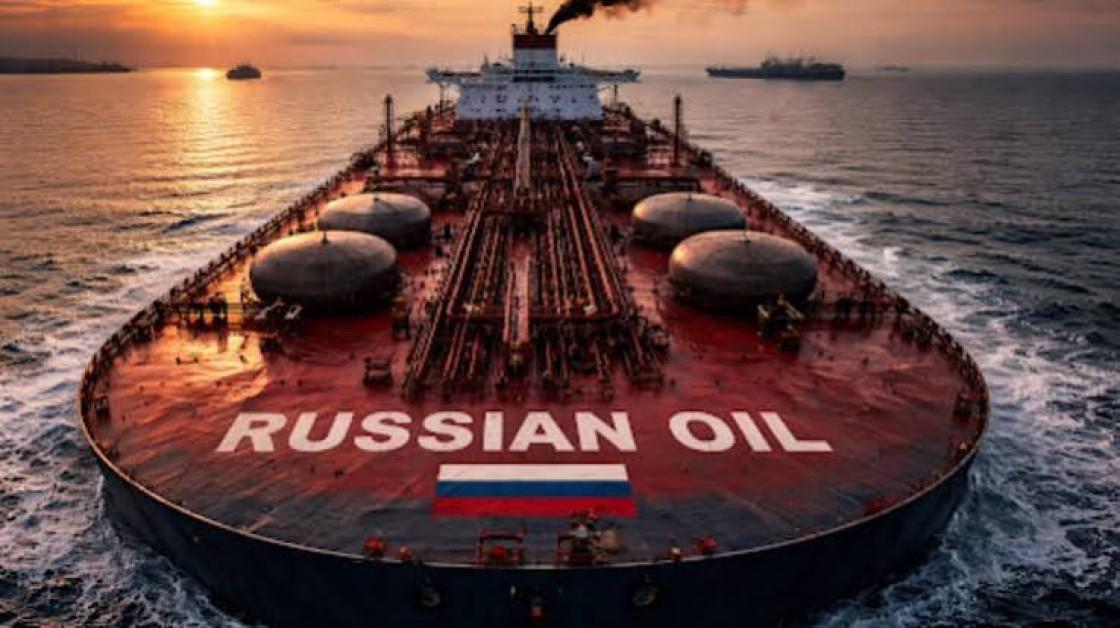
Trump Suspends Russia-Linked Tariffs and Sanctions Under New US Law
US President Donald Trump has waived significant tariffs and sanctions targeting Russia and major buyers of Russian energy under the Lindsey O. Graham Sanctioning Russia and Iran Act of 2026, reducing immediate trade risks for countries including India and China.
The decision was announced through a White House executive order dated October 16, 2026, just before key provisions of the legislation were scheduled to take effect.
The law, signed by Trump on September 18, was designed to increase economic pressure on Russia over its continuing war in Ukraine.
Its provisions included additional tariffs of 100% on goods imported into the United States from certain major purchasers of Russian crude oil and natural gas.
The legislation also provided for a 500% additional tariff on goods imported directly from Russia and penalties targeting individuals, financial institutions and entities involved in sanctions evasion.
However, the executive order invokes a national-interest waiver to suspend the application of specified duties, restrictions and sanctions.
The decision provides near-term relief to energy-importing countries and businesses that had faced the possibility of substantial new US trade penalties.
Importantly, the waiver does not repeal the Graham Act or eliminate existing US sanctions imposed under other legal authorities.
Washington has retained the ability to reconsider the exemptions, leaving longer-term trade and energy policy uncertainty unresolved.
Key Details of the US Russia Sanctions Waiver
The executive order establishes the legal framework for the new tariff measures while simultaneously waiving their immediate application.
|
Provision |
Graham Act Framework |
Current Position |
|---|---|---|
|
Additional tariffs on Russian goods |
500% |
Waived |
|
Tariffs on five largest Russian oil and gas importers |
100% |
Waived |
|
Tariffs on five largest sanctions-evasion facilitators |
100% |
Waived |
|
Specified Russia-related sanctions |
Expanded restrictions |
Covered provisions waived |
|
Existing sanctions under other authorities |
Continue independently |
Not automatically removed |
|
Waiver duration |
Subject to executive review |
No fixed expiry date |
|
US monitoring of Russian energy purchases |
Required |
Continues |
The White House has instructed relevant agencies to monitor purchases of Russian energy and activities associated with sanctions evasion.
The exemptions will remain in place until the president or designated senior officials determine that further action is appropriate.
Consequently, the immediate tariff threat has been reduced, but the underlying enforcement framework remains available.
What Is the Lindsey O. Graham Sanctioning Russia and Iran Act?
The Lindsey O. Graham Sanctioning Russia and Iran Act of 2026 is a US law intended to increase economic pressure on Russia and restrict financial activities supporting its war in Ukraine.
The legislation was named in honour of the late US Senator Lindsey Graham, who had advocated stronger economic measures against Moscow.
It received bipartisan congressional support and was signed into law on September 18, 2026.
The law targets several areas of Russia's economy, including energy exports, financial institutions, defence-related activities and sanctions-evasion networks.
A central feature is its ability to penalise third countries that continue purchasing significant quantities of Russian oil and gas.
Rather than restricting only Russian exporters, the legislation creates potential trade consequences for countries that maintain energy relationships with Moscow.
This approach is intended to reduce Russia's export revenues by increasing the economic cost of purchasing its energy products.
However, the legislation also includes presidential waiver authority.
That provision allows the US administration to suspend specified measures when it determines that doing so serves American national interests.
Trump has now exercised that authority.
White House Invokes National-Interest Waiver
The October 16 executive order invokes Section 115 of the Graham Act.
Under this provision, the president can waive specified sanctions, restrictions and duties after certifying to Congress that the decision serves the national interests of the United States.
Trump stated that the required certification had been submitted to Congress.
The order does not provide a detailed public explanation of the administration's reasoning.
However, the decision comes during a period of heightened energy market uncertainty and concern about fuel prices.
Additional restrictions on Russian oil exports could have disrupted established supply chains and increased competition for alternative crude supplies.
That possibility is particularly important because Russia remains a major participant in global energy markets.
The waiver therefore reduces the risk of an immediate disruption caused specifically by the new Graham Act provisions.
Nevertheless, it does not guarantee stable oil prices or uninterrupted Russian energy supplies.
India Receives Relief From Potential 100% Tariff Exposure
India is among the countries most directly affected by the decision because of its substantial purchases of Russian crude oil.
Indian refiners have relied on Russian supplies as part of their strategy to secure competitively priced feedstock.
The Graham Act created the possibility of additional US tariffs on goods imported from countries identified among the largest buyers of Russian oil and natural gas.
For India, this represented a potentially significant trade risk.
A 100% additional tariff on affected goods could have substantially increased the cost of exporting products to the United States.
The waiver removes the immediate application of that particular penalty.
This provides greater near-term certainty for Indian exporters and companies exposed to bilateral trade.
However, the exemption should not be interpreted as a blanket removal of all US tariffs on Indian goods.
Existing duties, product-specific restrictions and other trade measures remain governed by their respective legal frameworks.
The waiver is therefore best understood as relief from a specific additional tariff mechanism linked to Russian energy purchases.
Indian Oil Refiners Gain Short-Term Policy Flexibility
The decision is relevant to Indian oil refiners, including Indian Oil Corporation, Bharat Petroleum Corporation, Hindustan Petroleum Corporation, Reliance Industries and Nayara Energy.
These companies operate in a market where crude procurement decisions depend on price, availability, refinery configuration, shipping arrangements and regulatory compliance.
Russian crude has been an important source of supply for Indian refiners in recent years.
The possibility of additional US trade penalties had created uncertainty around the broader commercial consequences of continued purchases.
By waiving the new measures, Washington has reduced one immediate source of policy risk.
This may allow refiners and traders to assess procurement decisions without the additional pressure of the Graham Act tariffs taking effect immediately.
However, the waiver does not authorise transactions that remain prohibited under existing sanctions.
Individual refiners, banks, shipping companies and traders must continue evaluating applicable restrictions, payment arrangements and counterparty exposure.
The financial benefits will also depend on crude price differentials, freight costs and availability.
Why Russian Oil Matters to India's Energy Security
India is one of the world's largest crude oil importers and relies heavily on overseas supplies to meet domestic petroleum demand.
The country imports more than four-fifths of its crude oil requirements.
As a result, changes in international oil prices and trade restrictions can have substantial implications for India's economy.
Russian crude became an important component of India's import mix after Western sanctions and changes in global energy trade flows following Russia's invasion of Ukraine in 2022.
Indian refiners increased purchases when Russian grades became commercially attractive.
The availability of competitively priced crude can influence refinery margins and the broader cost of petroleum products.
However, India's energy security strategy also depends on maintaining diversified sources of supply.
The country purchases crude from the Middle East, the Americas and other producing regions.
The US waiver provides additional flexibility but does not eliminate the need for diversification.
Geopolitical developments, shipping disruptions and sanctions enforcement can still affect energy trade.
China and Other Russian Energy Buyers Also Benefit
The waiver is not limited to India.
China, another major purchaser of Russian energy, also benefits from the suspension of the new tariff provisions.
Other countries involved in Russian oil and gas trade could face reduced immediate exposure, depending on their position under the law's criteria.
The Graham Act focuses on major importers and countries identified as significant facilitators of sanctions evasion.
The tariff provisions were designed to apply selectively rather than automatically to every country purchasing Russian energy.
The waiver reduces the near-term possibility that qualifying countries will face the specified additional duties.
This is important because large-scale disruptions involving major energy importers could affect global trade flows.
Countries facing potential penalties might otherwise seek alternative supplies, increasing competition for crude from other producers.
However, the US administration continues to monitor Russian energy purchases.
The possibility of future action means that affected countries still face policy uncertainty.
Global Oil Markets Avoid an Immediate Additional Disruption
The decision has implications beyond bilateral trade relationships.
Russia remains an important exporter of crude oil and petroleum products.
Restrictions affecting major purchasers could disrupt established shipping routes, financing arrangements and supply contracts.
If buyers were forced to reduce Russian purchases rapidly, demand for alternative crude grades could increase.
Such a shift could place upward pressure on international oil prices, depending on available supply.
The Graham Act waiver reduces the immediate risk of disruption arising from its newly authorised tariffs and sanctions.
However, global oil prices are influenced by numerous factors, including production decisions, inventories, economic growth and geopolitical developments.
The waiver alone does not determine the direction of crude prices.
Market participants will continue assessing developments involving Russia, the Middle East and other major energy-producing regions.
Energy Price Concerns Influence US Policy Environment
The waiver comes at a time when the United States is facing elevated energy market uncertainty.
The continuing conflict involving Iran and disruptions affecting regional energy markets have contributed to concerns about oil and fuel prices.
Higher energy costs can influence inflation, transportation expenses and household purchasing power.
They can also affect manufacturing costs and economic growth.
Additional restrictions on Russian oil exports could potentially increase pressure on global energy supplies.
The administration's decision to suspend the Graham Act measures avoids introducing another immediate source of disruption.
However, the White House executive order formally cites the national interest without specifying fuel prices as the sole reason for the waiver.
The broader economic environment nevertheless provides important context for understanding the decision.
US policymakers face competing objectives involving sanctions enforcement, energy affordability and international trade relationships.
Existing Russia Sanctions Remain in Force
A critical distinction is that the waiver does not eliminate all US sanctions against Russia.
The executive order explicitly preserves measures imposed under other existing authorities.
This includes sanctions established through previous executive orders addressing specified harmful activities by the Russian government.
Consequently, individuals and companies already subject to restrictions may remain sanctioned.
Financial institutions must continue checking whether transactions involve designated entities, prohibited services or restricted activities.
Shipping companies and commodity traders must also assess applicable rules independently of the Graham Act waiver.
The suspension of new sanctions under one law does not automatically authorise transactions prohibited under another.
This distinction is particularly important for companies operating across multiple jurisdictions.
Businesses must evaluate the full regulatory framework rather than assuming that the waiver permits unrestricted trade with Russia.
US Retains Authority to Reimpose Tariffs
The waiver does not contain a fixed expiry date.
Instead, it remains effective until the president or designated senior officials determine that further action is appropriate.
This gives the administration considerable flexibility.
Washington could maintain the exemptions, modify its approach or restore specified measures depending on future developments.
The US Trade Representative has been instructed to monitor Russian energy purchases and activities associated with sanctions evasion.
Relevant agencies are expected to provide recommendations if circumstances justify further action.
For businesses, this means the immediate threat has diminished but has not disappeared.
Companies entering long-term supply agreements must consider the possibility that sanctions or tariffs could be reinstated.
Contractual provisions, payment structures and compliance procedures may therefore remain important.
Implications for India-US Trade Relations
The waiver reduces a potential source of friction in India-US economic relations.
The United States is a major destination for Indian exports, while India remains an important market for American goods and services.
The possibility of additional tariffs linked to Russian oil purchases had created uncertainty for businesses operating between the two countries.
A substantial increase in import duties could have affected export competitiveness and commercial planning.
The suspension of the Graham Act tariffs provides temporary relief from that specific risk.
However, broader trade discussions between India and the United States involve other issues, including market access, tariff structures and regulatory requirements.
The waiver does not resolve those matters.
It also does not establish a permanent exemption for India from future Russia-related trade measures.
The longer-term impact will depend on US policy decisions and developments in bilateral relations.
Indian Exporters Face Reduced Immediate Tariff Risk
Indian exporters in sectors such as textiles, engineering goods, chemicals, pharmaceuticals and manufactured products have an interest in the stability of US trade policy.
Additional tariffs can affect product pricing, profit margins and competitiveness in international markets.
The Graham Act's proposed 100% duties could have created significant uncertainty for exporters if India had been designated under the relevant provisions.
The waiver prevents those additional duties from taking effect immediately.
This allows businesses to plan shipments and contracts without incorporating that particular tariff increase into near-term pricing.
However, companies must still account for existing tariffs and other applicable US trade rules.
The waiver should therefore not be treated as a general reduction in duties across Indian exports.
Its significance lies in avoiding a potential additional trade penalty.
Sanctions Compliance Remains Essential for Banks and Traders
The waiver also has implications for financial institutions and commodity trading companies.
Russian energy transactions can involve complex payment, shipping and insurance arrangements.
Banks must evaluate counterparties, beneficial ownership, transaction structures and applicable sanctions requirements.
Commodity traders face similar obligations when arranging purchases, transportation and financing.
The new waiver may reduce some risks associated with the Graham Act.
However, existing sanctions and restrictions remain relevant.
Companies must also consider regulatory requirements imposed by jurisdictions outside the United States.
The European Union, United Kingdom and other authorities maintain separate sanctions frameworks.
Compliance with US requirements does not automatically establish compliance with every other jurisdiction.
Businesses should therefore continue evaluating individual transactions according to the applicable rules.
Impact on Russia's Energy Export Revenues
The Graham Act was intended to increase pressure on Russia by restricting its ability to generate revenue from international energy sales.
Oil and gas exports remain important sources of income for the Russian economy.
By targeting major buyers, the legislation sought to reduce the commercial attractiveness of Russian energy.
The waiver delays the application of several measures that could have intensified this pressure.
This may allow existing energy trade relationships to continue without the additional penalties specified under the new law.
However, Russia continues to face other sanctions and restrictions affecting financial transactions, shipping and international commerce.
The waiver does not remove those constraints.
The overall impact on Russian export revenues will depend on crude prices, production volumes, buyer demand and the effectiveness of existing restrictions.
US Decision Draws Political Criticism
The waiver has attracted criticism from lawmakers who support stronger economic pressure on Russia.
Critics argue that suspending the new measures weakens the legislation's intended effect and reduces pressure on Moscow over its war in Ukraine.
The Graham Act had received bipartisan support in Congress.
Its supporters viewed secondary sanctions and trade penalties as tools for limiting Russia's access to export revenues.
The administration's decision reflects a different immediate policy approach.
The White House has invoked the national-interest provision included in the legislation itself.
This makes the waiver legally distinct from repealing the law.
Nevertheless, the disagreement highlights continuing tensions between sanctions policy, energy security and diplomatic objectives.
Future developments could influence whether the administration maintains the exemptions.
What Businesses and Investors Should Monitor
The next phase of the policy will depend on several developments.
The first is whether the United States maintains the current waivers or introduces additional conditions.
The second is the outcome of continued monitoring of Russian oil and gas purchases.
Businesses will also assess developments in the Russia-Ukraine conflict and their potential influence on sanctions policy.
For energy importers, crude price differentials and shipping availability will remain important commercial considerations.
For Indian exporters, the main concern will be whether the additional tariff threat returns.
Financial institutions and commodity traders will need to monitor changes in sanctions lists and enforcement guidance.
The waiver provides near-term clarity, but long-term investment and procurement decisions must still account for geopolitical uncertainty.
Conclusion
The United States' decision to waive Russia-linked tariffs and sanctions under the Lindsey O. Graham Sanctioning Russia and Iran Act of 2026 represents a significant near-term change in international trade and energy policy.
The executive order suspends specified measures, including additional tariffs of 100% targeting major buyers of Russian energy and 500% duties on Russian goods.
For India, China and other countries involved in Russian energy trade, the waiver reduces the immediate risk of substantial new US trade penalties.
Indian refiners gain additional short-term flexibility, while exporters avoid the immediate application of a potentially significant tariff mechanism.
The decision may also reduce the risk of sudden disruption to global crude oil trade.
However, the waiver does not repeal the Graham Act or remove existing sanctions imposed under other authorities.
The United States retains the ability to reconsider the exemptions, and monitoring of Russian energy purchases will continue.
The immediate trade environment has become less restrictive, but the long-term outlook remains dependent on geopolitical developments, US policy decisions and global energy market conditions.
 US Waives Russia Energy Tariffs Under Graham Act, Offering Relief to India and Oil Importers FAQs
POST A COMMENT (0)
All Comments (0)
Replies (0)