





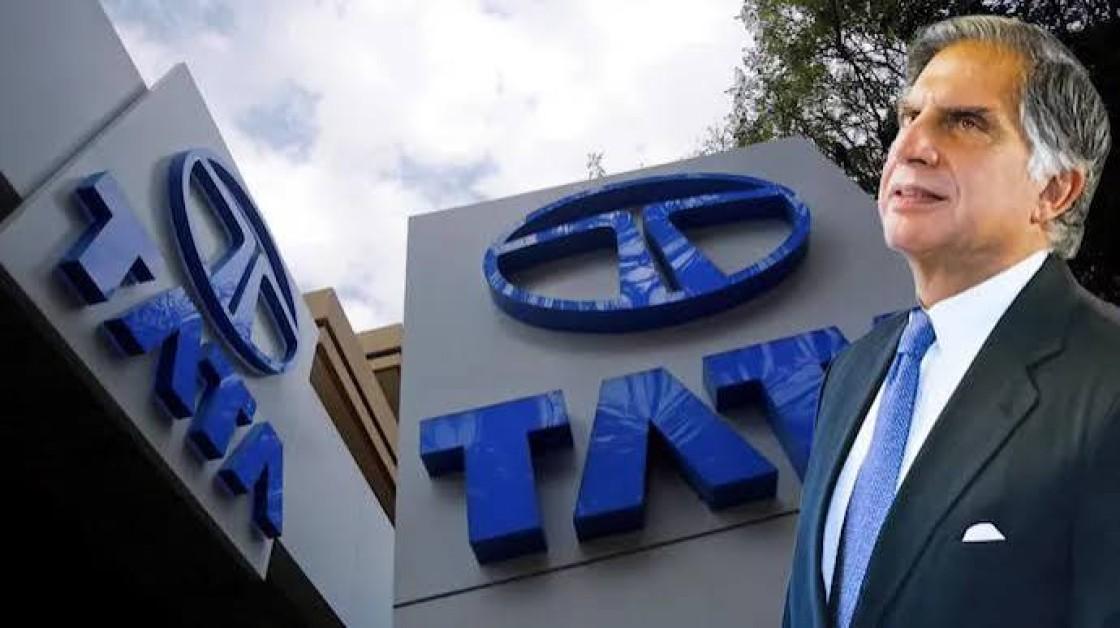
Tata Sons Leadership Dispute Raises Questions Over Group Governance
A leadership dispute involving Tata Sons, Tata Trusts and senior directors has intensified scrutiny of the Tata Group's governance structure, long-term investment strategy and decision-making processes as the conglomerate undertakes one of its most capital-intensive expansion programmes.
The disagreement centres on the reappointment of Tata Sons Executive Chairman N. Chandrasekaran, the authority of directors nominated by Tata Trusts and the potential public listing of Tata Sons.
Tata Trusts Chairman Noel Tata has challenged the validity of the September 17, 2026, board resolution supporting Chandrasekaran's reappointment for another five-year term.
The dispute has subsequently expanded into legal and regulatory proceedings involving the administration of the charitable trusts that control approximately 66% of Tata Sons.
The developments come as Tata Group businesses invest heavily in semiconductors, batteries, aviation, digital platforms and artificial intelligence infrastructure.
These investments could influence the group's industrial and technological position for decades, but several require substantial capital before generating meaningful financial returns.
The central business question is whether disagreements at the holding-company level could complicate future decisions on leadership, funding priorities and corporate strategy.
There is currently no established evidence that the governance dispute has stopped or delayed major Tata Group projects already underway.
Tata Group Governance Dispute: Key Developments
|
Date |
Development |
|---|---|
|
August 12, 2026 |
Chandrasekaran communicated that he would not seek another term as Tata Sons chairman |
|
September 11, 2026 |
RBI rejected Tata Sons' application to surrender its Core Investment Company registration |
|
September 17, 2026 |
Tata Sons board approved Chandrasekaran's reappointment for another five-year term |
|
September 20, 2026 |
Tata Trusts publicly challenged the validity of the reappointment resolution |
|
September 30, 2026 |
Noel Tata sought records and explanations relating to the board meeting |
|
October 2026 |
Disagreements within Tata Trusts developed into regulatory complaints and legal proceedings |
|
October 13, 2026 |
Chandrasekaran reiterated the long-term importance of investment in semiconductor manufacturing |
The developments involve overlapping questions about shareholder rights, board authority, regulatory obligations and investment strategy.
Chandrasekaran's Reappointment Becomes Central Issue

N. Chandrasekaran has served as chairman of Tata Sons since 2017.
His current term is scheduled to end in February 2027.
On September 17, the Tata Sons board approved a resolution supporting his continuation for another five years.
Four directors supported the proposal, while Noel Tata opposed it.
Chandrasekaran recused himself from the decision concerning his own appointment.
Venu Srinivasan, another Tata Trusts-nominated director, supported the proposal.
The disagreement created a dispute over whether the resolution satisfied the requirements of Tata Sons' Articles of Association.
Tata Trusts has argued that the decision lacked the necessary affirmative support from its nominated directors.
Those defending the board decision have relied on a different interpretation of the governance provisions and directors' legal responsibilities.
The validity of the resolution is therefore contested rather than conclusively settled.
Tata Trusts Challenges Board Decision
Tata Trusts has described Chandrasekaran's reappointment resolution as legally ineffective.
The Trusts' position is that Tata Sons' governance provisions require particular support from the directors nominated by the controlling charitable trusts.
According to this interpretation, the opposition of one relevant nominee director prevented the resolution from satisfying the prescribed conditions.
The opposing position emphasises the responsibilities of directors to exercise independent judgment in the interests of the company.
The dispute has also involved questions about the use of a casting vote during the board process.
These issues concern the interpretation of Tata Sons' governing documents and applicable company law.
The final legal position may depend on further proceedings or an agreed resolution among the parties.
For the group, prolonged uncertainty over the chairmanship could complicate strategic decision-making even if day-to-day business operations continue.
Noel Tata Seeks Records of September Board Meeting
Noel Tata subsequently sought information concerning the September 17 board proceedings.
His September 30 communication reportedly requested the meeting's video recording and minutes.
He also raised questions about the process through which legal opinions were obtained following the meeting.
These requests form part of the broader disagreement over the validity and procedural handling of the chairman's reappointment.
Board minutes and meeting records can be important in disputes involving voting procedures and corporate decisions.
They may help establish what was discussed, how resolutions were considered and whether applicable procedures were followed.
However, requests for records do not independently establish that a governance violation occurred.
The matter remains contested.
Tata Trusts' Majority Ownership Shapes the Dispute
Tata Trusts collectively hold approximately 66% of Tata Sons.
The trusts have historically played a central role in the ownership and oversight of the Tata Group.
Tata Sons, in turn, holds major investments in operating companies across technology, automobiles, steel, hospitality, consumer businesses, aviation and other sectors.
This structure creates a distinction between the charitable trusts as controlling shareholders and Tata Sons as the group's principal holding company.
The dispute raises questions about how shareholder authority should interact with board independence.
Controlling shareholders have important governance rights, but directors also have legal duties to the companies they serve.
The relationship between these responsibilities is central to the disagreement.
The outcome could influence how Tata Sons approaches future leadership appointments and major corporate decisions.
Disagreements Spread Within Tata Trusts
The governance dispute has extended beyond the Tata Sons board.
In October, disagreements among trustees of the Sir Dorabji Tata Trust and Sir Ratan Tata Trust became the subject of complaints and legal proceedings.
Trustees including Venu Srinivasan and Vijay Singh raised concerns with the Maharashtra Charity Commissioner over aspects of trust administration.
Questions reportedly included governance procedures, trustee appointments and participation in decision-making.
Noel Tata and Neville Tata subsequently filed caveats in court to ensure they would be heard before certain adverse orders were considered.
A caveat is a procedural legal measure and does not itself establish wrongdoing.
The developments indicate that the dispute involves both the holding company's leadership and the internal governance of its controlling shareholder institutions.
Any prolonged disagreement within the trusts could complicate their ability to communicate a unified position on Tata Sons matters.
RBI Decision Adds Pressure Over Tata Sons Listing
A separate regulatory issue concerns Tata Sons' status as a Core Investment Company.
On September 11, 2026, the Reserve Bank of India rejected the company's request to surrender its registration.
Tata Sons remains subject to the regulatory framework applicable to its classification as an upper-layer non-banking financial company.
The decision has renewed attention to requirements associated with the company's potential public listing.
Tata Sons has historically operated as a privately held holding company.
A public listing would represent a major change in its ownership and disclosure structure.
However, the RBI's rejection of deregistration should not be interpreted as confirmation that an IPO has been scheduled.
The applicable regulatory requirements, available legal options and timing remain important unresolved considerations.
Why a Tata Sons IPO Is Controversial
A public listing could provide Tata Sons with access to equity markets and introduce additional public-market disclosure requirements.
It could also create liquidity opportunities for existing shareholders.
However, listing would change the relationship between the holding company and outside investors.
Public shareholders would expect financial transparency, governance accountability and a clear capital allocation framework.
The company's charitable trust-controlled ownership structure adds another dimension.
Tata Trusts receives income from its investments, including dividends that support philanthropic activities.
The trusts' leadership has expressed concerns about the implications of listing for the group's long-standing ownership model.
Others have argued that a listing could strengthen transparency and accountability.
These are competing perspectives on the future structure of Tata Sons, and no final outcome has been established.
Major Investment Commitments Increase Importance of Governance
The Tata Group is undertaking significant investments across several capital-intensive industries.
An analytical assessment of publicly disclosed commitments and reported investment requirements estimated that approximately ₹2.6 lakh crore had been committed or absorbed across major new ventures and turnaround businesses.
The estimate includes semiconductor manufacturing, batteries, data centres, Tata Digital and Air India.
It should not be interpreted as an immediate funding obligation of Tata Sons.
Individual projects involve different ownership structures, financing arrangements, government support and outside investors.
Nevertheless, the scale illustrates why capital allocation has become a central concern.
Decisions about where to deploy additional funds could influence the group's financial flexibility and future returns.
Major Tata Group Investment Programmes
|
Business or programme |
Reported investment or financial scale |
Strategic focus |
|---|---|---|
|
Dholera semiconductor fabrication facility |
Approximately ₹91,000 crore |
Semiconductor manufacturing |
|
Jagiroad semiconductor assembly and testing facility |
Approximately ₹27,000 crore |
Chip packaging and testing |
|
Agratas battery manufacturing projects |
Approximately ₹60,000 crore |
Battery production |
|
HyperVault AI data-centre initiative |
Up to ₹70,000 crore |
AI and digital infrastructure |
|
Tata Digital |
Estimated ₹18,000–₹24,000 crore in capital absorption |
Digital commerce and platforms |
|
Air India |
Reported cumulative losses of approximately ₹58,000 crore since 2022 |
Airline transformation |
These amounts combine announced project values and third-party estimates covering different periods. They are not directly comparable measures of Tata Sons' cash expenditure.
Some projects also involve government incentives, financing partners or other sources of capital.
Semiconductor Manufacturing Represents a Long-Term Bet
The Tata Group is investing heavily in India's semiconductor manufacturing ecosystem.
Its Dholera fabrication project in Gujarat represents an estimated investment of approximately ₹91,000 crore.
The group is also developing a semiconductor assembly and testing facility at Jagiroad in Assam, involving approximately ₹27,000 crore.
Semiconductor manufacturing requires substantial capital expenditure, specialised equipment and technical expertise.
Commercial returns may take years to materialise.
Factories must meet demanding production standards and achieve sufficient utilisation to support their economics.
On October 13, Chandrasekaran emphasised the importance of investing in semiconductor and electronics capabilities for India's long-term industrial development.
He acknowledged that such investments may not generate large returns within the first few years.
The strategic argument is that semiconductor manufacturing could create capabilities with benefits extending beyond immediate financial performance.
The governance challenge is determining how much capital the group should commit and over what period.
Battery Manufacturing Adds Another Capital-Intensive Business
The Tata Group is also developing battery manufacturing capabilities through Agratas.
The company's planned investments include battery facilities serving electric mobility and energy storage markets.
Reported project commitments are approximately ₹60,000 crore.
Battery manufacturing requires substantial spending on facilities, machinery, materials and process development.
The economics depend on demand, manufacturing yields, technology and global competition.
Battery prices and product specifications can change rapidly as the industry develops.
The investment could strengthen the group's participation in electric vehicle and energy storage supply chains.
However, the financial returns will depend on commissioning timelines, production efficiency and customer demand.
The business therefore represents another long-term investment requiring careful capital allocation.
Air India Turnaround Requires Sustained Financial Support
Air India remains one of the Tata Group's most significant transformation projects.
The group reacquired the airline in 2022 and subsequently integrated Vistara into the business.
Following the merger, Tata holds 74.9% of the enlarged airline, while Singapore Airlines owns 25.1%.
The turnaround involves aircraft fleet renewal, service improvements, technology systems and operational restructuring.
These initiatives require substantial investment.
Air India has also reported significant losses during its transformation.
A prolonged period of losses can create requirements for additional shareholder funding.
Any future capital injection would involve decisions about the amount, timing and participation of the relevant shareholders.
The governance dispute at Tata Sons does not establish that Air India's operations have been disrupted.
However, uncertainty at the holding-company level could become relevant if major new financing decisions require approval.
Tata Digital Faces Questions Over Returns on Investment
Tata Digital represents the group's effort to build a larger presence in digital commerce and consumer technology.
The business includes digital platforms and investments intended to connect different parts of the group's consumer ecosystem.
Significant capital has been committed to developing these operations.
However, digital platform businesses can require prolonged investment in technology, customer acquisition and operating infrastructure.
Profitability depends on customer adoption, transaction activity, competitive positioning and cost efficiency.
The group's leadership must determine how much additional capital to allocate and the financial milestones expected from that investment.
These decisions can become more difficult when other businesses simultaneously require substantial funding.
For Tata Sons, balancing digital investment against industrial and infrastructure projects is an important strategic consideration.
Artificial Intelligence Infrastructure Creates New Funding Requirements
The Tata Group is also pursuing opportunities in AI infrastructure and data centres.
The HyperVault initiative has been associated with potential investment of up to ₹70,000 crore.
AI infrastructure requires computing capacity, electricity, cooling systems, network connectivity and specialised facilities.
Demand is influenced by enterprise AI adoption and cloud computing requirements.
However, large infrastructure projects can face uncertainty regarding technology, utilisation and future pricing.
Rapid changes in computing hardware can also influence investment decisions.
For Tata Sons, AI infrastructure adds another potential destination for long-term capital.
The commercial opportunity must be evaluated against the funding needs of existing businesses and other expansion projects.
TCS Dividends Remain Important to Tata Sons
Tata Consultancy Services is an important source of recurring cash income for Tata Sons.
Tata Sons holds approximately 71.74% of TCS.
According to reported figures, Tata Sons received approximately ₹28,291 crore in dividends from TCS during FY26, compared with ₹32,184 crore in FY25.
Dividend income provides resources that can support the holding company's obligations and investments.
However, dividend receipts depend on TCS's profitability, cash generation and payout decisions.
The IT services industry is also undergoing changes associated with artificial intelligence.
AI could create new service opportunities while changing the delivery and pricing of traditional technology work.
For Tata Sons, the long-term performance of TCS is therefore important beyond its market valuation.
Sustained dividend income contributes to the group's financial flexibility.
TCS Says Leadership Dispute Has Not Affected Business
Recent statements from TCS leadership indicate that the Tata Sons dispute has not affected the company's business operations.
TCS Chairperson Aarthi Subramanian said the governance disagreement had not disrupted customer relationships.
She also indicated that clients had not raised concerns about the dispute during recent interactions.
The comments are relevant because TCS is one of the group's largest listed companies.
TCS operates through its own board, management and corporate governance structure.
This provides an important distinction between a holding-company dispute and the day-to-day operations of individual subsidiaries.
However, continued uncertainty could still attract investor attention if it affects future group-level decisions.
There is no basis to conclude that TCS has experienced operational disruption because of the Tata Sons disagreement.
Outside Investors Add Complexity to Capital Decisions
Several Tata Group businesses have raised capital from external investors.
Outside investment can reduce the amount of funding required from the group.
However, financial investors may eventually seek liquidity through a public offering, secondary transaction or other arrangement.
One example is Tata Passenger Electric Mobility.
In 2021, TPG Rise Climate and Abu Dhabi's ADQ agreed to invest ₹7,500 crore in the business.
Regulatory filings contemplated a potential investor exit window between April 2027 and September 2028.
This does not automatically mean Tata Motors must repurchase the investors' holdings.
Possible liquidity routes include an IPO, secondary stake sale, additional investment or restructuring.
Nevertheless, decisions about ownership and valuation may require coordination among stakeholders.
Such decisions become more complicated when group-level governance remains contested.
Capital Allocation Is the Central Strategic Question
The Tata Group operates businesses with very different investment and cash-flow characteristics.
TCS generates substantial cash and dividend income.
Semiconductor and battery manufacturing require significant capital before reaching mature operating scale.
Air India is undergoing a costly transformation.
Digital platforms and AI infrastructure involve their own development and commercialisation risks.
These businesses compete for financial resources, management attention and investment capacity.
The key challenge is not necessarily a shortage of available funds.
Rather, it is determining which projects should receive priority, how they should be financed and what returns should be expected.
A functioning governance framework is important for making these decisions consistently.
The leadership dispute could become more consequential if disagreements delay future investment approvals.
Corporate Governance Questions Extend Beyond Leadership
The dispute raises broader questions about the governance of large business groups controlled by trusts or other concentrated shareholders.
These include the respective powers of controlling shareholders and directors.
They also concern the procedures used to appoint senior leadership and approve major strategic decisions.
A clear governance framework helps establish accountability and reduce uncertainty.
When governing documents are interpreted differently by major stakeholders, disputes can develop over the legitimacy of decisions.
For Tata Sons, the immediate issue concerns the chairman's reappointment.
The longer-term issue concerns how disagreements should be resolved without disrupting the group's strategic direction.
Any durable settlement would need to address the governance provisions and legal responsibilities of the relevant institutions.
Listed Tata Companies Retain Separate Governance Responsibilities
Tata Group companies operate across a range of ownership structures.
Several major businesses are publicly listed and have their own boards of directors.
These boards are responsible for the affairs of their respective companies and their obligations to shareholders.
Consequently, a dispute at Tata Sons does not automatically invalidate decisions made by listed subsidiaries.
It also does not establish that their operations or projects have been affected.
However, Tata Sons remains an influential shareholder and strategic institution within the group.
Its leadership and capital allocation decisions can influence long-term priorities.
The distinction between operational independence and group-level strategic influence is important when assessing the potential impact of the dispute.
What the Dispute Means for Investors
Investors evaluating Tata Group companies should distinguish between documented developments and potential future risks.
The leadership disagreement, regulatory dispute and legal proceedings are established developments.
The possibility of delayed investment approvals or strategic changes is a risk rather than a confirmed outcome.
No evidence currently establishes that the dispute has halted the group's major industrial projects.
Investors may nevertheless monitor whether uncertainty affects capital expenditure decisions, financing arrangements or senior leadership appointments.
The financial performance of individual listed Tata companies will remain an important consideration.
Holding-company governance can influence investor confidence, but operating results and business fundamentals continue to matter.
What Happens Next at Tata Sons?
Several developments could determine the direction of the dispute.
The first is the legal and corporate governance process surrounding Chandrasekaran's reappointment.
The second is the outcome of proceedings involving Tata Trusts' administration and trustee responsibilities.
The third concerns Tata Sons' regulatory status and the implications for a potential public listing.
The fourth involves the group's future capital allocation decisions.
The February 2027 end of Chandrasekaran's existing term provides a significant leadership deadline.
Until the relevant legal and governance questions are resolved, uncertainty over the holding company's leadership may persist.
However, the timing and outcome of any settlement cannot be established in advance.
Conclusion
The Tata Group leadership dispute has developed into a broader debate about governance, shareholder authority, regulatory obligations and long-term corporate strategy.
The immediate disagreement concerns the validity of N. Chandrasekaran's reappointment as Tata Sons chairman.
The dispute has also exposed differences within Tata Trusts and renewed attention to the potential listing of Tata Sons.
Its timing is significant because the group is investing heavily in semiconductors, batteries, aviation, digital platforms and AI infrastructure.
These businesses involve different financial risks and require substantial capital over extended periods.
Although there is no established evidence that the dispute has disrupted major ongoing projects, prolonged uncertainty could complicate future decisions requiring holding-company approval.
For Tata Sons, the central challenge will be establishing a clear and legally sustainable governance framework while maintaining the financial discipline needed to support the group's investment priorities.
The resolution will have implications not only for the holding company's leadership but also for the way one of India's largest business groups balances shareholder oversight, corporate independence and long-term industrial investment.
 Tata Group Leadership Dispute Raises Governance and Investment Concerns in 2026 FAQs
POST A COMMENT (0)
All Comments (0)
Replies (0)