





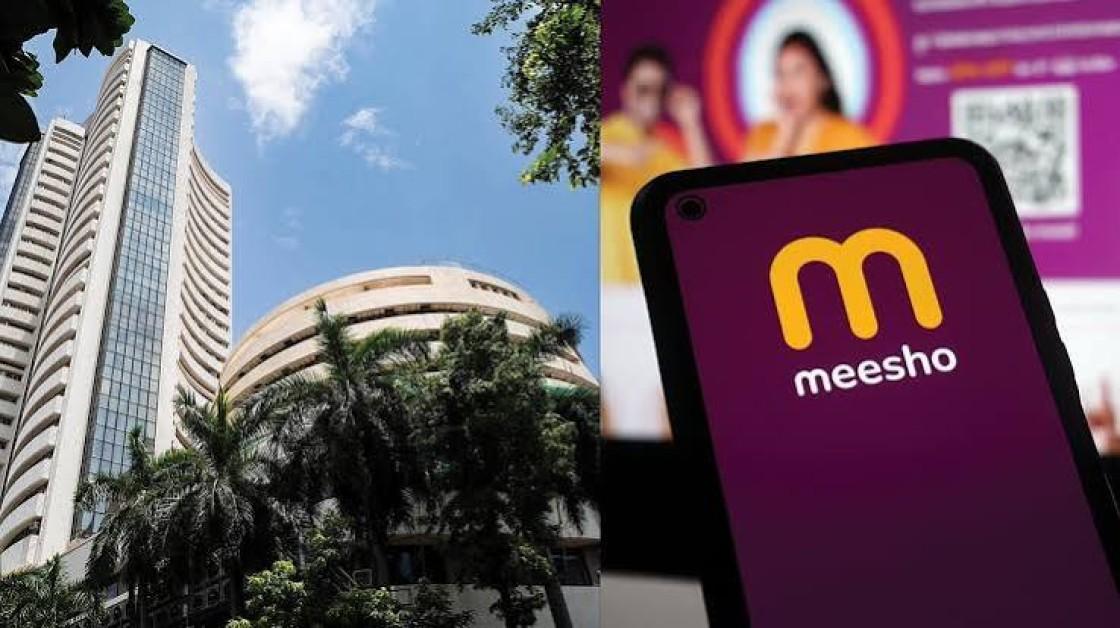
SoftBank Sells ₹1,650 Crore of Meesho Shares Through Bulk Deals, Booking About 3x Return
Japanese technology investor SoftBank has sold Meesho shares worth approximately ₹1,650 crore, marking its first monetisation of its investment in the Indian ecommerce company nearly five years after initially backing the business.
SoftBank's investment vehicle SVF II Meerkat (DE) LLC sold:
8 crore Meesho shares
at:
₹206.30 per share
through two bulk deals on the National Stock Exchange.
The transaction generated proceeds of approximately:
₹1,650.4 crore
and represented around:
1.7% of Meesho's equity.
The sale gives SoftBank an estimated return of around three times its original investment cost on the shares sold, while allowing the Japanese investor to retain a substantial position in the ecommerce company.
The transaction is another example of large global venture investors using India's public markets to progressively monetise investments after portfolio companies complete their IPOs.
SoftBank Sells 8 Crore Meesho Shares

Exchange data showed that SoftBank sold a total of:
80 million shares
through two bulk transactions.
The shares were sold at:
₹206.30 apiece.
That translates into total transaction proceeds of approximately:
₹1,650.4 crore.
The shares represented about:
1.73% of Meesho's paid-up equity capital.
The transaction was executed through SVF II Meerkat, an investment entity associated with the SoftBank Vision Fund.
The final transaction was larger than the share sale initially expected by the market.
Earlier reports indicated that SoftBank was considering selling around 7 crore shares representing roughly 1.5% of Meesho.
The eventual transaction increased that figure to 8 crore shares.
SoftBank Books Around Three Times Return
The sale represents a significant monetisation event for SoftBank.
The Japanese investor first backed Meesho in:
2021.
SoftBank subsequently participated in additional funding as the ecommerce platform expanded.
Based on its acquisition cost, SoftBank is estimated to have generated approximately:
three times its investment
on the shares sold in the latest transaction.
The return illustrates how public-market liquidity can provide venture investors with an exit route after years of holding shares in privately funded technology companies.
Instead of selling its entire position at once, SoftBank has chosen to monetise only part of its Meesho investment.
SoftBank Held 8.6% of Meesho Before Sale
Before the transaction, SoftBank remained one of Meesho's significant shareholders.
SVF II Meerkat held approximately:
39.63 crore shares
as of the June 2026 quarter.
That represented around:
8.6% of Meesho's equity.
After selling 8 crore shares, SoftBank continues to hold approximately:
31.63 crore shares,
before accounting for any other subsequent transactions.
On a simple share-count basis, that would leave the investor with roughly:
6.9% of Meesho.
The transaction should therefore be viewed as a partial monetisation rather than a complete exit.
SoftBank continues to have substantial economic exposure to Meesho's future performance.
Global Investors Buy SoftBank's Meesho Shares
The bulk deal attracted a broad group of institutional investors.
Buyers included several prominent global investment institutions, including:
Morgan Stanley,
Fidelity Investments,
Goldman Sachs,
Manulife Investment Management,
Norges Bank on behalf of Norway's Government Pension Fund Global,
Kuwait Investment Authority,
BofA Securities,
Societe Generale,
and other institutional investors.
The presence of multiple global investors indicates substantial institutional demand for the shares being offered by SoftBank.
Large secondary transactions require sufficient buyers to absorb substantial volumes without creating excessive disruption in the open market.
In this case, approximately ₹1,650 crore of Meesho equity changed hands.
Domestic Institutions Also Participate
Indian institutional investors also acquired shares in the transaction.
Buyers included institutions such as:
Franklin Templeton Mutual Fund,
HDFC Standard Life Insurance,
HSBC Mutual Fund,
Bajaj Allianz Life Insurance,
Canara Robeco Mutual Fund,
Bajaj Life Insurance,
and Motilal Oswal Asset Management.
The combination of domestic and international buyers helped absorb SoftBank's large share sale.
Institutional participation is particularly important for newly listed technology companies because it can broaden the shareholder base as early venture investors gradually reduce their positions.
Shares Sold at ₹206.30 Apiece
The transaction price of:
₹206.30 per share
represented a modest discount to Meesho's previous market price.
Meesho had closed at approximately:
₹211.60
on September 2.
The bulk-deal price therefore represented a discount of roughly:
2.5%.
Discounts are common in large secondary transactions because institutional buyers are being asked to absorb substantial quantities of shares at once.
The discount can provide an incentive for investors to participate while giving the seller certainty over executing a large transaction.
Meesho Shares End Marginally Lower
Meesho shares experienced some pressure during the session as the market absorbed the large transaction.
The stock ultimately closed at approximately:
₹209.74 on the NSE
on September 3.
That represented a decline of around:
0.9%.
The relatively contained closing movement was notable given that 8 crore shares changed hands through the SoftBank transaction.
Large block or bulk sales by major shareholders can sometimes create significant pressure on a company's stock because investors may interpret the transaction as an indication that early shareholders are seeking liquidity.
However, strong institutional demand can help absorb the additional supply.
SoftBank's First Meesho Monetisation Comes Nearly Five Years After Investment
SoftBank's transaction is significant because it marks its first major monetisation from Meesho.
The investor entered the company during the period when Indian consumer internet businesses were attracting substantial global venture capital.
Meesho became one of the country's most prominent ecommerce startups by focusing heavily on value-conscious consumers and smaller cities.
Like many late-stage technology companies, it raised significant private capital before eventually reaching the public markets.
The latest transaction completes an important part of that investment cycle for SoftBank:
private investment → company growth → public listing → secondary monetisation.
Meesho Listing Creates Exit Route for Early Investors
One of the most important functions of public markets for venture-backed companies is providing liquidity to existing shareholders.
Private startup shares can be difficult to sell because there is no continuous public market.
An IPO changes that.
Once applicable lock-in restrictions expire, eligible shareholders can progressively sell shares through:
open-market transactions,
bulk deals,
block deals,
or other permitted mechanisms.
This creates an exit route for:
venture capital funds,
private equity investors,
early employees,
founders,
and other pre-IPO shareholders.
Meesho's listing has therefore transformed the liquidity available to its early investors.
Post-IPO Lock-In Expiry Increases Secondary Activity
The latest transaction follows the expiry of Meesho's six-month post-listing shareholder lock-in period in June.
The expiry made a substantial quantity of previously restricted equity eligible for trading.
That does not mean shareholders are required to sell.
It simply gives eligible investors the ability to monetise their holdings.
Since the expiry, several early shareholders have taken advantage of public-market liquidity.
The pattern is common among venture-backed companies after listing because investment funds generally have finite life cycles and eventually need to return capital to their own investors.
Y Combinator Also Sold Meesho Shares
SoftBank is not the only early Meesho investor to monetise shares.
Y Combinator recently sold approximately:
4.85 crore Meesho shares
representing roughly:
1.05% of the company.
The transaction was valued at around:
₹970 crore.
Those shares were sold at an average price of approximately:
₹200.01 apiece.
The transaction occurred shortly before SoftBank's much larger sale.
Together, the deals illustrate the increasing secondary-market activity around Meesho following the expiry of applicable lock-in restrictions.
Fidelity Previously Sold Nearly ₹988 Crore Stake
Fidelity Investments had also monetised part of its Meesho investment earlier.
In June, Fidelity sold approximately:
5.98 crore shares
representing around:
1.31% of Meesho.
The transaction was valued at nearly:
₹988 crore.
The sequence of transactions reflects a gradual shift in Meesho's shareholder base.
Early private-market investors are taking liquidity while new public-market institutions acquire exposure.
That transition is an important stage in the evolution of a venture-backed company after an IPO.
Meesho Reports Strong Revenue Growth
The secondary share sales are occurring while Meesho continues to report substantial operating growth.
For the June quarter of FY27, Meesho reported revenue from operations of approximately:
₹3,712.8 crore.
That represented growth of around:
48% year-on-year
from approximately ₹2,503.9 crore in the corresponding period a year earlier.
The growth indicates continued expansion of the company's ecommerce platform.
For institutional investors purchasing shares from early shareholders, the central question is whether that growth can eventually translate into sustainable profitability and cash generation.
Net Loss Narrows to ₹132.8 Crore
Meesho also reported improvement in its bottom line.
The company's consolidated net loss narrowed to approximately:
₹132.8 crore
during the June quarter.
That compared with approximately:
₹289.4 crore
in the same quarter a year earlier.
The reduction represents an improvement of more than 50%.
Sequentially, the loss also improved from approximately:
₹166.3 crore
in the March quarter.
For a recently listed technology company, the trajectory toward profitability can be particularly important because public-market investors generally place greater emphasis on earnings and cash-flow visibility than private venture investors.
Net Merchandise Value Reaches ₹11,614 Crore
Meesho's Net Merchandise Value also continued to expand.
NMV increased approximately:
34% year-on-year
to:
₹11,614 crore
during the June quarter.
The increase was supported by continued growth in users and engagement across the platform.
NMV provides an indication of the value of transactions taking place through the ecommerce ecosystem.
However, it is different from revenue.
Meesho recognises only the revenue generated through its business model rather than the entire value of merchandise sold through the platform.
SoftBank Has Been Monetising Indian Investments
The Meesho transaction also fits within SoftBank's broader history of recycling capital from successful Indian technology investments.
SoftBank has invested billions of dollars across India's startup ecosystem through its Vision Funds and other investment vehicles.
As portfolio companies mature or list publicly, the investor can progressively monetise positions and redeploy capital elsewhere.
This approach is fundamental to venture and growth investing.
Returns are ultimately realised not when a portfolio company's valuation rises on paper, but when the investor successfully sells shares.
The ₹1,650 crore Meesho transaction therefore converts part of SoftBank's unrealised investment gain into actual proceeds.
Partial Sale Preserves Further Upside
SoftBank's decision to sell only part of its holding also gives it strategic flexibility.
A complete exit would eliminate its exposure to Meesho.
A partial sale allows SoftBank to:
recover capital,
realise investment gains,
reduce concentration,
and still participate in potential future appreciation.
This approach is common among large institutional investors.
Rather than attempting to time a single complete exit, they can monetise positions progressively depending on:
market conditions,
share prices,
fund requirements,
and portfolio strategy.
Institutional Buying Broadens Meesho's Shareholder Base
The other side of the transaction is equally important.
Every share sold by SoftBank was purchased by another investor.
The presence of large mutual funds, insurers, sovereign investors and global asset managers means Meesho's ownership is gradually transitioning from concentrated venture holdings toward a broader institutional shareholder base.
This can be an important stage in the development of a publicly traded company.
Public-market institutions generally evaluate businesses using factors including:
revenue growth,
profitability,
cash flows,
competitive positioning,
corporate governance,
and valuation.
The company's performance after listing therefore increasingly determines its ability to attract long-term institutional capital.
Conclusion
SoftBank's sale of 8 crore Meesho shares for approximately ₹1,650.4 crore represents a major liquidity event for one of the ecommerce company's earliest large global investors.
The shares were sold at ₹206.30 apiece, representing approximately 1.73% of Meesho, through bulk transactions on the National Stock Exchange.
For SoftBank, the transaction marks its first major monetisation of the investment nearly five years after entering Meesho and is estimated to have generated a return of around three times its investment cost on the shares sold.
Importantly, SoftBank has not exited Meesho completely. The investor retains a substantial shareholding, preserving exposure to the company's future performance.
The deal also demonstrates the growing maturity of India's startup capital cycle. Early investors that funded companies in private markets can increasingly use domestic stock exchanges to realise returns, while mutual funds, insurers, sovereign funds and other institutions become the next generation of shareholders.
For Meesho, that transition is another step in its evolution from a venture-backed startup into a widely held public-market ecommerce company.
 SoftBank Sells ₹1,650 Crore Meesho Shares, Books About 3x Return FAQs
POST A COMMENT (0)
All Comments (0)
Replies (0)