




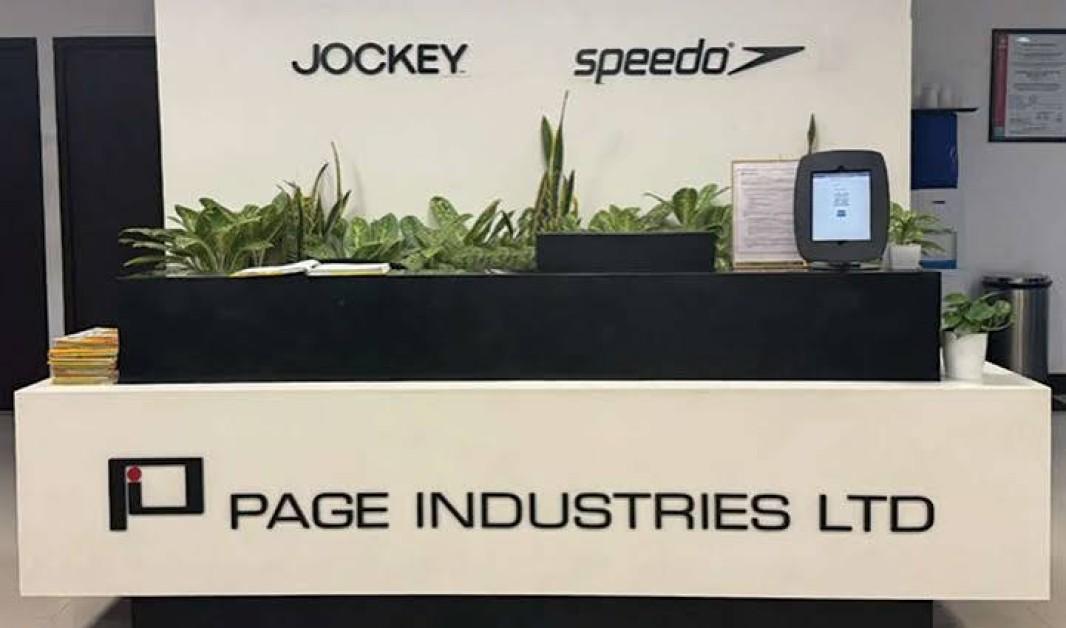
Page Industries Q2 FY27 Results on November 12 Put Innerwear Demand, Jockey Sales and Profit Margins in Focus
Bengaluru, November 12, 2026: Page Industries Limited is scheduled to announce its financial results for the quarter ended September 30, 2026, with investors closely monitoring innerwear demand, Jockey brand sales, retail distribution, operating margins and consumer spending trends.
The Bengaluru-headquartered apparel manufacturer has scheduled a board meeting for Thursday, November 12, to consider and approve its unaudited financial results for the second quarter of FY2026–27.
The board will also consider declaring a second interim dividend for the financial year.
The earnings announcement follows a June quarter in which Page Industries reported revenue of approximately ₹1,420 crore, representing year-on-year growth of 7.8%.
However, net profit declined approximately 4% to ₹193 crore, reflecting the importance of operating costs and profitability in evaluating the company's performance.
Page Industries is the exclusive licensee of the Jockey brand across India and several other markets, and the exclusive licensee of Speedo in India.
Its extensive retail network provides exposure to India's premium innerwear, athleisure and swimwear markets.
Investors will assess whether the company sustained sales growth during the September quarter while maintaining margins amid changing raw-material costs and consumer demand.
Page Industries Board Meeting Scheduled for November 12

Page Industries informed the National Stock Exchange and BSE on October 30, 2026, that its board would meet on November 12.
The meeting will consider two principal matters: approval of the unaudited financial results for the quarter ended September 30 and the possible declaration of a second interim dividend for FY27.
If the dividend is approved, the company has fixed November 18, 2026, as the record date.
The company has also scheduled an investor and analyst conference call for November 12 at 4:00 p.m. IST.
Managing Director V S Ganesh, Chief Executive Officer Karthik Yathindra and Chief Financial Officer Deepanjan Bandyopadhyay are among the scheduled management participants.
The conference call will provide an opportunity to discuss financial performance, consumer demand and business strategy.
The official earnings announcement will establish the September-quarter revenue, profit and operating margin figures.
Page Industries Q2 FY27: Key Indicators Investors Will Monitor
| Indicator | Previous Reported Benchmark | Investor Focus |
|---|---|---|
| Revenue from operations | Approximately ₹1,420 crore in Q1 FY27 | Sales growth |
| Net profit | Approximately ₹193 crore in Q1 FY27 | Earnings performance |
| Q2 FY26 revenue | Approximately ₹1,291 crore | Year-on-year comparison |
| Q2 FY26 net profit | Approximately ₹195 crore | Profit growth comparison |
| Operating margin | Approximately 20% in Q1 FY27 | Margin sustainability |
| Multi-brand outlets | 115,208 | Distribution reach |
| Exclusive brand stores | 1,604 | Retail expansion |
| Large-format stores | 930 | Organised retail presence |
| Second interim dividend | Under board consideration | Shareholder distribution |
The figures provide a benchmark for evaluating the September-quarter results rather than confirmed Q2 FY27 performance.
Q1 FY27 Revenue Increased 7.8% to ₹1,420 Crore
Page Industries reported revenue from operations of approximately ₹1,420 crore during the quarter ended June 30, 2026.
This compared with approximately ₹1,317 crore in the corresponding quarter of FY26.
The increase represented growth of 7.8%.
Revenue also increased approximately 13.3% sequentially from the March 2026 quarter.
The performance reflected continued demand for the company's apparel portfolio.
However, revenue growth can be influenced by sales volumes, product prices and the mix of items sold.
For Page Industries, distinguishing volume-led growth from price-led growth is important.
Sustained volume expansion can provide evidence of stronger underlying demand.
The September-quarter results will indicate whether the company maintained its sales momentum.
Net Profit Declined Approximately 4% in June Quarter
Despite higher revenue, Page Industries reported net profit of approximately ₹193 crore during Q1 FY27.
This compared with around ₹201 crore in Q1 FY26.
The decline represented approximately 4%.
The result highlighted the relationship between revenue growth and operating profitability.
Higher sales do not automatically translate into higher net earnings.
Raw-material costs, manufacturing expenses, employee costs, advertising and distribution expenses can influence margins.
The company must also manage expenditure associated with retail expansion and brand development.
Investors will examine whether the September-quarter results show an improvement in earnings conversion.
September 2025 Quarter Provides the Comparison Base
Page Industries reported revenue of approximately ₹1,291 crore during Q2 FY26.
Net profit stood at approximately ₹195 crore.
These figures provide the year-earlier benchmark for the September 2026 quarter.
The company's June-quarter revenue exceeded the September 2025 figure.
However, quarterly sales can be influenced by seasonal purchasing patterns and distribution activity.
Investors will therefore assess both year-on-year and sequential performance.
A stronger September-quarter result would need to be evaluated alongside changes in operating margins and sales volumes.
The company's first-half performance will provide a broader view of its growth trajectory.
Jockey Remains the Core Business Driver
Jockey is the flagship brand of Page Industries.
The company holds exclusive licensing rights to manufacture, distribute and market Jockey products in India and several other markets.
Its product portfolio includes men's innerwear, women's innerwear, leisurewear and athleisure.
The brand operates in the premium segment of the apparel market.
Demand is influenced by consumer purchasing power, product quality, brand preference and retail availability.
For Page Industries, maintaining Jockey's market position is important to revenue growth.
Investors will monitor whether the brand continues attracting customers across established and newer markets.
The company's ability to maintain pricing while expanding volumes will also influence profitability.
Innerwear Demand Reflects Consumer Spending Trends
Innerwear is a recurring consumer purchase category.
Demand is influenced by replacement cycles, household income and product preferences.
However, consumers may change purchasing behaviour when discretionary spending is under pressure.
Premium products can face competition from lower-priced alternatives.
At the same time, established brands may benefit from customer loyalty and perceptions of quality.
Page Industries operates within this competitive environment.
The September-quarter results will provide an indication of demand for its branded innerwear portfolio.
Investors will assess whether revenue growth is supported by higher unit sales.
Premiumisation Supports Product Mix
Premiumisation refers to consumers shifting toward higher-priced or higher-value products.
In apparel, this can involve preferences for fabric quality, comfort, design and brand reputation.
Page Industries operates in a market where branded products compete with both organised and unorganised manufacturers.
Premiumisation can support average selling prices.
However, the financial benefit depends on customers' willingness to pay and the company's ability to maintain volumes.
A shift toward higher-value products may improve revenue per unit.
Investors will monitor whether product mix contributes positively to sales and operating margins.
Women's Innerwear Offers Growth Opportunities
Women's innerwear is an important category within Page Industries' portfolio.
The company offers products designed for different consumer preferences and requirements.
Growth in this segment depends on product availability, fit, design and distribution.
The expansion of organised retail and online shopping can improve access to branded products.
However, competition remains significant.
Consumers have access to domestic and international apparel brands across multiple price categories.
For Page Industries, product development and distribution will influence its competitive position.
Investors will assess whether women's innerwear contributes to sustained business growth.
Athleisure Expands the Company's Addressable Market
Athleisure combines elements of sportswear and casual clothing.
Products may be used for exercise, leisure and everyday activities.
The category has attracted consumer interest as clothing preferences evolve.
Page Industries markets athleisure products under the Jockey brand.
The segment provides opportunities beyond traditional innerwear.
However, athleisure is also highly competitive.
Companies must respond to changing styles, consumer preferences and pricing expectations.
For Page Industries, growth will depend on product relevance and distribution reach.
Investors will monitor whether athleisure contributes to revenue diversification.
Retail Distribution Remains a Competitive Advantage
Page Industries has developed an extensive retail distribution network.
According to the company's November 2026 investor call information, Jockey products are distributed across approximately 2,732 cities and towns.
The brand is available through 115,208 multi-brand outlets.
It also has 1,604 exclusive brand stores and a presence in 930 large-format stores.
These channels provide access to consumers across different markets.
However, distribution scale alone does not guarantee sales growth.
Store productivity, inventory availability and customer demand remain important.
Investors will assess whether the company's distribution network is supporting higher sales volumes.
Exclusive Brand Stores Support Customer Engagement
Exclusive brand stores allow companies to present a wider range of products in a controlled retail environment.
They can support brand visibility and customer experience.
Page Industries operates an extensive network of Jockey exclusive brand stores.
These outlets provide opportunities to introduce new products and reach customers directly.
However, retail expansion involves operating expenses and investment.
Store profitability depends on sales volumes, location and cost management.
Investors will monitor whether the company's exclusive-store network continues expanding.
The productivity of existing outlets will also be important.
Multi-Brand Outlets Provide Wider Market Reach
Multi-brand outlets are an important part of India's apparel distribution system.
These stores sell products from different manufacturers and brands.
For Page Industries, the channel provides access to consumers beyond its exclusive retail network.
The company's presence in more than 115,000 multi-brand outlets supports widespread product availability.
However, the effectiveness of the channel depends on distributor relationships and inventory management.
Retailers must maintain sufficient stock to meet customer demand.
Excessive inventory can also create working-capital pressure.
Investors will assess whether the company's distribution strategy supports efficient sales growth.
Large-Format Retail Supports Organised Apparel Sales
Large-format stores provide another distribution channel for branded apparel.
These outlets often offer products across multiple categories and brands.
Page Industries has a presence in approximately 930 large-format stores.
The channel can support brand discovery and customer acquisition.
However, sales performance depends on store traffic, merchandising and consumer demand.
Large-format retail may also involve different commercial arrangements from exclusive stores.
For Page Industries, maintaining an effective balance across retail channels is important.
Investors will monitor whether organised retail contributes to revenue growth.
E-Commerce Adds Another Sales Channel
Online retail has become an important part of India's apparel market.
Consumers increasingly use digital platforms to compare products and make purchases.
Page Industries sells products through online channels alongside physical stores.
E-commerce can expand geographic reach and provide access to customers who prefer digital shopping.
However, online sales involve logistics, returns and marketing expenses.
Competition can also influence pricing and promotional activity.
For Page Industries, an effective digital strategy can support distribution diversification.
Investors will monitor whether online sales contribute to overall growth without creating excessive margin pressure.
Cotton and Yarn Prices Influence Manufacturing Costs
Cotton is an important raw material used in apparel manufacturing.
Changes in cotton prices can influence the cost of yarn and fabric.
Other materials, including elastic and packaging inputs, also affect production expenses.
Page Industries must manage these costs while maintaining product quality.
Higher input costs may reduce gross margins if they cannot be offset through pricing or efficiency.
However, the financial impact depends on inventory levels and procurement arrangements.
Investors will examine whether raw-material costs affected September-quarter profitability.
The company's ability to manage input-price volatility will remain important.
Operating Margins Remain a Key Earnings Indicator
Page Industries reported an operating margin of approximately 20% during Q1 FY27.
This compared with approximately 22% during Q2 FY26.
The difference highlights the importance of margin performance in the upcoming results.
Operating margins are influenced by manufacturing costs, product mix and operating expenses.
Advertising and distribution investments can also affect profitability.
For Page Industries, maintaining margins while expanding revenue is important.
Investors will examine whether September-quarter operating profit increased in line with sales.
A recovery in margins could support earnings growth.
However, the outcome will depend on actual cost and revenue developments.
Manufacturing Efficiency Supports Profitability
Apparel manufacturing requires coordination across procurement, production and quality control.
Efficient operations can help reduce waste and improve productivity.
Page Industries must manage production capacity while responding to changes in demand.
Manufacturing efficiency is particularly important when raw-material prices fluctuate.
Higher production volumes may improve utilisation of fixed assets.
However, capacity expansion can also increase operating expenses.
For investors, the relationship between sales growth and manufacturing costs will be important.
The September-quarter results will provide an indication of operating efficiency.
Inventory Management Influences Cash Flow
Apparel companies must maintain inventory across different products, sizes and styles.
Insufficient inventory can result in missed sales opportunities.
Excessive inventory can increase storage costs and working-capital requirements.
Page Industries operates across multiple retail channels.
This makes inventory planning important.
The company must coordinate manufacturing and distribution to meet customer demand.
Investors will examine whether working-capital requirements remain manageable.
Strong revenue growth is more valuable when accompanied by healthy cash generation.
Speedo Provides Exposure to Swimwear
Page Industries is also the exclusive licensee of the Speedo brand in India.
Speedo operates in the swimwear and related apparel market.
The brand provides Page Industries with exposure to a category distinct from its core Jockey business.
According to the company's November 2026 investor call information, Speedo products are available through 663 stores and 36 exclusive brand outlets across more than 150 cities.
The brand also has an online presence.
However, the swimwear market has different demand characteristics from innerwear.
Sales can be influenced by sports participation, recreation and seasonal patterns.
Investors will assess the company's overall portfolio performance while recognising that Jockey remains its principal business.
Brand Investment Supports Long-Term Demand
Consumer apparel companies invest in advertising and marketing to maintain brand awareness.
Brand campaigns can support customer engagement and product visibility.
Page Industries operates in a market where consumers have access to numerous apparel brands.
Maintaining brand relevance is therefore important.
However, marketing expenditure affects operating costs.
The financial return depends on whether campaigns contribute to sustained sales and customer loyalty.
Investors will assess whether the company is balancing brand investment with profitability.
Dividend Decision Adds Investor Interest
Page Industries' board will consider declaring a second interim dividend for FY27 at its November 12 meeting.
If approved, the company has fixed November 18 as the record date.
The amount of any dividend will depend on the board's decision.
Page Industries has a history of distributing dividends to shareholders.
However, future distributions are not guaranteed.
Dividend decisions must be evaluated alongside earnings, cash flow and investment requirements.
Investors will monitor the announcement for the approved amount and payment details.
Competition Remains Intense in Branded Apparel
India's innerwear and athleisure markets include established domestic brands, international labels and unorganised manufacturers.
Competition occurs across price, product quality, comfort and distribution.
Page Industries benefits from the established Jockey brand and its extensive retail network.
However, competitors continue introducing new products and expanding distribution.
Consumer preferences can also change over time.
For Page Industries, maintaining product relevance and retail availability will be important.
Investors will monitor whether the company can sustain growth without excessive promotional spending.
Page Industries Shares Remain Sensitive to Earnings
Page Industries is listed on the National Stock Exchange under the symbol PAGEIND and on the BSE under code 532827.
Its share price is influenced by earnings expectations, consumer demand and operating profitability.
The company operates in the premium apparel segment, where investors often focus on brand strength and long-term growth.
However, valuation also depends on revenue, profit and cash generation.
A strong brand does not eliminate business risks.
Changes in raw-material costs or consumer spending can affect financial performance.
Investors will assess the September-quarter results against the company's growth expectations.
Outlook for Page Industries in FY27
Page Industries enters the September-quarter earnings announcement after reporting revenue growth during Q1 FY27.
Its Jockey business remains central to financial performance.
The company's extensive distribution network provides opportunities to reach consumers across India.
Women's innerwear, athleisure and digital retail offer additional areas for growth.
However, operating margins remain an important consideration.
Cotton and yarn costs, manufacturing expenses and brand investment can influence profitability.
The company must also maintain inventory efficiency across its retail network.
The November 12 results will provide updated information about sales growth and earnings performance.
Management commentary during the 4:00 p.m. investor call will help clarify the company's outlook for the remainder of FY27.
Conclusion
Page Industries Limited is scheduled to announce its Q2 FY27 financial results on November 12, with investors focused on innerwear demand, Jockey sales, retail distribution and operating margins.
The company enters the reporting event after recording June-quarter revenue of approximately ₹1,420 crore, representing year-on-year growth of 7.8%.
However, net profit declined approximately 4% to ₹193 crore.
The contrast between revenue growth and earnings performance makes margin sustainability an important issue.
Page Industries' distribution network, which includes more than 115,000 multi-brand outlets and 1,600 exclusive brand stores, provides substantial market reach.
However, continued growth will depend on consumer demand, product availability and cost management.
The board's decision on a second interim dividend will also attract shareholder attention.
For investors, the September-quarter results will provide an important indication of whether Page Industries can sustain sales growth while improving profitability in India's competitive branded apparel market.
 Page Industries Q2 FY27 Results: Jockey Sales, Retail Growth and Margins FAQs

POST A COMMENT (0)
All Comments (0)
Replies (0)