





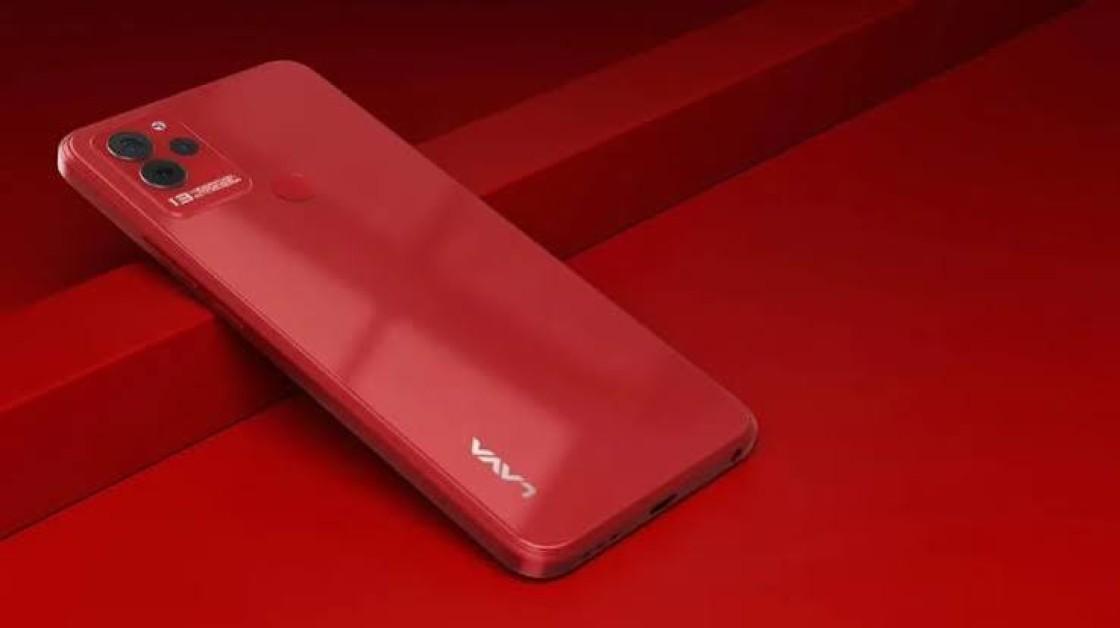
Lava Sets Ambitious 2030 Market Share Target in India's Affordable Smartphone Segment
Indian smartphone manufacturer Lava International is targeting a 10% share of India's smartphone market for devices priced below ₹30,000 by 2030, outlining an expansion strategy focused on strengthening its product portfolio, distribution network and domestic brand positioning.
The target reflects the company's ambition to increase its presence in one of India's most competitive consumer electronics categories, where international smartphone manufacturers account for a substantial share of sales.
Lava is seeking to position itself as a stronger domestic alternative by focusing on product quality, contemporary features, after-sales support and a broader range of smartphones.
The company's strategy centres on the affordable and mid-range segments, where consumers increasingly expect advanced cameras, improved processors, larger batteries and modern software experiences at competitive prices.
Achieving a 10% market share would represent a significant expansion for Lava, which competes with established brands including Samsung, Vivo, Oppo, Xiaomi, Realme and Motorola.
The 2030 objective is a business target rather than a confirmed market-share outcome, and its achievement will depend on consumer demand, product competitiveness and execution.
Key Details of Lava's Smartphone Expansion Strategy
|
Particulars |
Details |
|---|---|
|
Company |
Lava International Limited |
|
Headquarters |
Noida, Uttar Pradesh |
|
Target market share |
10% |
|
Target year |
2030 |
|
Focus segment |
Smartphones priced below ₹30,000 |
|
Core market |
India |
|
Product categories |
Affordable and mid-range smartphones |
|
Key smartphone families |
Agni, Blaze and Yuva |
|
Strategic priorities |
Product development, distribution and customer service |
|
Competitive environment |
Domestic and international smartphone brands |
The target applies specifically to smartphones priced below ₹30,000 and should not be interpreted as a goal to capture 10% of India's entire smartphone market.
The distinction matters because premium devices priced above ₹30,000 represent a separate and increasingly important part of the industry's revenue.
Lava's objective is to build greater scale in a defined price segment where affordability and product value remain important purchasing considerations.
Lava Aims to Increase Market Share From Below 2% to 10%

Lava Managing Director Sunil Raina has outlined the company's ambition to increase its share of India's sub-₹30,000 smartphone segment from below 2% to 10% by 2030.
The company has reported annual smartphone business growth of approximately 40–50% since restarting its smartphone strategy in 2022.
This growth has occurred from a relatively small base, while the wider Indian smartphone market has experienced periods of limited volume growth.
The company estimates that smartphones priced below ₹30,000 account for approximately 70–75% of India's annual smartphone sales.
With the overall market selling around 150 million smartphones annually, the targeted segment represents a substantial commercial opportunity.
Lava's Market Position and Growth Objectives
|
Indicator |
Reported figure |
|---|---|
|
Current smartphone market share |
Below 2% |
|
Target share in sub-₹30,000 segment |
10% |
|
Target year |
2030 |
|
Annual smartphone business growth |
Approximately 40–50% |
|
Share of Indian smartphone market below ₹30,000 |
Approximately 70–75% |
|
Estimated annual Indian smartphone sales |
Around 150 million units |
|
Lava's feature phone market share |
Approximately 29% |
|
Smartphone business relaunch |
2022 |
These figures reflect company statements and market estimates rather than guaranteed future performance.
Achieving the target would require Lava to increase sales substantially while competing against brands with established distribution, marketing and product development capabilities.
Affordable Smartphones Remain Lava's Primary Growth Opportunity
Lava is concentrating on smartphones priced below ₹30,000 because the category represents the majority of India's smartphone shipments.
Consumers in this segment typically evaluate devices based on price, performance, camera capabilities, battery life, display quality and after-sales support.
Demand also varies considerably within the category.
Entry-level smartphones priced below ₹10,000 serve customers seeking essential smartphone functionality.
Devices priced between ₹10,000 and ₹15,000 compete on features such as 5G connectivity, memory and display performance.
Higher-priced devices within the sub-₹30,000 category increasingly incorporate advanced processors, AMOLED displays and improved camera systems.
Lava has indicated that it intends to strengthen its position progressively across these price bands rather than immediately concentrating on premium devices.
This approach could help the company build customer familiarity before competing more aggressively in higher-value categories.
Agni, Blaze and Yuva Series Support Product Expansion
Lava's smartphone strategy includes multiple product families designed to address different consumer requirements.
The Agni series is positioned toward customers seeking more advanced features and higher performance.
The Blaze range focuses on affordable smartphones with contemporary specifications.
The Yuva series serves entry-level consumers and customers transitioning from feature phones to smartphones.
The company has also expanded its portfolio through additional models and product lines targeting different price points.
A broader product range allows Lava to compete across more retail categories.
However, maintaining multiple smartphone models creates operational challenges involving inventory management, software support and product development.
The company's ability to deliver consistent quality across its portfolio will be important in strengthening consumer confidence.
Clean Software and After-Sales Service Form Key Differentiators
Lava has identified product design, software experience and after-sales support as important elements of its competitive strategy.
One of the company's stated priorities is offering smartphones without unnecessary pre-installed third-party applications, commonly referred to as bloatware.
A cleaner software experience can reduce unwanted applications and simplify device usage.
The company also emphasises software updates and customer service as part of its brand positioning.
After-sales support is particularly important in India's affordable smartphone market, where consumers may retain devices for several years.
Repair availability, service turnaround times and access to replacement components can influence purchasing decisions.
Lava has previously introduced doorstep service arrangements for selected smartphone products.
However, the availability and terms of such services can differ between models and locations.
Lava Plans ₹1,100 Crore Investment in Smartphone Components
Beyond product development, Lava is pursuing greater localisation of its manufacturing supply chain.
The company has outlined plans to invest approximately ₹1,100 crore over five years in component manufacturing.
The proposed investment covers areas including display modules, camera modules, printed circuit boards and mobile phone enclosures.
These components represent important parts of the smartphone manufacturing process.
Increasing domestic production could help the company improve supply-chain coordination and reduce dependence on imported assemblies.
Lava has also established charger manufacturing capabilities in Noida, with reported annual production capacity of up to nine million units.
However, local assembly and component manufacturing should not be confused with complete domestic production of every smartphone component.
Advanced processors, memory chips and other semiconductor products remain areas where Indian manufacturers frequently depend on international supply chains.
The financial benefits of localisation will depend on production scale, investment costs and component competitiveness.
Retail Network Provides Foundation for Wider Distribution
Lava has an established presence in India's feature phone market and operates through a large retail distribution network.
The company has reported access to approximately 100,000–110,000 retail outlets across India.
This network provides a potential distribution advantage as Lava expands its smartphone business.
However, not every outlet selling Lava feature phones necessarily carries its complete smartphone portfolio.
The company will need to increase smartphone availability, improve retail visibility and support channel partners to translate its existing network into higher smartphone sales.
Offline distribution remains important in many Indian markets because customers often prefer to examine devices before purchasing.
Retailers can also provide product demonstrations, financing information and assistance with device selection.
At the same time, online platforms remain important channels for smartphone launches and price-sensitive consumers.
Lava's growth strategy will therefore require coordination across offline and digital sales channels.
Company Explores International Expansion Through Agni Series
Lava is also pursuing opportunities outside India.
The company has announced plans to introduce its Agni smartphone series in the United Kingdom.
It already has a presence in neighbouring markets including Nepal, Bangladesh and Sri Lanka.
Management has also indicated interest in expanding into selected African countries.
International expansion could provide additional revenue opportunities and reduce reliance on the domestic market.
However, entering new countries involves requirements relating to product certification, distribution, marketing and customer support.
Lava will also face competition from established international smartphone brands.
The company's ability to adapt products and pricing to local markets will influence its overseas performance.
Indian Smartphone Market Remains Highly Competitive
India is one of the world's largest smartphone markets, with annual shipments of approximately 150 million units.
Competition is concentrated among established international manufacturers.
Brands such as Vivo, Samsung, Oppo, Xiaomi and Realme maintain substantial market positions.
These companies benefit from large product portfolios, established supply chains and significant marketing investments.
For Lava, increasing market share will require attracting customers who may already be familiar with competing brands.
The company will also need to respond to changing consumer expectations regarding 5G connectivity, software updates, camera quality and device performance.
Price competition remains intense, particularly in entry-level and mid-range categories.
These conditions make the 10% target ambitious, although Lava's existing distribution network and manufacturing investments provide resources for pursuing expansion.
Domestic Manufacturing Policy Could Support Indian Smartphone Brands
India has expanded its electronics manufacturing capabilities through government initiatives and private-sector investment.
The Production Linked Incentive framework has encouraged large-scale electronics manufacturing, contributing to increased domestic production and exports.
The government has also proposed additional measures to support Indian-owned smartphone brands, local product development and domestic sourcing.
Such policies could create opportunities for companies seeking to expand beyond contract assembly into product design and component manufacturing.
Lava's investment plans align with this broader emphasis on strengthening domestic electronics capabilities.
However, government incentives do not guarantee commercial success.
Indian smartphone brands must still compete on price, quality, technology and customer experience.
Moving Beyond Budget Smartphones Presents Additional Challenges
Although Lava's primary target remains the sub-₹30,000 market, the company is considering a gradual expansion into higher price categories.
Management has indicated interest in smartphones priced between ₹30,000 and ₹40,000 as its product capabilities develop.
This would represent a move toward more demanding consumer segments.
Customers purchasing higher-priced smartphones often expect advanced cameras, powerful processors, premium materials and longer software support.
Brand perception also becomes increasingly important.
Lava will need to demonstrate that its products can compete consistently with established alternatives.
The company has indicated that it wants to strengthen its position in affordable smartphones before accelerating its expansion into higher price bands.
What Lava Must Achieve to Reach 10% Market Share
Reaching the 2030 objective will require progress across several business areas.
Lava must continue developing competitive smartphones while improving consumer awareness and product availability.
It will also need to maintain reliable after-sales service and strengthen relationships with retailers.
Manufacturing investments could support cost competitiveness, but they will need to generate sufficient commercial returns.
Another important factor will be the company's ability to retain customers and encourage repeat purchases.
Market-share growth may become more difficult as Lava moves beyond its existing customer base and competes directly with larger manufacturers.
The target should therefore be assessed through future shipment data, market-share estimates and financial performance rather than management ambition alone.
Conclusion
Lava International's ambition to capture 10% of India's sub-₹30,000 smartphone market by 2030 represents a significant growth objective for the domestic handset manufacturer.
The company is seeking to expand from a market share of below 2% by strengthening its smartphone portfolio, retail distribution, customer service and manufacturing capabilities.
Its reported annual smartphone business growth of 40–50% provides momentum, although that growth comes from a relatively small base.
The planned ₹1,100 crore investment in component manufacturing could also support greater supply-chain localisation.
Lava's strategy reflects the broader opportunity for Indian-owned smartphone brands as domestic electronics manufacturing expands.
However, the company faces intense competition from established international manufacturers.
Its ability to achieve the 2030 target will depend on sustained product innovation, competitive pricing, distribution expansion and long-term consumer trust.
 Lava Targets 10% Share of India's Sub-₹30,000 Smartphone Market by 2030 FAQs
POST A COMMENT (0)
All Comments (0)
Replies (0)