




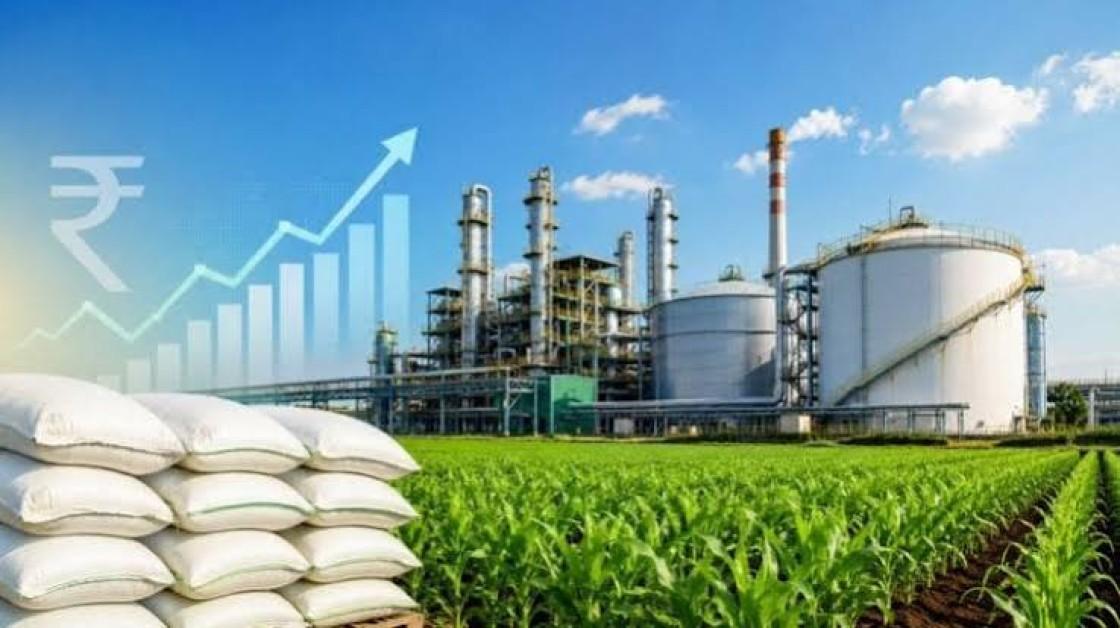
Deepak Fertilisers' November 13 Earnings Review Highlights Industrial Chemicals, Crop Nutrition and Mining Chemicals Performance
Pune, November 13, 2026: Deepak Fertilisers and Petrochemicals Corporation Limited (DFPCL) is scheduled to announce its financial results for the second quarter of fiscal year 2026–27 on Friday, November 13, bringing industrial chemicals, crop nutrition, mining chemicals and operating profitability into focus.
The company's board of directors is scheduled to consider and approve its unaudited standalone and consolidated financial results for the quarter and six months ended September 30, 2026.
The earnings announcement comes as investors assess whether improvements in chemical pricing, mining-sector demand and supply-chain conditions are supporting profitability across the company's diversified operations.
Deepak Fertilisers operates across three major business areas: industrial chemicals, crop nutrition and mining chemicals. Each serves different customer industries and is influenced by distinct pricing, demand and input-cost conditions.
The company has also been investing in manufacturing expansion and backward integration, including projects at Dahej in Gujarat and Gopalpur in Odisha.
These investments are intended to strengthen raw material security, manufacturing capacity and long-term competitiveness.
However, their financial contribution depends on commissioning schedules, production ramp-up and market demand.
The September-quarter results will provide an important indication of whether the company's operating performance is improving alongside its investment programme.
Deepak Fertilisers Confirms November 13 Board Meeting

Deepak Fertilisers informed stock exchanges on November 5, 2026, that its board would meet on November 13 to consider the September-quarter financial statements.
The meeting covers both standalone and consolidated results for the quarter and half year ended September 30, 2026.
The company also issued an investor and analyst conference call announcement on November 6.
An earnings presentation is scheduled for November 16, providing investors with an opportunity to assess management's discussion of business performance and strategic developments.
The November 13 board meeting establishes the financial reporting schedule.
The actual September-quarter revenue, profit and operating margins will be determined by the approved financial statements.
Deepak Fertilisers Q2 FY27 Results: Key Details
| Indicator | Details |
|---|---|
| Company | Deepak Fertilisers and Petrochemicals Corporation Limited |
| Headquarters | Pune, Maharashtra |
| Reporting period | July–September 2026 |
| Financial year | FY2026–27 |
| Board meeting | November 13, 2026 |
| Results under consideration | Unaudited standalone and consolidated financial results |
| Earnings presentation | November 16, 2026 |
| NSE symbol | DEEPAKFERT |
| BSE code | 500645 |
| Principal businesses | Industrial Chemicals, Crop Nutrition and Mining Chemicals |
| Major investor focus | Segment profitability, demand, raw material costs, capacity expansion and debt |
Industrial Chemicals Business Remains Central to Earnings
Deepak Fertilisers manufactures industrial chemicals used across several sectors, including pharmaceuticals, specialty chemicals and manufacturing.
Its portfolio includes nitric acid, isopropyl alcohol and related chemical products.
Demand for these chemicals depends on industrial production, downstream manufacturing and customer procurement activity.
Profitability is influenced by product realisations, raw material prices and manufacturing efficiency.
During FY26, the industrial chemicals business experienced pressure from weaker isopropyl alcohol pricing and nitric acid spreads.
The company also faced supply constraints involving refinery-grade propylene, an important feedstock for isopropyl alcohol production.
Investors will examine whether these conditions improved during the September quarter.
A recovery in selling prices or lower input costs could support profitability, although the actual impact will depend on production volumes and product mix.
Nitric Acid Demand Provides an Important Growth Indicator
Nitric acid is an important industrial chemical used in several downstream applications.
Deepak Fertilisers supplies nitric acid products to customers across manufacturing industries.
The company's nitric acid portfolio includes products used in chemical processing and specialised industrial applications.
Demand is influenced by the activity levels of downstream customers.
During the March 2026 quarter, the company reported year-on-year growth in building-block nitric acid volumes despite pricing pressure.
Management subsequently indicated that limited import availability could support domestic pricing.
The September-quarter results will show whether improved market conditions translated into stronger realisations.
Investors will also assess whether higher demand supported manufacturing utilisation.
Isopropyl Alcohol Prices and Feedstock Supply Under Scrutiny
Isopropyl alcohol, commonly known as IPA, is used in pharmaceutical manufacturing, cleaning products and other industrial applications.
Deepak Fertilisers is an important participant in India's IPA market.
The business is influenced by domestic demand, imported product prices and feedstock availability.
Refinery-grade propylene is a key input in IPA manufacturing.
Supply disruptions can affect production even when customer demand remains healthy.
During FY26, the company identified propylene availability as a constraint on IPA sales.
Management also indicated that domestic IPA pricing was showing signs of recovery.
Investors will assess whether the September quarter brought improvements in feedstock supply and product realisations.
The relationship between selling prices and input costs will remain important to profitability.
Specialty Chemicals Support Portfolio Diversification
Deepak Fertilisers has been expanding its portfolio of differentiated chemical products.
Specialty chemicals generally involve products developed for particular industrial applications or customer requirements.
These products may offer opportunities for stronger customer relationships and differentiated pricing.
However, commercial success depends on product performance, regulatory requirements and customer acceptance.
The company has been developing applications for specialty nitric acid and other chemical products.
It has also reported progress in selected industrial and healthcare-related markets.
Investors will examine whether specialty products are contributing a larger share of revenue.
A greater contribution from differentiated products could help reduce dependence on more volatile commodity chemical pricing.
Mining Chemicals Business Benefits From Industrial Activity
Deepak Fertilisers is a major supplier of technical ammonium nitrate used in mining and blasting applications.
Technical ammonium nitrate is an important input for explosives used in mining and infrastructure projects.
Demand is influenced by coal production, mineral extraction, quarrying and construction activity.
The company's mining chemicals operations are therefore connected to broader industrial and infrastructure investment.
During the March 2026 quarter, Deepak Fertilisers reported a recovery in technical ammonium nitrate sales volumes.
The improvement reflected stronger customer engagement and growth in its direct-to-customer business model.
Investors will examine whether mining chemicals demand remained healthy during July–September.
They will also assess pricing and operating margins.
Technical Ammonium Nitrate Volumes Remain a Key Indicator
Technical ammonium nitrate is one of Deepak Fertilisers' important products.
Its demand depends on the volume of mining and blasting activity.
During the March 2026 quarter, the company reported a 27% sequential increase in overall technical ammonium nitrate sales volumes.
Volumes were also 12% higher year-on-year.
For the full financial year, sales volumes increased approximately 11%.
These figures demonstrated a recovery in demand during the final quarter of FY26.
However, volume growth does not automatically translate into higher profitability.
Product prices, raw material costs and customer mix also matter.
The September-quarter results will provide an update on whether the recovery continued.
Direct-to-Customer Mining Strategy Gains Importance
Deepak Fertilisers has been strengthening its direct-to-customer approach in mining chemicals.
The strategy involves working more closely with mining operators to provide products and application-related solutions.
Rather than focusing exclusively on chemical supply, the company aims to support customers in improving mining productivity.
This approach may create opportunities for longer-term commercial relationships.
However, it also requires technical expertise and operational support.
During the March 2026 quarter, the company's business-to-customer mining segment reported 21% year-on-year volume growth.
Investors will assess whether the strategy continues supporting demand and pricing.
The commercial value will depend on customer retention, contract profitability and execution.
Mining Activity Supports Long-Term Chemical Demand
India's mining industry supplies raw materials to sectors including power generation, steel, cement and infrastructure.
Coal production remains important to the country's electricity system.
Mineral extraction also supports manufacturing and construction.
Mining operations require blasting materials and specialised chemical products.
Deepak Fertilisers participates in this supply chain through its technical ammonium nitrate business.
However, demand can fluctuate with mining schedules, weather conditions and regulatory approvals.
The September quarter overlaps with the monsoon season, which can affect some mining activities.
Investors will therefore assess mining chemicals performance against seasonal conditions.
Chardham Chemicals Acquisition Expands Mining Solutions Portfolio
Deepak Mining Solutions Limited, a subsidiary within the Deepak Fertilisers group, completed the acquisition of Chardham Chemicals Private Limited during FY26.
The acquisition was intended to expand the group's explosives-related product portfolio.
It also supports the company's strategy of offering broader mining solutions.
The expanded portfolio may help the business address customer requirements beyond technical ammonium nitrate supply.
Management has indicated that the acquisition could support its mining productivity and total-cost-of-ownership approach.
However, the financial contribution will depend on integration, customer demand and operating performance.
Investors will monitor whether the acquisition is supporting revenue growth and margin improvement.
International Mining Markets Provide Additional Opportunities
Deepak Fertilisers has been expanding its mining-related services and market exposure.
The company has identified opportunities to supply differentiated products to international customers.
Australia is an important mining market, with substantial activity across coal and mineral extraction.
Deepak Mining Solutions has exposure to this market through its mining services operations.
However, international expansion involves additional operational and regulatory requirements.
The business must also manage logistics and customer relationships.
Investors will examine whether international mining activities are contributing to growth.
Crop Nutrition Business Faces Input-Cost Pressure
Deepak Fertilisers operates a crop nutrition business serving India's agricultural sector.
Its products include fertilisers and differentiated crop nutrition solutions.
Demand depends on agricultural activity, rainfall, crop patterns and farmer purchasing power.
The business is also influenced by government fertiliser policies and raw material prices.
During FY26, the crop nutrition segment experienced pressure from rising input costs.
Management indicated that subsidy support had not fully offset the increase in certain raw material expenses.
This created challenges for profitability.
Investors will assess whether the September-quarter results show an improvement in margins.
The performance will also depend on seasonal fertiliser demand.
Fertiliser Subsidy Policy Influences Profitability
India's fertiliser sector operates within a regulatory and subsidy framework.
Government support influences the economics of several fertiliser products.
For manufacturers, profitability can depend on the relationship between input costs, selling prices and subsidy arrangements.
A sharp increase in raw material prices may create margin pressure if selling prices cannot be adjusted sufficiently.
Deepak Fertilisers previously identified this challenge in its crop nutrition business.
The company has also highlighted industry requests for adjustments to subsidy support.
Investors will monitor whether policy conditions and raw material prices improved during the September quarter.
However, any financial benefit must be assessed against the company's reported results.
Mahadhan Brand Supports Crop Nutrition Distribution
Deepak Fertilisers markets crop nutrition products through its Mahadhan portfolio.
The business serves farmers through agricultural distribution networks.
Product availability, farmer awareness and distribution reach influence sales.
The company has been expanding its differentiated crop nutrition offerings.
These products are intended to address specific crop and soil requirements.
However, commercial performance depends on farmer adoption and agricultural conditions.
Investors will examine whether the Mahadhan portfolio maintained demand during the September quarter.
Distribution efficiency and product mix will also be important to profitability.
Croptek Products Reflect Premiumisation Strategy
Croptek is an important part of Deepak Fertilisers' differentiated crop nutrition portfolio.
The company has been increasing the contribution of specialty and value-added fertiliser products.
During the March 2026 quarter, Croptek sales reached approximately 65,000 tonnes.
This represented year-on-year growth of approximately 13%.
Specialty and Croptek products accounted for approximately 33% of fertiliser revenue, compared with 30% in the preceding quarter.
The figures indicated progress toward a more differentiated product mix.
However, premium products must deliver sufficient value to farmers to support sustained demand.
Investors will assess whether the portfolio shift improved September-quarter profitability.
Monsoon Conditions Influence Fertiliser Demand
The July–September quarter overlaps with India's kharif agricultural season.
Fertiliser demand during this period depends on rainfall, crop planting and soil conditions.
Regional weather patterns can influence the timing and quantity of fertiliser purchases.
Deepak Fertilisers serves agricultural markets with different crop requirements.
The company has indicated that it is focusing on priority markets and irrigated regions to manage demand uncertainty.
However, actual sales depend on local agricultural conditions.
Investors will examine whether monsoon-related developments affected crop nutrition volumes.
Management commentary on regional demand may provide additional insight.
Raw Material Costs Remain Important Across Businesses
Deepak Fertilisers operates in industries that depend on chemical feedstocks and energy.
Natural gas, ammonia, propylene and other inputs influence production economics.
Changes in international prices can affect manufacturing costs.
The impact varies across industrial chemicals, crop nutrition and mining chemicals.
Some products may allow faster selling-price adjustments than others.
This creates differences in margin sensitivity.
Investors will examine whether the company experienced improvements in input-cost conditions during the September quarter.
The effect of raw material prices will be particularly important to operating profitability.
Long-Term LNG Supply Agreement Supports Integration
Deepak Fertilisers has entered into a long-term liquefied natural gas supply arrangement with Norwegian energy company Equinor.
The agreement is intended to support raw material availability and cost management.
Natural gas is an important feedstock in ammonia production.
Ammonia is used in several downstream chemical and fertiliser applications.
The company has indicated that the supply arrangement supports its broader integration strategy.
However, the financial impact depends on contract terms, market prices and operational utilisation.
Investors will assess whether the agreement is improving supply reliability and manufacturing economics.
The September-quarter results may provide further evidence of its contribution.
In-House Ammonia Production Adds Strategic Advantages
Deepak Fertilisers has invested in backward integration through ammonia production.
Backward integration allows a manufacturer to produce important inputs internally rather than relying entirely on external suppliers.
This can improve supply security.
It may also reduce exposure to fluctuations in imported material availability.
However, ammonia manufacturing is capital-intensive and energy-sensitive.
The economics depend on natural gas prices, plant utilisation and operational efficiency.
The company has indicated that its integrated manufacturing structure is intended to improve competitiveness.
Investors will assess whether these investments are supporting margins.
Dahej Expansion Remains an Important Project
Deepak Fertilisers has been developing additional manufacturing capacity at Dahej in Gujarat.
The project forms part of the company's broader investment programme.
Expansion in chemical manufacturing can support higher production volumes and improved integration.
However, new facilities require commissioning, testing and operational stabilisation.
The timing of commercial production can affect financial performance.
During FY26, management indicated that the commissioning schedule for major expansion projects had been aligned to the second quarter of FY27.
Investors will therefore monitor whether the Dahej project has progressed according to the revised schedule.
Any update on production readiness could influence expectations for future revenue and profitability.
Gopalpur Project Could Strengthen Mining Chemicals Capacity
The company has also been investing in manufacturing capacity at Gopalpur in Odisha.
The project is connected to its long-term industrial and mining chemicals strategy.
Additional capacity can support customer demand and strengthen the company's market position.
However, successful commissioning is only the first stage.
The facility must subsequently increase production and achieve efficient utilisation.
Investors will assess whether management provides an update on the project's commissioning and operational readiness.
The financial contribution will depend on customer orders, selling prices and manufacturing costs.
Capital Expenditure Creates Financial Commitments
Deepak Fertilisers has undertaken substantial capital expenditure to expand manufacturing capacity and improve integration.
During FY26, the company reported capital expenditure of approximately ₹1,569 crore.
The investment programme contributed to higher borrowing requirements.
At the end of FY26, net debt stood at approximately ₹4,824 crore.
The company's net debt-to-EBITDA ratio was approximately 2.86 times.
These figures highlight the financial commitments associated with expansion.
Investors will assess whether operating cash flow is improving as new facilities approach completion.
The balance between growth investment and debt management will remain important.
Debt and Interest Costs Under Investor Scrutiny
Capital-intensive manufacturing expansion can increase borrowing and financing costs.
Higher debt may support investment in future production capacity.
However, interest expenses can reduce net profitability.
Deepak Fertilisers must generate sufficient operating earnings and cash flow to support its investment programme.
Investors will examine changes in net debt, finance costs and cash generation.
They will also assess whether the company is progressing toward a stronger balance-sheet position.
New manufacturing facilities may improve earnings over time.
However, the timing and scale of benefits depend on commissioning and utilisation.
Operating Margins Will Determine Earnings Quality
Deepak Fertilisers' consolidated profitability depends on the performance of its three major businesses.
Industrial chemicals margins are influenced by product prices and feedstock costs.
Crop nutrition profitability depends on fertiliser pricing, subsidies and agricultural demand.
Mining chemicals margins reflect technical ammonium nitrate pricing, customer mix and operating efficiency.
The company must manage these different market conditions simultaneously.
Investors will assess whether September-quarter EBITDA margins improved.
They will also examine whether higher revenue, if reported, translated into stronger operating earnings.
The quality of margin improvement will be important to the market's assessment.
Specialty Products Could Reduce Commodity Exposure
Deepak Fertilisers has been shifting toward differentiated products and customer-focused solutions.
This strategy aims to reduce reliance on commodity chemical pricing.
Specialty products may offer opportunities for better margins and stronger customer relationships.
However, developing these markets requires technical capabilities and commercial investment.
The company has been expanding specialty offerings across industrial chemicals and crop nutrition.
It has also been strengthening customer-focused solutions in mining chemicals.
Investors will assess whether these initiatives are improving the overall business mix.
A more diversified earnings base could reduce volatility over time.
What Investors Will Watch in Q2 FY27 Results
The November 13 announcement will be evaluated across several financial and operational measures.
Consolidated revenue will provide an overview of business activity.
Segment performance will show which divisions are supporting growth.
Industrial chemicals pricing and feedstock availability will remain important.
Crop nutrition margins will indicate whether input-cost and subsidy pressures have eased.
Mining chemicals volumes will provide insight into industrial demand.
Investors will also monitor the commissioning of Dahej and Gopalpur projects.
Debt, cash flow and capital expenditure will remain important financial indicators.
Deepak Fertilisers Shares May React to Earnings
Deepak Fertilisers shares trade on the National Stock Exchange and Bombay Stock Exchange.
Quarterly earnings announcements can influence investor sentiment when reported performance differs from expectations.
Improved margins or stronger mining chemicals demand could support confidence in the company's outlook.
However, continued crop nutrition pressure or delays in manufacturing projects may create concerns.
The market response will also depend on valuations and broader chemical sector conditions.
Investors will assess whether the company is translating its investment programme into sustainable operating improvements.
Management commentary on debt and commissioning schedules may also influence expectations.
Outlook for Deepak Fertilisers in FY27
Deepak Fertilisers enters the second half of FY27 with opportunities and challenges across its businesses.
Industrial chemicals could benefit from improved product pricing and feedstock availability.
Mining chemicals demand remains linked to mining and infrastructure activity.
Crop nutrition performance will depend on agricultural conditions and fertiliser economics.
The company's major manufacturing expansion projects could strengthen future capacity.
However, the financial contribution will depend on timely commissioning and operational efficiency.
Debt management and cash generation will remain important.
The September-quarter results will provide an update on whether the company is progressing toward stronger operating performance.
Conclusion
Deepak Fertilisers' November 13 earnings announcement will provide an important assessment of industrial chemicals, crop nutrition and mining chemicals performance.
The company has been managing volatile input costs, changing chemical prices and significant manufacturing investments.
Industrial chemicals profitability remains sensitive to nitric acid and isopropyl alcohol market conditions.
Crop nutrition continues to face challenges associated with raw material costs, subsidies and agricultural demand.
Mining chemicals provides exposure to India's mining and infrastructure sectors, with technical ammonium nitrate volumes serving as an important operating indicator.
Meanwhile, investments at Dahej and Gopalpur are intended to strengthen manufacturing capacity and long-term competitiveness.
Investors will examine whether these initiatives are beginning to support improved margins and cash generation.
The September-quarter results and subsequent earnings presentation will help determine whether Deepak Fertilisers is moving toward a stronger financial position while pursuing its expansion strategy.
 Deepak Fertilisers Q2 FY27 Results: Chemicals and Margins in Focus FAQs

POST A COMMENT (0)
All Comments (0)
Replies (0)