





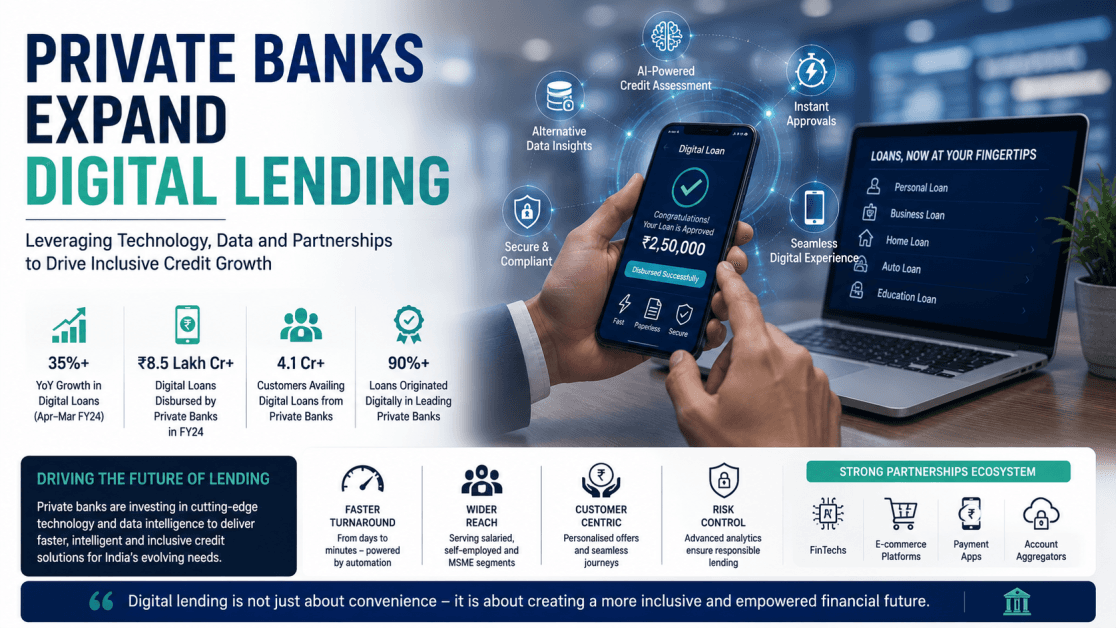
Private Banks Expand Digital Lending as Technology Accelerates Loan Growth and Customer Access
Private sector banks are rapidly expanding their digital lending capabilities as growing customer demand, advances in financial technology, and increasing smartphone adoption reshape the lending landscape. By leveraging artificial intelligence (AI), automation, data analytics, and digital platforms, banks are making loan applications faster, improving customer experiences, and expanding access to credit across retail and business segments.
Digital lending has become a key growth strategy for private banks as they compete to deliver faster approvals, personalized financial products, and seamless online banking services.
Digital Lending Gains Momentum
Private banks are strengthening their digital lending ecosystems across various loan categories, including:
-
Personal loans
-
Home loans
-
Vehicle loans
-
Business loans
-
MSME financing
-
Education loans
-
Credit card financing
-
Working capital loans
-
Consumer durable loans
-
Digital credit lines
Online loan journeys have significantly reduced paperwork, enabling customers to complete applications, verification, and approvals through digital channels.
Key Growth Drivers
Artificial Intelligence in Credit Assessment
Banks are increasingly using AI to evaluate borrower profiles, assess creditworthiness, identify fraud risks, and automate loan underwriting. AI-powered decision-making helps improve efficiency while reducing processing time.
Digital Customer Onboarding
Electronic Know Your Customer (e-KYC), digital identity verification, biometric authentication, and paperless documentation have simplified customer onboarding and accelerated loan disbursement.
Data Analytics and Personalisation
Advanced analytics allow banks to better understand customer behavior and offer personalized loan products, competitive interest rates, and targeted financial solutions.
Mobile Banking Adoption
The rapid growth of mobile banking applications has enabled customers to apply for loans, upload documents, track applications, and manage repayments from their smartphones.
Fintech Collaboration
Private banks continue to collaborate with fintech companies to expand digital lending capabilities, improve technology infrastructure, and reach underserved customer segments.
Technology Driving Digital Lending
Banks are investing in technologies such as:
-
Artificial intelligence
-
Machine learning
-
Cloud computing
-
Robotic process automation (RPA)
-
Digital identity verification
-
Optical character recognition (OCR)
-
Blockchain-based verification
-
Data analytics
-
Application programming interfaces (APIs)
-
Cybersecurity platforms
These technologies improve operational efficiency while enhancing customer convenience and risk management.
Benefits for Customers
Digital lending provides several advantages, including:
-
Faster loan approvals
-
Paperless applications
-
24/7 accessibility
-
Personalized loan offers
-
Simplified documentation
-
Transparent application tracking
-
Quicker disbursement
-
Improved customer experience
-
Remote access to financial services
-
Secure digital transactions
These improvements have contributed to increasing adoption among retail customers and small businesses.
Investment Trends
Private banks continue investing in:
-
AI-powered lending platforms
-
Digital infrastructure
-
Cloud-based banking systems
-
Cybersecurity
-
Customer experience technologies
-
Digital payment integration
-
Fraud detection systems
-
Financial data analytics
-
Mobile banking innovation
-
Open banking capabilities
Technology investments are expected to remain a strategic priority as digital financial services continue to evolve.
Challenges Facing Digital Lending
Despite rapid growth, several challenges remain.
Cybersecurity Threats
As digital transactions increase, protecting customer information and preventing cyber fraud remain top priorities.
Data Privacy
Banks must comply with evolving data protection regulations while ensuring responsible use of customer information.
Credit Risk Management
Expanding digital lending requires sophisticated risk assessment models to maintain asset quality and minimize defaults.
Regulatory Compliance
Financial institutions must continue meeting regulatory requirements related to digital lending, customer protection, and responsible lending practices.
Technology Integration
Modernizing legacy banking systems while integrating new digital technologies remains a significant operational challenge.
Future Outlook
Digital lending is expected to become an increasingly important driver of growth for private banks.
Key trends likely to shape the sector include:
-
AI-driven credit decisioning
-
Instant digital loan approvals
-
Embedded finance solutions
-
Expansion of MSME digital lending
-
Greater use of alternative credit data
-
Cloud-native banking platforms
-
Hyper-personalized financial products
-
Open banking integration
-
Stronger cybersecurity investments
-
Expansion of financial inclusion through digital channels
Banks that successfully combine advanced technology with responsible lending practices are expected to strengthen their competitive position in India's evolving financial services sector.
Conclusion
Private banks are accelerating digital lending by investing in AI, automation, cloud technologies, and customer-centric digital platforms. These innovations are enabling faster loan approvals, expanding financial access, and improving operational efficiency while supporting continued growth across retail and business lending.
Although cybersecurity, regulatory compliance, and credit risk management remain key challenges, the long-term outlook for digital lending remains positive. As technology adoption continues to rise, digital lending is expected to play a central role in the future of banking and financial services.
 Private Banks Expand Digital Lending Through AI, Automation, and Digital Banking FAQs
POST A COMMENT (0)
All Comments (0)
Replies (0)