




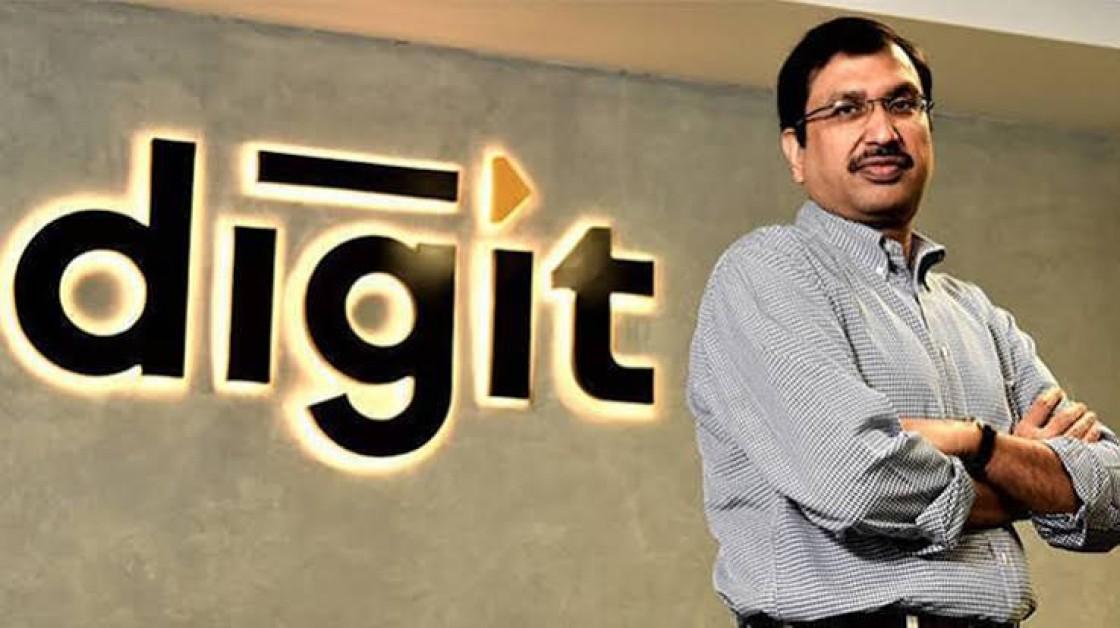
Go Digit General Insurance Announces Q2 FY27 Earnings Schedule
Go Digit General Insurance Limited has scheduled a meeting of its board of directors for November 5, 2026, to consider and approve its unaudited financial results for the quarter and half-year ended September 30, 2026.
The Bengaluru-based general insurance company informed the BSE and National Stock Exchange of the meeting through a regulatory filing dated October 30, 2026.
The board will review the company's financial performance for the second quarter of FY2026–27 and take on record the limited review report accompanying the financial statements.
Go Digit has also scheduled an earnings conference call for November 5 at 5:45 PM IST, providing investors and analysts with an opportunity to assess the company's operating performance and management outlook.
The announcement comes as investors closely monitor premium growth, claims experience, underwriting profitability and expense management across India's general insurance industry.
For Go Digit, the September-quarter results will provide an update on its ability to expand insurance business while maintaining pricing discipline and controlling claims-related costs.
The company's performance will also be assessed against changing competitive conditions in motor, health and other general insurance categories.
Go Digit Q2 FY27 Results: Key Details

|
Particulars |
Details |
|---|---|
|
Company |
Go Digit General Insurance Limited |
|
NSE symbol |
GODIGIT |
|
BSE code |
544179 |
|
Reporting quarter |
Q2 FY27 |
|
Quarter ended |
September 30, 2026 |
|
Board meeting date |
November 5, 2026 |
|
Results under consideration |
Unaudited quarterly and half-yearly financial results |
|
Earnings conference call |
November 5, 2026 |
|
Conference call time |
5:45 PM IST |
|
Trading window closure |
October 1–November 9, 2026 |
|
Regulatory framework |
SEBI Listing Regulations |
|
Insurance regulator |
IRDAI |
The scheduled announcement concerns the company's financial results for the July–September quarter and the first half of FY27.
Board to Review Unaudited Quarterly Financial Results
Go Digit's board meeting will consider the company's unaudited financial results for the quarter and six months ended September 30, 2026.
The board will also take on record the limited review report.
A limited review is conducted by auditors to provide a level of assurance on interim financial information.
It is different from a full annual statutory audit.
Quarterly financial disclosures help investors evaluate a listed company's operating performance, financial position and business developments.
For insurance companies, these results include several specialised indicators that differ from those commonly used to assess manufacturing or technology businesses.
Premium collections, claims expenses, underwriting performance and investment income are among the principal areas of interest.
Earnings Conference Call Scheduled for 5:45 PM IST
Go Digit has scheduled its Q2 and H1 FY27 earnings conference call for November 5, 2026, beginning at 5:45 PM IST.
The scheduled session is expected to run until 7:00 PM IST.
During the discussion, management is expected to address the company's financial results and operating developments.
Investors will be particularly interested in commentary concerning premium growth, claims trends and underwriting performance.
Management's assessment of competitive conditions and future growth opportunities could also influence market expectations.
The conference call follows the board meeting scheduled for the same day.
Gross Written Premium Growth Remains a Key Indicator
Gross Written Premium, commonly referred to as GWP, is one of the most important performance indicators for general insurance companies.
It represents the total premium value of insurance policies written during a reporting period before deductions for reinsurance.
Growth in GWP can indicate expansion in customer demand, policy issuance or average premium values.
However, premium growth alone does not establish that an insurance company is becoming more profitable.
Insurers must also consider the expected cost of claims, distribution expenses and other operating costs.
For Go Digit, investors will assess whether premium growth is accompanied by stable or improving underwriting performance.
The composition of premium growth across business segments will also be important.
Insurance Premium Metrics Investors Will Track
|
Metric |
What It Measures |
Why It Matters |
|---|---|---|
|
Gross Written Premium |
Total premiums written before reinsurance |
Indicates business expansion |
|
Net Written Premium |
Premiums retained after reinsurance |
Measures retained insurance exposure |
|
Net Earned Premium |
Premium revenue recognised over the coverage period |
Supports underwriting analysis |
|
Claims ratio |
Claims incurred relative to earned premium |
Indicates claims pressure |
|
Expense ratio |
Underwriting-related expenses relative to premium |
Measures operating efficiency |
|
Combined ratio |
Claims ratio plus expense ratio |
Assesses underwriting profitability |
|
Investment income |
Returns on invested insurance funds |
Supports overall earnings |
|
Profit after tax |
Final accounting profit |
Measures bottom-line performance |
These indicators should be considered together rather than individually.
Underwriting Performance Will Be Closely Watched
Underwriting profitability is central to the financial performance of general insurance companies.
An insurer generates underwriting income by collecting premiums and accepting specified risks.
It incurs expenses when covered claims arise.
The insurer must also bear distribution, administration and other underwriting-related costs.
If claims and expenses exceed the premiums earned, the underwriting operation may generate a loss.
An insurer can still report an overall profit if investment income and other earnings offset underwriting losses.
For this reason, investors often examine underwriting performance separately from reported net profit.
Go Digit's Q2 FY27 results will provide further information about the relationship between premium growth and insurance-related costs.
Combined Ratio to Indicate Underwriting Efficiency
The combined ratio is a widely used measure of general insurance underwriting performance.
It combines the claims ratio and expense ratio.
A combined ratio below 100% generally indicates an underwriting profit, while a ratio above 100% indicates an underwriting loss, subject to the accounting definitions used.
How the combined ratio works
Below 100%
Generally indicates an underwriting profit
Above 100%
Generally indicates an underwriting loss
Investors will examine whether Go Digit's combined ratio improves, remains stable or deteriorates compared with earlier reporting periods.
The trend can provide information about pricing discipline, claims experience and expense management.
Motor Insurance Performance in Focus
Motor insurance is an important segment of India's general insurance market.
Demand is influenced by vehicle sales, insurance renewals and regulatory requirements.
Motor insurance generally includes third-party liability coverage and own-damage protection.
The profitability of the segment depends on premium pricing, claims frequency, repair costs and the composition of insured vehicles.
Higher vehicle repair expenses can increase claim costs.
Changes in vehicle technology and spare-parts prices may also affect underwriting performance.
For Go Digit, investors will monitor premium growth and claims experience in the motor insurance portfolio.
The company must balance competitive pricing with adequate protection against future claims.
Health Insurance Claims Could Influence Margins
Health insurance represents another important area for general insurers.
Demand is supported by increasing awareness of medical expenses and the need for financial protection.
However, profitability can be affected by hospital costs, claims frequency and policy pricing.
Medical inflation can increase the cost of settling health insurance claims.
Insurers must therefore regularly assess underwriting assumptions and pricing.
Go Digit's quarterly performance will be evaluated partly on the development of its health insurance portfolio.
Investors will assess whether growth in premiums is sufficient to support the associated claims and operating expenses.
Reinsurance Arrangements Affect Retained Risk
Reinsurance is an important component of insurance risk management.
Under reinsurance arrangements, insurers transfer portions of specified risks to other insurance companies.
This can help reduce exposure to large claims or concentrations of risk.
However, reinsurance also involves costs and affects the proportion of premiums retained by the original insurer.
Go Digit's net written premium and net earned premium will provide information about the amount of insurance business retained after reinsurance.
Investors will consider these figures alongside gross premium growth.
Changes in reinsurance arrangements can influence both reported premium metrics and underwriting results.
Investment Income Remains Important to Profitability
General insurers invest funds collected through premiums and maintained as reserves.
Investment income can contribute significantly to overall earnings.
Returns depend on the composition of the investment portfolio, interest rates and financial market conditions.
For an insurer, strong investment income can partly offset weaker underwriting results.
However, investment returns should not be viewed as a substitute for sustainable underwriting discipline.
Go Digit's Q2 FY27 results will provide an opportunity to assess the contribution of investment income to total profitability.
Investors will also examine whether earnings growth is primarily driven by insurance operations or investment-related gains.
Expense Management and Distribution Efficiency
Insurance companies incur expenses related to policy acquisition, distribution, technology, administration and customer servicing.
Distribution expenses may include commissions and other costs associated with acquiring insurance customers.
Technology-led insurers seek to improve efficiency through digital policy issuance, automated processes and streamlined customer interactions.
Go Digit has positioned digital capabilities as an important part of its operating model.
However, technology investments also involve costs.
The financial benefits depend on scale, productivity and the effectiveness of customer acquisition.
Investors will examine whether the company's operating expenses grow more slowly than premium income.
Claims Settlement and Customer Service Remain Important
Claims settlement performance influences customer confidence and the reputation of insurance providers.
Efficient claims processing can improve customer experience and operational effectiveness.
However, insurers must also maintain effective fraud detection and claims verification.
For Go Digit, claims-related indicators will remain relevant to both profitability and customer retention.
The company operates in a competitive market where service quality can influence policy renewals.
Investors will assess whether claims growth is consistent with premium expansion and underwriting assumptions.
Sustained growth requires a balance between customer service, pricing and risk management.
Competitive Conditions in India's General Insurance Industry
India's general insurance market includes public-sector insurers, established private companies and newer technology-focused providers.
Competition extends across motor, health, travel, property and other insurance products.
Companies compete through pricing, distribution, product features and customer service.
Digital platforms have also changed how customers compare and purchase insurance policies.
These developments create opportunities for insurers with efficient technology systems.
However, competition can place pressure on premiums and acquisition costs.
Go Digit's quarterly results will provide insight into how it is navigating these conditions.
Regulatory Oversight by IRDAI
The Insurance Regulatory and Development Authority of India regulates the country's insurance industry.
Insurers must comply with requirements relating to solvency, governance, policyholder protection and financial reporting.
Regulatory changes can influence product structures, distribution practices and capital requirements.
Go Digit operates within this framework.
Investors will monitor any management commentary concerning regulatory developments and their potential financial impact.
Compliance is particularly important for insurers seeking to expand rapidly while maintaining financial stability.
CRISIL Reaffirms Go Digit's AA- Credit Rating
Ahead of the earnings announcement, Go Digit disclosed a credit rating update in October 2026.
CRISIL Ratings reaffirmed the company's AA- rating, with the outlook placed on Rating Watch with Positive Implications.
The development indicates that the rating agency is monitoring circumstances that could potentially result in a favourable rating action.
However, placement on rating watch does not itself constitute a rating upgrade.
Investors will assess future rating developments alongside Go Digit's financial performance and capital position.
Fairfax-Related Corporate Developments Attract Attention
Go Digit also disclosed an October 2026 announcement concerning its promoter, Fairfax Financial Holdings.
The announcement related to Fairfax's participation in the proposed acquisition of a stake in IDBI Bank.
Fairfax indicated plans involving Digit Insurance and IIFL Capital as part of the broader proposal, subject to necessary approvals.
The development represents a separate corporate matter from Go Digit's quarterly earnings.
Its eventual implications will depend on transaction terms, regulatory approvals and further disclosures.
Investors may seek clarification on any potential impact on Go Digit's ownership or business structure.
However, no completed change should be assumed from the announcement alone.
Trading Window Remains Closed Until November 9
Go Digit informed stock exchanges that its trading window for designated insiders and their immediate relatives would remain closed through November 9, 2026.
The closure began on October 1.
Trading-window restrictions are intended to support compliance with insider trading regulations during periods when financial results are being prepared and disclosed.
The restrictions apply to the categories of individuals identified under the company's insider trading code.
They do not represent a suspension of ordinary public trading in Go Digit shares.
The trading window is scheduled to reopen in accordance with the company's disclosure and compliance arrangements.
What Investors Should Monitor in Q2 FY27 Results
|
Area |
Key Question |
|---|---|
|
Gross Written Premium |
Is premium growth accelerating or slowing? |
|
Net Earned Premium |
How much premium revenue is being recognised? |
|
Motor insurance |
Are growth and claims experience improving? |
|
Health insurance |
Are medical claims affecting profitability? |
|
Combined ratio |
Is underwriting efficiency improving? |
|
Claims ratio |
Are claims costs under control? |
|
Expense ratio |
Is distribution becoming more efficient? |
|
Investment income |
How much does it contribute to earnings? |
|
Net profit |
Is bottom-line profitability improving? |
|
Solvency position |
Does the company maintain adequate capital? |
|
Management commentary |
What are the expectations for the second half? |
These indicators will help investors distinguish premium expansion from sustainable earnings growth.
H1 FY27 Results Will Provide a Broader Performance View
In addition to the September quarter, Go Digit will report financial results for the six months ended September 30, 2026.
The half-year figures will provide a broader assessment of business performance.
Insurance earnings can be affected by seasonal claims patterns and changes in business mix.
Consequently, evaluating six-month results alongside quarterly performance may provide a more balanced picture.
Investors will examine trends in premium income, underwriting profitability and investment returns.
The results will also provide information about the company's financial position entering the second half of FY27.
Outlook for Go Digit General Insurance
Go Digit's near-term performance will depend on premium growth, claims experience, operating efficiency and investment income.
India's general insurance market offers opportunities for expansion, supported by demand for financial protection and digital insurance services.
However, rapid premium growth can create financial pressure if pricing does not adequately reflect claims risk.
The company's ability to maintain underwriting discipline will therefore be important.
Investors will also monitor developments in motor and health insurance, where competition and claims costs can influence margins.
The November 5 results and management conference call will provide further information about Go Digit's operating position and business outlook.
Conclusion
Go Digit General Insurance has scheduled its Q2 FY27 earnings announcement for November 5, 2026, following a regulatory filing confirming that its board will consider the unaudited financial results for the quarter and half-year ended September 30.
The company has also scheduled an earnings conference call at 5:45 PM IST on the same day.
Investors will focus on gross written premium growth, underwriting performance, claims ratios, operating expenses and net profitability.
Motor and health insurance performance will remain particularly important in assessing the company's business momentum.
The combined ratio will provide insight into whether premium growth is translating into stronger underwriting economics.
Investment income, solvency and management commentary will also influence the assessment of the results.
The earnings announcement comes amid competitive conditions in India's general insurance industry and recent corporate developments involving the company's promoter.
For investors, the central question is whether Go Digit can expand its insurance portfolio while maintaining sustainable underwriting profitability and disciplined risk management.
 Go Digit Q2 FY27 Results on November 5: Premium Growth in Focus FAQs

POST A COMMENT (0)
All Comments (0)
Replies (0)