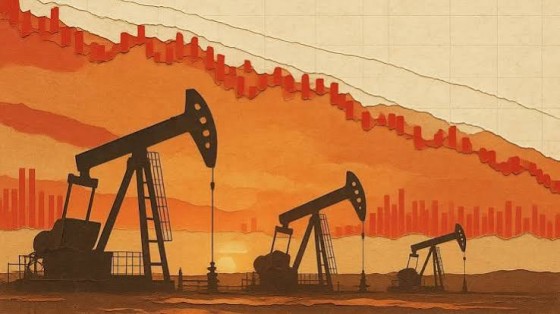
Falling Crude Oil Prices Improve India's Inflation and Currency Outlook
Declining global crude oil prices are strengthening India's macroeconomic outlook by easing inflationary pressures, improving the current account position and supporting the Indian rupee. As one of the world's largest crude oil importers, India benefits significantly from lower energy prices, which help reduce the country's import bill, lower transportation and production costs, and improve overall economic stability.
The improvement in oil prices comes at a time when investors are closely monitoring the Reserve Bank of India's (RBI) monetary policy, inflation trends and global economic developments. Lower energy costs provide policymakers with greater flexibility while supporting business confidence and consumer purchasing power.
Lower Oil Prices Ease Inflationary Pressures

Crude oil remains a major input across multiple sectors of the economy.
Lower prices can contribute to:
-
Reduced fuel costs
-
Lower transportation expenses
-
Softer manufacturing input costs
-
Reduced logistics costs
-
Improved corporate margins
-
Stable consumer prices
-
Lower imported inflation
-
Better household purchasing power
These developments help improve the overall inflation outlook.
Current Account Outlook Improves
Lower crude prices reduce India's overall import expenditure.
Key benefits include:
-
Smaller oil import bill
-
Improved trade balance
-
Reduced current account deficit
-
Lower demand for foreign currency
-
Stronger external position
-
Better foreign exchange management
-
Improved macroeconomic stability
-
Greater investor confidence
A healthier external balance supports long-term economic resilience.
Indian Rupee Gains Support
A lower import bill can provide a favourable backdrop for the domestic currency.
Key drivers include:
-
Reduced dollar demand for oil imports
-
Strong foreign exchange reserves
-
Foreign capital inflows
-
Improved investor sentiment
-
Stable monetary policy
-
Better external balances
-
Healthy financial markets
-
Positive macroeconomic outlook
These factors collectively support currency stability.
RBI Receives Greater Policy Flexibility
Lower inflationary pressure provides the central bank with additional policy flexibility.
Key areas influenced include:
-
Inflation management
-
Liquidity conditions
-
Interest-rate outlook
-
Financial stability
-
Credit growth
-
Currency management
-
Monetary policy transmission
-
Market confidence
The RBI continues balancing price stability with sustainable economic growth.
Businesses Benefit From Lower Energy Costs
Multiple industries stand to benefit from declining crude oil prices.
Potential beneficiaries include:
-
Airlines
-
Logistics companies
-
Manufacturing businesses
-
Consumer goods producers
-
Chemical companies
-
Infrastructure firms
-
Automotive sector
-
Industrial manufacturers
Lower operating costs can improve profitability and support investment.
Financial Markets Respond Positively
Lower energy prices generally improve overall market sentiment.
Investors continue monitoring:
-
Sensex performance
-
Nifty movements
-
Government bond yields
-
Banking stocks
-
Foreign portfolio investment
-
Corporate earnings
-
Currency markets
-
Liquidity conditions
Improved macroeconomic conditions can strengthen investor confidence.
Global Developments Continue to Matter
Despite lower crude prices, external risks remain important.
Key global factors include:
-
Geopolitical tensions
-
OPEC+ production decisions
-
Global energy demand
-
U.S. Federal Reserve policy
-
Commodity price movements
-
Currency volatility
-
International capital flows
-
Global economic growth
These developments may influence future oil prices and market sentiment.
Risks to Monitor
Investors should continue monitoring:
-
Crude oil prices
-
Inflation trends
-
RBI policy guidance
-
Foreign investment flows
-
Rupee movements
-
Current account balance
-
Government bond yields
-
Global interest rates
-
Geopolitical developments
-
Commodity market volatility
These variables will continue shaping India's macroeconomic outlook.
What Investors Should Watch
Key indicators include:
-
Brent crude prices
-
Indian rupee performance
-
CPI inflation
-
RBI monetary policy
-
Foreign exchange reserves
-
Current account data
-
Foreign portfolio investment
-
Corporate earnings
-
Manufacturing activity
-
Global energy market developments
These metrics will provide valuable insight into the outlook for India's economy and financial markets.
Outlook
If global crude oil prices remain relatively subdued, India is likely to benefit from lower inflation, improved external balances and stronger macroeconomic stability. These conditions could support consumer spending, corporate profitability and business investment while providing the RBI with greater flexibility in managing monetary policy.
However, energy markets remain sensitive to geopolitical events, supply disruptions and changes in global demand. Investors will continue monitoring these developments alongside domestic economic indicators to assess the sustainability of the current positive outlook.
Conclusion
Falling crude oil prices have strengthened India's inflation and currency outlook by reducing import costs, easing price pressures and supporting the country's external balance.
Together with resilient domestic demand, stable monetary policy and healthy financial markets, lower energy costs provide a favourable backdrop for economic growth and investor confidence.
Investors will continue monitoring crude oil prices, inflation, RBI policy, foreign capital flows and global economic developments as key drivers of India's macroeconomic trajectory.