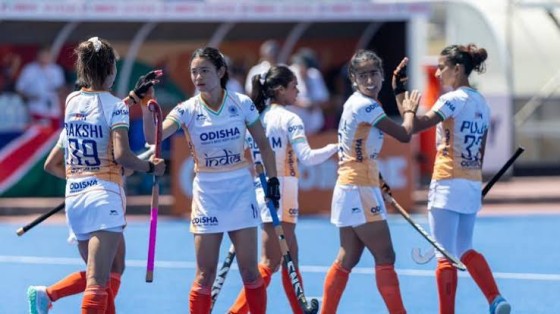
Women’s Hockey World Cup Enters August 18 Matchday as Broadcasters and Sponsors Track India’s Campaign
The 2026 FIH Women’s Hockey World Cup enters another important matchday on August 18, with India’s campaign carrying growing significance for broadcasters, sponsors and the wider commercial ecosystem surrounding women’s hockey. India opened its Pool D campaign with a 2-2 draw against Olympic silver medallists China and now faces South Africa in a match carrying major implications for progression to the next stage. (The Times of India)
The World Cup, being staged from August 15 to 29 across Belgium and the Netherlands alongside the men’s tournament, gives women’s hockey one of its largest global media platforms. (The Times of India)
For Indian sports businesses, the tournament is about more than results. Every additional high-profile match can strengthen television audiences, streaming engagement, sponsor visibility and the commercial profile of the women’s national team.
India Enters Crucial Second Pool Match

India began its campaign against China with a competitive performance.
Navneet Kaur and Deepika scored as India twice took the lead before China recovered to secure a 2-2 draw.
The result gave India a point from its opening match but increased the importance of the next fixture.
South Africa Match Carries Qualification Importance
India now needs a strong performance against South Africa to improve its position in Pool D.
Goal difference could also become important as teams compete for progression.
That creates a high-stakes sporting narrative.
For broadcasters, meaningful matches generally provide stronger promotional opportunities than fixtures with little competitive consequence.
The qualification equation gives audiences a clear reason to follow India throughout the tournament.
India’s Campaign Creates Valuable Broadcast Inventory
Major international tournaments provide broadcasters with premium live sports programming.
Live Sport Remains Difficult to Substitute
Unlike films or entertainment programmes, sporting events are most valuable when watched live.
Audiences want to see goals and decisive moments as they happen.
This creates concentrated viewing windows.
For broadcasters, concentrated audiences provide valuable advertising inventory.
Brands can place campaigns around:
pre-match programming,
live match coverage,
half-time breaks,
post-match analysis,
and digital highlights.
The stronger India's progress, the greater the potential value of this inventory in the Indian market.
Star Sports and JioHotstar Provide India Coverage
Indian audiences can follow the 2026 Hockey World Cup through television and streaming distribution, with Star Sports and JioHotstar among the viewing options available in the country. (TechRadar)
This television-plus-streaming structure reflects the broader transformation of sports broadcasting.
Fans Can Watch Across Multiple Screens
Traditional television remains important for households and communal viewing.
Streaming provides flexibility.
Fans can watch through smartphones, tablets, connected televisions and computers.
This allows sports properties to reach audiences beyond conventional television subscribers.
For sponsors, multi-platform distribution also creates more opportunities for brand exposure.
Women’s Sports Attract Greater Commercial Attention
The commercial environment surrounding women’s sport has changed significantly.
Brands Increasingly See Dedicated Audiences
Women’s competitions are no longer treated exclusively as extensions of men's sporting properties.
Successful tournaments are developing their own audiences, athletes and commercial identities.
Cricket has demonstrated this transition particularly clearly in India.
Hockey has an opportunity to build on the same broader shift.
International tournaments provide the visibility required for athletes to become recognisable beyond regular hockey followers.
World Cup Gives Sponsors International Exposure
National-team sponsorship offers a different commercial proposition from domestic leagues.
India Jersey Creates Repeated Brand Visibility
Sponsors associated with the national team can receive exposure whenever players appear during:
matches,
interviews,
training footage,
photographs,
social-media posts,
and tournament highlights.
A World Cup concentrates this visibility into a short period.
Every additional match increases the number of potential brand impressions.
Strong performances can multiply that value because highlights continue circulating after the live broadcast ends.
Winning Can Increase Commercial Value
Sporting performance and commercial visibility are closely connected.
Deeper Tournament Runs Create More Inventory
If a team exits during the initial phase, its media exposure ends relatively quickly.
Progression creates additional matches.
Additional matches generate additional broadcast hours.
They also produce more interviews, analysis, social-media conversation and press coverage.
This is why qualification can matter commercially as well as competitively.
For India, progression would keep the women’s national team inside the domestic sports conversation for longer.
Players Can Become Individual Commercial Assets
Major international tournaments can rapidly increase athlete recognition.
World Cups Create Star-Making Moments
A decisive goal can become a career-defining highlight.
A goalkeeper making a crucial save can suddenly attract national attention.
An outstanding tournament can transform an athlete from a specialist-sport figure into a recognisable public personality.
That visibility creates opportunities for individual endorsements.
Brands increasingly look for athletes who represent:
performance,
discipline,
leadership,
fitness,
and aspiration.
Women athletes can be particularly valuable for companies seeking broader representation in sports marketing.
Social Media Extends Value Beyond Live Matches
Modern tournament exposure continues long after the final whistle.
Highlights Can Reach Non-Viewers
Someone who does not watch a complete hockey match may still encounter a goal clip on social media.
Short-form video allows tournament moments to reach audiences outside the traditional hockey fan base.
Players can also communicate directly with supporters through their own accounts.
This creates another commercial layer.
Sponsors can participate in content surrounding matches rather than relying exclusively on television advertising.
India’s Opening Draw Creates Competitive Narrative
The 2-2 result against China provides an interesting foundation for India's campaign.
China entered the tournament with considerable international pedigree as Olympic silver medallists.
India's ability to compete closely therefore provides a positive sporting narrative despite not securing victory. (The Times of India)
Close Matches Increase Audience Interest
Competitive uncertainty is one of live sport's strongest attractions.
A predictable contest can lose casual viewers.
A close game encourages audiences to remain until the end.
India's opening match demonstrated the type of tension broadcasters value.
The South Africa fixture now adds another dimension because tournament progression is increasingly at stake.
Tournament Structure Supports Regular Engagement
The Women’s Hockey World Cup runs through August 29.
Pool matches create an initial rhythm before the tournament moves toward decisive knockout stages. (The Times of India)
Repeated Matches Build Audience Habit
A single international match creates one viewing event.
A tournament encourages repeated engagement.
Fans learn:
group standings,
qualification scenarios,
player performances,
and potential future opponents.
This creates a continuing narrative.
Broadcasters can use that storyline to bring viewers back for subsequent matches.
Joint Men’s and Women’s World Cup Creates Larger Platform
The 2026 competition is notable because the men’s and women’s World Cups are being staged concurrently in Belgium and the Netherlands.
Combined Event Can Increase Hockey Visibility
Running both tournaments within the same period creates a sustained global hockey conversation.
Broadcasters have more live matches.
Digital platforms have more highlights.
Sponsors gain broader tournament visibility.
Fans following one competition can also be exposed to the other.
For the sport, this provides an opportunity to market hockey as a unified global property rather than treating men's and women's competitions as completely separate products.
International Broadcast Distribution Expands Tournament Reach
The World Cup is being distributed across multiple international broadcasters and streaming services.
For example, selected matches are being shown through ON Sport across the Middle East and North Africa. (Africa Hockey)
Other territories have their own broadcast and streaming arrangements.
Global Distribution Helps Sponsorship Economics
A sponsor does not necessarily receive exposure only in its home country.
Tournament footage can travel internationally.
Highlights can circulate globally.
This increases the potential value of partnerships for multinational brands.
International visibility is particularly relevant for companies already operating across several markets.
India Offers Major Commercial Audience
India's enormous sports audience makes the national team's participation strategically valuable.
Cricket Dominates but Other Sports Have Space to Grow
Cricket remains overwhelmingly India's largest spectator sport.
That creates a challenge for hockey.
It also creates an opportunity.
Brands increasingly want sporting properties capable of reaching audiences beyond cricket.
Hockey carries historical significance in India and possesses a recognisable national-team identity.
Major international tournaments provide the moments required to convert that recognition into regular viewing.
Women’s Hockey Needs Consistent Visibility
One successful tournament can generate attention.
Building a durable commercial property requires repeated exposure.
Fans Need Regular Reasons to Follow Players
Audience relationships become stronger when supporters encounter athletes throughout the year.
International tournaments can provide peaks.
Domestic competitions, digital content and national-team matches need to maintain engagement between those peaks.
A sustainable commercial ecosystem therefore depends on continuity.
Sponsors are more likely to make larger long-term commitments when athletes remain visible outside major tournaments.
Streaming Can Help Reach Younger Audiences
Digital distribution is particularly important for sports seeking audience growth.
Mobile Viewing Reduces Access Barriers
Younger viewers may not organise their schedules around television programming.
Streaming allows them to watch from almost anywhere.
This can be particularly useful for international tournaments where match times may not align perfectly with traditional prime-time television.
Digital platforms can also provide highlights and clips for viewers unable to watch entire games.
That flexibility can help hockey reach audiences who would otherwise miss the competition.
Sponsors Can Measure Digital Engagement More Closely
Digital platforms provide more detailed audience information than traditional broadcast models.
Engagement Goes Beyond Television Ratings
Commercial partners can monitor:
video views,
social engagement,
search interest,
website traffic,
app activity,
and campaign interactions.
This provides a broader picture of sponsorship performance.
A tournament may therefore generate meaningful commercial value even when television ratings alone do not capture the entire audience.
India’s Performance Could Influence Tournament Attention
The national team's results remain the biggest variable affecting Indian audience interest.
Qualification Would Extend Commercial Momentum
Progressing beyond the pool stage would create additional high-stakes matches.
Those fixtures would give broadcasters more opportunities to promote India-specific coverage.
Sponsors would receive additional visibility.
Players would receive greater media attention.
Social conversation would increase.
An early exit would shorten that cycle.
This makes the South Africa match important throughout the surrounding sports-business ecosystem.
Brands Increasingly Link Sports With Purpose
Women’s sport also offers sponsorship narratives beyond pure audience reach.
Partnerships Can Support Broader Brand Positioning
Companies can associate themselves with:
women's participation in sport,
athlete development,
fitness,
equal opportunity,
and national sporting achievement.
These themes can strengthen corporate campaigns.
However, the strongest partnerships are generally those that combine purpose with genuine long-term investment rather than appearing only during major tournaments.
Hockey Can Benefit From India’s Broader Sports Economy
India's sports industry is becoming increasingly commercial.
Leagues, streaming platforms, sponsorship agencies, athlete-management companies and sports-technology businesses are expanding the ecosystem.
National-Team Success Creates Spillover Benefits
Strong performances can encourage:
grassroots participation,
merchandise interest,
academy enrolment,
sponsorship demand,
and domestic competition audiences.
This creates a reinforcing cycle.
More viewers can attract more sponsors.
More sponsorship can support better infrastructure and athlete development.
Improved performance can then attract larger audiences.
Broadcasters Need Storytelling Beyond the Match
Sports coverage increasingly extends beyond live action.
Player Stories Can Attract Casual Viewers
Dedicated hockey fans may watch because of the competition itself.
Casual audiences often need additional narratives.
Broadcasters can build interest through:
player profiles,
training stories,
tactical analysis,
historical rivalries,
and behind-the-scenes content.
This humanises athletes and helps viewers form stronger emotional connections with the team.
Women Athletes Offer Expanding Endorsement Opportunity
Indian women's sport has produced an increasing number of commercially recognisable athletes.
Hockey Players Can Expand Beyond Sports Brands
Endorsement categories can include:
financial services,
consumer goods,
fitness,
technology,
education,
automobiles,
and lifestyle products.
The key requirement is recognition.
World Cups provide the concentrated exposure that can significantly increase that recognition.
A breakthrough performance during the tournament could therefore influence an athlete's commercial prospects well beyond hockey.
India’s Campaign Matters Beyond Immediate Revenue
Not every benefit can be measured through advertising sales during one tournament.
Visibility Can Build Future Audience
A child watching the Indian women's team for the first time may become a long-term hockey follower.
A brand discovering strong engagement around a player may become a future sponsor.
A streaming platform observing audience growth may invest more heavily in hockey programming.
These effects can accumulate over time.
Major tournaments function partly as customer-acquisition events for the sport itself.
Broadcasters Will Track Audience Retention
India's progression provides an important test of how much interest the Women's Hockey World Cup can generate in a highly competitive sports market.
Match Importance Can Drive Viewing
Qualification scenarios create urgency.
Broadcasters can promote the South Africa fixture around a simple proposition: India's World Cup campaign is at stake.
That is easier to communicate than an ordinary international fixture.
If India advances, the tournament gains another opportunity to convert occasional viewers into repeat audiences.
Sponsors Will Watch Engagement as Closely as Results
Winning remains important, but commercial partners also evaluate how audiences respond.
A team can create significant sponsor value through competitive performances, compelling players and strong fan engagement even without winning the tournament.
Digital Conversation Provides Additional Signal
Search trends and social interactions can demonstrate growing interest.
Brands can compare engagement during the World Cup with normal periods.
Strong increases can support future sponsorship decisions.
The tournament therefore provides valuable market information about the commercial potential of Indian women's hockey.
Conclusion
The Women’s Hockey World Cup's August 18 matchday carries significance extending beyond the field as India prepares for an important Pool D encounter with South Africa following its 2-2 opening draw against China. (The Times of India)
For broadcasters, India's campaign provides valuable live sports inventory and an opportunity to attract viewers across television and streaming. For sponsors, every additional match creates more exposure through broadcasts, highlights, player content and social-media conversation.
The larger opportunity is the continued commercial development of women's hockey in India. Major tournaments can create visibility, but sustainable growth will depend on converting temporary attention into recurring audiences, stronger athlete brands and long-term sponsorship investment.
India's progress through the World Cup could therefore matter not only for qualification but also for the commercial momentum surrounding the women's national team.