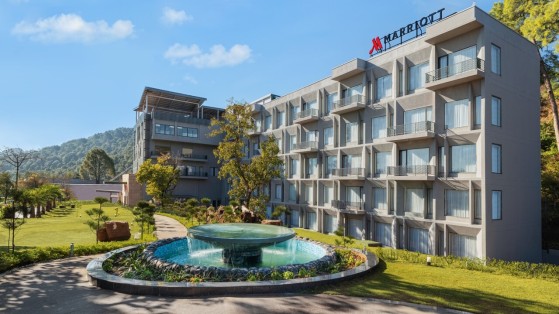
Marriott Expects India to Become Its Second-Largest Global Market Within Three to Four Years
Marriott International expects India to become its second-largest global market within the next three to four years, potentially overtaking both China and Mexico as the world's largest hotel company accelerates expansion across major cities and emerging travel destinations.
Marriott President and CEO Anthony Capuano said India is currently the company's fourth-largest market, behind the United States, China and Mexico, but its rapid development pipeline could move the country into second position. (ETHospitalityWorld.com)
The scale of the expansion is substantial.
Marriott currently operates approximately 230 hotels with more than 35,000 rooms in India and has over 200 additional hotels representing more than 30,000 rooms in its development pipeline. The planned additions would almost double its existing room footprint. (ETHospitalityWorld.com)
The company also signed more than 60 hotel deals in India during the first half of 2026, its highest number anywhere in the Asia-Pacific excluding China region. (ETHospitalityWorld.com)
The strategy reflects a broader transformation in India's hospitality industry as rising domestic travel, higher consumer spending, expanding business activity and growing demand outside traditional metropolitan markets encourage international hotel groups to accelerate development.
India Could Leapfrog China and Mexico

The United States remains Marriott's largest global market.
India currently ranks behind:
China,
Mexico,
and the United States.
But Capuano expects that hierarchy to change rapidly.
His projection suggests India could move directly into the number-two position within three to four years. (ETHospitalityWorld.com)
That would represent a significant change in Marriott's geographic business mix.
Marriott Already Operates Around 230 Hotels in India
Marriott's existing Indian portfolio includes approximately:
230 hotels
and more than:
35,000 rooms. (ETHospitalityWorld.com)
These properties operate across multiple price points and consumer segments.
The company's Indian portfolio includes luxury, premium, select-service and increasingly midscale brands.
More Than 200 Hotels Are in the Pipeline
The development pipeline is nearly as significant as the existing portfolio.
Marriott has:
more than 200 hotels
representing:
over 30,000 additional rooms
under development in India. (ETHospitalityWorld.com)
If these projects open as planned, the company's Indian room inventory will almost double.
That explains why management expects India to climb Marriott's global market rankings so quickly.
More Than 60 Deals Were Signed in First Half of 2026
Marriott signed more than 60 deals in India during the first six months of 2026.
That was the highest number of signings within the company's Asia Pacific excluding China region. (ETHospitalityWorld.com)
Hotel signings are an important forward indicator.
A hotel company can report strong existing performance, but future growth ultimately depends on owners committing capital to new properties.
The number of deals demonstrates significant developer confidence in Indian hospitality demand.
Marriott Could Reach Its 100th Indian City in 2027
Geographic expansion is another important component of the strategy.
Marriott currently operates across almost:
80 Indian cities.
Capuano said the company could enter its:
100th city in India next year. (The Economic Times)
The milestone would coincide with Marriott's centennial year.
More importantly, it illustrates how the company's growth is moving beyond India's largest metropolitan areas.
Expansion Is Moving Into Smaller Cities
Historically, international hotel chains concentrated heavily on markets such as:
Mumbai,
Delhi,
Bengaluru,
Chennai,
and Hyderabad.
India's travel market is now becoming much broader.
Business activity and domestic tourism are creating hotel demand across secondary and tertiary cities.
Marriott intends to capture that opportunity.
Domestic Travel Is Transforming Indian Hospitality
One of the most important changes in India's hotel industry is the growing importance of Indian travellers themselves.
Earlier phases of premium hospitality development depended much more heavily on international visitors.
Today, domestic consumers generate substantial demand across:
business travel,
leisure travel,
weddings,
and short holidays.
That makes India's hotel market less dependent on international arrivals alone.
India’s Expanding Middle Class Supports Hotel Demand
Rising household incomes are expanding the number of consumers capable of spending on organised hospitality.
Travel is increasingly becoming a recurring discretionary expense.
Consumers are taking:
weekend breaks,
family holidays,
and destination celebrations.
This creates opportunities beyond traditional luxury hotels.
Marriott Is Moving Beyond Luxury and Premium Hotels
Marriott already has a significant luxury and premium presence in India.
But a substantial portion of its future pipeline is increasingly focused on:
select-service,
and midscale hotels. (ETHospitalityWorld.com)
This allows the company to reach markets where luxury properties may not yet be economically viable.
The strategy also gives Marriott access to a much larger consumer base.
City Express Is Coming to India
Marriott is preparing to introduce City Express, its transient midscale brand, to the Indian market. (ETHospitalityWorld.com)
City Express entered Marriott's global portfolio through its acquisition of the brand's parent business in Latin America.
Its expansion into India demonstrates how Marriott intends to compete across a wider range of room rates.
Midscale hospitality could become one of the most important battlegrounds in India's hotel industry.
Series by Marriott Expands Distribution Further
Marriott has also launched Series by Marriott, an affiliation-focused brand platform.
The strategy allows independent and regional hotels to connect with Marriott's global distribution and loyalty ecosystem while retaining more of their individual identity.
In India, the Series strategy significantly expands Marriott's reach into additional cities. (Business Standard)
This provides another path to rapid network growth without relying exclusively on newly constructed hotels.
Luxury Expansion Is Continuing
The move into midscale hospitality does not mean Marriott is reducing its luxury ambitions.
In June 2026, the company opened JW Marriott Ranthambore Resort & Spa, which became Marriott's 10,000th hotel globally. (costar.com)
Choosing India for such an important global milestone was a visible indication of the country's strategic importance to the company.
New Luxury Hotels Are Planned for Delhi
Marriott's upcoming Indian portfolio also includes additional high-end properties.
Capuano highlighted plans for a:
Marriott Marquis in Delhi Aerocity
as well as a:
new W hotel near the airport. (ETHospitalityWorld.com)
These projects demonstrate that Marriott intends to expand at both ends of the hospitality market.
Marriott’s India Revenue Crossed $1.5 Billion
Marriott's India business has also expanded financially.
Revenue in the country crossed:
$1.5 billion in 2025
compared with:
$1 billion in 2023. (ETHospitalityWorld.com)
That represents substantial growth over two years.
Capuano nevertheless indicated that Marriott wants the Indian business to grow even faster.
Marriott Wants Faster Revenue Growth
Increasing hotel count is only one part of the strategy.
Marriott also wants stronger growth in:
revenue per available room,
and average room rates. (ETHospitalityWorld.com)
These metrics are important because opening more hotels does not automatically guarantee better economics.
Existing properties also need to generate stronger revenue.
Indian Hotel Rates Have Been Rising
The broader Indian hospitality market has experienced significant pricing strength.
Corporate hotel rates in some markets have increased between 25% and 35% over the past four years, according to HRS data cited by Business Travel News. (businesstravelnews.com)
CoStar data also showed substantial increases in average daily rates since May 2023 across major markets including Delhi, Bengaluru, Chennai, Pune and Mumbai. (businesstravelnews.com)
High occupancy combined with limited supply has strengthened hotel pricing.
Hotel Supply Has Struggled to Keep Up With Demand
India's hospitality opportunity is partly a supply story.
Demand from:
business travellers,
domestic tourists,
and leisure customers
has expanded rapidly.
But constructing quality hotels takes years.
This can produce periods where demand grows faster than available rooms.
That imbalance supports occupancy and pricing for existing hotels.
Hotel Development Takes Time
A hotel cannot be opened immediately after demand appears.
Developers need:
land,
approvals,
financing,
construction,
and operational preparation.
Large luxury properties can require particularly long development periods.
That means the 200-plus hotels currently in Marriott's pipeline represent several years of future capacity.
Marriott Uses Asset-Light Expansion Model
Large international hotel groups generally do not need to own every property carrying their brands.
Independent property owners can finance and own the physical hotel.
Marriott provides:
branding,
management,
distribution,
and loyalty infrastructure.
The company then earns management and franchise fees.
This model allows rapid geographic expansion without funding the full real-estate investment for every property.
Local Developers Provide Expansion Capital
India's Marriott growth therefore depends heavily on relationships with:
hotel developers,
real-estate companies,
and institutional investors.
Developers commit capital because they expect branded hotels to generate attractive returns.
Marriott provides global distribution and operating expertise.
Both sides share exposure to India's expanding travel economy.
Loyalty Programme Provides Competitive Advantage
Marriott Bonvoy is an important component of the company's hotel ecosystem.
A large loyalty programme can encourage travellers to remain within one hotel network.
Customers earn and redeem points across multiple brands and countries.
That can make a Marriott-branded property more attractive to hotel owners because it gains access to an existing global customer base.
Indian Travellers Are Becoming More Globally Important
India's growing middle and affluent classes are not travelling only domestically.
Outbound Indian tourism is also expanding.
That makes Indian customers increasingly important to Marriott properties around the world.
A traveller who develops loyalty to Marriott in India may use the same network while visiting:
Europe,
Southeast Asia,
the Middle East,
or North America.
India therefore has value beyond revenue generated inside the country.
Weddings Are Major Hospitality Demand Driver
India's wedding economy creates a particularly important hotel segment.
Large weddings can generate revenue from:
rooms,
banquets,
and food and beverage.
Luxury hotels and resorts are major beneficiaries.
Destination weddings also encourage hotel development in leisure locations beyond major commercial cities.
Short Leisure Trips Are Expanding
Improved roads and rising car ownership are increasing demand for short-distance travel.
Consumers can leave major cities for:
weekend resorts,
wellness destinations,
and nature retreats.
This has created opportunities in locations that historically attracted relatively little branded hotel investment.
Marriott's expansion increasingly reflects this demand.
Business Travel Remains Important
India's economic expansion continues to create corporate travel.
New manufacturing clusters, technology centres and commercial hubs generate hotel demand outside traditional business districts.
When companies establish factories or offices in new regions, demand emerges for reliable accommodation.
International brands can follow that corporate activity.
India Is Becoming Marriott’s Innovation Laboratory
Capuano described India as a strong environment for testing new products and brands because of its diverse consumers and wide range of price points. (ETHospitalityWorld.com)
Marriott currently has 19 brands operating in India and is preparing to introduce its 20th. (ETHospitalityWorld.com)
The breadth of the market allows the company to experiment across luxury, premium and midscale hospitality.
Hyderabad Technology Accelerator Reinforces India Strategy
Marriott has also established a technology accelerator in Hyderabad.
The company intends to develop and test initiatives there that could eventually be deployed across its global operations. (ETHospitalityWorld.com)
This broadens India's role beyond hotel development.
The country can become a source of technology and operational innovation for Marriott's global network.
AI Could Transform Hotel Distribution
Marriott is examining artificial intelligence across four broad areas:
travel distribution,
corporate functions,
hotel operations,
and guest-facing services. (ETHospitalityWorld.com)
One of the most significant changes could occur in travel discovery.
Consumers may increasingly ask AI agents to find and book accommodation instead of searching manually across hotel and travel websites.
AI Agents Could Change How Hotels Acquire Customers
Today's online travel market relies heavily on:
search engines,
online travel agencies,
and hotel websites.
AI agents could change that structure.
A traveller might simply ask an AI system to find the best hotel meeting specific requirements.
That creates new questions about how hotel brands remain visible within machine-generated recommendations.
Marriott Is Experimenting With Major AI Companies
Marriott is experimenting with technology companies including Google, Anthropic and OpenAI as the travel industry considers how generative AI could reshape distribution. (ETHospitalityWorld.com)
The challenge is strategic.
Hotels want the convenience AI can provide while maintaining direct relationships with guests.
Distribution economics could change significantly if AI becomes a major booking intermediary.
Hospitality Still Depends on Human Service
Capuano has emphasised that Marriott views hospitality fundamentally as a human-connection business. (ETHospitalityWorld.com)
AI can improve:
efficiency,
personalisation,
and operations.
But hotel experiences still depend heavily on employees interacting with guests.
That makes hospitality different from industries where automation can replace most customer interaction.
India’s Hospitality Workforce Is Strategic Asset
India has a large hospitality workforce and established hotel-management education ecosystem.
As international hotel groups expand, demand will increase for:
general managers,
chefs,
sales professionals,
and operational staff.
The growth of branded hospitality can therefore create significant employment opportunities.
Talent Could Become a Constraint
Rapid hotel development creates a challenge.
Every new property requires trained employees.
If supply expands faster than the talent pool, companies may face:
higher labour costs,
and recruitment difficulties.
Hospitality companies therefore need to invest in training alongside physical expansion.
Infrastructure Will Influence India’s Tourism Potential
Capuano has also highlighted infrastructure and easier travel processes as areas that could help India attract more international tourists. (The Economic Times)
Airports,
roads,
rail connectivity,
and destination infrastructure
directly influence hotel demand.
Improved connectivity can transform previously difficult-to-access destinations into viable hospitality markets.
India Still Has Significant International Tourism Upside
India's domestic tourism market is enormous.
But international tourism remains below its potential relative to the country's:
cultural heritage,
natural diversity,
and geographic scale.
Increasing foreign visitor numbers would create another growth engine for international hotel companies.
It would also reduce reliance on domestic travel cycles.
Global Scale Helps Marriott Absorb Regional Shocks
Marriott operates more than 10,000 hotels across nearly 150 countries.
That geographic diversification provides resilience when individual regions weaken.
For example, Marriott's Gulf RevPAR fell sharply during the June quarter amid regional conflict, but the Middle East represents only a small share of the company's global room inventory and fees. (ETHospitalityWorld.com)
India's expansion adds another major growth market to that global portfolio.
Marriott’s Global Pipeline Is Already at Record Level
At the end of the second quarter of 2026, Marriott's worldwide development pipeline reached a record:
nearly 4,200 properties
and approximately:
629,000 rooms. (Marriott International)
Around 44% of pipeline rooms were already under construction or pending conversion.
India therefore represents an increasingly important component of an already enormous global expansion programme.
India Could Become a Bigger Contributor to Global Fees
Marriott's asset-light model means expansion can increase fee revenue without requiring equivalent growth in owned real estate.
If India's hotel portfolio nearly doubles, the country can become a much larger contributor to:
management fees,
franchise fees,
and loyalty economics.
That makes the country's ranking strategically important beyond hotel count alone.
Competition for India Is Intensifying
Marriott is not the only international hospitality company accelerating investment.
Global hotel groups increasingly view India as one of the world's most attractive long-term development markets. (businesstravelnews.com)
Competition will therefore increase for:
hotel owners,
development sites,
employees,
and guests.
Marriott's existing scale provides an advantage, but maintaining leadership will require continued expansion.
Midscale Hotels Could Determine Future Market Leadership
Luxury properties attract attention, but midscale hotels could ultimately determine which hotel companies build the largest Indian networks.
India has hundreds of cities capable of supporting organised accommodation without necessarily supporting luxury pricing.
Brands that create:
reliable,
affordable,
and standardised
hotel experiences can access this much larger geographic opportunity.
Marriott's expansion into midscale categories reflects that reality.
India’s Rise Could Reshape Marriott’s Global Portfolio
If India becomes Marriott's second-largest market, the company's geographic profile will change materially.
The country would sit behind only the United States.
That would make Indian:
consumers,
developers,
employees,
and technology operations
increasingly important to Marriott's global strategy.
The shift would also illustrate how rapidly the centre of gravity in global travel is moving toward emerging consumer markets.
Conclusion
Marriott International expects India to become its second-largest global market within the next three to four years, overtaking China and Mexico as the company accelerates one of its most ambitious expansion programmes anywhere in the world. (ETHospitalityWorld.com)
Marriott already operates approximately 230 hotels and more than 35,000 rooms in India. Its development pipeline contains more than 200 additional hotels representing over 30,000 rooms, which could almost double the company's nationwide footprint. (ETHospitalityWorld.com)
More than 60 new hotel deals were signed during the first half of 2026, while Marriott expects to reach its 100th Indian city in 2027. (ETHospitalityWorld.com)
The expansion is also becoming broader.
Luxury remains important, but Marriott is increasingly targeting select-service and midscale hospitality, secondary cities and new consumer segments. At the same time, India is becoming an innovation base through the company's Hyderabad technology accelerator and experiments with new brands and digital technologies.
The underlying opportunity comes from a structural change in Indian travel.
Domestic consumers are travelling more frequently, hotel rates and occupancies remain strong in many major markets, business activity is spreading into new cities, and international hotel supply has significant room to expand.
If Marriott's projection is realised, India's rise to become its second-largest market would represent more than another milestone for the hotel company.
It would confirm India's emergence as one of the central growth markets shaping the future of the global hospitality industry.