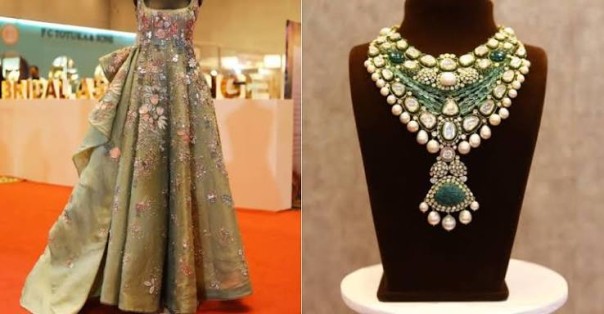
Bridal Asia Symphony of Jewels Opens Hyderabad Edition With Two-Day Luxury Jewellery Showcase
Bridal Asia's Symphony of Jewels has opened its Hyderabad edition, bringing a curated selection of fine and luxury jewellery brands together for a two-day showcase aimed at bridal shoppers, collectors and customers seeking contemporary and traditional jewellery designs.
The event takes place on:
September 5 and September 6, 2026
and forms part of Bridal Asia's broader effort to create specialised luxury platforms around India's large wedding and jewellery market.
Unlike a conventional trade exhibition focused primarily on wholesale transactions, Symphony of Jewels is positioned as a curated consumer-facing experience where visitors can discover jewellery across:
bridal,
heritage,
contemporary,
diamond,
gemstone,
and:
statement design categories.
The Hyderabad edition arrives as jewellery brands increasingly use exhibitions, private showcases and appointment-led events to engage affluent customers outside conventional retail stores.
The timing is also commercially important, coming ahead of India's major festive and wedding purchasing period.
Symphony of Jewels Brings Curated Jewellery to Hyderabad

Bridal Asia has built Symphony of Jewels as a specialised extension of its established wedding and luxury platform.
The Hyderabad edition focuses specifically on:
jewellery.
That narrower positioning allows participating brands to showcase collections in an environment designed for customers actively considering significant jewellery purchases.
Visitors can explore products across different:
design languages,
materials,
craft traditions,
and price segments.
For jewellery houses, this creates an opportunity to meet prospective customers directly and explain the craftsmanship and design philosophy behind individual collections.
Two-Day Showcase Runs September 5 and 6
The Hyderabad edition runs for:
two days
on September 5 and 6.
The compact format creates a concentrated period for:
product discovery,
client appointments,
designer interactions,
and purchasing.
Short-duration luxury showcases are increasingly common because they can create a sense of exclusivity while allowing brands to reach customers in cities where they may not operate extensive permanent retail networks.
For consumers, they provide access to multiple jewellery houses within one curated environment.
Hyderabad Is a Natural Market for Luxury Jewellery
Hyderabad is strategically important for a jewellery-focused event.
The city has a longstanding cultural relationship with:
diamonds,
pearls,
gold,
gemstones,
and elaborate jewellery.
Its historic association with royal courts and trading networks helped create a distinctive jewellery culture that remains influential today.
Modern Hyderabad adds another dimension.
The city's growth across:
technology,
pharmaceuticals,
healthcare,
real estate,
and entrepreneurship
has expanded its affluent consumer base.
That combination of heritage and contemporary wealth makes Hyderabad an important market for premium jewellery brands.
Bridal Jewellery Remains Core Category
Bridal jewellery is naturally central to the event.
Indian weddings can involve multiple jewellery purchases across:
engagements,
mehendi,
sangeet,
wedding ceremonies,
and receptions.
The bride's jewellery wardrobe may therefore include very different styles for separate occasions.
Products can range from:
necklaces,
earrings,
bangles,
bracelets,
rings,
maang tikkas,
and other traditional ornaments.
This creates a significant commercial opportunity for brands capable of offering coordinated collections rather than isolated pieces.
Jewellery Is Central to India's Wedding Economy
Jewellery occupies a distinctive position within Indian wedding expenditure.
It serves several roles simultaneously.
It can be:
ornamentation,
a cultural object,
a family tradition,
a store of value,
and an heirloom.
That combination makes jewellery fundamentally different from many other wedding purchases.
A wedding outfit may be worn only occasionally after the ceremony.
High-quality jewellery can remain within a family for generations.
This long-term dimension influences how consumers evaluate:
design,
craftsmanship,
materials,
and brand trust.
Fine Jewellery Increasingly Combines Heritage and Modern Design
One of the strongest trends within Indian luxury jewellery is the blending of:
traditional craft
with:
contemporary design.
Younger customers may value heritage techniques but want pieces that fit modern wardrobes.
This is encouraging designers to reinterpret:
traditional motifs,
historic settings,
regional craftsmanship,
and classic gemstones
through lighter or more contemporary forms.
The objective is often to create jewellery that retains cultural identity without feeling restricted to ceremonial use.
Versatility Is Becoming More Important
Modern jewellery consumers increasingly consider how frequently a piece can be worn.
A large ceremonial necklace may remain important for a wedding.
But customers may also want jewellery that can transition between:
weddings,
festivals,
formal events,
and smaller social occasions.
This is increasing demand for:
modular pieces,
detachable elements,
lighter constructions,
and adaptable designs.
Versatility can improve the perceived value of a jewellery purchase because customers can use the product across more occasions.
Statement Jewellery Remains Important for Weddings
At the same time, the demand for highly elaborate statement pieces remains significant.
Indian weddings continue to provide occasions for:
large necklaces,
layered jewellery,
bold earrings,
intricate bangles,
and gemstone-heavy designs.
For luxury jewellers, these pieces offer opportunities to demonstrate craftsmanship.
Complex jewellery can require significant expertise across:
design,
stone selection,
setting,
enamelling,
polishing,
and finishing.
A curated showcase provides an environment where brands can explain those details directly to customers.
Diamonds Remain Major Luxury Category
Diamond jewellery is another important component of India's premium market.
Diamonds can appear across:
engagement rings,
necklaces,
earrings,
bracelets,
and bridal sets.
Customers purchasing high-value diamond jewellery increasingly pay attention to:
cut,
clarity,
colour,
carat,
certification,
and provenance.
This makes trust especially important.
Established jewellers and specialised designers can differentiate themselves through transparency around materials and quality.
Coloured Gemstones Add Individuality
Coloured gemstones are also increasingly prominent in luxury jewellery.
Emeralds,
rubies,
sapphires,
and other stones can create distinctive pieces that differ from conventional all-diamond designs.
Gemstones can also carry:
historical,
regional,
and aesthetic associations.
For designers, they provide greater flexibility in creating jewellery around:
colour,
contrast,
and individual identity.
This can appeal to customers seeking pieces that feel more personal and less standardised.
Hyderabad's Pearl Heritage Remains Relevant
Hyderabad's association with pearls gives jewellery showcases in the city an additional cultural context.
The city has long been known as a major centre for:
pearl trading
and:
pearl jewellery.
Although modern luxury demand spans many jewellery categories, pearls remain an important part of Hyderabad's identity.
Designers can combine pearls with:
diamonds,
gold,
emeralds,
and other gemstones
to create both traditional and contemporary pieces.
This allows heritage materials to remain relevant to changing consumer preferences.
Bridal Asia Has Built a Luxury Wedding Platform
Bridal Asia has established itself around India's premium wedding ecosystem.
Its exhibitions and showcases bring together categories such as:
fashion,
jewellery,
accessories,
and bridal design.
Symphony of Jewels narrows that proposition specifically toward jewellery.
This specialisation is strategically useful.
Customers interested in jewellery can access a concentrated selection of brands without navigating a much broader wedding exhibition.
Participating jewellers, meanwhile, gain access to an audience with stronger purchase intent.
Curated Exhibitions Offer Alternative to Conventional Retail
Luxury jewellery is traditionally sold through:
standalone boutiques,
family jewellers,
large jewellery chains,
and luxury shopping destinations.
Curated exhibitions provide an additional distribution and customer-acquisition channel.
A brand can enter a new city temporarily without immediately investing in:
a permanent store,
long-term rent,
large local staff,
and extensive inventory.
This allows jewellers to test demand and build customer relationships before making larger retail commitments.
Exhibitions Help Emerging Designers Reach New Customers
The model can be particularly valuable for independent jewellery designers.
A smaller brand may produce distinctive products but lack a national store network.
Participating in a curated event can provide access to affluent customers from another city.
If the response is strong, the brand can continue serving those customers through:
private appointments,
digital communication,
repeat exhibitions,
and ecommerce.
This creates a more flexible expansion model than immediately opening stores across multiple cities.
Physical Interaction Remains Critical in High-Value Jewellery
Digital commerce has transformed many retail categories, but high-value jewellery retains a strong physical component.
Customers often want to:
see the stones,
feel the weight,
evaluate proportions,
compare designs,
and try pieces personally.
Photographs can communicate design.
They cannot fully replicate:
sparkle,
scale,
texture,
movement,
and fit.
This gives physical exhibitions an enduring role even as jewellery brands expand their online presence.
Trust Is Essential in Jewellery Purchases
High-value jewellery purchases also require considerable trust.
Customers want confidence regarding:
metal purity,
gemstone quality,
certification,
craftsmanship,
pricing,
and after-sales service.
Face-to-face interaction can help establish that confidence.
A curated event also provides an additional layer of selection because the organiser determines which brands participate.
For customers unfamiliar with an emerging designer, that curation can support discovery.
Jewellery Brands Are Becoming More Design-Led
India's jewellery industry has historically included a strong commodity component.
Customers often evaluated jewellery heavily through:
gold weight,
purity,
and prevailing metal prices.
Those factors remain important.
However, premium jewellery is increasingly becoming:
design-led.
Brands are attempting to create value through:
distinctive aesthetics,
craftsmanship,
brand identity,
and storytelling.
This can help reduce direct price comparison because the customer is purchasing a particular design rather than only a quantity of precious metal.
Craftsmanship Can Create Brand Differentiation
Indian jewellery benefits from an enormous base of specialist craftsmanship.
Different traditions involve techniques such as:
stone setting,
enamelling,
hand engraving,
filigree,
and intricate metalwork.
Luxury brands can use these capabilities to create products that are difficult to reproduce through purely industrial manufacturing.
For customers, understanding the work behind a piece can increase appreciation of its value.
This is why luxury showcases increasingly emphasise:
craft,
heritage,
and process
alongside finished products.
Personalisation Is Becoming More Important
Affluent consumers increasingly expect jewellery to reflect individual preferences.
That can involve:
custom sizing,
stone selection,
design modifications,
engraving,
or completely bespoke commissions.
Weddings create particularly strong demand for personalisation because customers may want jewellery coordinated with:
specific outfits,
family heirlooms,
or ceremonial requirements.
Exhibitions allow customers to begin these conversations directly with designers and brand representatives.
Heirloom Jewellery Is Being Reinterpreted
Another important trend involves the reinterpretation of family jewellery.
Customers may possess inherited pieces that have:
emotional value
but:
dated designs.
Jewellers can sometimes reset stones or redesign older pieces while preserving their family significance.
This creates a bridge between:
heritage
and:
contemporary style.
The concept is particularly relevant within India's wedding market, where jewellery often passes between generations.
India's Affluent Consumer Base Is Expanding
The commercial backdrop for luxury jewellery is also changing.
India's economic growth is creating new wealth across:
entrepreneurship,
technology,
financial services,
manufacturing,
real estate,
and professional careers.
This is expanding the potential customer base for premium products.
Luxury consumption is also spreading beyond the traditional largest markets.
Cities such as Hyderabad have become increasingly important destinations for:
international brands,
premium retail,
luxury automobiles,
fine dining,
and designer fashion.
Jewellery naturally participates in the same expansion.
Luxury Customers Want Experiences, Not Only Products
High-end retail is increasingly moving toward experiential engagement.
Customers can already browse enormous numbers of products online.
Physical events therefore need to provide something additional.
That can include:
designer access,
private appointments,
styling,
storytelling,
hospitality,
and exclusive collections.
Symphony of Jewels fits this model.
Its value lies not simply in assembling jewellery in one location but in creating a curated discovery environment around it.
Wedding Season Strengthens Commercial Timing
The September timing is particularly relevant.
Jewellery purchases often begin months before a wedding.
Customers need time for:
selection,
customisation,
sizing,
production,
and coordination with outfits.
Retailers and designers therefore benefit from reaching customers before the peak wedding calendar begins.
The festive season can add another layer of demand.
Festivals are traditionally important periods for precious-metal purchases and gifting.
A September showcase can therefore address both wedding and festive customers.
Gold Prices Influence Consumer Choices
Elevated gold prices remain an important consideration across the jewellery market.
When metal prices rise significantly, the cost of heavy jewellery increases.
Consumers may respond by changing:
weight,
design,
purchase timing,
or product mix.
This can encourage greater interest in:
lighter jewellery,
diamonds,
gemstones,
and design-intensive pieces.
Luxury customers may be less price-sensitive than mass-market buyers, but even affluent consumers evaluate the overall value of large jewellery purchases.
Design Can Offset Some Commodity-Price Sensitivity
For jewellers, stronger design differentiation can help reduce dependence on metal weight as the primary source of value.
A distinctive piece may command a premium based on:
craftsmanship,
creative identity,
rarity,
and brand reputation.
This shifts part of the customer's attention from:
“How much gold does this contain?”
toward:
“How unique is this design?”
That transition is strategically important for premium jewellery businesses.
Social Media Is Transforming Jewellery Discovery
Jewellery discovery increasingly begins online.
Consumers encounter designs through:
Instagram,
Pinterest,
celebrity weddings,
fashion influencers,
and digital campaigns.
A customer may discover a jeweller online and then attend a physical exhibition specifically to see the product.
This creates an increasingly interconnected buying journey.
Digital platforms generate:
awareness.
Physical showcases provide:
experience and trust.
Private appointments or stores complete:
the transaction.
Celebrity Weddings Influence Bridal Trends
High-profile weddings continue to influence jewellery preferences.
Celebrity bridal looks can rapidly increase interest in:
specific necklace styles,
gemstones,
traditional techniques,
or layering combinations.
Social media amplifies these trends almost immediately.
Jewellery brands therefore need to respond quickly while maintaining their own design identity.
Curated showcases provide opportunities to present new collections at moments when customers are actively researching wedding styles.
Hyderabad Can Support National Jewellery Brands
For brands based outside Telangana, the Hyderabad edition provides access to an important regional market.
A successful showcase can help a jeweller:
identify customer preferences,
build a local client database,
generate referrals,
and evaluate whether permanent expansion makes commercial sense.
This is particularly valuable because jewellery preferences can vary considerably between Indian regions.
Understanding local customers directly is often more useful than assuming a single national design strategy will work everywhere.
Luxury Jewellery Market Is Becoming More Competitive
India's premium jewellery market includes:
large national chains,
regional family jewellers,
heritage houses,
independent designers,
and emerging digital-first brands.
Competition therefore extends across multiple dimensions.
Companies must differentiate through:
design,
trust,
service,
craftsmanship,
brand identity,
and customer relationships.
Curated platforms such as Symphony of Jewels can help brands communicate these differences in a more personal setting.
Jewellery Is Moving Toward Omnichannel Retail
The future of jewellery retail is increasingly likely to combine:
stores,
exhibitions,
private appointments,
social media,
websites,
and digital consultations.
Customers may move between several of these channels before making a purchase.
A bride might:
discover a necklace online,
see it at an exhibition,
discuss customisation digitally,
and complete the purchase through a boutique appointment.
Brands capable of connecting these interactions can provide a more seamless customer experience.
Symphony of Jewels Highlights Broader Luxury Shift
The significance of Bridal Asia's jewellery-focused platform extends beyond a two-day event.
It reflects the increasing segmentation of India's luxury market.
Rather than treating all premium consumers as one audience, organisers and brands are developing specialised experiences around:
bridal fashion,
jewellery,
beauty,
gifting,
and other categories.
This allows businesses to reach consumers at moments of particularly high purchase intent.
For jewellery, weddings provide one of the strongest such moments.
Conclusion
The Hyderabad edition of Bridal Asia's Symphony of Jewels, running across September 5 and September 6, 2026, brings luxury and fine-jewellery brands together for a focused two-day showcase aimed at India's important bridal and celebration market.
The event combines traditional and contemporary jewellery with a curated environment designed for:
discovery, personal interaction, private buying and design-led luxury.
Hyderabad provides a particularly relevant setting.
Its longstanding association with pearls, gemstones and royal jewellery traditions is now complemented by a rapidly expanding affluent consumer base created by the city's modern economic growth.
The showcase also reflects wider changes across India's jewellery industry.
Customers increasingly want more than precious-metal weight alone. They are placing greater emphasis on:
design, craftsmanship, versatility, personalisation and brand identity.
For jewellery houses, temporary luxury showcases offer an efficient way to reach new customers and test markets without immediately building permanent retail networks.
As India's wedding and luxury economies expand, curated platforms such as Symphony of Jewels are likely to play an increasingly important role in connecting jewellery designers with consumers seeking distinctive, high-value and highly personal purchases.