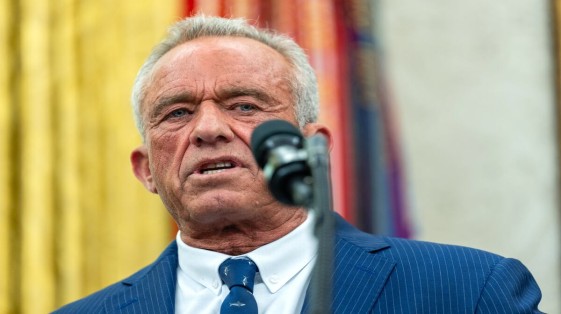
Robert F. Kennedy Jr. has once again taken center stage in the national health debate, this time by defending the Centers for Disease Control and Prevention’s response to a major measles outbreak in the United States. Writing in an op-ed published by the Wall Street Journal, Kennedy offered strong support for the CDC’s actions while also addressing the intense scrutiny the agency has faced in recent months. His comments arrive at a moment when the CDC itself is undergoing internal upheaval, with resignations, restructuring efforts, and questions about its credibility dominating headlines.
The measles outbreak, one of the most severe in recent years, has spread across multiple states and raised concerns about vaccine hesitancy, public misinformation, and gaps in the nation’s health infrastructure. For many Americans, the crisis has evoked memories of past public health challenges and reignited debates over how the CDC, the nation’s leading public health agency, should respond in times of crisis. Kennedy’s defense of the CDC is especially notable given his complex history with the agency and his longstanding reputation as a critic of certain vaccination policies.
The measles virus, highly contagious and potentially deadly, has historically been kept under control in the United States through widespread vaccination. The introduction of the measles, mumps, and rubella (MMR) vaccine in the 1960s led to a dramatic decline in cases. By the early 2000s, measles was declared eliminated in the United States, meaning there was no sustained transmission in the country. However, outbreaks have returned in recent years, driven by vaccine refusal, misinformation, and international travel that reintroduces the virus into vulnerable communities.
The current outbreak, according to CDC data, has affected thousands, with clusters emerging in communities where vaccination rates are below recommended thresholds. The outbreak has not only strained hospitals and schools but also reignited political battles over mandates, public trust in science, and the role of federal agencies in safeguarding health. It is against this backdrop that Kennedy chose to publish his defense of the CDC, aiming to reframe the debate and highlight what he views as the agency’s strengths in responding to the crisis.
In his op-ed, Kennedy acknowledged the seriousness of the outbreak while praising the CDC for deploying rapid response teams, coordinating with state and local health departments, and ensuring that vaccines were made widely available. He emphasized that the agency has acted decisively to contain outbreaks, provide accurate information to the public, and support health workers on the front lines. Kennedy argued that, despite criticism, the CDC remains an essential pillar of American public health, one that should not be undermined at a time when confidence in institutions is fragile.
What makes Kennedy’s defense significant is its timing. The CDC has recently been rocked by internal upheaval, with reports of leadership tensions, staff departures, and disagreements over how the agency communicates with the public. Some critics have accused the CDC of being too reactive, failing to anticipate outbreaks, and struggling with transparency. Others argue that the agency has been unfairly politicized, especially in the aftermath of the COVID-19 pandemic, when its guidance on masks, vaccines, and restrictions became the subject of intense partisan battles.
Kennedy, in his op-ed, acknowledged these challenges but framed them as growing pains rather than systemic failures. He urged Americans to recognize the scale of the CDC’s responsibilities and the difficulties of responding to rapidly evolving public health threats. By defending the agency, Kennedy positioned himself as a voice of pragmatism, appealing to both those who demand accountability and those who fear that ongoing attacks on public health institutions will weaken America’s ability to respond to crises.
The politics of Kennedy’s stance are also striking. As a prominent political figure and presidential candidate, Kennedy’s words carry weight in shaping public opinion. His defense of the CDC may be seen as an attempt to bridge divides between skeptics of federal health agencies and those who support them. For critics, however, the move raises questions about Kennedy’s consistency, given his past criticisms of vaccination policies and his association with movements questioning vaccine safety. Supporters counter that his defense demonstrates a willingness to adapt and prioritize public health over politics in moments of crisis.
The measles outbreak itself illustrates the stakes of this debate. Hospitals in several states have reported rising admissions of children suffering from severe complications, including pneumonia and encephalitis. Public health campaigns have intensified efforts to promote vaccination, but misinformation continues to spread across social media platforms, with some communities resistant to public health messaging. The CDC, in partnership with state agencies, has launched targeted campaigns aimed at increasing vaccine uptake, particularly in communities hardest hit by the outbreak.
Kennedy’s op-ed also touched on the issue of misinformation, urging Americans to seek credible sources of information and avoid politicizing the outbreak. He argued that public trust in institutions like the CDC is crucial, not only for measles but for the broader landscape of health threats, including emerging infectious diseases. His call for unity reflects an understanding that public health crises do not respect political boundaries, and effective responses require both bipartisan support and public cooperation.
The internal upheaval at the CDC, however, remains a pressing issue. Reports of staff morale declining, leadership disputes, and calls for reorganization have raised concerns about the agency’s ability to function effectively. Kennedy acknowledged these issues but suggested that such turbulence is common in institutions tasked with navigating crises of national importance. He pointed to past examples where the CDC adapted and emerged stronger, arguing that the current challenges could ultimately lead to needed reforms that improve efficiency and transparency.
The implications of Kennedy’s defense extend beyond the measles outbreak. In an era when trust in government institutions is at historic lows, his decision to side with the CDC may influence public attitudes, particularly among his supporters. It may also signal a shift in the broader conversation about how Americans view federal health agencies. If a prominent figure with a history of challenging vaccine orthodoxy can defend the CDC’s role in managing a crisis, it may open the door to a more nuanced public discourse that balances accountability with support.
Nevertheless, skepticism persists. Critics argue that Kennedy’s defense risks glossing over genuine failures in the CDC’s handling of past crises, including COVID-19. They contend that the agency’s communication strategies have often been inconsistent, leading to confusion and erosion of trust. For these critics, defending the CDC without addressing deeper reforms may reinforce complacency rather than drive necessary change. Kennedy’s challenge, then, is to demonstrate that his defense of the CDC does not equate to unconditional support but rather reflects a recognition of its importance alongside the need for improvement.
The measles outbreak also raises broader questions about public health infrastructure in the United States. Gaps in vaccination coverage highlight disparities in healthcare access, education, and community engagement. The CDC’s efforts, while significant, cannot fully address these systemic issues without coordinated support from state governments, schools, healthcare providers, and community leaders. Kennedy’s op-ed touched on these themes, urging a whole-of-society approach to tackling public health crises.
As the outbreak continues, the public will be watching both the CDC’s response and Kennedy’s role in shaping the conversation. For survivors of measles complications and families affected by the outbreak, the immediate priority is containment and recovery. For policymakers, the crisis is a reminder of the need to invest in public health infrastructure, strengthen communication strategies, and address vaccine hesitancy at its roots. For Kennedy, the challenge lies in navigating his dual identity as both a critic and defender of public health institutions, balancing political ambition with the realities of a health system under pressure.
In conclusion, Robert F. Kennedy Jr.’s decision to defend the CDC in the midst of a major measles outbreak and internal agency upheaval represents a pivotal moment in the national conversation about public health. His op-ed underscores the need to protect and strengthen institutions that serve as the backbone of America’s health security, even as they face scrutiny and demands for reform. The CDC’s response to the outbreak, while imperfect, demonstrates its indispensable role in safeguarding the nation. Kennedy’s defense, meanwhile, highlights the importance of unity, trust, and transparency at a time when misinformation and division threaten to undermine progress. Whether his words will shift public opinion or policy remains to be seen, but they mark a significant intervention in one of the most consequential health debates of our time.