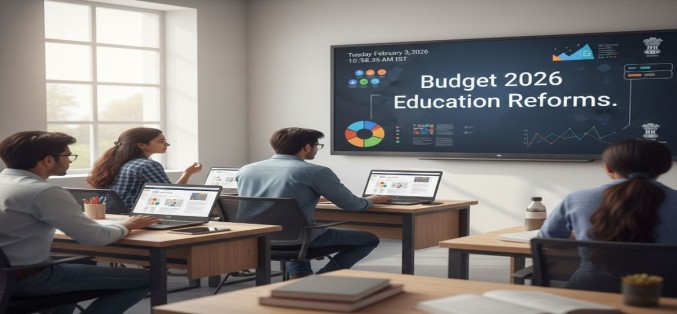
Education is the cornerstone of Budget 2026, harnessing India's youth bulge through school strengthening, skill alignment and higher ed innovation. Aligned with NEP 2020, allocations target foundational learning, vocational training and research to build a future-ready workforce.
School education dominates with funding for infrastructure—classrooms, toilets, labs and digital aids. Foundational literacy and numeracy (FLN) missions intensify teacher training and play-based learning for grades 1-5. Mid-day meals extend nutrition support, while regional languages and inclusive ramps address diversity. This tackles learning poverty, ensuring 100% gross enrolment by 2030.
Higher education sees premier institutions like IITs, IIMs and NITs receive capex for expansions, hostels and research parks. New IITs in underserved states boost access, while multidisciplinary universities foster holistic curricula. Fellowships and loans ease financial barriers, emphasising equity for girls and rural talent.
Skill India gets turbocharged, targeting 40% vocational training by 2026. Budget 2026 scales apprenticeships, ITIs and sector-specific hubs in AI, green tech and manufacturing. Industry partnerships guarantee placements, blending classroom theory with on-job practice. Reskilling for gig workers and MSMEs addresses automation shifts.
Digital learning leaps forward via PM e-VIDYA, DIKSHA platforms and SWAYAM courses. Free tablets, high-speed internet and VR labs democratise quality content. Ed-tech startups gain incubation support, while AI tutors personalise pacing for millions.
Research and innovation funding doubles for grants, patents and labs. Atal Tinkering Labs in schools spark early STEM curiosity, feeding into incubators. Women in STEM scholarships promote gender balance.
Teacher development is pivotal—salaries, training and performance-linked incentives. Digital pedagogy equips educators for hybrid models, reducing urban-rural divides.
Regional focus aids aspirational districts with model schools and scholarships. Northeast and island territories get specialised packages.
Financing leverages PPPs for hostels, CSR for labs and bonds for infra. Outcome-based budgeting ties funds to enrolment, learning metrics.
Economically, educated youth fuel 8%+ GDP growth, innovation and jobs. Corporates benefit from skilled hires, lowering training costs.
Implementation challenges—monitoring, corruption-proofing—require tech dashboards and audits. Parental involvement and industry feedback loops enhance efficacy.
Budget 2026 positions education as empowerment, from anganwadi to PhD, unlocking demographic potential for Amrit Kaal.