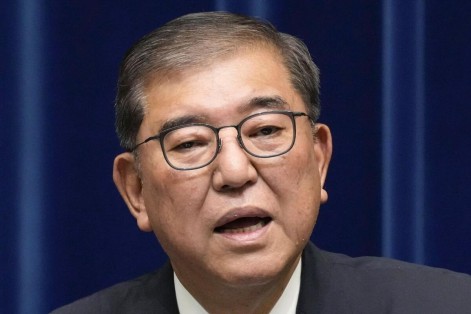
Japan has entered a new political chapter as its Prime Minister officially announced his resignation following a historic election defeat earlier this summer. The announcement, though expected after weeks of speculation, has sent shockwaves across the nation and raised pressing questions about the future of governance in one of the world’s most influential democracies. For many Japanese citizens, the resignation symbolizes both the end of a political era and the beginning of an uncertain period marked by transition, negotiation, and the search for renewed leadership.
The election, held earlier this summer, delivered one of the most significant defeats in modern Japanese history for the ruling party. Long considered a dominant force in Japanese politics, the party suffered losses that reflected widespread public dissatisfaction with economic stagnation, rising inflation, social inequality, and ongoing challenges in areas such as energy security and international relations. The magnitude of the loss left the Prime Minister politically weakened and unable to maintain the authority necessary to govern effectively, making resignation the only viable option.
In his resignation speech, delivered with characteristic composure, the Prime Minister acknowledged responsibility for the party’s failure and emphasized the importance of accountability in democratic systems. He expressed gratitude to the Japanese people for their support throughout his tenure and urged the next generation of leaders to embrace bold reforms to meet the nation’s evolving needs. He also stressed the importance of unity, warning that political divisions at this critical moment could undermine Japan’s ability to address both domestic challenges and global responsibilities.
The political fallout has been immediate and intense. Within the ruling party, factions are maneuvering to select a successor capable of restoring public trust and stabilizing the government. Meanwhile, opposition parties, emboldened by their electoral success, are calling for sweeping policy shifts and structural reforms. This moment represents a rare opportunity for opposition forces to influence the direction of Japan’s political and economic agenda, potentially reshaping the country’s trajectory for years to come.
Internationally, the resignation has sparked concern among Japan’s allies and economic partners. Japan plays a crucial role in global trade, security, and diplomacy, particularly in the Asia-Pacific region, where tensions with China and North Korea remain high. Leadership instability in Tokyo has the potential to affect delicate negotiations on defense cooperation, trade agreements, and environmental commitments. World leaders have issued statements of respect for the Prime Minister’s service, while expressing hope that Japan will quickly achieve stability under new leadership.
Domestically, the resignation comes at a time when Japanese society is grappling with pressing challenges that demand decisive leadership. Economic concerns are at the forefront, with households struggling under the weight of rising living costs and stagnant wages. Demographic issues, particularly an aging population and declining birth rates, continue to strain social welfare systems and raise questions about the long-term sustainability of Japan’s workforce and economy. Citizens are also increasingly vocal about climate change, demanding stronger commitments to renewable energy and environmental protection.
The Prime Minister’s decision to step down may also be viewed through the lens of Japan’s political culture, where humility and accountability are deeply valued. Unlike some global leaders who cling to power despite electoral setbacks, the resignation reflects a recognition that leadership requires legitimacy rooted in public trust. By stepping aside, the Prime Minister has paved the way for new leadership while preserving the integrity of the democratic system.
Attention now turns to the selection of a new Prime Minister, a process that will determine not only the immediate course of governance but also the broader direction of Japanese politics. The ruling party faces the difficult task of choosing a leader capable of bridging internal divisions while appealing to a disillusioned electorate. Potential candidates are already being discussed, with analysts weighing their ability to address key issues such as economic reform, defense policy, and Japan’s role in global affairs.
For the Japanese public, the resignation is both a moment of uncertainty and an opportunity for renewal. Many citizens are hopeful that new leadership will bring fresh perspectives and stronger commitments to addressing everyday concerns. At the same time, there is skepticism about whether systemic issues within the political establishment will allow for meaningful change. Trust in politicians has been eroded in recent years, and rebuilding that trust will be one of the greatest challenges facing the next government.
As Japan navigates this period of transition, the world watches closely. The resignation of a Prime Minister following a historic election defeat is more than just a change in leadership; it is a reminder of the resilience of democratic institutions and the power of public will. The coming weeks will determine whether Japan seizes this moment as an opportunity to renew its political and social contract, or whether it becomes another chapter in a cycle of leadership instability. Either way, the decision marks a turning point in Japanese history and underscores the profound responsibility carried by those who lead.