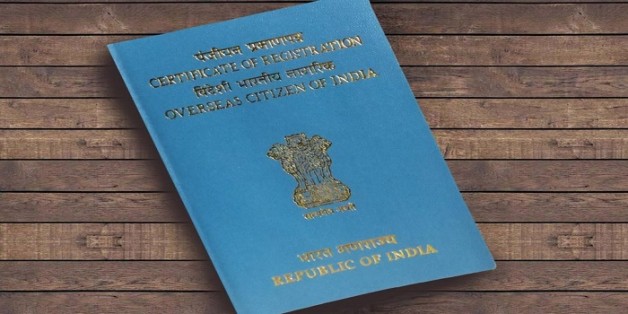
Government Tightens OCI Registration Rules —
Ensuring Accountability in Citizenship Privileges
Introduction
The Overseas Citizen of India (OCI) program, introduced in 2005, has been a vital bridge connecting the global Indian diaspora to their roots. It allows foreign citizens of Indian origin to enjoy multiple long-term benefits in India, including visa-free travel, property rights, and participation in certain economic activities. However, with changing global and domestic circumstances, the Government of India has revisited and updated the framework governing OCI privileges. In its latest move, the government has introduced a stricter provision: OCI registration may now be canceled if the holder is convicted of an offense that leads to imprisonment for two years or more.
This is not just a bureaucratic adjustment—it’s a significant shift in the government’s stance on ensuring that the privileges associated with OCI status are safeguarded by accountability, integrity, and legal compliance. The move has sparked debates across legal, political, and diaspora circles about the balance between rights and responsibilities for OCI holders.
Early History of OCI and Its Significance
The OCI scheme was conceptualized to allow Persons of Indian Origin (PIOs) to maintain strong connections with India without holding dual citizenship, which is not permitted under the Indian Constitution. The card came with multiple benefits, including:
-
Lifetime visa to visit India.
-
Exemption from registration with local police for long-term stays.
-
Access to economic opportunities and certain property rights.
From the early years, the intent was clear—strengthen cultural, economic, and emotional ties between India and its diaspora spread across the world. As the Indian economy grew and global migration increased, the OCI card became one of the most sought-after links for the Indian diaspora.
Why the New Rule Was Introduced
The Indian government’s decision to implement stricter rules stems from several underlying concerns:
-
Ensuring National Security — Criminal activities by foreign citizens holding OCI status could pose threats to India’s law and order.
-
Preventing Misuse of Privileges — While most OCI holders comply with laws, a small minority may misuse the status for illegal activities such as fraud, trafficking, or corruption.
-
Aligning with International Norms — Many countries have similar provisions to revoke long-term residency rights for serious criminal offenses.
-
Public Trust and Governance — Maintaining OCI as a prestigious status requires that it be held by individuals who respect India’s laws.
Legal Provisions Under the New Rule
Under the revised guidelines, the Ministry of Home Affairs now has the authority to cancel OCI registration if:
-
The holder is convicted of an offense resulting in two years or more of imprisonment.
-
The conviction is recorded in India or recognized through international legal agreements.
-
The act committed is classified as serious under Indian penal laws.
This change is significant because earlier, OCI cancellation was limited to offenses against national security, fraud in application, or other narrowly defined grounds. The expanded criteria mean that a wider range of serious crimes—such as drug trafficking, financial fraud, or violent crimes—can now lead to cancellation.
Reactions from the Indian Diaspora
The global Indian community, which numbers over 30 million, has had mixed reactions to this update.
-
Supporters believe that this will protect India’s reputation and ensure that the benefits of OCI are enjoyed only by law-abiding individuals.
-
Critics worry that the law could be misused for political or bureaucratic targeting, especially in cases where legal definitions vary across countries.
For example, a conviction in a foreign nation may be seen differently under Indian law. Diaspora groups in the US, UK, Canada, and Australia have already begun seeking legal clarifications from Indian embassies.
Diplomatic & International Context
India is not alone in tightening residency rules for overseas citizens. Many countries, including the US, Australia, and Singapore, have clear legal mechanisms to revoke residency or long-term visas upon criminal convictions. By aligning its OCI policies with such international practices, India strengthens its ability to enforce law and order in a globalized environment.
Furthermore, India has recently been in talks with several countries regarding extradition agreements and cross-border criminal information sharing. These reforms can complement such efforts by ensuring that individuals convicted abroad can face corresponding consequences for their OCI privileges.
Possible Scenarios of Implementation
Let’s break down some hypothetical examples of how this law might work:
-
Case of Financial Fraud — An OCI holder convicted of large-scale bank fraud in India and sentenced to three years in prison could have their OCI status revoked, barring them from returning under the same privileges.
-
Case of Violent Crime Abroad — If an OCI holder is convicted of armed assault in a foreign country and India recognizes the judgment through a legal treaty, the cancellation clause may apply.
-
Case of Political Sensitivity — Concerns exist about politically motivated charges in certain countries. For such cases, the Indian government would need to carefully assess credibility before acting.
Economic Implications
While this rule is primarily about law enforcement, it also has economic dimensions:
-
Investor Confidence — OCI holders investing in India may view the law as a sign of stronger governance and rule of law.
-
Property Ownership — Since OCI holders can buy certain categories of property in India, this law ensures that only those with clean legal records retain these rights.
-
Business Risks — Entrepreneurs holding OCI status may have to ensure compliance across multiple jurisdictions to safeguard their status.
Potential Legal Challenges
Given the global nature of the Indian diaspora, there may be legal pushback:
-
Jurisdictional Disputes — How will India treat crimes committed abroad where legal definitions differ?
-
Right to Appeal — Will OCI holders have a transparent appeals process?
-
Retrospective Application — Will the rule apply to past convictions or only future ones?
These questions are crucial in ensuring that the law remains fair while still effective.
Government’s Communication Strategy
The Ministry of Home Affairs has emphasized that the law is aimed at serious criminal activity and not minor infractions. They have promised:
-
Clear guidelines on what constitutes a two-year imprisonment offense.
-
A formal appeals process for OCI holders.
-
Coordination with embassies to ensure diaspora awareness.
The government is also likely to conduct awareness campaigns through consulates, diaspora organizations, and online portals to clarify these changes.
Long-Term Impact on OCI Framework
This reform could reshape the very perception of the OCI card:
-
From a Passive Benefit to a Conditional Privilege — Holders may now view OCI as a responsibility that requires adherence to India’s legal and ethical standards.
-
Encouraging Law-Abiding Behavior — The possibility of cancellation could deter OCI holders from engaging in unlawful activities.
-
Strengthened India-Diaspora Relations — While some may see this as restrictive, others may interpret it as India’s commitment to protecting its global image.
Expert Opinions
Legal experts in India and abroad have shared varied perspectives:
-
Supportive Legal View — Many constitutional lawyers argue that this is a natural evolution of the OCI framework, keeping pace with modern governance needs.
-
Cautious Diplomatic View — Some foreign policy analysts caution that overly strict or politically influenced application could harm India’s diaspora diplomacy.
Conclusion
The tightening of OCI registration rules marks a significant policy evolution in India’s engagement with its overseas community. By introducing the possibility of cancellation for serious criminal convictions, the government has sent a clear message: OCI status is a privilege, not a right, and it must be upheld with responsibility.
While debates about fairness, international jurisdiction, and implementation will continue, the move underscores India’s determination to balance openness to its diaspora with the need for national integrity and legal accountability.
Over the coming years, the effectiveness of this law will depend on transparent enforcement, consistent legal interpretation, and proactive communication with the global Indian community. The OCI card remains a powerful link between India and its diaspora—but like all valuable connections, it thrives on mutual trust and respect for the law.