How Nehru's Rules for the Indus Waters Treaty Shaped Regional Water Diplomacy
The Indus Waters Treaty (IWT) of 1960 remains one of the most significant water-sharing agreements in modern history, not only for India and Pakistan, but for the entire South Asian region. The treaty, brokered by the World Bank, established a framework for cooperation and equitable distribution of water resources from the Indus River System between the two nations, which are both highly dependent on its waters. While the treaty has withstood many tensions between India and Pakistan over the decades, its creation was largely influenced by the diplomatic foresight of Jawaharlal Nehru, India’s first Prime Minister.
The treaty’s terms, shaped by Nehru’s leadership and vision, have significantly influenced regional water diplomacy and have been instrumental in guiding the approach to water disputes in the subcontinent. This article explores the specific rules Nehru set forth in the treaty and how these guidelines have affected water-sharing agreements and the management of transboundary water resources in South Asia.
Nehru's Vision for the Indus Waters Treaty: A Framework for Cooperation
The primary challenge Nehru faced was navigating the deeply contentious and sensitive issue of water distribution following the Partition of India in 1947, which led to the division of the Indus River system between India and Pakistan. The Partition left Pakistan with much of the river system, while India retained control over some key tributaries, especially in the north. With both nations experiencing rapid population growth and agricultural development, the need for a formal, structured agreement became urgent.
Nehru’s approach was rooted in the belief that water should not be a source of conflict, but rather a catalyst for cooperation between nations. The rules Nehru laid out in the Indus Waters Treaty were intended to ensure that both countries could benefit from the river system while minimizing potential disputes. His vision sought to establish neutrality and fairness in the division of the waters, which would allow both India and Pakistan to prioritize long-term peace over short-term political interests.
The Core Terms of the Indus Waters Treaty: Nehru’s Strategic Framework
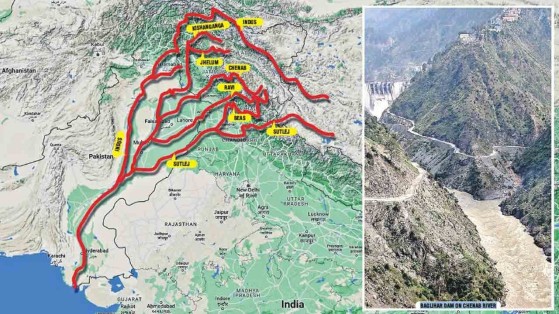
The Indus Waters Treaty is based on the allocation of the river’s six tributaries. It divides the rivers into two groups:
-
Eastern Rivers (Ravi, Sutlej, Beas): These rivers were allocated to India, meaning India could have control over them for irrigation and hydroelectric projects.
-
Western Rivers (Indus, Jhelum, Chenab): These rivers were allocated to Pakistan, ensuring its access to a vast portion of the river system’s water supply.
Nehru's strategic rule in drafting these terms was clear: India would control the upper reaches of the rivers, while Pakistan would be granted exclusive rights to the lower reaches. This allocation scheme sought to balance the needs of both nations without unduly disadvantaging either.
The treaty’s design ensured that while India could build hydroelectric power plants and use water for irrigation in the eastern region, it could not restrict Pakistan’s access to water in the western rivers. The treaty’s rules allowed Pakistan to build irrigation infrastructure using waters from the western rivers without interference, while India was committed to non-interference with these projects.
Nehru’s Commitment to Peace and Development
Nehru’s rule in the treaty’s formation was not just about securing water rights but also about ensuring the peaceful use of shared resources. His primary goal was to prevent water disputes from becoming flashpoints for further conflict between India and Pakistan, both of which were newly independent and fragile states, and often involved in military confrontations. By creating a framework based on international cooperation, Nehru ensured that both countries would have access to the resources they needed while avoiding further escalation of hostilities.
The treaty included a neutral third-party mechanism, represented by the World Bank, to mediate any disagreements that might arise. This was significant because it shifted the responsibility for dispute resolution away from the two nations and placed it into the hands of a neutral entity. Nehru’s vision of an independent, neutral arbiter was a groundbreaking move in international water diplomacy, setting a precedent for future water-sharing agreements in the region.
The Role of the Neutral Expert and World Bank in Dispute Resolution
One of Nehru’s significant contributions was his insistence on creating a mechanism for peaceful dispute resolution. This was pivotal in ensuring that the Indus Waters Treaty stood the test of time despite several conflicts and tensions between India and Pakistan. The treaty set up a Permanent Indus Commission, composed of officials from both countries, to oversee the implementation of the agreement and resolve any technical issues.
Further, Nehru’s rule established the importance of independent experts in water disputes. The World Bank, which helped broker the treaty, acted as a mediator, offering solutions in cases where technical issues arose. The involvement of neutral experts has since become a hallmark of successful water-sharing agreements, providing a blueprint for future international water management deals.
The Treaty’s Long-Term Influence on Regional Water Diplomacy
Nehru’s diplomatic foresight, enshrined in the Indus Waters Treaty, influenced the way future water-sharing agreements were negotiated and enforced in South Asia and beyond. His rule established the principle that shared water resources should be managed cooperatively, rather than be used as tools of political leverage. It also set the stage for multilateral water-sharing agreements in other regions, where third-party mediation and the use of experts have become critical components of negotiations.
The treaty itself has continued to be a stabilizing force in South Asia, despite intermittent periods of tension between India and Pakistan. Even during conflicts, such as the Kargil War and the Mumbai attacks, the treaty has held, with both countries refraining from using water resources as a weapon. This adherence to the treaty’s rules is often cited as a rare example of cooperation amidst longstanding political and military rivalries.
Challenges and Future Directions
While the treaty has endured, challenges remain. Both nations have, at times, accused each other of violating its terms, particularly regarding the construction of dams and hydropower projects on shared rivers. The future of the Indus Waters Treaty will depend on how these disagreements are handled in the coming years, as both countries face growing pressure from climate change and increased water demands.
Nehru’s approach to water diplomacy—through negotiation, cooperation, and third-party mediation—remains as relevant today as it was in 1960. His rule continues to serve as a model for the peaceful management of transboundary water resources, highlighting the importance of shared responsibility, neutrality, and long-term cooperation in maintaining regional peace.
Conclusion: Nehru’s Enduring Legacy in Water Diplomacy
In conclusion, Jawaharlal Nehru's approach to the Indus Waters Treaty has had a profound and lasting influence on regional water diplomacy. His insistence on cooperation, neutrality, and the peaceful resolution of disputes has provided a framework that not only benefited India and Pakistan but has also inspired future international water-sharing agreements. While the geopolitical dynamics of South Asia continue to evolve, Nehru’s legacy remains central to the management of shared water resources, offering valuable lessons in diplomacy, sustainability, and conflict resolution.