Introduction
A striking hot mic incident occurred during a grand military parade in Beijing marking the 80th anniversary of the end of World War II. Chinese leader Xi Jinping and Russian President Vladimir Putin were overheard discussing biotechnology, organ transplantation, and the possibility of living up to 150 years—perhaps even achieving immortality. What began as candid small talk has quickly become a global talking point—raising questions of ethics, power, and the role of world leaders in discussions about life extension.
The Moment Captured
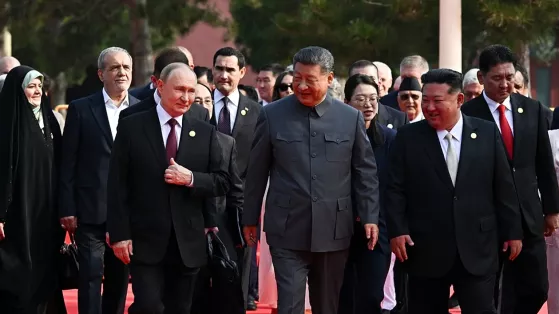
During the parade, Xi and Putin led a procession alongside North Korea’s Kim Jong Un. The moment was broadcast live by state media and shared widely by international outlets. Viewership reached nearly two billion online views and hundreds of millions of TV viewers.
As the trio walked toward Tiananmen’s viewing platform, Putin’s interpreter was heard saying:
“Biotechnology is continuously developing… Human organs can be continuously transplanted. The longer you live, the younger you become, and [you can] even achieve immortality.”
Xi responded off-camera:
“Some predict that in this century humans may live to 150 years old.”
Kim remained silent but appeared amused.
Putin later confirmed to reporters that the topic was indeed discussed, emphasizing that modern medical advancements—including organ replacement—offer hope for significantly increasing active life spans.
The Context: Power, Longevity, and Public Messaging
At face value, the conversation reflects an elite fascination with longevity and cutting-edge medical science. But beyond the surface:
-
Symbolism of Eternal Rule: Both Xi and Putin have consolidated power—Xi removed term limits in 2018, and Putin has extended his presidency. Their discussion on immortality hints at not just personal longevity but symbolic permanence.
-
Scientific Ambitions and Speculation: The conversation isn’t rooted in scientific consensus. Experts dismiss the notion of immortality through serial organ transplants, citing medical risks like immune rejection and infection.
-
Authoritarian Overtones: The mention of forced organ harvesting—particularly in the context of China’s history of such practices against minorities—adds a chilling subtext.
Scientific Perspective: Fantasy or Future?
What Experts Say:
-
Transplants are life-saving for organ failure patients but not a route to immortality.
-
Risks include rejection, immunosuppression, and complications that make continuous organ replacement dangerous.
-
Bioprinting and regenerative medicine show potential in reconstructive surgery—but printing fully functional organs at scale remains decades away.
Experts insist the conversation between Xi and Putin reflects fantasy rather than fact.
Ethical and Political Implications
This candid exchange has raised multiple ethical and geopolitical concerns:
-
Authoritarian Dystopia: Some commentators frame the moment as a chilling glimpse into two leaders' quest for power and control, raising fears of unethical biomedical practices.
-
Propaganda vs. Reality: Others speculate the hot mic moment may have been intentional—designed to signal scientific prowess, stir intrigue, or distract global audiences.
-
Public Reaction and Censorship: The conversation triggered intense online interest. Phrases like "150 years" quickly trended on Chinese platforms—even though searches were censored on Weibo.
Global Reactions and Online Frenzy
The intensity of reactions was immediate and varied:
-
Humor Meets Skepticism: One social media user quipped: “72-year-olds planning their 150th birthday party while the rest of us can barely plan next week.”
-
Conspiracy Theories: Another speculated the moment was deliberate—a cryptic signal from global power players.
-
Philosophical Reflections: Some comments pondered mortality, power, and human limitations—regardless of authority.
Historical Echoes and Patterns
This moment fits into broader narratives:
-
Putin’s Longevity Campaigns: Since 2024, Putin has backed initiatives like “New Health Preservation Technologies” focused on anti-aging, bioprinting, and neurotech. Critics argue these are led by political insiders, not scientific experts.
-
China’s Biotech Push: Beijing has increasingly touted biotechnology as a pillar of national strategy, despite international scrutiny over organ practices.
Together, these patterns suggest an ideological investment in longevity—blurring the line between scientific ambition and propagandistic spectacle.
The Broader Message
Why does this matter beyond the surreal?
-
Power Projection: Casting themselves as leaders who could defy death reinforces a narrative of invincibility—both to domestic and foreign audiences.
-
Public Distrust in Science: Grandiose claims like these—especially unsupported ones—may erode trust in science and medicine.
-
Ethical Red Flags: Even joking about immortality in such contexts raises alarms about the direction of life-extension research under authoritarian regimes.
Final Thoughts
The hot mic moment wasn’t just strange—it was symbolic. Beneath the veils of prestige and spectacle lie pressing questions about how world leaders view life, power, and science. Xi and Putin’s words may have been speculative, but the ripples they created—through censorship, online debate, and global commentary—are real.
Will longevity become the next frontier of geopolitical influence? Or will this moment go down as a bizarre anecdote rather than a policy foreshadowing? Only time—and scientific rigor—will tell.