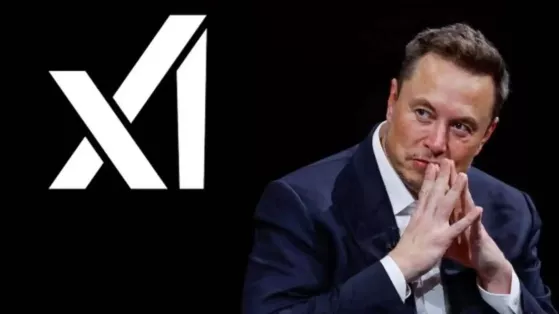
Elon Musk’s artificial intelligence startup, xAI, is once again making headlines, this time for the abrupt resignation of its Chief Financial Officer, who has exited the company after only a few months in the role. The departure, part of a broader wave of high-profile exits from the company, raises questions about the stability and direction of Musk’s AI venture at a time when the global artificial intelligence industry is more competitive than ever.
The announcement of the CFO’s departure has fueled speculation across Silicon Valley and Wall Street alike. xAI, launched in 2023 with the stated mission of building artificial general intelligence (AGI) that benefits humanity, has positioned itself as a challenger to OpenAI, Anthropic, Google DeepMind, and other leading players in the AI race. The loss of a key executive responsible for overseeing financial strategy, fundraising, and investor relations suggests deeper turbulence within the startup.
The CFO, whose tenure lasted only a few months, was expected to play a pivotal role in securing financial backing for xAI’s ambitious projects. With Musk emphasizing rapid growth, large-scale data infrastructure, and integration of AI technologies into his other companies—such as Tesla, SpaceX, and X (formerly Twitter)—the role of the CFO was seen as crucial to balancing bold vision with financial discipline. Their sudden exit, therefore, not only signals possible internal disagreements but also underscores the challenges of aligning Musk’s aggressive timelines with traditional corporate governance.
This resignation is not an isolated incident. xAI has experienced a string of executive departures in recent months, including key engineers, product managers, and strategic advisors. While Musk remains the driving force behind the company, critics argue that such high turnover points to a deeper cultural issue. Musk’s management style—famously demanding, fast-paced, and sometimes polarizing—has been both lauded for driving innovation and criticized for contributing to burnout and instability.
The timing of these exits is especially significant given the broader context of the AI industry. Rivals such as OpenAI and Anthropic have secured billions in funding, forged partnerships with tech giants like Microsoft, Amazon, and Google, and accelerated their rollout of advanced generative AI models. For xAI to compete at this level, it must not only deliver cutting-edge technology but also build a stable, sustainable organizational structure capable of attracting top talent and investor confidence. The departure of its CFO, whose expertise in financial strategy would have been central to fundraising efforts, threatens to weaken its standing in this race.
Supporters of Musk argue that leadership shakeups are not unusual in fast-moving startups, particularly those operating at the frontier of emerging technologies. They note that Musk’s track record with companies like Tesla and SpaceX demonstrates his ability to weather organizational turbulence and ultimately deliver breakthroughs. For example, Tesla faced years of executive turnover and financial struggles before becoming the world’s most valuable carmaker. Similarly, SpaceX endured early setbacks, including rocket failures and funding shortfalls, before achieving historic successes. From this perspective, the CFO’s resignation may be seen as part of the growing pains of building a company with world-changing ambitions.
Yet critics are less optimistic. They warn that the AI sector, unlike electric vehicles or space exploration, is already crowded with well-established players who not only have deep pockets but also relatively stable organizational structures. In such an environment, frequent leadership exits could erode investor trust and hinder xAI’s ability to form strategic partnerships. For a company seeking to compete on the global stage, stability at the executive level is not a luxury but a necessity.
The CFO’s departure also highlights broader questions about Musk’s vision for xAI. From the outset, Musk has framed xAI as a company that will develop “truth-seeking AI” capable of providing reliable, unbiased answers in contrast to competitors he has accused of building politically biased systems. While this mission resonates with many of Musk’s followers, turning it into a commercially viable product requires a clear financial strategy, disciplined execution, and investor alignment. Without a strong financial leader, critics argue, Musk risks relying too heavily on his personal brand and resources, which may not be sufficient to sustain the company’s ambitions at scale.
Internally, sources suggest that tensions within xAI may stem from conflicting priorities. On one hand, engineers and researchers are focused on long-term breakthroughs in artificial general intelligence, requiring substantial investment in compute infrastructure, data acquisition, and talent. On the other hand, there is pressure to deliver short-term products and integrations, particularly within Musk’s social media platform, X, where xAI’s chatbot “Grok” has been rolled out as a competitor to ChatGPT. Balancing these competing demands requires not only technical leadership but also financial discipline—precisely the areas where the CFO’s guidance would have been invaluable.
The wave of high-profile departures also reflects the intense competition for AI talent. Top engineers and executives in the field are courted by multiple companies offering lucrative compensation packages, research opportunities, and the promise of working on groundbreaking projects. For xAI, retaining such talent is especially challenging given Musk’s reputation for long hours and high-pressure expectations. While some thrive under such conditions, others may find the environment unsustainable, leading to turnover.
From an investor’s perspective, the CFO’s resignation may raise concerns about xAI’s ability to secure the billions of dollars needed to compete in the AI arms race. Building and training large-scale AI models requires not only top talent but also massive investments in supercomputing infrastructure, specialized chips, and energy resources. Rivals like OpenAI have benefited from partnerships with Microsoft’s Azure cloud platform, while Anthropic has secured backing from Amazon and Google. For xAI to keep pace, it will need similar levels of support, which could be harder to secure without stable financial leadership.
The departure also underscores the unique challenges of managing a Musk-led company. While Musk’s charisma and visionary outlook attract attention and resources, his tendency to shift priorities rapidly across his portfolio of companies can create uncertainty. For executives tasked with long-term planning, this unpredictability can be difficult to navigate. It is possible that the CFO’s decision to leave reflected frustration with such dynamics or disagreements over financial strategy and resource allocation.
Public reaction to the news has been divided. Supporters of Musk argue that his companies often thrive amid chaos and that the CFO’s resignation will ultimately be a footnote in xAI’s history. They point to Musk’s ability to personally raise capital, rally talent, and push projects forward through sheer force of will. Critics, however, see the departure as a warning sign that xAI may be struggling to find its footing in an increasingly competitive industry. They question whether Musk’s leadership style, effective in industries like automotive and aerospace, will translate successfully to the fast-evolving world of artificial intelligence.
Looking ahead, xAI faces critical challenges. It must replace its CFO with a leader capable of navigating both the financial demands of AI development and the unique pressures of working alongside Musk. It must also address internal cultural issues to reduce turnover and create an environment that attracts and retains top talent. At the same time, it must continue to innovate rapidly to avoid falling behind competitors who are already rolling out advanced AI models and securing market share.
For Musk personally, the CFO’s departure adds to the growing scrutiny of his management style across his empire of companies. At Tesla, he faces pressure to deliver new products like the Cybertruck while maintaining profitability. At SpaceX, he continues to oversee ambitious projects like Starship and Starlink. At X, he is attempting to reinvent the platform while facing financial losses and advertiser skepticism. Adding xAI to this mix only increases the complexity of his responsibilities. While Musk has thrived on juggling multiple ventures, the question remains whether such an approach is sustainable in the hyper-competitive AI industry.
In conclusion, the resignation of xAI’s CFO after just a few months highlights the challenges of building a world-class AI company under Elon Musk’s leadership. It reflects not only internal tensions and cultural challenges but also the broader pressures of competing in a crowded, high-stakes industry. While Musk’s track record suggests that he can overcome turbulence and deliver breakthroughs, the stakes in AI are uniquely high, requiring stability, financial discipline, and long-term strategy. Whether xAI can weather this storm and emerge as a true competitor to established players remains uncertain, but one thing is clear: the path forward will be closely watched by investors, competitors, and the public alike.