Introduction
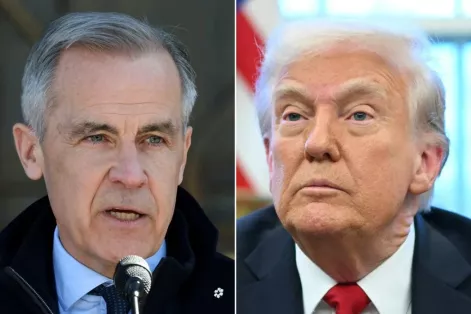
The Canadian Prime Minister and former US President Donald Trump held a productive phone call this week, signaling a possible easing of trade tensions that have strained relations between Ottawa and Washington in recent months. The conversation focused on ongoing negotiations, tariff issues, and broader economic cooperation between the two countries.
The Call and Its Tone
According to officials familiar with the discussion, the tone of the call was described as “constructive” and “forward-looking.” Both leaders emphasized the importance of stable economic ties and reducing uncertainty for businesses and workers on both sides of the border. This marks a significant shift from earlier rhetoric that suggested growing friction.
The Canadian leader reportedly pressed for clarity on tariffs and market access, while Trump, who has often taken a hardline stance on trade, appeared open to dialogue and cooperation.
Background of Trade Strains
Relations between Canada and the United States have long been shaped by deep economic interdependence. However, trade tensions have intensified over the last few years due to disputes over tariffs, agricultural exports, and regulatory barriers.
The renegotiation of the North American Free Trade Agreement, which led to the United States–Mexico–Canada Agreement (USMCA), left lingering concerns among Canadian exporters and policymakers. Trump has often framed trade in terms of American competitiveness, while Canada has sought assurances that its industries will not be unfairly targeted.
Signals of Progress
The latest call suggests progress on several fronts. Sources indicate that both leaders discussed lowering trade barriers, ensuring fair access to markets, and addressing disputes in sectors such as steel, aluminum, and agriculture.
Observers say the fact that both leaders highlighted cooperation rather than confrontation is a sign that negotiations may be moving toward resolution. Business groups in both countries have expressed optimism, urging policymakers to finalize agreements that would strengthen North American supply chains.
Domestic and Global Implications
For Canada, reducing trade uncertainty is critical to supporting economic growth and investor confidence. For the United States, particularly under Trump’s influence, restoring predictability in North American trade could serve as a political and economic win.
On the global stage, the easing of tensions between Canada and the US also sends a reassuring message to allies and markets. With geopolitical competition and global economic volatility rising, North American cooperation is seen as a stabilizing force.
Expert Reactions
Trade experts note that while the call represents a positive step, significant challenges remain. Issues such as agricultural quotas, energy exports, and digital trade standards still require detailed negotiation.
Some analysts also caution that Trump’s approach to trade has historically been unpredictable. While this call was productive, future talks may still encounter friction depending on political and economic pressures.
Looking Ahead
Negotiations are expected to continue over the coming weeks. Both Ottawa and Washington have signaled readiness to engage in high-level discussions aimed at finalizing a framework that addresses key concerns.
If successful, the agreement could mark a turning point in US-Canada trade relations, setting the stage for renewed cooperation and stability in North America.
Conclusion
The productive call between the Canadian Prime Minister and Donald Trump underscores a shift toward easing trade tensions after a period of heightened uncertainty. While challenges remain, both sides appear committed to dialogue and compromise.
For businesses, workers, and policymakers in both countries, the prospect of a stronger and more predictable trade partnership offers hope for stability in an otherwise uncertain global economy.