HAL and Safran Sign Final Contract to Develop Aravalli Engine for India’s Indigenous 13-Tonne Helicopter
India's effort to develop a new generation of indigenous military helicopters has reached a major propulsion milestone, with Hindustan Aeronautics Limited and Safran signing the final contract to jointly develop and produce the Aravalli, a new high-power helicopter engine.
The engine will be developed through SAFHAL Helicopter Engines Pvt Ltd, the 50:50 joint venture established by HAL and Safran Helicopter Engines.
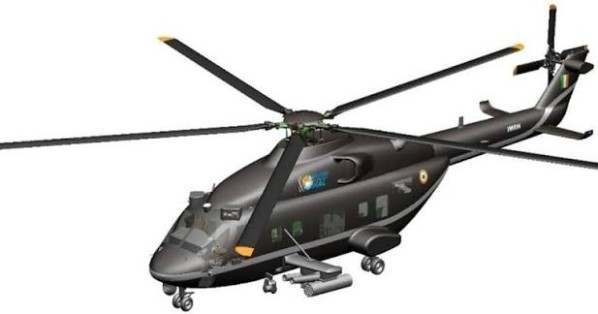
Aravalli is being designed in the 3,500–4,000 shaft horsepower class and has been selected to power HAL's future 13-tonne Indian Multi-Role Helicopter, or IMRH, as well as its naval derivative, the Deck-Based Multi-Role Helicopter, or DBMRH. (Safran)
The programme is strategically important because India is not merely acquiring an overseas engine for installation on a domestic helicopter.
HAL and Safran intend to jointly design, develop, manufacture and support the new propulsion system, expanding India's participation in one of the most technologically demanding areas of aerospace engineering.
Final Contract Launches Aravalli Development

The contract was signed on August 26, 2026.
It covers the:
design,
development,
manufacture,
supply,
and lifecycle support
of the Aravalli engine. (Safran)
The agreement moves the programme into a more substantive development and production phase following years of collaboration between the two aerospace companies.
Aravalli Will Deliver 3,500–4,000 shp
The new turboshaft engine is being developed in the:
3,500–4,000 shp power class.
That places it substantially above the power class of engines currently used on HAL's lighter indigenous helicopters.
The higher output is necessary because the IMRH will be a significantly larger aircraft designed for demanding medium-lift missions.
Engine Will Power the 13-Tonne IMRH
The principal platform for Aravalli is the:
Indian Multi-Role Helicopter.
HAL is developing the IMRH as a new 13-tonne-class multi-role helicopter for India's armed forces. (Safran)
The programme is intended to give India an indigenous medium-lift rotary-wing platform capable of performing a broad range of military missions.
IMRH Will Fill an Important Capability Segment
India already produces several lighter helicopter platforms.
But the IMRH represents a significant move into the heavier medium-lift category.
A helicopter of this class can potentially support missions including:
troop transport,
logistics,
search and rescue,
and specialised military operations.
The exact operational configuration will depend on the requirements of the armed forces.
Naval DBMRH Will Also Use Aravalli
Aravalli has also been selected for the:
Deck-Based Multi-Role Helicopter.
The DBMRH is the naval derivative of the IMRH concept.
Safran describes it as a roughly 12.5-tonne naval helicopter under development for the Indian Navy. (Safran)
Operating from warships creates a different set of engineering requirements from land-based helicopter operations.
Naval Helicopters Face Difficult Conditions
A deck-based helicopter must operate in an environment involving:
saltwater exposure,
high humidity,
strong winds,
and constrained shipboard operations.
Naval aircraft also require specialised systems for maritime missions.
Developing an engine capable of supporting both land and naval variants can therefore create a common propulsion architecture across multiple platforms.
SAFHAL Will Lead the Programme
The engine will be developed through SAFHAL Helicopter Engines Pvt Ltd.
SAFHAL is jointly owned by:
HAL
and
Safran Helicopter Engines.
The joint venture was established specifically to develop, produce, sell and support new-generation helicopter engines in India.
Partnership Is Structured on a 50:50 Basis
HAL and Safran are equal partners in SAFHAL.
The programme combines:
HAL's experience designing and manufacturing Indian helicopters
with
Safran's specialised expertise in turboshaft propulsion.
Business Standard reported that development is being shared on a 50:50 basis through the joint venture. (Business Standard)
This Is More Than Licensed Manufacturing
The distinction between manufacturing and development is important.
India has previously produced foreign-origin aerospace engines under licence.
But licensed manufacturing does not necessarily provide deep capability in:
engine architecture,
core design,
materials,
and performance optimisation.
The Aravalli programme involves joint design and development.
That provides India with an opportunity to deepen domestic propulsion expertise.
HAL Will Participate in Core Engine Development
The partnership has been structured over several years to provide HAL with meaningful participation in the engine programme.
A workshare agreement signed in 2023 established an equivalent distribution of development activities between the partners and specified HAL participation in the design, development and production of some core engine components. (Safran)
That makes the programme strategically more significant than simply assembling imported components.
Aero Engines Are Among the Most Difficult Technologies to Master
Aircraft engines operate under extreme conditions.
Inside a modern turbine engine:
temperatures are extremely high,
components rotate at enormous speeds,
and tolerances can be extraordinarily small.
At the same time, the engine must remain reliable for thousands of operating cycles.
That combination makes aerospace propulsion one of the most technologically demanding industrial sectors.
Helicopter Engines Have Additional Requirements
Turboshaft engines must deliver large amounts of power while remaining:
compact,
light,
reliable,
and fuel efficient.
Military helicopters may also operate under demanding environmental conditions.
India's geography adds challenges ranging from:
high-altitude mountains
to
hot deserts
and humid maritime environments.
Hot-and-High Performance Is Particularly Important for India
Helicopters lose performance as altitude and temperature increase because air becomes less dense.
This makes operations in mountainous regions especially demanding.
India's armed forces operate helicopters in some of the world's highest operational environments.
Engine performance therefore becomes directly connected to:
payload,
range,
and operational flexibility.
Aravalli Is Being Designed for Demanding Environments
Safran says the new engine will incorporate modern aeronautical propulsion technologies and is being designed to operate in demanding environments. (Safran)
Performance reliability across diverse conditions will be essential if the same propulsion family is used for both land and naval helicopters.
HAL and Safran Already Have a Long Engine Partnership
The Aravalli programme builds on decades of cooperation between the two companies.
Safran engines have powered several generations of HAL helicopters.
Their relationship began with the Artouste engines used on the:
Cheetah
and
Chetak.
It later expanded through the Shakti engine family. (Safran)
Shakti Powers Major HAL Helicopters
The Shakti engine family powers platforms including the:
Advanced Light Helicopter,
Light Combat Helicopter,
and Light Utility Helicopter.
Safran's Ardiden 1H1 forms the basis of the Shakti engine and was co-developed with HAL. (Safran)
Aravalli therefore represents the next stage in an established industrial partnership.
Aravalli Is Far More Powerful Than Shakti-Class Engines
Safran lists the Ardiden 1 family in the approximately:
1,400–2,000 shp
power range.
Aravalli is being developed for:
3,500–4,000 shp. (Safran)
The jump reflects the much greater propulsion requirements of a 13-tonne medium-lift helicopter.
Safran Calls the Programme a First for This Engine Class
Safran Helicopter Engines CEO Cédric Goubet said the Aravalli programme represents the first time the company has undertaken co-development of an engine in this power class. (Safran)
That highlights the industrial significance of the partnership for both companies.
HAL gains access to deeper propulsion development capabilities, while Safran participates in the creation of a new engine family for India's future rotorcraft requirements.
Development Will Require Extensive Testing
Designing the engine is only the beginning.
A new helicopter engine must undergo extensive validation involving:
component testing,
ground testing,
performance evaluation,
endurance testing,
and integration with the aircraft.
The engine must prove that it can perform reliably across the operating envelope expected from the helicopter.
Certification Is a Long Process
Aerospace systems require exceptionally rigorous certification.
Failures that might be inconvenient in ordinary machinery can be catastrophic in aviation.
Developers therefore need to demonstrate:
performance,
durability,
reliability,
and safety
before full operational deployment.
This means new engine programmes typically require years of engineering work.
Manufacturing Is Planned in India
Production of the engine is expected to form part of India's domestic aerospace industrial ecosystem.
Business Standard reported plans for manufacturing at Tumakuru, Karnataka. (Business Standard)
Domestic production could support a broader supply chain around precision components, materials, testing and maintenance.
Local Manufacturing Has Strategic Value
Military aircraft can remain in service for decades.
That means engine availability must be maintained across:
production,
maintenance,
upgrades,
and wartime requirements.
Domestic capability reduces exposure to overseas supply disruptions.
This becomes particularly important for strategically critical defence platforms.
Lifecycle Support Is Included in the Contract
The Aravalli agreement extends beyond development and production.
It specifically includes:
lifecycle support. (Safran)
This matters because the long-term cost of an engine is not determined solely by its purchase price.
Maintenance and overhaul expenses accumulate throughout decades of service.
MRO Capabilities Could Expand in India
Safran expects the programme to support development of indigenous:
Maintenance, Repair and Overhaul capabilities. (Safran)
An established domestic MRO ecosystem could reduce turnaround times and dependence on overseas maintenance facilities.
It can also create high-skill aerospace employment.
Engine Capability Has Broader Industrial Benefits
Aero-engine development requires expertise across multiple technologies.
These include:
high-temperature materials,
precision manufacturing,
aerodynamics,
combustion,
digital control systems,
and advanced testing.
Building capability in these areas can benefit other aerospace and industrial programmes.
India Has Historically Faced an Aero-Engine Gap
India has made substantial progress in designing:
aircraft,
helicopters,
missiles,
and space launch systems.
But advanced aircraft propulsion has remained one of the country's most difficult technology gaps.
Many Indian-designed aircraft continue to depend on foreign-origin engines.
The Aravalli programme addresses part of that challenge specifically in helicopter propulsion.
The Programme Supports Defence Self-Reliance
The government has increasingly emphasised domestic development of critical defence systems.
Propulsion is strategically important because a platform cannot operate independently without reliable engine access.
An indigenous helicopter fitted permanently with an imported engine remains dependent on foreign supply for a critical subsystem.
Co-development can reduce that vulnerability.
Technology Absorption Will Determine Long-Term Value
Simply manufacturing an engine in India does not automatically create complete technological independence.
The deeper question is how much Indian engineers learn about:
design,
materials,
testing,
and future modifications.
The strategic value of Aravalli will therefore depend partly on whether the programme creates capabilities that can be reused in later indigenous engine programmes.
IMRH Could Replace Imported Medium-Lift Platforms Over Time
India's armed forces currently operate imported helicopters across several medium and heavy categories.
A successful IMRH programme could progressively provide a domestic alternative for some future requirements.
That would reduce import dependence while increasing standardisation around an Indian-designed platform.
Commonality Can Reduce Operating Costs
Using a common helicopter family across multiple services can create advantages in:
training,
maintenance,
spares,
and logistics.
If the IMRH and DBMRH share major systems including propulsion architecture, the armed forces could benefit from greater fleet commonality.
Naval Variant Could Strengthen Maritime Aviation
The Indian Navy requires helicopters for missions ranging from surveillance and logistics to more specialised maritime roles.
Shipborne helicopters significantly extend the operational reach of naval vessels.
An indigenous deck-based medium helicopter could therefore become an important component of India's future maritime aviation capability.
Civil Applications Are Also Possible
HAL and Safran see potential applications beyond defence.
Safran says the engine programme could eventually support civil-market opportunities including:
offshore transportation,
utility missions,
and VVIP transport. (Safran)
That could expand the addressable market for the propulsion system.
Offshore Operations Require Powerful Helicopters
Energy companies use medium and heavy helicopters to transport workers and equipment to offshore installations.
These missions require:
range,
payload,
and reliability.
A future civil derivative of the IMRH platform could potentially address parts of this market if appropriate certification is achieved.
Export Potential Could Become Important
HAL increasingly views exports as part of its long-term growth strategy.
An indigenous helicopter powered by an engine jointly developed with an established global manufacturer could potentially appeal to overseas customers.
However, export success would depend on:
price,
performance,
certification,
and long-term support.
Engine Exports Could Extend Beyond HAL Helicopters
Safran describes Aravalli as a propulsion system tailored for medium-lift rotorcraft and potentially relevant to global markets. (Safran)
If the engine establishes a strong reliability record, the programme could eventually have applications beyond the original Indian platforms.
That would significantly improve production economics.
Scale Matters in Aero-Engine Manufacturing
Engine programmes require enormous upfront investment.
Development,
testing,
certification,
and manufacturing infrastructure
can cost heavily before meaningful production begins.
Larger production volumes allow those fixed costs to be spread across more engines.
Military, civil and export demand could therefore reinforce each other.
Supply-Chain Development Could Create New Opportunities
Domestic engine manufacturing requires suppliers capable of producing components to aerospace tolerances.
This can create opportunities for Indian companies specialising in:
precision machining,
forgings,
castings,
electronics,
and specialised materials.
Over time, such suppliers can become part of global aerospace supply chains.
Private Industry Could Benefit
Although HAL is a public-sector aerospace company, modern aircraft programmes depend on extensive supplier networks.
Indian private manufacturers already supply components to global aerospace companies.
A major domestic engine programme could deepen this ecosystem.
The value created therefore extends beyond HAL itself.
India-France Defence Cooperation Continues to Deepen
The Aravalli programme also reflects broader aerospace cooperation between India and France.
French companies have long participated in Indian aviation and defence programmes.
Joint development represents a deeper form of industrial cooperation than straightforward equipment purchases.
It creates longer-term relationships between engineering and manufacturing ecosystems.
The Programme Has Been Building Since 2022
The Aravalli partnership did not emerge suddenly.
HAL and Safran signed an initial memorandum in July 2022 to establish a joint venture for future helicopter engines. (Safran)
A workshare agreement followed in February 2023.
The partners then moved toward establishing SAFHAL and defining the propulsion solution for IMRH and DBMRH.
2024 Agreement Advanced the Programme
In August 2024, HAL selected SAFHAL to develop and produce Aravalli engines for the IMRH and DBMRH programmes.
That agreement covered joint:
design,
development,
manufacturing,
supply,
and support. (Safran)
The August 2026 final contract therefore represents the culmination of several years of programme development.
Aravalli Has Symbolic Significance
The engine is named after India's Aravalli mountain range.
Safran follows a tradition of naming helicopter engines after mountains, peaks and lakes.
The name is also intended to symbolise India's ambition to strengthen self-reliance in critical propulsion technologies. (Safran)
The Engine Could Become as Important as the Helicopter
Aircraft programmes often receive greater public attention than their propulsion systems.
But an engine can determine:
payload,
range,
reliability,
and operating cost.
A successful helicopter requires both an effective airframe and an equally capable powerplant.
Aravalli is therefore central to the IMRH programme rather than merely another subsystem.
Development Risk Remains
New aero-engine programmes are technically challenging.
Potential risks include:
development delays,
cost escalation,
performance shortfalls,
and certification difficulties.
These risks exist even for experienced global aerospace manufacturers.
The programme's success will therefore depend on disciplined engineering and testing.
Timelines Will Be Closely Watched
India's armed forces need modern helicopter capacity, while developing a completely new engine takes time.
HAL and Safran will need to coordinate engine development with the IMRH airframe programme.
Delays on either side can affect the overall helicopter schedule.
Synchronising the two development programmes will therefore be essential.
Success Could Create a Foundation for Future Engines
The most important long-term outcome may extend beyond Aravalli itself.
If Indian engineers develop deeper expertise in high-power turboshaft design, manufacturing and testing, that knowledge can support:
future helicopter engines,
unmanned aviation,
and other propulsion programmes.
Aero-engine capability compounds over time because each generation provides knowledge for the next.
Conclusion
The final contract between HAL and Safran Helicopter Engines to develop the 3,500–4,000 shp Aravalli engine marks a significant step in India's effort to build deeper indigenous aerospace propulsion capabilities.
Developed through their 50:50 joint venture SAFHAL, the engine will power HAL's upcoming 13-tonne Indian Multi-Role Helicopter and its approximately 12.5-tonne naval DBMRH derivative. (Safran)
The agreement goes substantially beyond assembling a foreign-designed engine in India.
It encompasses joint design, development, manufacturing, supply and lifecycle support, giving HAL a direct role in creating a new high-power turboshaft propulsion system.
The programme also builds on decades of cooperation between HAL and Safran, from the engines powering the Cheetah and Chetak to the Shakti family used by newer indigenous helicopters.
But Aravalli represents a larger technological step.
If successfully developed and industrialised, the engine could strengthen India's ability to produce medium-lift helicopters with greater domestic control over one of their most critical systems.
The broader significance is therefore not limited to the IMRH.
Aravalli could help establish engineering knowledge, manufacturing infrastructure, MRO capability and an indigenous supplier ecosystem that India can use across future generations of military and potentially civilian rotorcraft.