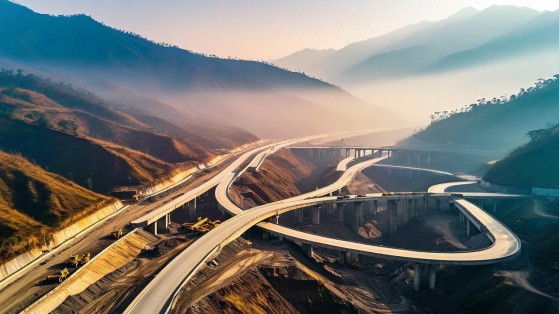
Ceigall India Wins ₹704.7 Crore MoRTH Contract for Arunachal Pradesh Frontier Highway
Ceigall India Ltd has secured a ₹704.70 crore engineering, procurement and construction contract from the Ministry of Road Transport and Highways for a section of the strategically important Frontier Highway in Arunachal Pradesh, strengthening the infrastructure company's order book and its presence in complex highway construction.
The contract covers the construction of a 35.12-kilometre section of National Highway 913, extending from Hunli to Hayuliang, under the EPC model.
The project forms part of the broader Frontier Highway programme being developed across Arunachal Pradesh, a major road infrastructure initiative designed to improve connectivity across remote areas of India's northeastern frontier.
For Ceigall India, the latest award provides another large government-backed road project while expanding its experience in challenging mountainous terrain.
Ceigall India Receives Letter of Award From MoRTH
The Ministry of Road Transport and Highways has issued a Letter of Award to Ceigall India for the project.
The contract has an estimated value of:
₹704.70 crore.
The award represents a domestic infrastructure contract and has been secured through the government's competitive procurement process.
For Ceigall India, the order adds significant executable revenue to its project pipeline.
Project Covers 35.12 Kilometres
The contract involves construction of approximately:
35.12 km of highway.
The road will connect Hunli and Hayuliang as part of NH-913.
Although 35 kilometres may appear relatively modest compared with highway projects across India's plains, road construction in Arunachal Pradesh can involve substantially greater engineering complexity.
Mountainous terrain, difficult access and challenging weather can increase construction requirements considerably.
Highway Will Be Developed to Two-Lane Standard
The project involves construction of the highway to a two-lane configuration with paved shoulders.
Paved shoulders improve:
road safety,
vehicle movement,
and emergency stopping space.
They can also strengthen the road's ability to accommodate traffic in difficult terrain.
For remote regions, reliable all-weather highway infrastructure can significantly improve mobility.
Project Will Be Executed Under EPC Model
Ceigall India will execute the contract under the Engineering, Procurement and Construction model.
Under EPC, the contractor takes responsibility for:
engineering,
procurement of materials,
and construction.
The government provides the project framework and pays the contractor according to agreed milestones and contractual conditions.
This differs from toll-based concession models where the private developer may also assume long-term traffic and revenue risk.
EPC Reduces Traffic-Risk Exposure
One advantage of EPC projects is that contractors do not generally depend on future toll collections to recover their investment.
Ceigall India's primary responsibility is to deliver the road according to specifications and schedule.
Its profitability therefore depends more heavily on:
construction efficiency,
cost management,
and timely execution.
This makes project-management capability particularly important.
Frontier Highway Is Major Strategic Infrastructure Programme
The Arunachal Pradesh Frontier Highway is one of India's most significant road-development programmes in the Northeast.
The corridor is intended to strengthen connectivity across areas close to India's international frontier.
It is being developed through multiple packages rather than as a single construction contract.
Different contractors therefore execute individual sections.
NH-913 Forms Core of Frontier Highway Network
The Frontier Highway has been designated as National Highway 913 across significant portions of the planned corridor.
The road is designed to improve east-west connectivity across Arunachal Pradesh.
Historically, many communities in the state's mountainous regions have depended on difficult and indirect road routes.
A more continuous highway network can substantially change regional accessibility.
Arunachal Pradesh Presents Major Engineering Challenges
Road construction in Arunachal Pradesh is fundamentally different from building highways across flat terrain.
Contractors can encounter:
steep slopes,
heavy rainfall,
landslides,
rivers,
and unstable geology.
These conditions increase engineering complexity and can affect project timelines.
Slope Stabilisation Is Critical
Cutting roads through mountainous terrain can destabilise hillsides.
Engineers therefore need to incorporate measures such as:
retaining structures,
rock protection,
and drainage systems.
Failure to manage slopes effectively can create landslide risks.
This makes geotechnical engineering a central part of Himalayan highway construction.
Drainage Is Equally Important
Arunachal Pradesh receives substantial rainfall.
Water can damage road infrastructure if drainage is inadequate.
Engineering therefore needs to manage:
surface runoff,
and hillside water flows.
Well-designed drainage can extend pavement life and reduce erosion.
Bridges and Culverts Support Mountain Connectivity
Mountain highways frequently cross:
streams,
ravines,
and rivers.
This can require substantial bridge and culvert construction even over relatively short distances.
Such structures can account for a meaningful portion of project costs.
Their construction also requires careful planning because access to remote sites can be difficult.
Logistics Can Be Challenging
A contractor working in remote Arunachal Pradesh must transport:
cement,
steel,
machinery,
and fuel
into areas where existing road infrastructure may itself be limited.
Moving heavy construction equipment can therefore become a project within the project.
Strong logistics planning is essential.
Weather Can Reduce Construction Window
Heavy monsoon rainfall can restrict construction activity.
Mountainous regions can also experience weather conditions that make some work unsafe or inefficient.
Contractors therefore need to maximise activity during favourable construction windows.
Delays during one season can affect the entire project schedule.
Project Has Strategic Importance
The Frontier Highway is not only a conventional transportation project.
Its location gives it broader strategic significance.
Improved road connectivity can allow faster movement of:
people,
supplies,
and essential services
across remote frontier regions.
The infrastructure can therefore support both civilian development and national logistics.
Border Infrastructure Has Become Major Government Priority
India has accelerated infrastructure development across its border regions.
Projects include:
highways,
bridges,
and tunnels.
The objective is to reduce the connectivity gap between remote frontier areas and the rest of the national transport network.
Arunachal Pradesh is an important part of this programme.
Better Roads Can Transform Local Economies
The benefits of highway development extend beyond strategic mobility.
Reliable roads reduce transportation costs.
Farmers can reach larger markets.
Businesses can receive supplies more efficiently.
Tourists can access previously difficult destinations.
Construction can therefore generate wider economic effects.
Healthcare Access Could Improve
Remote communities often face significant travel times to reach hospitals.
Better roads can reduce those journeys.
This is particularly important during medical emergencies.
All-weather connectivity can therefore create direct social benefits beyond conventional economic measures.
Education Access Can Also Benefit
Improved transportation can make it easier for students and teachers to travel between communities.
Schools can receive supplies more reliably.
Higher education and training centres in larger towns become easier to reach.
Infrastructure therefore influences human development as well as commerce.
Tourism Could Gain From Better Connectivity
Arunachal Pradesh has substantial tourism potential because of its:
mountain landscapes,
cultural diversity,
and natural environment.
However, difficult transportation has historically limited visitor numbers in some regions.
Better roads can expand tourism opportunities.
This can support hotels, restaurants and local service businesses.
Construction Must Balance Environmental Concerns
Large road projects in mountainous ecosystems require careful environmental management.
Construction can affect:
forests,
waterways,
and slopes.
Poorly managed excavation can increase erosion and landslide risks.
Environmental safeguards are therefore particularly important in sensitive Himalayan terrain.
Ceigall India Strengthens Highway Portfolio
The MoRTH award adds another major project to Ceigall India's infrastructure portfolio.
The company has developed expertise across:
highways,
elevated roads,
flyovers,
and other transportation infrastructure.
Winning a Frontier Highway package expands that experience into strategically important mountain-road construction.
Government Contracts Provide Revenue Visibility
Infrastructure contractors rely heavily on order books.
A signed contract provides future work that can be executed over several years.
Large government projects can therefore give companies greater revenue visibility.
The ₹704.70 crore order strengthens Ceigall India's executable project pipeline.
Order Book Is Key Metric for EPC Companies
For construction companies, current revenue provides only part of the picture.
Investors also examine the order book.
A strong order book indicates potential future revenue.
However, order-book size alone does not guarantee profitability.
Projects need to be completed efficiently.
Execution Determines Margins
An EPC contractor typically bids at a predetermined project price.
If costs rise unexpectedly, margins can shrink.
Potential pressures include:
raw-material inflation,
and construction delays.
Project management is therefore critical to profitability.
Steel and Cement Prices Matter
Highway construction consumes significant quantities of construction materials.
Movements in steel and cement prices can influence project economics.
Contractual escalation mechanisms may provide some protection, but they do not necessarily eliminate all cost risk.
Procurement strategy is therefore important.
Labour Availability Can Affect Execution
Large infrastructure projects require:
engineers,
equipment operators,
and construction workers.
Remote locations can make workforce deployment more difficult.
Contractors may need to establish temporary accommodation and support facilities.
These requirements add operational complexity.
Equipment Utilisation Is Important
Road construction requires expensive machinery.
This can include:
excavators,
graders,
and paving equipment.
High utilisation improves returns on those assets.
Equipment sitting idle because of weather or access problems can increase project costs.
Timely Government Payments Support Cash Flow
EPC companies typically incur substantial expenditure before receiving full payment.
Working capital therefore matters.
Timely certification and payment of project milestones help contractors maintain liquidity.
Delayed payments can increase borrowing requirements.
Infrastructure Contractors Often Carry Working-Capital Needs
Even profitable projects can consume cash during construction.
Companies must pay for:
materials,
labour,
and subcontractors
before receiving corresponding milestone payments.
Rapid order-book growth can therefore increase financing requirements.
Investors need to monitor cash flow alongside reported revenue.
MoRTH Is Major Source of Highway Opportunities
The Ministry of Road Transport and Highways remains one of India's most important infrastructure awarding authorities.
Its highway-development programmes create opportunities for:
EPC contractors,
engineering consultants,
and construction-material suppliers.
Companies with strong execution records can repeatedly compete for new packages.
Competitive Bidding Keeps Pressure on Margins
Government infrastructure contracts are typically awarded through competitive bidding.
Companies must balance two objectives.
They need to bid aggressively enough to win.
But they also need sufficient margins to absorb execution risk.
Underpricing a technically difficult project can create problems later.
Frontier Highway Could Generate Additional Contracts
Because the broader highway programme is divided into multiple packages, companies with relevant experience may compete for additional work.
Successful execution of one package can strengthen technical credentials.
However, future contracts will remain subject to competitive bidding.
The current award does not guarantee additional projects.
Northeast Infrastructure Spending Is Expanding
India has increased investment in transportation infrastructure across the Northeast.
Projects are improving connections between:
state capitals,
border districts,
and economic centres.
The objective is to reduce geographic isolation and integrate the region more closely with national markets.
Roads Remain Essential in Mountainous Regions
Railways and airports are important, but road infrastructure remains indispensable.
Roads provide last-mile access to communities that cannot be directly served by rail or aviation.
They also connect households and businesses to larger transportation networks.
This makes highway investment foundational to regional development.
Strategic Roads Can Have Long Economic Lives
A highway may operate for decades after construction.
Its economic impact therefore extends far beyond the contractor's initial project period.
New settlements, businesses and tourism activity can emerge along improved corridors.
This is why road infrastructure often produces broader economic benefits than the construction expenditure alone suggests.
Maintenance Will Matter After Construction
Building the road is only the first stage.
Mountain highways require ongoing maintenance because of:
landslides,
erosion,
and pavement damage.
Long-term reliability depends on regular inspection and repair.
Government agencies therefore need maintenance strategies alongside new construction.
Technology Can Improve Highway Monitoring
Modern infrastructure projects increasingly use technology for:
surveying,
progress monitoring,
and quality control.
Drones can inspect difficult terrain.
Digital project-management systems can track construction milestones.
Geospatial technology can help monitor slope movement.
These tools are particularly valuable in remote mountain projects.
Satellite Monitoring Can Support Remote Projects
Satellite imagery can provide periodic information about:
terrain,
and environmental changes.
For a project spanning difficult terrain, remote monitoring can complement physical inspections.
Digital infrastructure management can therefore reduce some of the challenges created by geography.
Frontier Highway Has Broader Connectivity Role
The Hunli-Hayuliang section represents only one portion of the wider corridor.
Its value increases as adjacent sections are completed.
Transport networks become most useful when individual links connect into continuous routes.
This means the economic impact of Ceigall India's package will ultimately depend partly on progress across the broader Frontier Highway programme.
Network Effects Matter in Infrastructure
A road ending at an unconnected point provides limited value.
A road integrated with other highways can transform mobility.
This is known as a network effect in transportation infrastructure.
The Frontier Highway's strategic importance therefore lies in creating a connected corridor rather than isolated road sections.
Investors Will Monitor Execution Timeline
For Ceigall India shareholders, the contract award is only the first milestone.
Future attention will shift toward:
mobilisation,
construction progress,
and revenue recognition.
Execution speed will determine how quickly the ₹704.70 crore order contributes to financial performance.
Project Revenue Will Be Recognised Over Time
Ceigall India will not recognise the entire contract value immediately.
Revenue will generally be recorded as construction progresses according to applicable accounting standards.
This means the project should contribute across multiple reporting periods.
The exact timing depends on execution.
New Order Improves Business Visibility
Infrastructure companies can experience uneven order inflows.
Large new contracts provide visibility into future work.
The Arunachal Pradesh award therefore strengthens Ceigall India's medium-term pipeline.
It also diversifies the geographic composition of its project portfolio.
Geographic Diversification Can Reduce Concentration
Operating across multiple states can reduce dependence on any one regional infrastructure programme.
However, each geography creates different execution challenges.
Arunachal Pradesh requires capabilities that may differ substantially from projects in urban or flat-terrain environments.
Successful delivery can therefore broaden the company's operational expertise.
Strong Execution Could Improve Future Qualification
Government tenders often require evidence of previous technical experience.
Completing complex projects can strengthen a contractor's credentials.
The Frontier Highway project could therefore have strategic value beyond its ₹704.70 crore contract amount.
It may help Ceigall India qualify for increasingly complex infrastructure projects.
Conclusion
Ceigall India's ₹704.70 crore contract from the Ministry of Road Transport and Highways strengthens the company's order pipeline while giving it a role in one of India's most strategically important highway-development programmes.
The project involves constructing approximately 35.12 kilometres of NH-913 between Hunli and Hayuliang in Arunachal Pradesh under the EPC model.
Its importance extends beyond the contract value.
The section forms part of the broader Arunachal Pradesh Frontier Highway, which is intended to improve connectivity across remote frontier districts while supporting economic development and strategic mobility.
For Ceigall India, the award provides additional revenue visibility and expands its portfolio of technically demanding transportation projects.
The execution challenge will be significant.
Mountainous terrain, heavy rainfall, logistics constraints, slope stability and limited construction windows can make Himalayan highway projects substantially more complex than equivalent road lengths elsewhere.
Successful delivery will therefore depend on disciplined engineering, procurement and project management.
If executed effectively, the contract can strengthen Ceigall India's credentials for future infrastructure awards while contributing to a road network capable of transforming connectivity across Arunachal Pradesh.
The project ultimately demonstrates how India's infrastructure expansion is moving beyond conventional highways toward strategically important transportation corridors designed to integrate some of the country's most remote regions with the wider national economy.