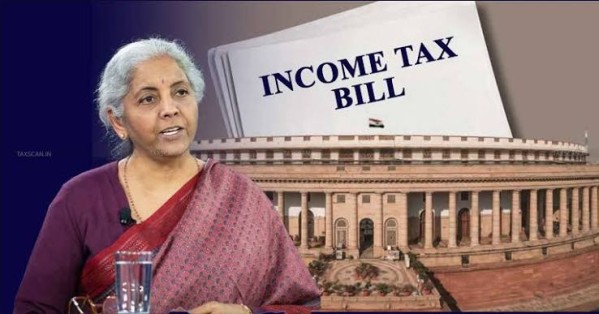
Government Introduces New Income Tax Bill During Parliament’s Monsoon Session
The government has placed income-tax reform among the key legislative priorities of Parliament’s Monsoon Session, drawing attention from taxpayers, businesses, investors, and financial-market participants.
The tax proposal under consideration is focused on amending India’s new direct-tax framework and giving legislative effect to measures announced before Parliament reconvened. The development comes as the government seeks to simplify tax administration, support investment flows, and strengthen the broader business environment.
The Monsoon Session began on July 20, 2026, and is scheduled to continue until August 13, with tax reform forming part of a wider legislative agenda covering economic policy, small businesses, institutional governance, and public administration.
Income Tax Reform Returns to Parliament

India’s direct-tax system has undergone a major transition in recent years. Parliament passed the Income-tax Act, 2025, as part of an effort to replace the decades-old Income-tax Act, 1961, with a shorter and more structured framework.
The legislation was designed to:
- Simplify tax language
- Remove outdated provisions
- Reduce duplication
- Improve legal clarity
- Organise provisions through tables and schedules
- Make compliance easier for taxpayers
- Reduce avoidable tax disputes
The latest parliamentary proposal is expected to amend or refine parts of that framework rather than completely replace it with another new law.
Foreign Investment Tax Measure in Focus
One of the important issues connected with the tax legislation is the treatment of foreign investors in Indian government securities.
Before the Monsoon Session, the government introduced a tax exemption for eligible foreign institutional investors and certain international organisations on income or capital gains arising from specified government debt investments.
The measure is intended to:
- Improve returns for overseas bond investors
- Encourage stable foreign capital inflows
- Increase participation in government securities
- Strengthen the domestic bond market
- Support demand for the Indian rupee
- Broaden India’s institutional investor base
Because the measure was initially introduced when Parliament was not in session, legislation is required to formally incorporate it into the tax framework.
Why the Government Wants More Foreign Bond Investment
India has been seeking to attract longer-term foreign capital at a time when global volatility, elevated crude oil prices, and equity-market outflows have created pressure on the rupee.
Foreign investment in government bonds can provide relatively stable capital compared with short-term equity flows.
Greater overseas participation may help:
- Improve liquidity in the bond market
- Diversify sources of government financing
- Reduce dependence on domestic investors
- Support currency-market stability
- Strengthen India’s integration with global debt markets
- Improve price discovery in government securities
The government is therefore using targeted tax incentives as part of its broader capital-market strategy.
No Similar Relief for Domestic Equity Investors
The tax relief connected with government securities does not represent a general removal of capital gains tax across all investment categories.
The government has clarified that there is no proposal to eliminate long-term capital gains tax for domestic equity investors. Equity investments by domestic and foreign investors continue to be governed by the applicable capital-gains framework.
This distinction is important because the bond-market exemption has a specific policy objective: attracting foreign investment into government debt rather than providing broad tax relief across capital markets.
Impact on Foreign Portfolio Investors
Eligible foreign portfolio investors may benefit from improved post-tax returns on government securities under the proposed framework.
Potential advantages include:
- Lower tax-related investment costs
- More competitive returns
- Greater certainty over tax treatment
- Improved attractiveness of Indian sovereign debt
- Easier long-term portfolio allocation
However, investors may still need to meet prescribed reporting, disclosure, and eligibility requirements to claim the exemption.
Implications for the Indian Rupee
The tax measure is also closely connected with developments in the foreign-exchange market.
The rupee has faced pressure from:
- Rising crude oil prices
- Increased dollar demand from importers
- Foreign equity outflows
- Global risk aversion
- Geopolitical uncertainty
- Strength in the US dollar
By encouraging foreign investors to purchase Indian government securities, policymakers hope to attract dollar inflows that could provide some support to the domestic currency.
The measure alone may not determine the rupee’s direction, but it could contribute to broader efforts aimed at improving capital inflows.
What the Bill Means for Businesses
Although the most immediate provisions may concern institutional investment and tax administration, businesses will also monitor the legislation closely.
Companies are likely to assess:
- Changes in tax definitions
- Reporting requirements
- Compliance procedures
- Withholding-tax provisions
- Treatment of investment income
- Transition rules under the new tax framework
- Potential amendments affecting corporate planning
Greater clarity can help companies reduce legal uncertainty and improve financial planning.
Tax Simplification Remains a Key Objective
One of the central goals of India’s new tax framework is to make the law easier to understand without materially changing established tax principles unless specifically intended.
Tax simplification may support:
- Easier compliance
- Faster return processing
- Reduced litigation
- Better digital administration
- Improved taxpayer communication
- More consistent interpretation
- Lower administrative costs
However, the practical success of the framework will depend on implementation, subordinate rules, digital systems, and the ability of tax authorities to provide clear guidance.
Parliamentary Review and Debate
The proposed legislation will pass through the normal parliamentary process before becoming law.
This process may include:
- Formal introduction
- Debate in the Lok Sabha
- Examination of individual provisions
- Consideration of amendments
- Approval by both Houses
- Presidential assent
- Official notification
Lawmakers may seek additional clarity regarding the scope, beneficiaries, revenue implications, and implementation of the tax changes.
Broader Monsoon Session Agenda
Income-tax reform is one part of a wider legislative programme during the Monsoon Session.
Other areas expected to receive attention include:
- Micro, small, and medium enterprise reforms
- Foreign contribution regulations
- Judicial capacity
- Administrative laws
- Economic growth
- Employment
- Inflation
- Infrastructure development
Political disagreements and opposition protests may also influence the pace of parliamentary proceedings.
What Taxpayers Should Watch
Individual taxpayers should distinguish between legislative proposals and rules that have already become effective.
Key developments to monitor include:
- The final wording of the legislation
- Effective dates of amended provisions
- New compliance requirements
- Changes to tax forms
- Official departmental guidance
- Transitional arrangements
- Notifications issued after passage
Taxpayers should avoid changing their filing or investment decisions based only on early reports before the final provisions are officially notified.
What Investors Should Watch
Investors and market participants are expected to focus on:
- Eligibility for the bond-related tax exemption
- Securities covered by the measure
- Reporting requirements
- Effective dates
- Parliamentary amendments
- Foreign portfolio investment flows
- Government bond yields
- Rupee movements
The response from overseas investors will help determine whether the tax incentive meaningfully increases demand for Indian government securities.
Economic Significance
The proposed changes reflect the government’s effort to use tax policy as a tool for attracting investment and improving financial-market stability.
Potential economic benefits include:
- Higher foreign capital inflows
- Deeper bond markets
- Better financing conditions
- Improved currency stability
- Greater investor participation
- Stronger confidence in India’s regulatory framework
The eventual impact will depend on global interest rates, crude oil prices, investor risk appetite, and the competitiveness of Indian bond returns.
Outlook
Income-tax reform is expected to remain a major focus throughout the Monsoon Session as Parliament evaluates amendments linked to investment policy and the implementation of India’s new direct-tax framework.
Businesses, taxpayers, and investors will be watching for the final provisions, especially those relating to foreign investment in government securities and the transition to the new tax system.
A clear and predictable framework could strengthen confidence, but effective implementation will be essential for delivering the intended benefits.
Conclusion
The government’s income-tax legislation during the Monsoon Session places tax reform, foreign investment, and financial-market development at the centre of the parliamentary agenda.
The proposed changes are expected to support the transition to India’s new direct-tax framework while formalising targeted relief for eligible foreign investors in government securities. As Parliament debates the legislation, taxpayers and businesses will seek clarity on compliance, implementation, and the final scope of the amendments.