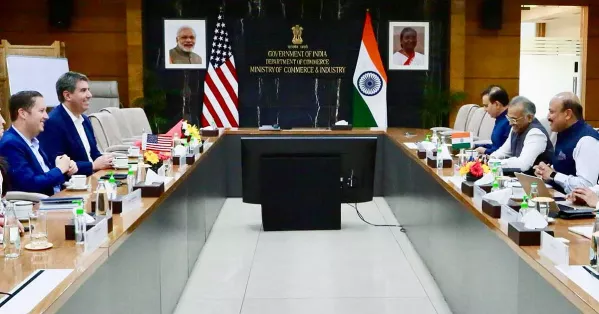
Centre Reviews Export Strategy Amid India–US Trade Discussions and Global Market Shifts
The Central Government is reviewing India's export strategy as trade discussions with the United States continue, reflecting its broader objective of strengthening global market access, expanding export opportunities, and improving the country's international trade competitiveness.
The review comes at a time when global trade patterns are evolving due to geopolitical developments, changing supply chains, inflationary pressures, and shifting demand across major economies. Policymakers are assessing measures that could help Indian exporters maintain momentum while supporting long-term economic growth.
The discussions are expected to focus on improving bilateral trade, encouraging manufacturing, diversifying export destinations, and enhancing India's position in global value chains.
Why the Export Strategy Is Being Reviewed

India's export sector remains a key contributor to economic growth, employment generation, and foreign exchange earnings.
The government's review aims to:
- Expand export opportunities
- Improve market access
- Enhance global competitiveness
- Strengthen supply chains
- Diversify export destinations
- Increase manufacturing exports
- Support domestic industries
- Promote sustainable export growth
A stronger export ecosystem is expected to contribute to India's long-term economic development.
Importance of India–US Trade Discussions
The United States remains one of India's largest trading partners across goods and services.
Ongoing trade discussions are expected to cover areas such as:
- Market access
- Tariff-related issues
- Investment cooperation
- Supply chain resilience
- Digital trade
- Manufacturing collaboration
- Technology partnerships
- Regulatory cooperation
Progress in these discussions could support stronger bilateral trade and create new opportunities for businesses in both countries.
Key Export Sectors in Focus
Several industries are expected to benefit from improved trade engagement.
These include:
- Engineering goods
- Pharmaceuticals
- Information technology services
- Electronics
- Textiles and apparel
- Chemicals
- Agricultural products
- Gems and jewellery
Expanding exports across these sectors could strengthen India's global trade position.
Manufacturing and Export Competitiveness
Manufacturing continues to play a central role in India's export ambitions.
Policy priorities include:
- Improving production capacity
- Encouraging value-added manufacturing
- Enhancing product quality
- Supporting innovation
- Increasing productivity
- Reducing logistics costs
- Expanding export infrastructure
These initiatives are intended to improve India's competitiveness in international markets.
Supply Chain Diversification
Global businesses continue to diversify supply chains to reduce dependence on single-country sourcing.
India aims to benefit from this trend by:
- Expanding manufacturing capabilities
- Improving logistics infrastructure
- Attracting foreign investment
- Strengthening industrial corridors
- Supporting export-oriented production
- Enhancing ease of doing business
A diversified supply chain ecosystem can help Indian exporters access new global opportunities.
Challenges Facing Exporters
Despite positive long-term prospects, exporters continue to face several challenges.
These include:
- Global economic uncertainty
- Inflationary pressures
- Currency volatility
- Higher logistics costs
- Geopolitical tensions
- Trade policy changes
- Slower demand in some international markets
- Supply chain disruptions
Addressing these challenges remains important for maintaining export growth.
Government Support Measures
The government continues to introduce initiatives aimed at strengthening the export ecosystem.
Areas of focus include:
- Trade facilitation
- Digital customs procedures
- Export finance
- Infrastructure development
- Manufacturing incentives
- Logistics improvements
- Market diversification
- Investment promotion
These measures seek to improve the efficiency and competitiveness of Indian exporters.
What Businesses Should Watch
Export-oriented companies are expected to monitor:
- Progress in India–US trade discussions
- Changes in trade policies
- Tariff developments
- Market access agreements
- Global demand trends
- Currency movements
- Export incentive schemes
- Regulatory updates
Businesses may adjust their strategies based on future policy announcements and bilateral agreements.
Broader Economic Significance
A stronger export strategy can deliver multiple benefits for the Indian economy.
Potential advantages include:
- Higher foreign exchange earnings
- Increased manufacturing output
- Employment generation
- Greater foreign investment
- Stronger industrial growth
- Improved trade competitiveness
- Sustainable economic expansion
Export growth remains an important pillar of India's long-term development strategy.
Outlook
India's export outlook remains positive despite ongoing global uncertainties. Continued engagement with major trading partners, including the United States, along with policy support for manufacturing and infrastructure, is expected to strengthen export performance over the medium to long term.
The outcome of the India–US trade discussions will be closely watched by exporters, investors, and industry participants seeking greater clarity on future market access and trade opportunities.
Conclusion
The Centre's review of India's export strategy highlights the government's focus on strengthening global trade competitiveness amid ongoing India–US trade discussions. By improving market access, supporting manufacturing, diversifying exports, and enhancing supply chain resilience, policymakers aim to position India for sustained export-led growth. As negotiations progress, businesses will closely monitor policy developments that could shape the country's trade and investment landscape.