Islamic Conquests: How Balochistan Became a Crossroads of Muslim Empires
Balochistan, a region with a long and complex history, underwent a profound transformation with the arrival of Islam and subsequent Muslim conquests. From the 7th century onwards, the region saw waves of Islamic expansion, but it was during the rule of powerful dynasties like the Ghaznavids and Ghurids that Balochistan was firmly integrated into the Islamic world.
These empires not only extended political control over the region but also facilitated the spread of Islamic culture, trade, architecture, and religious thought, leaving a lasting legacy that still resonates today.
Early Islamic Influence
The seeds of Islam in Balochistan were first sown shortly after the death of Prophet Muhammad, during the Umayyad Caliphate's eastward expansion. Though initial incursions into the region were sporadic and met with tribal resistance, Muslim influence began to take root, especially in urban settlements and along trade routes connecting the Arabian Peninsula to South Asia.
However, the more organized and sustained Islamic presence came centuries later under the Turkic dynasties of Central Asia.
The Ghaznavid Dynasty (10th–12th Century)
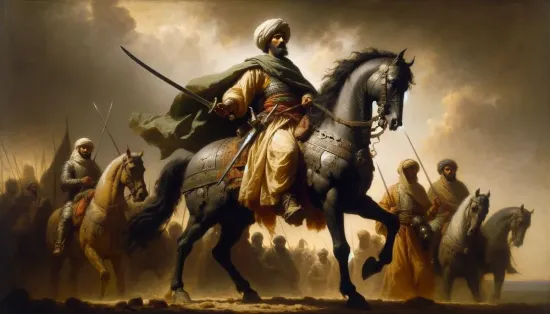
Founded by Sabuktigin, a former slave who rose to power, the Ghaznavid Empire was centered in Ghazni (present-day Afghanistan). His son, Mahmud of Ghazni, became one of the most prominent Muslim conquerors of the region. Known for his invasions into the Indian subcontinent, Mahmud also secured control over large parts of Balochistan as a strategic frontier for his campaigns.
Under Ghaznavid rule, Balochistan was not only a military corridor but also became exposed to Persian-Islamic cultural influence, with the construction of mosques, caravanserais, and administrative centers. Ghaznavid policies also promoted the spread of Sunni Islam, which became dominant in the region.
The Ghurid Dynasty (12th–13th Century)
Following the decline of the Ghaznavids, the Ghurid Empire rose to prominence. Originating from the Ghor region of central Afghanistan, the Ghurids extended their authority into Balochistan during their campaigns to control eastern Persia and northwestern India.
The Ghurids, particularly under Muhammad of Ghor, were instrumental in laying the groundwork for Islamic rule in India through their victories over Rajput kingdoms. Balochistan again served as a key corridor for movement between Central Asia and the Indian subcontinent. Their rule reinforced Islamic governance and education systems in the region, supporting the growth of madrassas and Islamic scholarship.
Cultural and Religious Impact
The Islamic conquests brought a gradual transformation in language, religion, art, and administration. Arabic and Persian replaced earlier local languages in administration and literature. Sufi saints, scholars, and traders traveled through Balochistan, establishing Sufi shrines and cultural centers that remain spiritually significant today.
The region also became a melting pot where local Baloch traditions fused with Islamic customs, creating a unique cultural identity that persists in Baloch society.
A Strategic and Spiritual Gateway
Due to its location, Balochistan acted as a gateway between the Middle East and South Asia for centuries. The Ghaznavid and Ghurid control of the region solidified its position as a frontier of Islamic civilization, bridging cultural and political exchanges between the Islamic heartlands and the Indian subcontinent.
Enduring Legacy
The Islamic conquests under the Ghaznavids and Ghurids laid the foundation for centuries of Muslim rule in South Asia, including the Delhi Sultanate and eventually the Mughal Empire. Balochistan's integration into these imperial frameworks gave it enduring religious and strategic importance.
Today, remnants of this era—such as ancient mosques, fortresses, and Sufi shrines—serve as testaments to the region’s Islamic medieval heritage.
Disclaimer: This article is based on public sources and reports. Our aim is not to hurt the sovereignty of any nation but to present information under the values of free and fair journalism.