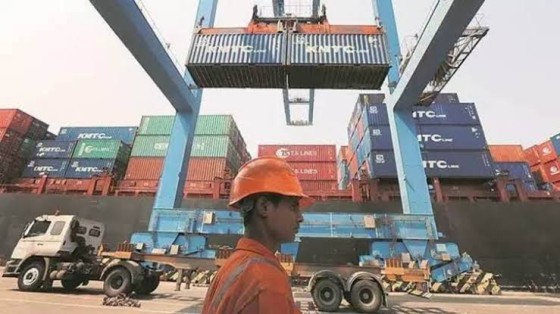
India's $1 Trillion Export Target: Business Opportunities Across Sectors
India is aiming for $1 trillion in merchandise exports by 2030 — part of a $2 trillion total goal — with electronics tipped to hit $233 billion, and opportunities opening across pharma, engineering, textiles, and services, though a modest export track record is a sobering baseline.
By Naina, 8th July 2026
India has set an ambitious target of achieving $1 trillion in merchandise exports by 2030, part of a broader goal of $2 trillion in total exports when services are included. This aspiration, anchored in the country's foreign trade policy, is opening significant business opportunities across a range of sectors, from electronics and pharmaceuticals to engineering goods, textiles, and services. The strategy rests on securing preferential market access through a new generation of free trade agreements and strengthening domestic manufacturing capacity through production incentives, capitalising on the global shift to diversify supply chains. While the target is ambitious relative to India's historical export growth, it maps out a clear opportunity landscape for businesses across the economy. Here is a detailed look at India's $1 trillion export target and the business opportunities emerging across key sectors.
The export push represents a fundamental shift in India's economic strategy, moving from a more cautious, protectionist stance toward deeper integration into global trade and supply chains. By combining trade agreements with manufacturing incentives, the government aims to boost exports, revive private investment, and integrate Indian firms into global value chains, following an export-led growth model. Certain sectors are positioned as the strongest beneficiaries, offering substantial opportunities for companies. However, realising the target will require India to significantly accelerate its export growth and address domestic competitiveness challenges. Here is an analysis of the target, the strategy behind it, the sector-by-sector opportunities, and the challenges that must be overcome to achieve this transformative goal.
The Ambitious Target
India's export target is bold by historical standards. The country aims for $2 trillion in total exports by around 2030, split evenly between $1 trillion in merchandise, or goods, and $1 trillion in services. This represents a substantial leap from current levels, with merchandise exports having grown from around $314 billion to $451 billion over roughly a decade, at an average annual rate of around 5 percent. Achieving the target would require export growth to accelerate well beyond this historical pace, described by some analysts as a sobering baseline. The government has launched an exercise to identify the infrastructure needs, potential sectors, and industrial clusters required to reach the goal, reflecting a focused, sector-specific approach to driving the ambitious export expansion.
The Strategy and the Capex Link
The strategy rests on two main pillars with a broader ambition. The first is securing preferential market access through a new generation of free trade agreements, with India having concluded around nine agreements covering dozens of countries, raising the share of trade conducted with agreement partners significantly. The second is strengthening domestic manufacturing capacity through production-linked incentives, combined with the global supply-chain diversification trend. Crucially, analysts see a potential transmission mechanism to private investment: by providing sustained export demand, the strategy could improve manufacturing capacity utilisation, currently around three-quarters, and eventually trigger a revival in private capital expenditure, mirroring the export-led growth model that transformed several East Asian economies. Deeper participation in global value chains, which account for the majority of world trade, is central to this vision.
The Electronics Opportunity
Electronics is the headline opportunity. The sector has undergone a structural transformation, evolving from an import-dependent industry into one of the fastest-growing contributors to merchandise exports, driven by production incentives, global contract manufacturers, and a rapidly expanding smartphone manufacturing ecosystem. Electronics exports have been growing at a remarkable pace, rising nearly 40 percent year-on-year recently, making them the fastest-growing category among India's top export items. Analysts project electronics exports could reach well over $200 billion by 2030, potentially surpassing the government's own target for the sector. The electronics manufacturing services industry alone has seen output expand sixfold over a decade and exports grow eightfold. This makes electronics the single largest sectoral opportunity in India's export ambitions, offering vast scope for manufacturers and suppliers.
The Pharma and Chemicals Opportunity
Pharmaceuticals and chemicals present significant opportunities. India, already a major global supplier of generic medicines, is positioned to gain from stronger regulatory cooperation and improved access to developed markets under new trade agreements, boosting its pharmaceutical exports. The sector offers mid-cycle earnings visibility and steady growth potential. Specialty chemicals represent another high-value opportunity, with India well-placed to expand its role in producing active pharmaceutical ingredients and chemical intermediates, benefiting from global supply-chain diversification away from a single dominant supplier. As global companies seek alternative sources for pharmaceuticals and chemicals, India's established capabilities, cost advantages, and improving market access create substantial opportunities for firms to expand exports and move up the value chain into higher-value, more sophisticated products for global markets.
The Engineering Opportunity
Engineering and machinery goods form a major opportunity. This broad sector, encompassing capital goods, industrial machinery, auto components, and a wide range of engineered products, stands to benefit from lower tariff barriers under trade agreements and the ongoing diversification of global supply chains. With a substantial existing export base, particularly to developed markets, engineering goods are positioned to capture larger shares as tariffs fall and demand for reliable, cost-competitive suppliers grows. The sector's breadth means opportunities span numerous industries and company sizes. As global manufacturers seek to diversify their sourcing, India's engineering capabilities, combined with improved market access, offer significant scope for export growth, making this one of the strongest sectoral beneficiaries of the country's trade and export strategy alongside electronics and pharmaceuticals.
The Labour-Intensive Sectors
Labour-intensive sectors offer broad-based opportunities. Industries such as textiles and apparel, leather and footwear, gems and jewellery, marine products, and processed foods stand to benefit significantly from the duty-free or preferential access provided by trade agreements to developed markets. These sectors are particularly important for employment, given their large workforces, making their export growth valuable for both the economy and job creation. Enhanced market access can help Indian producers compete more effectively against rivals from other countries. However, these sectors also face challenges, including developed-market sustainability requirements that demand transparent, environmentally responsible supply chains. Nonetheless, the opening of major markets represents a substantial opportunity for these traditional export industries to expand their global footprint and contribute meaningfully to the overall export target.
The Services Engine
Services are a parallel engine of export growth. India aims for $1 trillion in services exports, matching its merchandise goal, leveraging its established strength in information technology and software. New trade agreements are expected to improve access for a range of services, including IT and software, consulting, engineering research and development, and financial services, reinforcing India's edge in skilled labour and technology. The rise of global capability centres, which deliver high-value services for multinational companies from India, further strengthens this engine. Services exports have been a consistent source of surplus for India, helping balance its trade. As global demand for technology and business services grows, the services sector offers substantial, durable opportunities, complementing merchandise exports and playing a central role in achieving the overall $2 trillion ambition.
The Challenges
Significant challenges stand between ambition and achievement. The most fundamental is that India's historical merchandise export growth has been modest, meaning the target requires a substantial acceleration that is far from guaranteed. Analysts stress that trade agreements alone are insufficient, and that India must simultaneously fix its domestic competitiveness, addressing persistent issues in logistics costs, though these have improved, manufacturing capacity, and infrastructure. Developed-market sustainability regulations, including carbon border measures and due-diligence requirements, could raise costs and create barriers, particularly for labour-intensive and carbon-intensive exports. Rising import costs for intermediate goods could offset export gains, affecting the trade balance. Sustaining a revival in private investment and converting incentives into genuine market share remain critical uncertainties. Overcoming these challenges is essential to realising the export opportunity across sectors.
The Road Ahead
India's $1 trillion export target represents a transformative ambition, opening substantial business opportunities across electronics, pharmaceuticals, engineering, labour-intensive industries, and services. The structural scaffolding, comprising trade agreements, manufacturing incentives, and favourable global supply-chain shifts, is increasingly in place. However, realising the opportunity will depend on accelerating export growth well beyond historical rates, improving domestic competitiveness, and navigating challenges from sustainability regulations to infrastructure. For businesses, the target maps out a clear landscape of opportunity across diverse sectors, rewarding those that can scale, innovate, and compete globally. If India can convert its strategy into sustained export growth and integrate more deeply into global value chains, the export push could catalyse a broader economic transformation, advancing the country's ambitions for the coming decade.