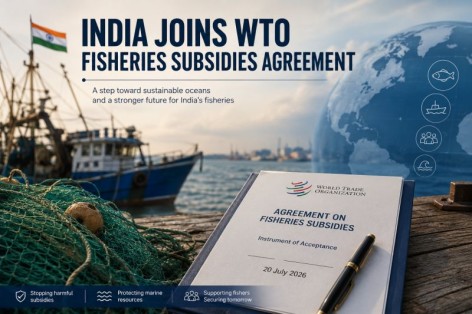
India Joins WTO Fisheries Subsidies Agreement, Strengthening Global Trade Commitment
India has formally joined the World Trade Organization (WTO) Fisheries Subsidies Agreement, marking an important step in the country's participation in global trade reforms and sustainable fisheries management. The agreement is designed to reduce harmful fisheries subsidies that contribute to overfishing and illegal, unreported, and unregulated (IUU) fishing while promoting the long-term sustainability of marine resources.
India's participation reflects its commitment to balancing economic growth, the interests of fishing communities, and responsible use of marine resources within the framework of international trade.
Understanding the WTO Fisheries Subsidies Agreement

The WTO Fisheries Subsidies Agreement establishes global rules aimed at improving sustainability in the fisheries sector.
The agreement seeks to:
- Reduce harmful fishing subsidies
- Discourage illegal, unreported, and unregulated fishing
- Promote sustainable marine resource management
- Strengthen transparency in subsidy programmes
- Support responsible international trade
- Protect global fish stocks
The framework is considered an important milestone in aligning international trade with environmental sustainability.
Significance for India
India's participation reinforces its role in the global trading system while supporting long-term development of the fisheries sector.
Potential benefits include:
- Greater policy certainty
- Enhanced global trade cooperation
- Promotion of sustainable fishing practices
- Improved international market confidence
- Stronger regulatory alignment
- Long-term conservation of marine resources
The agreement also supports India's broader objective of maintaining a competitive and sustainable fisheries industry.
Impact on the Fisheries Sector
The fisheries sector plays an important role in employment, exports, and food security.
The agreement may encourage:
- Sustainable resource management
- Improved compliance standards
- Better monitoring systems
- Responsible fishing practices
- Long-term industry resilience
- Increased focus on marine conservation
A sustainable fisheries ecosystem can support stable economic opportunities for the sector over the long term.
Implications for Global Trade
The agreement represents a significant development in multilateral trade cooperation.
It is expected to:
- Promote fair competition
- Improve transparency
- Strengthen international trade rules
- Encourage responsible subsidy policies
- Support sustainable economic development
- Enhance confidence in global trade governance
These measures can contribute to a more balanced and environmentally responsible trading system.
Challenges and Considerations
Implementation of the agreement will require continued coordination among policymakers and industry stakeholders.
Areas of focus include:
- Effective policy implementation
- Regulatory compliance
- Protection of small-scale fishing communities
- Sustainable resource management
- Monitoring and reporting mechanisms
- International cooperation
Balancing environmental objectives with the livelihoods of fishing communities will remain an important policy priority.
What Businesses and Investors Should Watch
Market participants are expected to monitor:
- Implementation of the agreement
- Fisheries export trends
- Government policy updates
- Marine sustainability initiatives
- International trade developments
- WTO negotiations
- Fisheries sector investments
- Regulatory announcements
These developments will shape the long-term outlook for India's fisheries and seafood industry.
Outlook
India's participation in the WTO Fisheries Subsidies Agreement is expected to strengthen its engagement with global trade while supporting sustainable development in the fisheries sector. Continued policy coordination, responsible resource management, and international cooperation are likely to play an important role in ensuring the long-term competitiveness and resilience of the industry.
Conclusion
India's decision to join the WTO Fisheries Subsidies Agreement underscores its commitment to sustainable trade practices and responsible management of marine resources. By aligning with global efforts to reduce harmful subsidies and promote sustainable fisheries, the country aims to support long-term industry growth while preserving marine ecosystems. The agreement is expected to strengthen India's position in international trade and contribute to a more sustainable future for the fisheries sector.