What Is an API? How Application Programming Interfaces Work
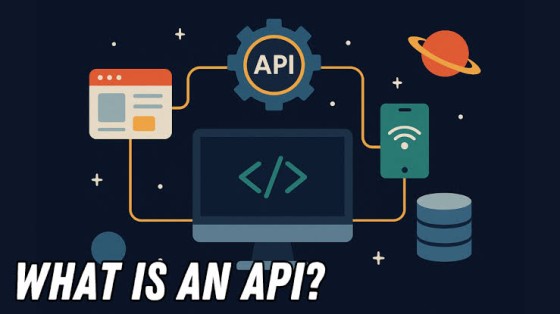
An Application Programming Interface (API) is a set of rules and protocols that allows different software applications to communicate and exchange data with each other. APIs act as intermediaries, enabling applications to request services or information from other applications without needing to understand their internal code. From mobile apps and websites to cloud services and Artificial Intelligence platforms, APIs power many of the digital experiences people use every day.
What Is an API?

An API is a software interface that defines how different applications, systems, or services interact by sending requests and receiving responses in a standardized format.
How an API Works
When an application needs information or wants to perform an action, it sends a request to an API. The API forwards the request to the appropriate server or service, processes it, and returns a response containing the requested data or confirmation of the action.
For example, a weather app does not generate weather forecasts itself. Instead, it requests weather information from a weather service API and displays the results to the user.
Why APIs Matter
APIs make it possible for software systems to work together efficiently. They reduce development time, encourage software reuse, simplify integrations, and enable businesses to connect services across different platforms.
Key Components of an API
Several elements work together in an API.
API Request
The client application sends a request specifying the action it wants to perform or the data it needs.
API Endpoint
An endpoint is a specific URL where an API receives requests for a particular resource or service.
HTTP Methods
Most web APIs use standard HTTP methods such as:
- GET – Retrieve information
- POST – Create new data
- PUT – Update existing data
- DELETE – Remove data
API Response
The server returns the requested information or a status message, usually in formats such as JSON or XML.
Authentication
Many APIs require authentication using API keys, OAuth tokens, or other security mechanisms to ensure only authorized users or applications can access services.
Types of APIs
Different APIs are designed for different purposes.
REST APIs
Representational State Transfer (REST) APIs are the most widely used type of web API. They use standard HTTP methods and are known for their simplicity and scalability.
SOAP APIs
Simple Object Access Protocol (SOAP) APIs use XML messaging and are commonly found in enterprise systems that require strict security and reliability.
GraphQL APIs
GraphQL allows clients to request exactly the data they need, reducing unnecessary data transfers and improving efficiency.
WebSocket APIs
WebSocket APIs enable continuous, real-time communication between clients and servers, making them suitable for chat applications, live notifications, and online gaming.
Real-World Examples of APIs
APIs power countless digital services.
Payment Processing
E-commerce websites integrate payment APIs to securely process online transactions.
Social Media Login
Many websites allow users to sign in using existing social media accounts through authentication APIs.
Maps and Navigation
Navigation applications use mapping APIs to display locations, directions, and traffic information.
Weather Applications
Weather apps retrieve forecasts and climate data from weather service APIs.
Artificial Intelligence
Developers use AI APIs to integrate text generation, image recognition, speech processing, translation, and chatbot capabilities into their applications.
Benefits of APIs
APIs offer numerous advantages for developers and businesses.
Faster Development
Developers can integrate existing services instead of building every feature from scratch.
Improved Integration
APIs connect applications, databases, cloud platforms, and third-party services seamlessly.
Better Scalability
Businesses can expand software functionality by adding new API-powered services as needed.
Greater Innovation
APIs enable organizations to create new products, automate workflows, and build interconnected digital ecosystems.
Reusability
The same API can be used by multiple applications across web, mobile, desktop, and cloud environments.
Challenges of APIs
Despite their benefits, APIs introduce several considerations.
Security Risks
Poorly secured APIs can expose sensitive information or allow unauthorized access.
Version Management
API updates must be carefully managed to avoid breaking existing applications.
Rate Limits
Many APIs restrict the number of requests allowed within a certain time period to ensure service stability.
Dependency on Third Parties
Applications that rely on external APIs may be affected by service outages or changes introduced by API providers.
API Security Best Practices
Organizations should follow these recommendations.
Use Strong Authentication
Protect APIs using API keys, OAuth, JSON Web Tokens (JWT), or other secure authentication methods.
Encrypt Data
Use HTTPS and encryption to protect data during transmission.
Validate Inputs
Check all incoming data to prevent attacks such as SQL injection and command injection.
Monitor API Activity
Track API usage, detect unusual behavior, and respond quickly to suspicious requests.
Keep APIs Updated
Regularly patch vulnerabilities and retire outdated API versions when appropriate.
Future of APIs
APIs continue to evolve with Artificial Intelligence, cloud-native applications, microservices, serverless computing, edge computing, and Internet of Things (IoT) platforms. AI-powered APIs are enabling advanced automation, natural language processing, computer vision, and predictive analytics, while API management platforms simplify security, monitoring, and governance. As software becomes increasingly interconnected, APIs will remain one of the most important building blocks of modern digital services.
Conclusion
Application Programming Interfaces (APIs) are the foundation of modern software communication, enabling applications, services, and platforms to exchange data efficiently and securely. Whether powering mobile apps, cloud platforms, payment systems, AI services, or enterprise software, APIs accelerate innovation and simplify integration. By implementing strong security practices and choosing appropriate API technologies, organizations can build scalable, reliable, and connected digital solutions.