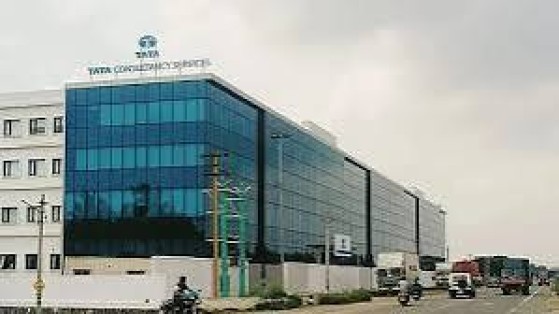
TCS HyperVault Plans Up to ₹70,000 Crore Investment in 1-GW Hyderabad AI Data-Centre Campus
Tata Consultancy Services subsidiary HyperVault AI Data Center is planning a hyperscale artificial-intelligence data-centre campus in Hyderabad with capacity of up to 1 gigawatt and combined investment of as much as ₹70,000 crore from HyperVault and its partners, marking one of the largest AI-infrastructure commitments announced in India.
The company has secured approximately:
264 acres
in Hyderabad's:
Future City
for the project.
At full build-out, the campus is designed to support:
1 GW, or 1,000 MW, of data-centre capacity.
It will target:
frontier AI companies,
hyperscalers,
and:
global enterprises
requiring large-scale computing infrastructure for:
AI model training,
inference,
and other advanced workloads.
The development will be executed:
in phases
based on customer demand and technology requirements.
The Telangana government expects the project to create approximately:
7,000 direct and indirect jobs
while supporting a broader ecosystem spanning:
power,
cooling,
networking,
construction,
engineering,
and data-centre operations.
HyperVault and Partners Could Invest Up to ₹70,000 Crore

The headline investment commitment is:
up to ₹70,000 crore.
Importantly, this amount represents the expected investment by:
HyperVault and its partners
to build and manage the infrastructure.
It should therefore not be interpreted as an immediate ₹70,000 crore standalone cash outlay by TCS itself.
Large data-centre projects are typically developed in multiple stages and can involve capital from:
operators,
infrastructure partners,
energy providers,
technology suppliers,
and financing institutions.
The ultimate investment will depend on how quickly the campus scales toward its full 1-GW capacity.
1 GW Would Put Hyderabad Campus Among India’s Largest
A 1-gigawatt data-centre campus would represent extraordinary computing scale.
One gigawatt equals:
1,000 megawatts.
Traditional enterprise data centres are usually measured in far smaller units.
Even hyperscale facilities are commonly developed in:
tens
or:
hundreds of megawatts
before being expanded over time.
A campus capable of ultimately supporting 1 GW would therefore rank among the most significant digital-infrastructure developments in India.
Project Will Be Developed Over 264 Acres
HyperVault has secured:
264 acres
of land for the Hyderabad campus.
The large land parcel reflects the physical requirements of hyperscale AI infrastructure.
A campus of this size needs space not only for:
data halls
but also for:
electrical substations,
cooling equipment,
backup systems,
water infrastructure,
networking facilities,
security,
roads,
and future expansion.
The availability of a large contiguous site is therefore a significant advantage.
Future City Selected for Campus
The project will be located in:
Hyderabad's Future City development.
Telangana is positioning the area as a major destination for:
technology,
AI,
advanced industries,
and digital infrastructure.
The HyperVault campus could become an anchor investment for that strategy.
Large infrastructure projects often attract additional activity from:
suppliers,
technology vendors,
engineering contractors,
power companies,
and service providers.
This can create a broader industrial cluster around the original investment.
TCS Says Hyderabad Offers Scale and Talent
TCS CEO and Managing Director:
K. Krithivasan
has highlighted Hyderabad's combination of:
scale,
engineering talent,
technology ecosystem,
and infrastructure
as key reasons for selecting the city.
Hyderabad already has a significant presence from:
global technology companies,
cloud providers,
IT services companies,
and enterprise software businesses.
That creates a deep pool of technical talent capable of supporting complex AI-infrastructure operations.
Data Centre Will Target Frontier AI Companies
The campus is specifically being designed to support:
frontier AI companies.
These companies develop some of the world's most computationally demanding artificial-intelligence models.
Training advanced models requires extremely large numbers of:
GPUs
and other:
AI accelerators
operating simultaneously.
That creates enormous requirements for:
electricity,
cooling,
network bandwidth,
and data-centre design.
Conventional facilities are not always capable of supporting these workloads efficiently.
High-Density GPU Deployments Will Be Core Requirement
HyperVault's Hyderabad campus will support:
high-density GPU deployments.
AI servers consume much more power per rack than many conventional computing systems.
A traditional enterprise rack may require relatively moderate power.
An advanced AI rack containing multiple high-performance GPUs can require:
many times more.
As AI chips become more powerful, power density is increasing rapidly.
This forces data-centre developers to redesign:
electrical systems,
cooling,
floor layouts,
and networking infrastructure.
AI Training Drives Massive Computing Demand
Training a large AI model involves processing enormous datasets through billions or trillions of calculations.
The workload can require:
thousands
or:
tens of thousands
of GPUs operating in parallel.
These accelerators need to communicate with one another at extremely high speeds.
That means AI infrastructure requires not only computing chips but also:
specialised networking,
high-bandwidth interconnects,
storage,
and advanced cooling.
The Hyderabad campus is being designed around these requirements.
Inference Will Also Drive Demand
AI infrastructure is not required only during model training.
Once a model has been developed, it must respond to:
users,
software applications,
and enterprise systems.
This process is called:
inference.
As AI adoption expands across millions of users and businesses, inference can become an even larger source of ongoing computing demand.
Data centres therefore need capacity for both:
training
and:
continuous model operation.
Liquid Cooling Will Be Used
The campus is expected to incorporate:
liquid-cooled computing infrastructure.
This is increasingly important for advanced AI hardware.
Traditional data centres often use:
air cooling.
Fans move cool air through server racks while heat is removed through air-conditioning systems.
But modern AI accelerators can generate so much heat that air cooling becomes:
less efficient
or:
insufficient.
Liquid cooling can remove heat much closer to the processors.
Why Liquid Cooling Matters for AI
Liquids can transfer heat much more efficiently than air.
In high-density AI systems, cooling technology may involve:
cold plates,
direct-to-chip liquid cooling,
or other advanced designs.
Improved heat removal can support:
higher rack densities,
better energy efficiency,
and more powerful computing equipment.
This makes liquid cooling increasingly central to next-generation AI data-centre design.
Green Energy Is Built Into Project Design
HyperVault has said the campus will incorporate:
green-energy principles.
That is important because data centres consume enormous quantities of electricity.
A fully developed 1-GW campus could have power requirements comparable with those of:
large industrial complexes
or even:
substantial urban areas.
The source of that electricity therefore has major implications for:
operating costs,
carbon emissions,
and regulatory sustainability.
Water-Neutral Design Is Also Planned
The campus will also be developed around:
water-neutral design principles.
Water consumption is becoming a major issue in data-centre development.
Some cooling systems require significant quantities of water.
This can create tension in locations where:
water availability is limited
or:
urban demand is already high.
A water-neutral approach aims to reduce or offset the net water impact associated with operations.
Data Centres Need Enormous Power Infrastructure
A data centre with ultimate capacity of:
1 GW
cannot simply connect to the grid like a conventional office complex.
It requires:
large transmission connections,
substations,
high-voltage equipment,
redundant power feeds,
and backup systems.
This means the HyperVault project will require coordination with:
utilities,
transmission companies,
renewable-energy providers,
and government agencies.
Power infrastructure could therefore become one of the most important determinants of the campus's development schedule.
Telangana Government Promises Project Support
Chief Minister:
A. Revanth Reddy
has assured TCS and HyperVault of government support required to facilitate the development.
The state sees the campus as a strategic project within its broader ambition to position Telangana as:
a global AI
and:
advanced-computing hub.
Large data centres require multiple approvals covering:
land,
power,
construction,
water,
environment,
and connectivity.
Government coordination can therefore materially influence execution speed.
Telangana Wants First Operations by June 2028
Revanth Reddy has urged TCS to inaugurate the project by:
June 2, 2028.
TCS management has indicated that the data centre could become operational approximately:
18 to 24 months after breaking ground.
This suggests the first phase could potentially become available around that period if:
construction,
power infrastructure,
equipment procurement,
and approvals
progress as planned.
Full 1-GW build-out would take considerably longer because the campus will be developed in phases.
Phased Development Reduces Demand Risk
HyperVault does not need to construct the full:
1 GW
immediately.
Instead, capacity will be added according to:
customer commitments
and:
technology requirements.
This phased model is common in hyperscale data-centre development.
It allows the operator to align capital expenditure with actual demand.
That reduces the risk of building hundreds of megawatts of infrastructure before customers are ready to use it.
AI Hardware Changes Quickly
Phased development also makes sense because AI hardware is evolving extremely quickly.
GPU generations can change within:
a few years.
New systems may require different:
rack densities,
cooling methods,
power architecture,
or networking configurations.
Building the entire campus at once could create the risk of technology becoming outdated before later sections are occupied.
A phased approach gives HyperVault more flexibility.
Project Fits TCS “Infrastructure-to-Intelligence” Strategy
TCS has positioned HyperVault as part of its broader:
Infrastructure-to-Intelligence strategy.
The concept links physical AI infrastructure with:
cloud services,
engineering,
enterprise transformation,
and AI applications.
Traditional IT-services companies generally operated on top of infrastructure owned by:
customers
or:
cloud providers.
TCS is now expanding deeper into the infrastructure layer itself.
That represents an important strategic shift.
TCS Is Moving Beyond Traditional IT Services
For decades, TCS built its business around:
software services,
IT outsourcing,
consulting,
and enterprise technology.
AI is changing that model.
Customers increasingly require massive amounts of:
computing capacity
before they can deploy advanced AI applications.
Owning or operating AI-ready infrastructure gives TCS the ability to participate in another part of the value chain.
This could create opportunities to bundle:
compute,
cloud,
engineering,
AI development,
and enterprise integration.
HyperVault Creates New Infrastructure Platform
HyperVault AI Data Center Limited is the TCS subsidiary through which the group is building its:
AI data-centre platform.
The business can potentially operate differently from traditional IT services.
Data centres are:
capital intensive
and:
infrastructure driven.
Returns depend heavily on:
asset utilisation,
power availability,
financing costs,
and long-term customer contracts.
This gives HyperVault a business model closer to digital infrastructure than conventional outsourcing.
Frontier AI Companies Need Dedicated Capacity
One reason for creating specialist infrastructure is that the world's largest AI developers require enormous dedicated clusters.
AI companies may need:
thousands of GPUs
located within:
the same campus.
They also require high-speed networking between machines.
Using fragmented computing capacity spread across multiple locations can reduce performance.
Large campuses therefore give operators the ability to offer:
dedicated AI clusters
at significant scale.
Hyperscalers Are Another Target Market
HyperVault will also target:
hyperscalers.
These are large cloud and technology companies operating computing infrastructure at massive scale.
They typically require:
large blocks of power,
high network connectivity,
strong physical security,
and predictable expansion capacity.
A 264-acre campus capable of growing toward 1 GW gives HyperVault the ability to offer very large deployments.
Global Enterprises Could Use Campus for AI Transformation
The third major customer category is:
global enterprises.
Banks,
manufacturers,
retailers,
pharmaceutical companies,
telecom operators,
and other large organisations are rapidly deploying AI.
Some will use public cloud.
Others may require:
private AI infrastructure,
dedicated clusters,
or hybrid environments
because of:
security,
regulation,
latency,
or cost.
HyperVault can potentially serve these requirements while TCS provides broader enterprise transformation services.
Data Sovereignty Could Support Domestic Demand
India's expanding digital economy is also creating greater attention around:
data sovereignty.
Certain organisations prefer or are required to store sensitive information within:
India.
Domestic AI infrastructure can reduce the need to rely exclusively on:
overseas computing facilities.
This is particularly relevant for:
government,
financial services,
healthcare,
and other regulated industries.
Large domestic AI campuses can therefore have strategic value beyond commercial computing.
AI Compute Is Becoming Strategic Infrastructure
The Telangana government has described large-scale computing capacity as increasingly similar to:
critical infrastructure.
That view reflects a broader global shift.
Countries increasingly see access to:
AI chips,
data centres,
electricity,
and computing clusters
as strategically important.
Without sufficient compute capacity, businesses and researchers may struggle to develop or deploy advanced AI systems.
Data centres are therefore becoming part of national technology competitiveness.
₹70,000 Crore Shows Capital Intensity of AI
The scale of the proposed investment demonstrates how capital intensive the AI era is becoming.
Software historically allowed technology businesses to expand without enormous physical infrastructure.
Frontier AI reverses part of that model.
Building AI systems requires:
chips,
servers,
power plants,
cooling,
fibre,
data centres,
and land.
The physical infrastructure supporting AI can therefore cost billions of dollars.
Reuters Values Planned Investment at About $7.4 Billion
At prevailing exchange rates around the announcement, the:
₹70,000 crore
maximum investment was equivalent to approximately:
$7.4 billion.
That places the project among the larger digital-infrastructure investments announced in India.
However, the figure represents:
the full potential investment
at large-scale development.
Actual expenditure will occur progressively as additional phases are constructed.
7,000 Direct and Indirect Jobs Expected
The Telangana government expects the project to create approximately:
7,000 direct and indirect employment opportunities.
Direct jobs can include roles across:
data-centre operations,
engineering,
security,
facilities management,
networking,
and technical support.
Indirect employment can arise through:
construction,
power infrastructure,
equipment supply,
transport,
maintenance,
and services.
The capital intensity of data centres means job creation is typically smaller than in labour-intensive manufacturing, but the roles can be highly specialised.
Construction Will Create Large Supplier Opportunity
Before the facility begins operations, construction itself will create significant economic activity.
A gigawatt-scale campus requires:
buildings,
electrical systems,
cooling infrastructure,
roads,
fibre,
substations,
and mechanical equipment.
Indian engineering and construction firms could therefore benefit from substantial project orders.
Specialist contractors will also be needed for:
high-voltage systems
and:
mission-critical infrastructure.
Cooling Industry Could Benefit
AI data centres are creating a rapidly expanding market for:
advanced cooling.
High-density GPU systems generate much more heat than conventional servers.
This creates demand for:
liquid-cooling systems,
heat exchangers,
pumps,
cooling distribution units,
and control systems.
A project as large as HyperVault's could support development of a broader cooling technology ecosystem in India.
Networking Demand Will Also Rise
AI clusters require extremely fast communication between servers.
That creates demand for:
high-performance switches,
optical networking,
fibre infrastructure,
and network management.
Large AI-training workloads can be limited not only by chip performance but also by how efficiently those chips exchange data.
Networking therefore becomes a critical part of AI infrastructure.
India Could Build More Local Data-Centre Equipment
The scale of investment could create opportunities to localise more components.
India currently imports significant quantities of:
servers,
AI chips,
networking equipment,
and specialised cooling technology.
As domestic data-centre demand increases, suppliers may have greater incentive to establish:
manufacturing,
assembly,
or engineering operations
in India.
That could extend the economic impact beyond the data-centre operators themselves.
AI Chips Will Be Major Capital Component
GPUs and other AI accelerators are among the most expensive components in modern computing infrastructure.
Large clusters can require:
billions of dollars
of hardware.
The hardware installed inside HyperVault's campus may therefore represent a substantial portion of the ecosystem's overall investment.
The exact ownership model for computing hardware could vary depending on whether equipment is funded by:
HyperVault,
partners,
cloud companies,
or customers.
Power Availability Could Be Biggest Constraint
India has ample demand for data centres.
The more difficult question is increasingly:
power availability.
A gigawatt-scale campus requires access to continuous, reliable electricity.
AI workloads cannot tolerate frequent outages.
The operator must therefore secure:
firm supply,
redundancy,
and sufficient transmission capacity.
This challenge is becoming common across major global data-centre markets.
Renewable Power Must Still Be Firmed
Using renewable energy can reduce the campus's carbon footprint.
But renewable output is variable.
Solar power falls after sunset.
Wind output changes according to weather.
Data centres operate:
24 hours a day.
Operators therefore need combinations of:
renewables,
grid electricity,
storage,
and other balancing arrangements
to maintain constant supply.
Battery Storage Could Become Part of Data-Centre Ecosystem
As AI campuses grow, battery energy storage could become increasingly important.
Batteries can provide:
short-term backup,
grid balancing,
and renewable-energy integration.
They cannot necessarily replace all conventional backup systems today.
But their role is expanding.
This creates links between India's:
AI infrastructure boom
and:
energy-storage industry.
Water Use Will Face Increasing Scrutiny
Another major constraint is water.
Some data-centre cooling technologies can consume large volumes.
Hyderabad and other Indian cities periodically experience:
water stress.
HyperVault's water-neutral design ambition will therefore receive close attention.
Achieving this could involve:
recycled water,
efficient cooling,
rainwater harvesting,
or water replenishment initiatives.
Environmental Design Could Become Competitive Advantage
Large customers increasingly scrutinise the environmental profile of their computing infrastructure.
Global enterprises often have targets covering:
carbon emissions,
renewable energy,
and water.
A campus capable of demonstrating lower environmental impact could therefore have a commercial advantage.
Sustainability is becoming part of data-centre procurement rather than simply a regulatory obligation.
Hyderabad Already Has Major Technology Ecosystem
Hyderabad is already home to large operations from numerous:
global technology
and:
cloud companies.
The city has deep expertise across:
software engineering,
cloud services,
cybersecurity,
and enterprise technology.
Adding hyperscale AI infrastructure strengthens the ecosystem vertically.
Companies can potentially access both:
technical talent
and:
large-scale computing capacity
within the same region.
Telangana Beat Competition From Five Other States
According to the Telangana government, the state secured the HyperVault project despite competition from:
five other Indian states.
The competition demonstrates how aggressively states are pursuing:
data-centre
and:
AI infrastructure investment.
These projects can bring:
capital,
technology,
employment,
and long-term demand for power and connectivity.
States are therefore offering policy support and infrastructure to attract operators.
Discussions Began at Davos in January 2026
The project originated from discussions between:
Telangana Chief Minister A. Revanth Reddy
and:
Tata Sons Chairman N. Chandrasekaran
at the World Economic Forum in:
Davos in January 2026.
Subsequent discussions between the state government and TCS moved the proposal toward implementation within months.
The relatively fast progression illustrates the strategic importance both sides attach to the project.
Hyderabad Could Become Major AI Infrastructure Hub
The project gives Hyderabad an opportunity to compete with other Indian data-centre markets including:
Mumbai,
Chennai,
Delhi-NCR,
and Bengaluru.
Historically, Mumbai has held a major share of India's data-centre capacity because of:
submarine cable connectivity
and:
financial-sector demand.
AI infrastructure could create new geographic patterns because power availability and large land parcels become increasingly important.
1-GW Campuses Are Part of Global AI Race
Globally, technology companies are announcing increasingly large:
gigawatt-scale computing projects.
The trend reflects exponential growth in demand for:
AI training
and:
inference.
Large campuses are being planned across:
the United States,
Middle East,
Europe,
and Asia.
HyperVault's Hyderabad project places India more directly within this global infrastructure race.
TCS Could Gain New Revenue Pool
For TCS, the strategic opportunity extends beyond owning infrastructure.
The company already manages technology systems for:
major global enterprises.
It can potentially combine those relationships with:
AI compute infrastructure.
A customer could use TCS for:
cloud migration,
application modernisation,
AI development,
engineering,
and infrastructure capacity.
This creates scope for deeper and longer-term customer relationships.
Infrastructure Revenue Has Different Economics
However, data-centre infrastructure also has different economics from IT services.
TCS's traditional business generates high returns from:
human capital
and:
software expertise.
Data centres require very large:
capital expenditure.
Returns may therefore be lower but potentially more:
predictable
and:
contracted.
Management will need to balance these economics carefully as HyperVault scales.
Utilisation Will Be Key to Returns
The financial success of the project will depend on:
how much capacity customers actually contract.
A data centre with high utilisation can generate stable revenue against largely fixed infrastructure.
Underutilised capacity can depress returns because:
power infrastructure,
buildings,
and financing costs
remain significant.
The phased strategy helps reduce this risk.
Long-Term Customer Contracts Could Improve Visibility
Hyperscale data-centre customers often sign:
multi-year agreements.
These contracts can provide strong revenue visibility.
Large customers may also reserve significant blocks of capacity before construction is complete.
If HyperVault can secure anchor tenants early, it can support financing and reduce demand risk.
This will be one of the most important commercial milestones to watch.
Full Build-Out Will Depend on Customer Demand
The announcement should therefore be understood as:
a maximum development framework
rather than a guarantee that 1 GW will be built immediately.
HyperVault will expand according to:
market demand.
If AI compute requirements grow as expected, the campus could scale rapidly.
If demand develops more slowly, later phases can be deferred.
This flexibility is important in a rapidly changing technology market.
Conclusion
TCS subsidiary HyperVault's plan to develop a 1-GW AI data-centre campus in Hyderabad with potential investment of up to ₹70,000 crore represents one of India's most ambitious commitments to artificial-intelligence infrastructure.
The company has secured 264 acres in Hyderabad's Future City, where the project will be developed in phases to serve frontier AI companies, hyperscalers and global enterprises requiring high-density computing for AI training and inference.
At full scale, the facility would support approximately 1,000 MW of capacity and rank among India's largest AI infrastructure campuses.
The design will incorporate liquid cooling, green energy and water-neutral principles, reflecting the enormous power and cooling requirements associated with next-generation GPU clusters.
HyperVault and its partners are expected to invest up to ₹70,000 crore, while the Telangana government estimates the project could create around 7,000 direct and indirect jobs.
The first operational phase could emerge around 2028, with TCS indicating an 18-24 month construction period after groundbreaking and the Telangana government pushing for an inauguration by June 2, 2028.
For TCS, the project represents a strategic expansion from conventional IT services toward physical AI infrastructure through its Infrastructure-to-Intelligence strategy.
For India, it reflects a larger shift: access to computing power is becoming as strategically important to the AI economy as software talent itself.
The success of the Hyderabad campus will ultimately depend on whether HyperVault can secure enough customers, power, renewable-energy supply and high-performance computing equipment to convert its 1-GW ambition into commercially productive AI capacity.