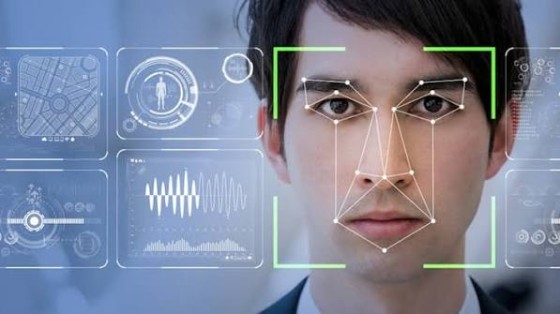
How Facial Recognition Works: A Beginner's Guide to Face Recognition Technology
Facial recognition is a biometric technology that identifies or verifies a person's identity by analyzing the unique features of their face. Powered by Artificial Intelligence (AI) and computer vision, facial recognition systems compare facial characteristics against stored biometric data to determine whether there is a match.
Today, facial recognition is widely used to unlock smartphones, verify identities, improve security, manage access to buildings, assist law enforcement, and support digital authentication services.
What Is Facial Recognition?

Facial recognition is a biometric identification technology that uses AI algorithms to detect, analyze, and compare facial features in digital images or video.
Unlike passwords or PINs, facial recognition relies on something you are—your unique biological characteristics—to verify identity.
How Facial Recognition Works
Facial recognition systems follow several coordinated steps.
Step 1: Image Capture
A camera captures an image or live video of a person's face using a smartphone, security camera, laptop, or other imaging device.
Step 2: Face Detection
Computer vision algorithms locate the face within the image by distinguishing it from the surrounding background and identifying key facial regions.
Step 3: Facial Feature Analysis
The system analyzes distinctive facial characteristics, such as:
- Distance between the eyes
- Shape of the nose
- Jawline
- Cheekbone structure
- Mouth position
- Forehead shape
- Facial contours
Modern systems evaluate hundreds or even thousands of measurable facial features.
Step 4: Face Encoding
The extracted facial characteristics are converted into a mathematical representation called a face template or facial embedding. This numerical template represents the facial features rather than storing the face as a simple photograph.
Step 5: Comparison
The generated facial template is compared with templates stored in a secure database.
Step 6: Identity Verification
If the similarity score exceeds the required confidence threshold, the system verifies or identifies the individual and grants access or performs the requested action.
The entire process typically takes less than a second.
Key Components of Facial Recognition
Several technologies work together to enable facial recognition.
Camera
Captures images or video of the subject.
Artificial Intelligence
Machine learning models analyze facial characteristics and improve recognition accuracy over time.
Computer Vision
Processes images and identifies facial landmarks.
Biometric Database
Stores encrypted facial templates for comparison.
Matching Algorithm
Calculates the similarity between the captured facial template and stored records.
Types of Facial Recognition Systems
Different systems are designed for different purposes.
Face Verification
Confirms that a person is who they claim to be, such as unlocking a smartphone.
Face Identification
Searches a database to determine the identity of an unknown individual.
Live Facial Recognition
Analyzes faces in real-time video streams for security, access control, or monitoring.
Common Applications of Facial Recognition
Facial recognition is used across many industries.
Smartphone Security
Unlocks devices and authorizes payments using facial authentication.
Airport Security
Supports identity verification and automated passenger processing.
Banking
Verifies customer identities during digital account access and online transactions.
Law Enforcement
May assist investigations by comparing images against authorized databases, subject to applicable laws, policies, and oversight.
Healthcare
Helps verify patient identities and manage secure access to medical systems.
Workplace Access
Controls entry to offices, laboratories, and other restricted areas.
Retail
Some retailers use facial recognition for security or customer experience initiatives where permitted by law.
Benefits of Facial Recognition
Facial recognition provides several important advantages.
Fast Authentication
Identity verification is completed within seconds.
Contactless Verification
Users authenticate without touching devices or entering passwords.
Enhanced Security
Biometric authentication can reduce reliance on passwords alone.
User Convenience
People can access devices and services quickly without remembering complex credentials.
Fraud Reduction
Biometric verification makes certain types of identity fraud more difficult.
Challenges of Facial Recognition
Despite its capabilities, facial recognition presents important challenges.
Privacy Concerns
The collection and use of biometric data raise significant questions about consent, transparency, and personal privacy.
Data Protection
Organizations must securely store and protect biometric information from unauthorized access.
Accuracy Limitations
Performance may be affected by poor lighting, camera quality, face coverings, or significant changes in appearance. Accuracy can also vary depending on system design and deployment.
Ethical Considerations
The use of facial recognition requires responsible governance, clear policies, and compliance with applicable laws and regulations.
Facial Recognition vs. Fingerprint Recognition
Both technologies are forms of biometric authentication but differ in implementation.
Facial Recognition
- Uses facial characteristics.
- Contactless authentication.
- Works with cameras.
- Suitable for remote identity verification.
Fingerprint Recognition
- Uses unique fingerprint patterns.
- Requires a fingerprint sensor.
- Often provides highly accurate local authentication.
- Commonly used for smartphones, laptops, and access control.
Many devices support multiple biometric methods to provide users with flexibility and stronger security.
Best Practices for Using Facial Recognition
Organizations and users should follow these recommendations.
Protect Biometric Data
Store facial templates securely using strong encryption and access controls.
Obtain Appropriate Consent
Use facial recognition transparently and in accordance with applicable privacy laws and organizational policies.
Combine with Additional Security
For highly sensitive systems, use facial recognition alongside Multi-Factor Authentication (MFA).
Keep Systems Updated
Regular software updates improve accuracy, performance, and security.
Monitor Performance
Regularly evaluate system accuracy and address potential biases or operational issues.
Future of Facial Recognition
Facial recognition continues to evolve through Artificial Intelligence, deep learning, 3D facial mapping, edge computing, and multimodal biometric systems. Modern systems increasingly combine facial recognition with other biometric methods, such as voice recognition or fingerprint authentication, to improve security and reliability. Advances in privacy-preserving AI and stronger regulatory frameworks are also shaping how facial recognition is developed and deployed. As these technologies mature, facial recognition is expected to become more accurate, secure, and widely integrated into digital identity systems.
Conclusion
Facial recognition has become one of the most widely adopted biometric technologies, enabling fast and convenient identity verification across smartphones, banking, healthcare, transportation, and enterprise security. By combining AI, computer vision, and biometric analysis, facial recognition systems can identify or verify individuals in seconds. As adoption grows, balancing innovation with privacy, security, transparency, and responsible governance will remain essential to building trust in this technology.