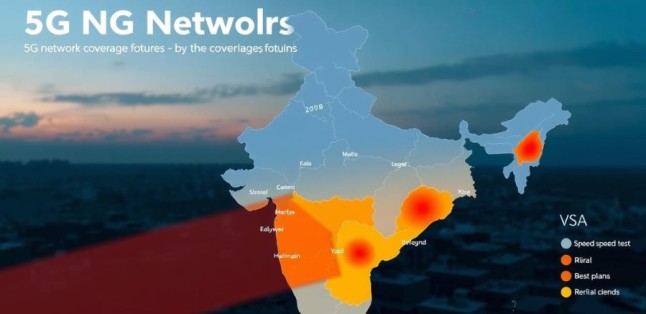
The advent of 5G technology is revolutionizing the telecom industry in India, promising faster data speeds and enhanced connectivity. As we move towards 2026, the rollout of 5G networks is expected to gain momentum, transforming the way we communicate and access information.
The coverage map for 5G in India is expanding rapidly, with major telecom operators investing heavily in infrastructure development. This article will provide an overview of the current state of 5G networks, including coverage maps, speed tests, and the best plans available from top telecom providers.
As the technology continues to evolve, understanding the nuances of 5G networks will be crucial for consumers looking to upgrade their mobile plans. This article aims to provide valuable insights into the world of 5G, helping readers make informed decisions about their telecom services.
Key Takeaways
- Overview of 5G network coverage in India
- Speed test results for major telecom operators
- Comparison of the best 5G plans available
- Future projections for 5G technology in India
- Tips for choosing the right 5G plan
The Current State of 5G in India
As India embraces 5G technology, the country witnesses a paradigm shift in its telecom sector. The introduction of 5G has brought about a significant change in the way people connect and interact.
Initial Rollout and Adoption Rates
The initial rollout of 5G in India has been rapid and extensive, with multiple cities getting covered. According to recent data, Vi 5G is available in several major cities, including Mumbai, Delhi, and Bangalore. This widespread coverage has led to an increase in adoption rates, with more users switching to 5G networks.
The adoption rates are expected to grow further as more devices become 5G-compatible and as the networks continue to expand.
Major Players in the Indian 5G Market
The Indian 5G market is dominated by key players such as Jio, Airtel, and Vi. These telecom giants have been at the forefront of the 5G rollout, offering a range of plans and services to cater to different user needs.
| Telecom Operator | 5G Coverage | Notable Plans |
|---|---|---|
| Jio | Multiple cities | Unlimited 5G data plans |
| Airtel | Major metropolitan areas | 5G plans with high data limits |
| Vi | Mumbai, Delhi, Bangalore, etc. | Competitive pricing for 5G |
The competition among these players is driving innovation and improving services, ultimately benefiting the consumers.
Evolution of 5G India 2026: What to Expect
As India hurtles towards 2026, the 5G network is expected to undergo substantial evolution, fueled by technological innovations and proactive government initiatives. This evolution is not just about enhancing existing infrastructure but also about creating a robust ecosystem that supports a wide range of applications and services.
Technological Advancements Since Initial Launch
Since the initial launch of 5G in India, there have been significant technological advancements. One of the key developments is the improvement in network slicing capabilities, allowing for more efficient allocation of network resources. Additionally, advancements in Massive MIMO (Multiple Input Multiple Output) technology have enhanced the capacity and coverage of 5G networks.
Key Technological Advancements:
- Enhanced network slicing for better resource allocation
- Massive MIMO technology for improved capacity and coverage
- Edge computing for reduced latency
Government Initiatives Driving 5G Growth
The Indian government has been proactive in driving the growth of 5G through various initiatives. One of the key initiatives is the establishment of a dedicated task force to oversee the rollout of 5G services. The government has also been working on creating a conducive regulatory environment to encourage investments in the 5G sector.
| Initiative | Description | Impact |
|---|---|---|
| Dedicated Task Force | Oversees 5G rollout and addresses challenges | Efficient rollout and issue resolution |
| Regulatory Framework | Creates a conducive environment for 5G investments | Increased investments in 5G infrastructure |
| Public-Private Partnerships | Collaboration between government and private entities for 5G development | Accelerated 5G adoption and innovation |
The government's efforts are expected to play a crucial role in the successful adoption and growth of 5G technology in India by 2026.
Nationwide 5G Coverage Map for 2026
As India hurtles towards a fully connected future, the 5G coverage map for 2026 is set to undergo a significant transformation. The expansion of 5G infrastructure is expected to bridge the gap between urban and rural India, providing high-speed internet to a larger population.
Urban Coverage Analysis
Urban areas in India are expected to see a comprehensive 5G rollout by 2026. Major cities like Delhi, Mumbai, and Bangalore will have extensive coverage, with telecom operators investing heavily in infrastructure. According to recent reports, urban 5G coverage is expected to reach up to 90% in these areas, providing seamless connectivity for residents and businesses.
Rural Expansion Projections
Rural India is also on the cusp of a 5G revolution. By 2026, it's projected that a significant portion of rural areas will be covered, with the government and private sector collaborating to expand infrastructure. As noted by a recent industry report, "Rural 5G expansion will be driven by government initiatives and public-private partnerships, aiming to bring high-speed internet to underserved communities."
"The expansion of 5G in rural areas will be a game-changer for India's digital landscape, enabling new opportunities in agriculture, education, and healthcare."
Regional Disparities and Solutions
Despite the progress, regional disparities in 5G coverage are expected to persist in 2026. To address this, the government is implementing policies to encourage investment in underserved regions. As stated by a government official, "We are committed to ensuring that the benefits of 5G reach all parts of the country, including the most remote areas."
The nationwide 5G coverage map for 2026 will be a critical tool in understanding the reach and impact of this technology. With continued investment and innovation, India is poised to become a leader in the global 5G landscape.
5G Speed Tests: Performance Metrics in 2026
By 2026, India's 5G network is expected to offer unparalleled download and upload speeds, transforming the mobile experience. As the technology continues to mature, understanding its performance metrics becomes essential for both consumers and businesses.
Average Download and Upload Speeds
Recent 5G speed tests indicate that Indian telecom operators are achieving remarkable speeds. For instance, Vi 5G has been reported to offer speeds up to 30 times faster than its 4G counterpart.
Real-world Applications at These Speeds
With such high speeds, applications like 4K video streaming and cloud gaming become seamless, enhancing user experience.
Comparison with 4G Performance
The transition from 4G to 5G is not just an incremental upgrade; it's a significant leap. The table below highlights the differences:
| Metric | 4G | 5G |
|---|---|---|
| Average Download Speed | 10-20 Mbps | 100-1000 Mbps |
| Average Upload Speed | 5-10 Mbps | 50-500 Mbps |
Latency Improvements and Their Impact
Latency, or the delay between sending and receiving data, is significantly reduced in 5G networks. This improvement has far-reaching implications.
Gaming and Real-time Applications
For gamers, lower latency means a more responsive and immersive experience. Similarly, real-time applications benefit from this reduction.
Industrial and Commercial Benefits
Beyond consumer applications, industries such as manufacturing and logistics can leverage 5G's low latency for IoT and automation.
Jio 5G Plans and Coverage in 2026
As India hurtles towards a fully 5G-enabled future, Jio is at the forefront, offering a range of 5G plans tailored to diverse user needs. With a commitment to providing seamless connectivity, Jio's 5G plans are designed to cater to both individual consumers and businesses.
Premium and Budget Options
Jio's consumer plans are segmented into premium and budget-friendly options, ensuring there's something for everyone.
Family and Individual Plans
- Family Plans: These plans offer a shared data pool for multiple users, making them ideal for families. They come with additional benefits like free streaming services.
- Individual Plans: Tailored for single users, these plans offer flexibility with various data allowances and pricing options.
Data Allowances and Pricing Structure
Jio's pricing strategy is competitive, with data allowances ranging from budget-friendly limited data plans to premium unlimited data options. The plans are designed to be flexible, allowing users to choose what best suits their needs.
Business-specific Solutions
Jio also offers a range of business-specific 5G solutions, recognizing the critical role connectivity plays in enterprise operations.
Enterprise Connectivity Options
Jio's enterprise plans include dedicated broadband services with high-speed data and reliable connectivity, essential for businesses operating in a digital landscape.
Industry-specific Packages
- Manufacturing: Plans tailored for the manufacturing sector, focusing on IoT applications and smart factory solutions.
- Healthcare: Specialized plans for healthcare providers, enabling telemedicine and other health services.
By offering a diverse portfolio of 5G plans, Jio is poised to support India's digital transformation across consumer and business segments.
Airtel 5G Plans and Coverage in 2026
Airtel's 5G services are set to revolutionize connectivity in India by 2026. With a focus on providing high-speed internet and comprehensive coverage, Airtel aims to cater to both consumer and enterprise needs.
Consumer Package Highlights
Airtel's consumer packages are designed to offer flexibility and value. Key features include:
- Unlimited Data Options: Airtel provides unlimited data plans with high-speed 5G connectivity, ensuring seamless streaming and browsing.
- Bundled Services and Benefits: These plans come with additional benefits such as free streaming services, music subscriptions, and more.
Unlimited Data Options
Airtel's unlimited data plans are designed for heavy users, offering high-speed data without worrying about data caps.
Bundled Services and Benefits
The bundled services enhance the overall user experience, providing added value through various perks and promotions.
Enterprise Solutions and Pricing
Airtel also offers tailored 5G solutions for enterprises, focusing on reliability and security.
- Small Business Options: Airtel provides flexible plans for small businesses, including customized data packages and priority customer support.
- Corporate Network Solutions: For larger corporations, Airtel offers comprehensive network solutions with dedicated bandwidth and advanced security features.
Small Business Options
These plans are designed to be affordable and scalable, meeting the specific needs of small businesses.
Corporate Network Solutions
Airtel's corporate solutions ensure secure and reliable connectivity, supporting business operations with high-speed 5G networks.
Vi (Vodafone Idea) 5G Offerings in 2026
Vi is revolutionizing the Indian telecom landscape with its innovative 5G offerings in 2026. As the third major player in the Indian telecom market, Vi is leveraging its strengths to provide competitive 5G services.
Competitive Advantages and Unique Features
Vi's 5G services come with several competitive advantages, including enhanced data speeds and broader coverage. Unique features include:
Entertainment Partnerships
Vi has partnered with popular streaming services to offer exclusive content to its 5G users, enhancing the overall user experience.
International Roaming Benefits
Vi's 5G plans include seamless international roaming, allowing users to stay connected abroad without additional charges.
Coverage Expansion Strategy
Vi is aggressively expanding its 5G coverage across India. Key strategies include:
Tier 2 and Tier 3 City Rollout
Vi is focusing on rolling out 5G services in tier 2 and tier 3 cities, enhancing connectivity in these regions.
Infrastructure Sharing Agreements
Vi has entered into infrastructure sharing agreements with other telecom operators to accelerate its 5G rollout.
| City | 5G Coverage | Expected Rollout |
|---|---|---|
| Delhi | Available | 2026 |
| Mumbai | Available | 2026 |
| Bangalore | Rolling Out | 2026 |
BSNL's Entry into 5G: Government-backed Solutions
As India accelerates its 5G rollout, BSNL is poised to play a crucial role with its government-backed solutions. The state-owned telecom company is expected to leverage its extensive network infrastructure to provide widespread 5G coverage, especially in rural and underserved areas.
Affordable 5G for the Masses
BSNL's 5G plans are anticipated to be highly competitive, focusing on affordability for the masses. This approach is likely to disrupt the market, pushing other telecom operators to revisit their pricing strategies.
Rural-focused Initiatives
BSNL's rural-focused initiatives are expected to bridge the digital divide, bringing high-speed internet to remote areas. This aligns with the government's vision of digital inclusivity.
Subsidized Plans for Students and Seniors
Subsidized plans for students and seniors are on the cards, making 5G more accessible to vulnerable sections of society. This move is likely to garner significant support from the government.
Public-Private Partnerships in Infrastructure
To enhance its 5G infrastructure, BSNL is likely to engage in public-private partnerships. This collaboration will help in leveraging the strengths of both sectors to deliver robust 5G services.
Tower Sharing Agreements
Tower sharing agreements with private telecom operators could be a key strategy for BSNL to expand its 5G coverage rapidly.
Indigenous Technology Implementation
The implementation of indigenous technology, such as 4G/5G stack developed by Indian companies, is expected to be a significant aspect of BSNL's 5G rollout, promoting self-reliance in technology.
As BSNL embarks on its 5G journey, it is set to redefine the Indian telecom landscape with its government-backed solutions and focus on affordability. The success of BSNL's 5G venture could have far-reaching implications for the industry.
Comparing 5G Plans: Best Value for Different User Types
As India strides towards a fully 5G-enabled future by 2026, choosing the right telecom plan becomes crucial for consumers. With multiple telecom operators like Jio, Airtel, and Vi offering a variety of plans, the task of selecting the best one can be daunting.
Heavy Data Users and Streamers
For heavy data users and streamers, unlimited data plans with high-speed internet are ideal. Jio and Airtel offer competitive plans in this category, with data speeds up to 1 Gbps. For instance, Jio's Premium 5G plan offers unlimited data, free streaming, and additional cloud services.
Business and Professional Users
Business and professional users require plans with secure and reliable connectivity. Airtel and Vi offer dedicated business plans with features like static IPs, VPN services, and priority customer support. These plans also include additional services like cloud storage and collaboration tools.
Budget-conscious Consumers
For budget-conscious consumers, Vi offers competitive pricing with its entry-level 5G plans. These plans provide a balance between affordability and data benefits, making 5G accessible to a wider audience.
In conclusion, the best 5G plan in India by 2026 will depend on individual needs. Whether you're a heavy data user, a business professional, or a budget-conscious consumer, there's a plan available to suit your requirements.
5G-enabled Devices Dominating the Indian Market
With the advent of 5G in India, consumers are increasingly adopting 5G-enabled smartphones and IoT devices, enhancing their digital experience. The Indian market is witnessing a significant transformation, driven by the demand for faster data speeds and lower latency.
Smartphones Optimized for Indian 5G Networks
The Indian smartphone market is flooded with 5G-enabled devices, catering to various consumer segments. Premium segment options include devices from top brands like Apple and Samsung, offering advanced features and superior performance.
Premium Segment Options
- Apple iPhone 13 Pro and Pro Max
- Samsung Galaxy S22 Ultra
- OnePlus 10 Pro
Affordable 5G Devices
For budget-conscious consumers, brands like Xiaomi and Realme offer affordable 5G smartphones with impressive specifications at competitive prices.
IoT Devices and Smart Home Solutions
The adoption of 5G is also driving the growth of IoT devices and smart home solutions in India. Connected home ecosystems are becoming increasingly popular, enhancing home automation and security.
Connected Home Ecosystems
Smart speakers, security cameras, and smart thermostats are some of the IoT devices gaining traction in Indian homes.
Industrial IoT Applications
Beyond consumer applications, 5G-enabled IoT devices are revolutionizing industries through industrial IoT applications, improving efficiency and productivity.
Impact of 5G on Digital India Initiatives
The advent of 5G is expected to bolster India's digital landscape, enhancing various initiatives under the Digital India program. With its high-speed connectivity and low latency, 5G is poised to revolutionize several aspects of digital governance and public services.
Smart Cities Transformation
The implementation of 5G will significantly enhance the smart cities mission by improving infrastructure and services. Key areas of impact include:
Traffic Management and Public Safety
5G enables real-time data analytics for efficient traffic management, reducing congestion and enhancing public safety through smart surveillance systems.
Utility Management Systems
With 5G, utility management becomes more efficient through IoT devices that monitor and manage resources like water and electricity in real-time.
Digital Inclusion and Rural Connectivity
5G is set to bridge the digital divide by providing high-speed internet to rural areas, thus promoting digital inclusion.
E-education Opportunities
The enhanced connectivity will facilitate e-education initiatives, providing quality educational resources to remote areas.
Telehealth Services Expansion
5G will enable the expansion of telehealth services, allowing for remote consultations and monitoring, thus improving healthcare accessibility.
| Initiative | Pre-5G | Post-5G |
|---|---|---|
| Smart Cities | Limited IoT integration | Enhanced IoT and real-time analytics |
| Digital Inclusion | Limited rural connectivity | High-speed internet in rural areas |
| E-education | Limited online resources | Quality education through digital means |
As seen in the table, 5G is expected to bring about significant improvements across various Digital India initiatives, from smart city infrastructure to digital inclusion efforts.
"The integration of 5G with Digital India initiatives will be a game-changer for the country, enhancing both urban and rural digital landscapes."
5G Applications Revolutionizing Indian Industries
The advent of 5G technology is transforming various sectors in India, paving the way for unprecedented growth and innovation. As 5G applications continue to roll out, they are expected to have a significant impact on several key industries.
Healthcare and Telemedicine Advancements
The healthcare sector is poised to benefit greatly from 5G, with advancements in telemedicine allowing for remote consultations and more efficient data transfer. 5G-enabled telemedicine will improve patient care, especially in rural areas.
Agriculture and Rural Development
In agriculture, 5G will facilitate the use of IoT devices for precision farming, improving crop yields and reducing waste. This technology will also enable better connectivity in rural areas, promoting digital inclusion.
Manufacturing and Industry 4.0
The manufacturing sector will see a significant boost with the adoption of 5G, enabling Industry 4.0 practices such as automation and smart manufacturing. This will lead to increased productivity and efficiency.
| Industry | 5G Application | Benefits |
|---|---|---|
| Healthcare | Telemedicine | Improved patient care, remote consultations |
| Agriculture | Precision farming | Increased crop yields, reduced waste |
| Manufacturing | Industry 4.0 | Increased productivity, automation |
Challenges in 5G Implementation and Solutions
As India accelerates its 5G rollout, several challenges need to be addressed to ensure seamless implementation. The country's diverse geography and varying levels of infrastructure development pose significant hurdles.
Infrastructure Limitations and Upgrades
One of the primary challenges is upgrading existing infrastructure to support 5G technology. This includes addressing power supply challenges and ensuring reliable connectivity.
Power Supply Challenges
A stable power supply is crucial for maintaining 5G networks. Areas with frequent power outages or inadequate power infrastructure need special attention.
Fiber Backhaul Requirements
Fiber backhaul is essential for high-speed data transmission. Upgrading to fiber-optic cables is necessary to support the high bandwidth requirements of 5G.
Spectrum Allocation and Regulatory Framework
Another significant challenge is the allocation of spectrum and establishing a conducive regulatory framework. This involves complex processes such as auction processes and pricing, as well as ensuring security and compliance standards.
Auction Processes and Pricing
The auction process for spectrum allocation must be transparent and fair, ensuring that prices are competitive and encourage participation from various telecom operators.
Security and Compliance Standards
Implementing robust security measures is critical to protect against cyber threats and ensure compliance with international standards.
Addressing these challenges requires a collaborative effort from government bodies, telecom operators, and technology providers. By overcoming infrastructure limitations and establishing a robust regulatory framework, India can successfully implement 5G technology.
5G vs. Emerging 6G Research: India's Position
As India continues to roll out 5G networks, researchers are already exploring the possibilities of 6G technology. The transition from 5G to 6G is expected to be a significant leap, with 6G potentially offering even faster speeds, lower latency, and more robust connectivity.
Research Initiatives and Innovation Hubs
India has launched several research initiatives to drive innovation in 6G technology. Institutions like the Indian Institute of Technology (IIT) Madras and the Indian Institute of Science (IISc) are at the forefront of 6G research. These innovation hubs are collaborating with international partners to develop cutting-edge technologies that will shape the future of wireless communication.
Timeline for Next-generation Connectivity
The timeline for 6G is still in its infancy, but experts predict that it could be commercially available by the early 2030s. India's next-generation connectivity plans are aligned with global efforts, ensuring that the country remains at the forefront of technology adoption. As research progresses, we can expect significant advancements in areas like terahertz frequencies and quantum communication.
Global Comparison: India's 5G Standing in 2026
India's 5G journey is gaining momentum, with 2026 expected to be a pivotal year for its global standing. As the country continues to expand its 5G infrastructure, it's essential to benchmark its progress against global leaders.
Benchmarking Against Asian Leaders
India's 5G development is closely tied to the advancements in other Asian countries. China and South Korea are leading the way in 5G technology, with extensive coverage and innovative applications.
Comparison with China and South Korea
China has been at the forefront of 5G deployment, with widespread coverage and a strong ecosystem. South Korea, on the other hand, has focused on delivering high-speed 5G services, with average download speeds exceeding 400 Mbps. India, while lagging behind, is making significant strides in enhancing its telecom infrastructure.
ASEAN Nations' 5G Development
The ASEAN region is also witnessing rapid 5G adoption, with countries like Singapore and Malaysia leading the charge. India's 5G standing in the region will be influenced by its ability to deliver reliable and fast services.
Comparison with Western 5G Implementation
The Western world, including North America and Europe, has its own set of 5G challenges and successes. Understanding these can provide valuable insights for India's 5G journey.
North American 5G Ecosystem
The North American 5G ecosystem is characterized by intense competition among telecom operators, driving innovation and better services.
"The US 5G market is expected to continue its growth trajectory, with significant investments in mmWave technology."
European 5G Standards and Adoption
Europe has been a proponent of standardized 5G regulations, facilitating a cohesive approach to 5G adoption across the continent. India's 5G standards can benefit from studying European best practices.
Conclusion: The Future of Connectivity in India
India's 5G rollout is transforming the country's connectivity landscape. Major players like Jio, Airtel, and Vi are driving this change, enabling faster data transfer rates and lower latency.
The 5G infrastructure is expected to drive a digital revolution, unlocking new opportunities for businesses and individuals. This will propel India towards a more digitally inclusive future, with significant advancements in areas like smart cities and IoT devices.
As India's infrastructure continues to evolve, the country's future of connectivity is poised to be bright. The government's commitment to driving 5G growth will be crucial in shaping this future.
With its 5G network, India is likely to emerge as a leader in the global 5G landscape. The digital revolution will have a significant impact on India's economy, society, and culture, making it an exciting time for the country's technological advancements.