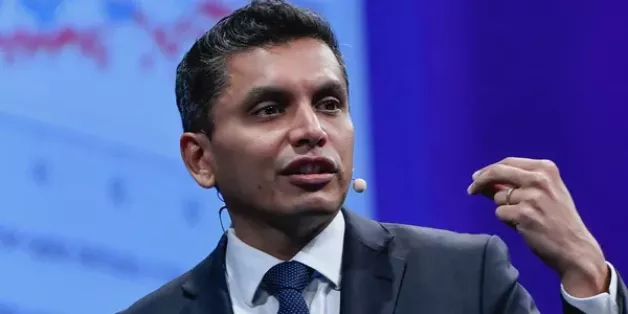
In a world increasingly marked by division and volatility, the virtue of temperance has never been more important. Karthik Ramanna, a prominent thinker on ethics and leadership, argues that managing the intense social and political turbulence of today requires a renewed focus on temperance—self-restraint, moderation, and balance.
Ramanna points out that many of the traditional tools used to navigate conflict and disagreement—whether legal frameworks, political compromise, or market mechanisms—are proving insufficient in the face of unprecedented social fragmentation. These tools often assume a shared baseline of trust and values that no longer exists, making them less effective.
Temperance, in contrast, offers a personal and collective means of addressing divisiveness. It encourages individuals, especially leaders, to moderate their impulses, avoid extremes, and engage in thoughtful reflection before reacting. This quality fosters dialogue rather than confrontation and helps build bridges across ideological divides.
Ramanna believes that temperance is not about passivity or avoidance but about conscious control over one’s responses and emotions. In a climate where social media and rapid information flow amplify polarization, temperance can serve as a crucial buffer against impulsive decisions and rhetoric that deepen divides.
He also stresses that temperance must be cultivated at both individual and institutional levels. Organizations, communities, and governments need to embed this virtue into their cultures and practices to promote stability and resilience.
The leadership challenge, according to Ramanna, is to create environments where temperance is valued and modeled. This involves fostering spaces for respectful dialogue, encouraging empathy, and recognizing the limits of what can be achieved through confrontation alone.
In summary, Karthik Ramanna reminds us that while the world around us grows more complex and fractious, temperance remains a timeless and essential virtue. Leaders who embrace and promote temperance are better equipped to navigate today’s volatile social landscape, building understanding and unity where others see only conflict.