Indian Super League Faces Commercial Pressure Following Tata Steel’s Exit From the Competition
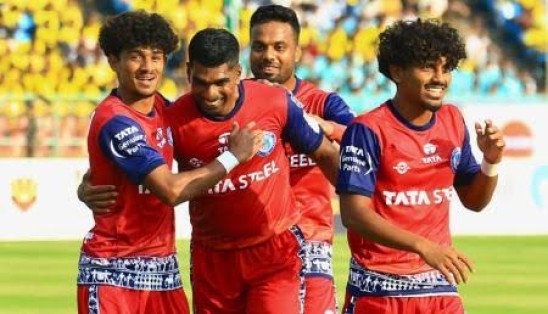
The Indian Super League is facing renewed questions over its commercial sustainability after Tata Steel decided to withdraw Jamshedpur FC from the 2026-27 competition, removing one of Indian football's most established corporate backers from the country's top professional league.
Tata Steel's decision has put the spotlight on the economics of running an ISL club at a time when the competition is already undergoing a major commercial transition. Industry reporting indicates that media-rights values have fallen sharply while several corporate stakeholders have either exited or reassessed their involvement in Indian football.
The development is particularly significant because Tata Steel has supported football development in India for decades and established Jamshedpur FC in 2017 as its entry into the commercial side of the sport.
Tata Steel Withdraws Jamshedpur FC From ISL

Jamshedpur FC will not participate in the 2026-27 Indian Super League after Tata Steel decided to discontinue the club's operations at the top level.
The club did not pay the ₹55 lakh participation fee required under the league's new club-led structure before the extended deadline. Inter Kashi, by contrast, completed the payment required to participate in the competition.
Tata Steel subsequently confirmed that shutting down Jamshedpur FC was a board-level decision and said existing player contracts would be honoured.
Tata Steel Says Decision Was Strategic
Tata Steel has maintained that its withdrawal was not driven by uncertainty surrounding the ISL's commercial future.
The company has indicated that it intends to refocus its football investment toward grassroots development, consistent with its longstanding involvement in sports academies and youth development.
That distinction is important.
Tata Steel's stated rationale should not automatically be interpreted as confirmation that Jamshedpur FC exited because the ISL itself was financially unsustainable.
However, the withdrawal comes amid broader commercial challenges confronting the league, making the timing significant for Indian football stakeholders.
Jamshedpur FC Joined the ISL in 2017
Tata Steel entered the Indian Super League in 2017 when the competition expanded.
The company's participation was notable because Tata had already been deeply involved in football development through the Tata Football Academy, established in 1987.
Jamshedpur FC subsequently became an important part of the league and won the ISL League Winners' Shield during the 2021-22 season.
Its withdrawal therefore removes a club with established infrastructure, corporate backing and a strong connection to grassroots football.
Exit Raises Questions About Franchise Economics
Professional football clubs require sustained investment across several areas.
Major expenses include:
-
Player salaries
-
Coaching staff
-
Travel
-
Stadium operations
-
Training infrastructure
-
Youth development
-
Marketing
-
Administration
These costs need to be supported through commercial revenue if clubs are to become financially sustainable.
Potential revenue sources include broadcasting distributions, sponsorships, ticketing, merchandise and central league payments.
The challenge for Indian football is developing these revenue streams sufficiently to support long-term club investment.
Media Rights Are Central to League Economics
Broadcasting and streaming rights are among the most important financial pillars of professional sports leagues.
Major international football competitions generate substantial central revenue by selling media rights and distributing part of those proceeds to clubs.
The ISL previously operated under a commercial structure involving Football Sports Development Limited, while its media-rights arrangements also evolved over time.
The previous media-rights deal beginning in 2023 had a reported base value of ₹550 crore for two years, with an option for an extension.
The league's changing commercial structure now makes future media-rights monetisation especially important.
Declining Media Value Creates Pressure
Current industry reporting indicates that the commercial value attached to ISL media rights has fallen sharply.
That creates a significant challenge because lower media-rights revenue can ultimately reduce the financial resources available across the football ecosystem.
If broadcasting income weakens, clubs become more dependent on:
-
Owners
-
Sponsors
-
Ticketing
-
Merchandise
-
Other commercial partnerships
That can make the economics particularly difficult for clubs that lack large fan bases or diversified commercial revenue.
ISL Is Moving Toward a New Commercial Structure
Indian football has been transitioning away from the previous commercial framework that shaped much of the ISL's development.
The earlier Master Rights Agreement between the All India Football Federation and Football Sports Development Limited became a major source of uncertainty ahead of the 2025-26 season.
The transition has forced stakeholders to reconsider how the league should be funded, governed and commercialised.
The 2026-27 structure therefore represents more than another season. It is an important test of whether a revised model can create a sustainable professional football ecosystem.
Clubs Carry Greater Commercial Responsibility
Under a more club-led structure, franchises may need to assume greater responsibility for the league's commercial development.
That can include contributing toward operating costs while participating more directly in decisions surrounding:
-
Media rights
-
Sponsorship
-
Marketing
-
Scheduling
-
Commercial partnerships
Greater club control can potentially align incentives.
However, it also places more financial responsibility on individual owners, making long-term commitment critical.
Corporate Confidence Matters
Professional leagues require stable ownership.
Club owners often need to commit capital for years before a sports franchise reaches financial maturity.
When prominent corporate groups withdraw or reconsider investments, other stakeholders naturally reassess the risk associated with the league.
Tata Steel's departure is therefore important not only because one club disappears but because of what the loss of a long-established corporate participant could mean for broader investor confidence.
Other Ownership Changes Add to Uncertainty
Indian football has already experienced significant changes among corporate stakeholders.
Reliance-linked entities played a foundational role in establishing the ISL's commercial model, while international football investor City Football Group has also altered its involvement in India.
When ownership structures repeatedly change, leagues can find it harder to build long-term commercial planning.
Sponsors and broadcasters generally prefer competitions with predictable participation, stable governance and clear calendars.
Sponsors Need Certainty
Commercial partners typically commit marketing budgets months before a sports season begins.
They need clarity around:
-
Participating clubs
-
Match schedules
-
Broadcast distribution
-
Audience reach
-
Competition format
Uncertainty in any of these areas can reduce the attractiveness of sponsorship.
This means administrative stability has direct commercial value.
Broadcasters Also Need Predictable Inventory
Sports broadcasters purchase rights partly based on the number and quality of matches available.
A stable league provides predictable programming inventory.
Late changes to club participation can complicate:
-
Scheduling
-
Advertising sales
-
Production planning
-
Marketing
For the ISL, maintaining a stable competition structure will be important when negotiating future broadcasting and streaming agreements.
Football Competes With Cricket for Commercial Spending
Indian football operates in a sports market overwhelmingly dominated by cricket.
The Indian Premier League commands enormous broadcasting fees, sponsorship budgets and consumer attention.
Football therefore competes for a smaller share of sports marketing expenditure.
Corporate sponsors considering an ISL partnership can compare potential returns against opportunities across:
-
Cricket
-
Kabaddi
-
Badminton
-
Digital entertainment
-
Influencer marketing
The ISL must demonstrate strong audience engagement to justify sustained commercial investment.
Football Still Has Significant Audience Potential
Commercial pressure does not mean Indian football lacks demand.
Football maintains strong support across several regions, particularly in:
-
West Bengal
-
Kerala
-
Goa
-
Northeast India
-
Karnataka
-
Jharkhand
Major clubs can generate substantial fan engagement both inside stadiums and digitally.
The challenge is converting that passion into sustainable commercial revenue.
Ticketing Can Become More Important
Match-day revenue represents an opportunity for clubs with strong local support.
Successful ticketing economics depend on:
-
Stadium attendance
-
Pricing
-
Hospitality
-
Season tickets
-
Premium experiences
Clubs capable of building strong local identities may be better positioned to reduce dependence on central league revenue.
Merchandise Remains Underdeveloped
Official football merchandise remains another potential growth area.
Club jerseys, scarves, collectibles and lifestyle products can deepen fan relationships while generating revenue.
However, merchandise economics require strong distribution, brand protection and consistent fan engagement.
Indian clubs still have significant room to develop this part of their business.
Digital Audiences Could Support New Revenue Models
Football has a particularly young and digitally engaged audience.
Clubs can reach supporters through:
-
Short-form video
-
Social media
-
Streaming
-
Mobile applications
-
Creator partnerships
Digital engagement can help clubs build audiences outside their immediate home markets.
Over time, those audiences could support sponsorship, merchandise and direct-to-consumer revenue.
FanCode and Sony Reflect Changing Distribution Model
The ISL's current broadcasting arrangements also illustrate how Indian sports distribution is changing.
Digital platforms are becoming increasingly important, while linear television remains valuable for mass reach.
A combination of streaming and television distribution could potentially give the league flexibility to reach different audience segments.
However, the commercial value of those rights ultimately depends on viewership and advertiser demand.
Grassroots Development Remains Essential
Tata Steel's decision to redirect attention toward grassroots football highlights another important dimension of Indian football.
Professional leagues cannot develop sustainably without a strong pipeline of players.
Investment is required across:
-
Academies
-
Coaching
-
School football
-
Youth competitions
-
Training facilities
-
Scouting
Tata Steel has operated the Tata Football Academy since 1987 and continues to support multiple sports-development programmes.
Jamshedpur FC Exit Creates Player Impact
The immediate consequences extend beyond league economics.
Professional clubs employ:
-
Players
-
Coaches
-
Medical staff
-
Analysts
-
Administrators
-
Support personnel
A club withdrawal creates uncertainty for those careers.
Tata Steel's commitment to honour existing player contracts provides financial protection, but affected players may still need to find new clubs to continue competing at the highest domestic level.
AIFF Wants Tata to Reconsider
The All India Football Federation has sought to keep Tata involved in senior professional football.
AIFF President Kalyan Chaubey has publicly appealed for reconsideration of the withdrawal.
The federation also provided additional time for Jamshedpur FC to reconsider its position.
Tata Steel, however, has indicated that the board decision is final.
Losing Jamshedpur Has Symbolic Importance
Jamshedpur occupies a distinctive place in Indian sport.
The city has long been associated with organised corporate investment in sporting infrastructure.
Jamshedpur FC also had access to established facilities and a strong football-development ecosystem.
Losing such a club therefore carries symbolic significance beyond the numerical reduction in league participants.
New Investors Need Clear Economics
If Indian football wants to attract new corporate owners, the commercial proposition must be understandable.
Prospective investors need visibility around:
-
League governance
-
Participation costs
-
Revenue sharing
-
Media rights
-
Sponsorship
-
Promotion and relegation
-
Competition structure
Uncertainty increases the cost of capital because investors demand greater returns for assuming greater risk.
Long-Term Ownership Is Essential
Sports franchises often require patient capital.
Building a football brand can take decades rather than a few seasons.
Owners must invest through periods of:
-
Weak performance
-
Lower attendance
-
Commercial downturns
-
Management changes
A sustainable ISL therefore needs investors willing to take a long-term view of Indian football's development.
What the Indian Football Industry Should Watch
The commercial pressure surrounding the league puts several issues in focus:
-
Final 2026-27 club participation
-
Media-rights value
-
Sponsorship agreements
-
League governance
-
Revenue-sharing arrangements
-
Club operating costs
-
Corporate ownership
-
Match attendance
-
Digital audiences
-
New investor participation
The ability to provide commercial certainty across these areas will be critical.
Outlook
Tata Steel's withdrawal of Jamshedpur FC comes at a difficult moment for the Indian Super League as the competition transitions toward a different commercial structure.
The company's stated decision to refocus on grassroots development should be distinguished from the broader financial pressures facing professional Indian football.
Nevertheless, losing a major corporate-backed club inevitably raises questions about the attractiveness of the current professional model.
The ISL still possesses important assets, including established clubs, passionate regional fan bases and significant digital audience potential. Converting those advantages into a commercially sustainable league will require stable governance, predictable scheduling and stronger monetisation.
Conclusion
Tata Steel's decision to withdraw Jamshedpur FC has intensified scrutiny of the Indian Super League's commercial model at a time when media-rights economics and corporate participation are already under pressure.
Jamshedpur FC's departure is particularly significant because Tata Steel entered the league in 2017 after decades of investment in Indian football and built one of the competition's more distinctive club ecosystems.
The company's stated strategy is to concentrate more heavily on grassroots development, rather than abandoning its wider commitment to sport.
For the ISL, however, the challenge is clear. The league must demonstrate that professional football in India can offer club owners, broadcasters and sponsors a stable and economically credible long-term proposition.
Its ability to achieve that will influence not only the future of individual franchises but also the development of India's professional football industry.