Babycare Quick-Commerce Startup Peeko Raises $7 Million to Expand Beyond Bengaluru
Bengaluru-based babycare quick-commerce startup Peeko has raised $7 million in fresh funding led by Chiratae Ventures, giving the young company additional capital to expand its specialised rapid-delivery model as competition intensifies across India's online babycare market.
Existing investor Stellaris Venture Partners also participated in the round, alongside MakeMyTrip co-founder and Group CEO Deep Kalra.
Peeko plans to deploy the fresh capital toward geographic expansion, technology development and strengthening its team as it prepares to move beyond its current Bengaluru operations.
The startup now operates three dark stores in Bengaluru and offers more than 30,000 stock-keeping units across baby and children's categories, promising delivery within 60 minutes.
The funding represents another significant bet on vertical quick commerce — the idea that specialised platforms can build defensible businesses by offering substantially greater selection and category expertise than general-purpose rapid-delivery companies.
Chiratae Ventures Leads Peeko’s $7 Million Round

The latest financing brings a prominent Indian venture-capital investor onto Peeko's cap table.
Chiratae Ventures led the $7 million investment, while existing investor Stellaris Venture Partners continued backing the company.
Deep Kalra also participated.
For Peeko, the financing provides resources to move from proving its model within Bengaluru toward building a potentially multi-city business.
Peeko Previously Raised $3.2 Million
The new investment follows Peeko's $3.2 million seed funding round announced in August 2025.
That earlier round was led by Stellaris Venture Partners.
Angel investors included Kunal Bahl, Rohit Bansal, Maninder Gulati, Abhishek Goyal, Nitin Gupta and Arjun Vaidya.
Peeko was then operating from a single approximately 4,000-square-foot dark store and serving 10 Bengaluru pin codes.
The company's expansion to three dark stores provides an indication of the operational progress made since that financing.
Peeko Was Founded by Chetan Sharma, Vivek Khetan and Abhijit Gairola
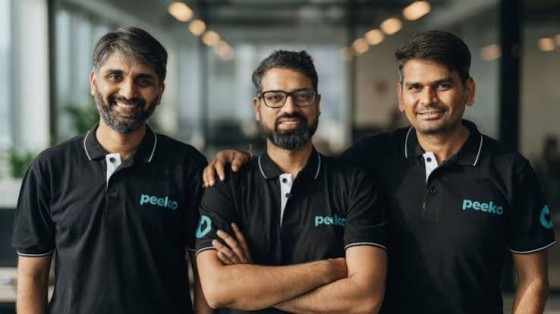
Peeko was founded by Chetan Sharma, Vivek Khetan and Abhijit Gairola.
The founders brought experience from companies including Leap and OYO.
The business was created around a relatively simple observation: parents frequently need baby products urgently, but conventional ecommerce can take days to deliver them.
Peeko attempts to combine the speed associated with quick commerce with the product selection of a specialised babycare retailer.
Platform Promises Delivery Within 60 Minutes
Speed forms one part of Peeko's proposition.
The startup promises delivery of baby and children's products within approximately 60 minutes.
Its assortment includes categories such as:
diapers,
baby apparel,
toys,
personal-care products,
food,
footwear,
and baby gear.
This makes Peeko different from general quick-commerce platforms that typically prioritise a smaller assortment of high-frequency baby essentials.
Peeko Now Offers More Than 30,000 Products
The startup's catalogue has expanded to more than 30,000 SKUs.
That breadth is strategically important.
Parents do not purchase only diapers and wipes.
Children continuously require different:
clothing sizes,
toys,
feeding products,
personal-care items,
and equipment.
A specialised platform can dedicate substantially more inventory space to these categories than a general quick-commerce dark store.
Vertical Quick Commerce Is Peeko’s Central Bet
India's first quick-commerce wave was dominated by horizontal platforms.
Companies built large catalogues spanning groceries, household essentials, beauty, electronics and other everyday products.
A second model is emerging around specialised verticals.
Instead of selling almost everything, these businesses concentrate on one category and attempt to provide greater depth.
Peeko is applying this strategy to babycare.
Why Babycare Could Suit Rapid Delivery
Babycare combines planned purchases with unexpected requirements.
A family may know weeks in advance that it needs new clothing.
But other purchases can become urgent.
Running out of diapers or baby food can create immediate demand.
Parents Often Value Convenience Highly
Households with young children can find even a routine shopping trip difficult.
Rapid home delivery therefore offers practical value beyond novelty.
If the platform becomes dependable, parents may use it repeatedly rather than only during emergencies.
That repeat behaviour is particularly important to quick-commerce economics.
Babycare Can Generate High Purchase Frequency
Children grow quickly.
Their requirements change constantly.
Clothing sizes change.
Toy preferences evolve.
Feeding needs develop.
Daily essentials need replenishment.
This creates multiple purchase occasions throughout the year.
A platform capable of acquiring a parent early could potentially retain that customer across several stages of childhood.
Peeko Wants to Solve Catalogue Fatigue
A massive catalogue does not automatically create a better ecommerce experience.
Parents can encounter hundreds of apparently similar products.
That creates decision fatigue.
Peeko's strategy includes curation rather than simply maximising product count.
Trust Is Particularly Important in Baby Products
Parents may scrutinise:
materials,
ingredients,
safety,
age suitability,
and product quality
more carefully than they would for ordinary consumer purchases.
A specialised retailer can potentially create value by helping customers navigate these decisions.
Try-and-Buy Addresses Apparel Problem
Baby and children's apparel creates a particular challenge for ecommerce.
Sizes can be inconsistent.
Children grow quickly.
Parents may be uncertain about fit.
Peeko has developed a try-and-buy proposition intended to reduce this friction.
Customers can evaluate eligible products before completing the purchase.
Instant Returns Can Improve Customer Experience
Returns are one of the biggest weaknesses in conventional ecommerce.
A product may arrive quickly but take several days to return.
Refunds can take even longer.
Peeko has sought to integrate faster returns into its shopping model.
This can be particularly useful for apparel and accessories where fit is uncertain.
Dark Stores Support Rapid Fulfilment
Peeko's delivery model depends on dark stores positioned close enough to customers to fulfil orders quickly.
Unlike traditional retail outlets, these facilities are designed primarily for online order processing.
Inventory Location Determines Delivery Speed
A product cannot reach a customer in 60 minutes if it is stored hundreds of kilometres away.
Quick commerce therefore decentralises inventory.
Products need to be stocked near demand.
This increases speed but also makes inventory management more complicated.
Three Bengaluru Dark Stores Mark Early Expansion
Peeko now operates three dark stores in Bengaluru.
The network allows it to serve a larger geographic area while maintaining rapid delivery.
The new funding is expected to support further expansion.
Moving into additional cities, however, will test whether the model can be replicated efficiently outside its home market.
Peeko Plans Expansion Into New Cities
Geographic expansion is one of the central uses of the $7 million financing.
New cities require:
dark stores,
inventory,
delivery capacity,
local marketing,
and supplier coordination.
Each launch therefore consumes capital before reaching full utilisation.
Peeko will need to select markets where demand density can support these costs.
Technology Will Receive Additional Investment
Peeko also plans to use the funding to strengthen its technology.
Quick commerce is fundamentally a technology-intensive retail model.
Software needs to coordinate:
inventory,
orders,
payments,
warehouses,
delivery partners,
and customer support.
Small improvements in these systems can materially affect profitability when order volumes become large.
Personalisation Could Become Major Advantage
Babycare shopping depends heavily on a child's age and development stage.
A product suitable for a six-month-old may be irrelevant for a four-year-old.
That makes the category well suited to personalisation.
Recommendations Can Reduce Search Time
If a platform understands the child's approximate age and customer preferences, it can surface more relevant products.
AI-based recommendation systems can potentially improve:
discovery,
conversion,
and repeat purchases.
This could help specialised platforms differentiate themselves from general marketplaces.
Peeko Faces Powerful Quick-Commerce Rivals
The opportunity is substantial, but so is the competition.
India already has enormous quick-commerce platforms capable of delivering baby essentials rapidly.
These companies possess large:
customer bases,
delivery fleets,
dark-store networks,
and technology systems.
If babycare demand becomes attractive enough, horizontal platforms can expand their assortments.
Blinkit, Zepto and Instamart Set Customer Expectations
Large quick-commerce companies have conditioned urban Indian consumers to expect extremely rapid delivery.
Peeko therefore competes not simply against traditional babycare retailers but against the service standards established by the entire quick-commerce sector.
Specialisation Needs to Justify Different Platform
A parent already using a general quick-commerce app may not want another application merely to buy diapers.
Peeko needs to provide something meaningfully better.
Its argument is greater selection, curation, try-and-buy functionality and a shopping experience specifically designed for parents.
FirstCry Is Another Major Competitive Benchmark
The specialised babycare market already has a powerful incumbent in FirstCry.
FirstCry combines ecommerce with a large physical retail network and extensive product selection.
Peeko's challenge is therefore unusual.
It must compete against general quick-commerce companies on speed while competing against specialised babycare retailers on assortment.
Its potential advantage lies in combining both.
Babycare Market Is Becoming More Digital
India's urban babycare market is increasingly shifting online.
Recent industry estimates have placed the urban market at around ₹7,000 crore in 2025, with nearly two-thirds of urban households purchasing babycare products online.
That behaviour creates a favourable foundation for digital-first businesses.
The remaining question is whether customers want specialist rapid delivery strongly enough to support a standalone platform.
Premiumisation Supports Higher Spending
Indian parents are also showing greater willingness to purchase premium products for young children.
Demand increasingly extends beyond basic functionality toward:
quality,
safety,
design,
and specialised formulations.
This can increase average order values and create opportunities for curated platforms.
A specialised retailer can also introduce customers to emerging premium brands that may receive limited visibility on mass marketplaces.
New Babycare Brands Need Distribution
India has experienced substantial growth in direct-to-consumer parenting and children's brands.
These businesses need efficient customer acquisition and distribution.
Peeko can potentially become an important channel for them.
Specialised Marketplace Can Improve Discovery
A new babycare brand can struggle for visibility inside a general marketplace containing millions of products.
A category-focused platform gives it a more relevant audience.
Peeko therefore needs to build relationships on both sides of the marketplace: parents and brands.
Inventory Economics Will Determine Success
Large catalogues create a difficult trade-off.
More products improve customer choice.
But every item occupies warehouse space and ties up capital.
Slow-Moving Products Can Damage Economics
A dark store needs high inventory productivity.
If thousands of products remain unsold for long periods, working capital becomes trapped.
Peeko therefore needs sophisticated demand forecasting.
The company must provide category breadth without turning dark stores into inefficient warehouses.
Apparel Makes Inventory More Complex
Clothing is especially challenging.
One design may require multiple:
sizes,
colours,
and styles.
That multiplies SKU count quickly.
Unlike diapers, many apparel items are not purchased frequently enough to generate predictable turnover.
Peeko's model will therefore depend heavily on managing this long-tail inventory efficiently.
Marketplace Structure Can Reduce Inventory Burden
Peeko has previously described its business as using a marketplace-oriented approach while building its supply chain.
This can help reduce the amount of inventory risk carried directly by the platform.
However, rapid delivery still requires products to be physically accessible close to customers.
The company therefore needs to balance marketplace economics with the operational realities of quick fulfilment.
Unit Economics Become Central as Peeko Scales
Fast delivery is expensive.
Every order needs to absorb costs associated with:
warehouse operations,
picking and packing,
delivery,
technology,
and customer service.
The business becomes more attractive when order density increases.
More Orders Per Dark Store Improve Economics
A dark store has fixed operating costs.
Higher order volumes spread those expenses across more transactions.
Geographic density is therefore crucial.
Expanding too quickly into low-density areas can increase losses even while revenue grows.
Average Order Value Could Help Peeko
Babycare can potentially generate larger basket sizes than some everyday quick-commerce purchases.
Parents may order multiple items together.
Apparel, toys and baby gear can also carry higher prices than routine grocery products.
Higher average order values can make delivery economics more manageable.
The company still needs sufficient gross margins to cover fulfilment costs.
Customer Retention Could Be Strong
Parents often repeatedly purchase trusted products.
Once a household finds:
a suitable diaper,
skin-care product,
formula,
or clothing brand,
it may reorder regularly.
That behaviour creates potential for strong customer retention.
Repeat Customers Lower Acquisition Costs
The first purchase may require advertising or promotional spending.
Subsequent purchases can be significantly cheaper to generate.
A high repeat rate could therefore become one of Peeko's strongest economic advantages.
Subscription Features Could Become Natural Extension
Recurring baby essentials are suitable for scheduled purchases.
A platform could allow customers to automatically receive products at regular intervals.
This could create predictable demand.
It would also help Peeko forecast inventory more accurately.
Although quick commerce emphasises immediate delivery, scheduled commerce could improve the economics of frequently purchased essentials.
Private Labels Could Eventually Improve Margins
Specialised retailers often develop their own products after understanding customer demand.
Private labels can offer stronger margins than third-party brands.
For Peeko, potential categories could eventually include apparel or accessories.
However, private-label expansion would introduce additional responsibilities around product development, quality and inventory.
The immediate priority remains scaling the core marketplace.
Trust Will Determine Long-Term Brand Value
Babycare is unusually sensitive to trust.
Parents need confidence that products are:
authentic,
safe,
properly stored,
and appropriate.
A single serious quality problem can damage customer relationships.
Peeko therefore needs rigorous supplier and inventory controls as it expands.
Speed cannot come at the expense of product reliability.
Funding Gives Peeko Time to Build Infrastructure
The $7 million round provides capital to expand before the business needs to rely entirely on internally generated cash.
That is important because quick-commerce businesses typically require substantial upfront investment.
Dark stores need to open.
Technology needs to be developed.
Employees need to be hired.
Inventory needs to be positioned.
Revenue follows after this infrastructure is created.
Venture Investors Are Testing Vertical Quick Commerce
Peeko's funding also has significance beyond one company.
Venture investors are increasingly examining whether specialised quick-commerce businesses can coexist alongside large horizontal platforms.
The thesis is that certain categories require too much assortment or expertise to fit efficiently inside a general dark store.
Babycare is one candidate.
Fashion, healthcare and other specialised categories are also being explored.
Vertical Platforms Need Genuine Moats
Specialisation alone is not enough.
A general quick-commerce platform can add popular baby products relatively easily.
A vertical business therefore needs deeper advantages.
These could include:
exclusive brands,
better curation,
specialised logistics,
personalisation,
and superior returns.
Peeko's long-term defensibility will depend on whether these advantages become difficult for larger competitors to reproduce.
Bengaluru Is Strong Testing Ground
Bengaluru offers favourable conditions for a new quick-commerce model.
The city has:
high digital adoption,
large numbers of young professionals,
strong startup awareness,
and established rapid-delivery behaviour.
Success in Bengaluru, however, does not automatically guarantee success elsewhere.
Consumer spending and delivery economics can vary significantly between cities.
Multi-City Expansion Will Be Major Test
The next stage of Peeko's development will therefore be more challenging than its initial launch.
Each new city requires the company to recreate:
supply relationships,
dark-store operations,
delivery density,
and customer awareness.
The startup needs to determine how much of its Bengaluru playbook can be standardised.
Efficient replication is one of the most important tests for any venture-backed retail business.
Hiring Will Support Next Growth Phase
Peeko intends to use part of the funding to strengthen its team.
As the business expands, it will require expertise across:
technology,
operations,
category management,
supply chain,
and marketing.
Building management capacity becomes especially important when moving from a few dark stores to a multi-city network.
Fresh Funding Raises Expectations
New capital provides opportunity, but it also creates new performance expectations.
Investors will expect evidence that the company can convert funding into:
higher order volumes,
strong retention,
better unit economics,
and geographic expansion.
Revenue growth alone will not ultimately be sufficient.
Peeko will need to demonstrate a credible path toward sustainable economics.
Conclusion
Peeko's $7 million funding round led by Chiratae Ventures represents an important step in the development of India's specialised quick-commerce market.
Existing investor Stellaris Venture Partners and MakeMyTrip co-founder and Group CEO Deep Kalra also participated, giving the Bengaluru startup additional capital to expand geographically, strengthen technology and build its team.
Peeko has already grown from one dark store in 2025 to three Bengaluru facilities and now offers more than 30,000 baby and children's products with delivery within 60 minutes.
Its central bet is that parents need more than rapid delivery of basic essentials. They also want a deep, curated assortment of apparel, toys, personal care, food and baby gear combined with features such as try-and-buy and fast returns.
The opportunity is attractive, but Peeko operates between two powerful competitive forces: India's large quick-commerce platforms on one side and established specialised babycare retailers on the other.
The fresh funding gives Peeko the resources to test whether vertical quick commerce can create a defensible middle ground.
Its next phase will depend on whether it can replicate its Bengaluru operations in new cities while maintaining customer trust, inventory efficiency and sustainable unit economics.