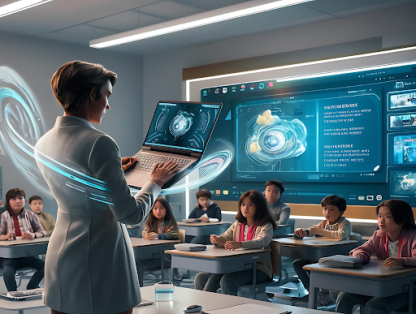
Education in 2025 is undergoing one of the most significant transformations in modern history. Artificial intelligence has moved far beyond being a digital assistant and is now taking on active roles as virtual teachers, learning guides, and curriculum designers. This shift has led to the rise of personalized learning systems that adjust to the strengths, weaknesses, pace, and preferences of each student. As classrooms become increasingly hybrid and digital, AI-driven education is reshaping how students learn, how teachers teach, and how institutions evaluate performance.
The idea of an AI teacher is no longer futuristic. These systems can explain concepts, answer doubts instantly, conduct quizzes, and even adjust teaching styles based on a student’s response patterns. AI teachers work around the clock, offering support beyond school hours and providing consistent feedback. In regions where teacher shortages are common, AI teachers are helping bridge gaps by ensuring that every learner receives guidance, regardless of geographic or economic limitations.
Personalized learning is at the core of this new educational model. Traditional classrooms often struggle with uniform teaching methods that do not account for individual differences. AI-driven platforms solve this by monitoring every student’s progress, identifying areas where they struggle, and customizing lessons accordingly. A student who learns slowly can receive additional practice materials, while an advanced learner can proceed to higher levels without being held back. The result is a more efficient learning environment where students feel empowered and understood.
Assessment methods are also evolving. Instead of relying solely on periodic exams, AI systems continuously track performance using quizzes, simulations, and interactive tasks. This helps teachers gain insights into each student’s learning journey. AI can detect patterns such as declining attention, difficulty with specific topics, or sudden improvements. Educators can then refine their teaching strategies or offer personalized interventions that improve long-term outcomes.
For teachers, AI is not a replacement but a powerful partner. With administrative tasks automated, such as attendance, grading, and scheduling, teachers can focus more on student interactions and creativity-driven lessons. AI tools also help educators design engaging modules, translate complex concepts, and provide resources tailored to different learning styles. This collaboration between human teachers and AI systems enhances the depth and quality of teaching.
Students benefit from learning at their own pace. Some understand concepts visually, while others respond better to audio explanations or hands-on simulations. Personalized learning systems adapt to these preferences and deliver content in forms that make learning more enjoyable and effective. This flexibility is particularly valuable for students with learning disabilities, as AI can create specialized support modules that improve accessibility and inclusion.
AI teachers are also expanding opportunities for global education. Students in rural or remote areas can access high-quality lessons through affordable digital platforms. Language barriers are reduced through real-time translation and multilingual learning materials. The global classroom is becoming a reality, where students from different cultures learn together through AI-enabled systems.
The future of education will also see an increase in skill-based learning. AI can analyse market trends and recommend relevant courses, helping students develop practical skills aligned with future job demands. Whether it is coding, design, communication, or problem-solving, AI-driven platforms ensure that students learn what is most relevant to the evolving economy.
Ethical considerations, however, cannot be ignored. Data security, privacy concerns, and responsible AI usage must be addressed through strong educational policies and strict guidelines. Schools and institutions need transparent rules for data collection, consent, and algorithmic fairness to ensure safe and equitable learning for all.
In 2025, AI teachers and personalized learning systems are no longer optional innovations but essential tools shaping the modern education landscape. They offer a future where learning is more inclusive, adaptive, and effective. As technology continues to advance, the partnership between AI and educators will redefine classrooms and empower students to achieve their full potential in a rapidly evolving world.