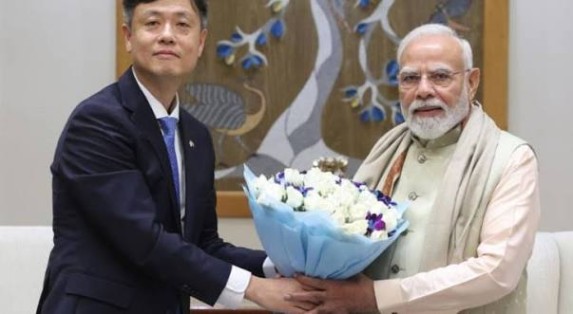
Krafton Pledges Additional $250 Million Investment in India as Gaming Group Deepens Local Expansion
South Korean gaming company Krafton has committed to invest an additional $250 million in India over the next three to four years, doubling down on a market that has become one of its most important global growth centres while widening its investment strategy beyond gaming into artificial intelligence, robotics and deep technology.
The new commitment will take Krafton's planned direct investment in India to approximately:
$500 million.
The company has already invested more than:
$250 million
in India since:
2021.
Krafton's latest pledge was announced after Chairman:
Byung Gyu Chang
met Prime Minister:
Narendra Modi
in New Delhi on:
September 4, 2026.
The meeting focused on opportunities for deeper India-South Korea cooperation across:
gaming,
technology,
digital content,
innovation,
AI,
and emerging technologies.
The additional $250 million commitment is separate from a:
$670 million India-focused growth fund
created with South Korean internet company:
Naver
and investment group:
Mirae Asset.
That distinction substantially increases the scale of capital potentially connected to Krafton's broader India strategy.
Krafton Plans Another $250 Million for India

Krafton plans to deploy the additional:
$250 million
over approximately:
three to four years.
The investment expands on more than $250 million already committed or deployed across:
gaming companies,
digital businesses,
startups,
content platforms,
and related investments.
The new commitment reflects Krafton's decision to treat India as more than simply a:
large gaming-consumption market.
It increasingly sees the country as a base for:
technology development,
startup investment,
local intellectual property,
and globally exportable digital products.
Total Planned Direct Investment Reaches Around $500 Million
Including the latest commitment, Krafton's planned direct investment in India reaches approximately:
$500 million.
That makes India one of the most significant overseas investment destinations within the company's strategic portfolio.
Krafton's India strategy originally developed primarily around:
gaming.
But the investment mandate is becoming much broader.
The company now wants exposure to:
AI,
robotics,
deep tech,
digital content,
interactive entertainment,
and technology startups.
Commitment Follows Meeting With Prime Minister Narendra Modi
Krafton Chairman Byung Gyu Chang met Prime Minister Narendra Modi in:
New Delhi
on:
September 4.
The meeting highlighted the potential for India and South Korea to collaborate more closely across:
gaming,
technology,
innovation,
and emerging digital industries.
Krafton positioned the investment as aligned with India's ambition to build:
globally competitive technology
and:
digital intellectual property.
The company also emphasised opportunities to help Indian developers and creators take locally developed products into:
international markets.
Krafton Sees India as Long-Term Technology Market
India has become strategically important because of its combination of:
large digital audience,
smartphone penetration,
engineering talent,
startup ecosystem,
and rapidly expanding digital economy.
The country now has more than:
one billion internet subscriptions
and over:
700 million smartphone users.
That scale creates an enormous potential market for:
games,
digital entertainment,
AI applications,
creator platforms,
and consumer technology.
For Krafton, the opportunity increasingly extends from:
consuming digital products
to:
creating them.
BGMI Established Krafton’s India Presence
Krafton's India expansion is closely associated with:
Battlegrounds Mobile India, or BGMI.
The title was introduced in:
2021
as a customised version of PUBG Mobile for the Indian market.
BGMI has subsequently surpassed approximately:
260 million downloads.
The game has become one of India's most prominent:
mobile gaming
and:
esports franchises.
Its popularity gave Krafton a direct relationship with a massive Indian gaming community and created the foundation for broader investments.
India Became One of Krafton’s Most Important Gaming Markets
India offers Krafton something few markets can match:
scale.
A large young population,
affordable mobile data,
widely available smartphones,
and strong engagement with competitive gaming
have created one of the world's largest potential gaming audiences.
Games can reach millions of users without requiring:
console ownership
or:
high-end gaming computers.
Mobile gaming therefore remains central to India's digital entertainment economy.
Krafton Has Faced Regulatory Challenges in India
The company's expansion has not been completely straightforward.
India banned:
PUBG Mobile
in 2020 as part of restrictions affecting several Chinese-linked applications.
Krafton subsequently restructured its India strategy and launched:
BGMI.
Among the changes, the company separated the Indian publishing operation from:
Tencent Games
and shifted Indian data infrastructure to:
Microsoft Azure.
BGMI Was Also Temporarily Blocked
BGMI itself was removed from app stores in:
2022.
The Indian government later allowed the title to return in:
2023
on an initial trial basis.
Krafton subsequently continued investing in:
operations,
esports,
localisation,
and gaming development.
The company's willingness to expand its India commitment after those regulatory challenges demonstrates its long-term view of the market.
Krafton Plans BGMI Lite
Krafton's Indian gaming portfolio is also expected to broaden through:
BGMI Lite.
The lighter version of the game is planned for launch by the:
end of 2026.
A lighter application can help reach consumers using:
lower-specification smartphones
or:
more constrained data connections.
That could further broaden Krafton's addressable gaming audience outside premium-device users.
New Investment Goes Beyond Gaming
The most important change in the latest commitment is that Krafton is explicitly broadening its strategy beyond:
games.
Future investments are expected to include:
artificial intelligence,
robotics,
deep technology,
and:
digital content.
This suggests Krafton increasingly sees itself as an investor in India's broader:
technology ecosystem.
AI Becomes Central Investment Area
Artificial intelligence is one of the most significant areas in the expanded strategy.
AI is increasingly being integrated into:
game development,
animation,
digital characters,
content creation,
recommendation systems,
and productivity tools.
For a gaming company, AI can influence almost every part of the development process.
These include:
character behaviour,
environment generation,
testing,
voice production,
and localisation.
Krafton Can Use India as AI Talent Base
India's large engineering workforce gives technology companies access to talent across:
software,
data science,
machine learning,
and cloud infrastructure.
Krafton can potentially use investments to identify:
AI startups
and:
technical teams
whose capabilities have applications both inside and outside gaming.
This creates a strategic benefit beyond simple financial investment.
A promising Indian AI company could potentially contribute technology to:
Krafton's global products.
Robotics Expands Krafton Into New Territory
Krafton has also identified:
robotics
as a future investment area.
This represents a significant diversification from conventional gaming.
Modern robotics increasingly combines:
AI,
computer vision,
simulation,
sensors,
and autonomous decision-making.
Many of these technologies overlap with tools already used in:
game engines
and:
virtual environments.
Physical AI Could Connect Gaming and Robotics
One emerging concept is:
physical AI.
This refers to AI systems operating in the physical world through:
robots,
vehicles,
and machines.
Gaming companies possess expertise in:
simulation,
3D environments,
real-time graphics,
and virtual physics.
Those capabilities can potentially contribute to training robotic systems.
For Krafton, the boundary between gaming technology and robotics may therefore become increasingly relevant.
Humanoid Robotics Is Also Part of Broader Strategy
Korean reports have indicated that Krafton is exploring opportunities involving:
humanoid robotics.
Humanoid systems require sophisticated:
movement,
perception,
AI,
and simulation.
Game-development technologies can be useful for creating digital environments in which robots learn before entering the real world.
India's engineering talent could become part of this emerging development ecosystem.
Deep Tech Adds Longer-Term Investment Horizon
Deep-tech investments generally involve technologies that require:
substantial technical research
and:
longer development cycles.
These can include:
advanced AI,
robotics,
semiconductors,
new computing architectures,
and specialised software infrastructure.
Such investments differ from conventional consumer applications because they often require more:
capital,
technical expertise,
and patience.
Krafton's willingness to allocate capital to these areas indicates a longer investment horizon.
Krafton Has Already Backed Around 18 Indian Companies
Krafton has invested in approximately:
18 companies in India.
Only around:
four to five
are gaming studios.
That demonstrates how far the investment portfolio has already expanded beyond Krafton's core industry.
Its Indian holdings and investments include businesses spanning:
gaming,
streaming,
digital content,
audio,
creator platforms,
and consumer technology.
Nodwin Gaming Is Major Esports Investment
One of Krafton's better-known India investments is:
Nodwin Gaming.
Nodwin operates across:
esports,
gaming events,
media,
and entertainment.
Krafton's investment gives it exposure to the broader ecosystem surrounding:
competitive gaming.
Esports can support game engagement by transforming titles into:
spectator entertainment.
That can extend the lifecycle of successful games.
Loco Expanded Exposure to Game Streaming
Krafton has also invested in:
Loco.
The platform focuses on:
game streaming
and:
interactive entertainment.
Game-streaming platforms can create communities around:
players,
creators,
professional esports,
and tournaments.
This makes them strategically relevant to publishers seeking deeper engagement beyond the game application itself.
Pratilipi Expands Krafton Into Storytelling
Krafton's investment in:
Pratilipi
illustrates its broader interest in:
content.
Pratilipi operates a digital storytelling platform offering content across:
multiple Indian languages.
Story platforms can create:
characters,
worlds,
and intellectual property
that may eventually be adapted into:
games,
audio,
video,
or other entertainment formats.
Kuku FM Adds Audio Content Exposure
Krafton has also backed:
Kuku FM.
The company operates across:
audio stories,
podcasts,
and spoken-content formats.
Audio platforms provide another route into:
Indian-language entertainment.
For a gaming and entertainment company, these investments can provide exposure to:
new narratives
and:
creator ecosystems.
One Impression Adds Creator Economy Exposure
Another investment is:
One Impression.
The company operates in the:
creator marketing
and:
influencer economy.
Creators have become increasingly important to gaming companies because they can:
promote releases,
stream gameplay,
build communities,
and shape cultural relevance.
This means creator infrastructure can have direct strategic value for game publishers.
Krafton Has Shifted From Publisher to Ecosystem Investor
Taken together, these investments show Krafton evolving from:
a foreign game publisher operating in India
toward:
a broader ecosystem participant.
Its capital now touches:
games,
esports,
streaming,
storytelling,
audio,
creator marketing,
AI,
and other technology sectors.
This diversified model can help Krafton identify emerging consumer behaviour before it becomes mainstream.
Nautilus Mobile Acquisition Deepens Local Ownership
One of Krafton's most important India transactions has been its acquisition of:
Nautilus Mobile.
The Pune-based studio developed the:
Real Cricket
franchise.
Unlike minority startup investments, the acquisition gives Krafton direct ownership of:
an Indian development studio
and:
locally created gaming intellectual property.
Real Cricket Is Important Local IP
Cricket is one of India's most commercially powerful entertainment categories.
A successful cricket-game franchise therefore has strong:
cultural relevance
and:
commercial potential.
Real Cricket provides Krafton with locally developed intellectual property built around a sport with:
massive domestic demand.
This aligns closely with the company's objective of developing:
Indian IP
rather than relying exclusively on international franchises.
Local IP Could Be Exported Globally
Krafton's ambition is not limited to producing games:
for India.
The company wants Indian creators and developers to build products that can reach:
global markets.
This is strategically important.
If India becomes a source of internationally successful gaming IP, its role in the global industry shifts from:
consumer market
to:
creative and technology exporter.
Krafton can potentially provide:
capital,
publishing expertise,
distribution,
and global marketing
to help local studios make that transition.
Krafton Launches KIGI Academy
Talent development is another component of the India strategy.
Krafton recently launched:
KIGI Academy.
The initiative is designed to train people in:
game development
and:
digital content creation.
The programme reflects a structural challenge facing India's gaming sector:
the need for more specialised development talent.
KIGI Academy Partners IIT Madras
The initiative includes collaboration with:
IIT Madras.
A six-month programme will train an initial group of:
30 students.
Areas covered include:
coding,
game design,
UI/UX,
art,
and product development.
Training is expected to take place across:
the IIT Madras campus
and:
Krafton's Bengaluru headquarters.
Gaming Requires More Than Software Developers
Building modern games requires highly specialised teams.
Roles can include:
game designers,
engine programmers,
3D artists,
animators,
sound designers,
writers,
producers,
and monetisation specialists.
India has a large general technology workforce but a smaller pool of professionals with experience shipping:
large commercial games.
Training programmes can help close that gap.
Krafton Signed MoU With DPIIT
Earlier in 2026, Krafton India signed a memorandum of understanding with:
the Department for Promotion of Industry and Internal Trade.
The partnership is designed to support startups across:
gaming,
esports,
interactive media,
and:
AI.
The initiative provides another link between Krafton's private investment strategy and India's broader:
startup ecosystem.
Startup Support Goes Beyond Capital
Investment alone may not be enough for early-stage gaming companies.
Studios can also need:
publishing support,
product feedback,
global distribution,
technology,
monetisation expertise,
and international networks.
Krafton can provide these capabilities because it has experience taking gaming products to:
global audiences.
This gives it a potentially different role from a purely financial investor.
Separate $670 Million Growth Fund Adds Scale
Krafton's direct $250 million commitment sits alongside a much larger:
$670 million India-focused growth fund.
The fund was established with:
Naver
and:
Mirae Asset.
It focuses on growth-stage Indian companies across areas such as:
AI,
software,
and:
deep technology.
The fund was announced in:
December 2025.
Krafton’s Commitment to Growth Fund Is Separate
The new direct investment pledge is:
separate
from the $670 million fund.
Krafton had previously indicated it would contribute around:
$137 million
at the fund's first close.
That means the company's economic exposure to India's innovation ecosystem extends beyond the headline:
$500 million direct-investment figure.
The different vehicles, however, should not be added together as if every dollar represents capital already deployed.
Naver and Mirae Asset Bring Wider Korean Capital
The growth fund also demonstrates increasing interest from:
South Korean companies
and:
investors
in India's technology sector.
Naver has capabilities spanning:
internet services,
AI,
cloud,
content,
and digital platforms.
Mirae Asset is a major global:
financial-services
and:
investment group.
Their collaboration with Krafton connects Indian startups with a broader Korean technology and capital ecosystem.
India-South Korea Technology Ties Are Deepening
Krafton's announcement also fits within a broader pattern of stronger:
India-South Korea technology cooperation.
The two countries are expanding engagement across:
digital technology,
AI,
semiconductors,
manufacturing,
and innovation.
Large Korean companies already maintain substantial operations in India.
Krafton adds:
gaming
and:
digital entertainment
to that relationship.
India Wants to Become Global Gaming Hub
India's policy ambition is increasingly focused on building domestic:
gaming
and:
creative technology capabilities.
The potential economic value extends beyond consumer spending.
A successful gaming industry can generate jobs in:
software,
art,
animation,
music,
design,
marketing,
and esports.
It can also create intellectual property that can be monetised globally.
Gaming IP Can Have Long Commercial Lifespans
Successful game franchises can remain economically valuable for:
many years.
They generate revenue from:
game sales,
in-game purchases,
licensing,
esports,
merchandise,
and media adaptations.
That makes gaming different from many conventional technology businesses.
A hit title can become:
an entertainment franchise.
Krafton's investments in local developers are therefore partly a search for:
future IP.
India Has Scale but Needs More Global Hits
India has one of the world's largest gaming audiences.
But the country has produced relatively few:
globally dominant game franchises.
Much of domestic consumer spending still goes toward:
foreign-developed titles.
That creates an imbalance.
A larger domestic development ecosystem could allow Indian companies to capture a greater share of:
gaming value creation.
Capital Can Help Studios Build Larger Games
Game development can be:
capital intensive.
Studios may spend years developing a title before generating meaningful revenue.
They require money for:
salaries,
technology,
art,
testing,
marketing,
and distribution.
This can be difficult for early-stage companies dependent on short venture-capital timelines.
Strategic investors such as Krafton can potentially provide a longer development runway.
Regulatory Stability Remains Important
Krafton's own experience demonstrates that:
regulation
can significantly influence India's gaming market.
Mobile games and online gaming services operate across an evolving legal environment involving:
data,
consumer protection,
content,
and monetary gaming.
Krafton's core titles such as BGMI are entertainment games rather than real-money betting products.
However, broad changes in gaming policy can still influence:
investment sentiment
and:
industry development.
Real-Money Gaming and Video Games Are Different Markets
India's gaming industry often includes very different business models under the same broad label.
These range from:
casual games,
premium games,
esports,
and multiplayer titles
to:
real-money gaming.
Regulatory treatment varies substantially across categories.
For companies such as Krafton, maintaining a clear distinction between:
video-game entertainment
and:
wagering-based products
is strategically important.
Esports Is Growing as Separate Opportunity
Esports has become another major part of Krafton's India strategy.
BGMI competitions can attract:
large online audiences,
sponsorship,
and live-event participation.
Esports transforms gaming from individual entertainment into:
competitive spectator content.
That creates commercial opportunities across:
media rights,
advertising,
sponsorship,
and events.
Local Tournaments Build Community
Krafton has invested heavily in Indian esports competitions.
Events help:
retain players,
create professional pathways,
and increase visibility.
Competitive leagues also generate personalities and teams that fans can follow beyond individual matches.
This strengthens the game ecosystem.
For long-running titles, community development can be almost as important as:
new user acquisition.
Indian Gaming Revenue Could Expand With Income Growth
India remains a lower-monetisation gaming market compared with several developed economies.
Millions of people play games, but average spending per user remains relatively modest.
As disposable income rises, publishers could see greater demand for:
in-game purchases,
subscriptions,
premium content,
and virtual items.
This creates potential for gaming revenue to grow faster than:
user numbers alone.
Localisation Is Critical in India
India is not a single-language consumer market.
Successful products often require localisation across:
Hindi,
Tamil,
Telugu,
Bengali,
Marathi,
and other languages.
Games can also benefit from:
local events,
Indian themes,
regional marketing,
and culturally relevant collaborations.
Krafton's experience with BGMI gives it insight into the importance of adapting global products specifically for:
Indian consumers.
India Can Also Become Production Hub
Beyond consumer demand, India offers significant potential as a:
game-development hub.
The country already has large industries in:
software,
animation,
visual effects,
and digital services.
Gaming brings these capabilities together.
With stronger specialised training and capital, India could increase its role in:
global game production.
AI Could Lower Development Barriers
Generative AI may reduce some of the costs involved in building games.
Tools can assist with:
concept art,
code,
dialogue,
testing,
and localisation.
This could help smaller Indian studios produce more sophisticated titles.
However, success will still depend on:
creative direction,
gameplay,
product quality,
and community engagement.
Technology alone does not guarantee a successful game.
Krafton Could Benefit From Early Access to Startups
Investing in emerging Indian companies gives Krafton another strategic advantage:
early access to technology.
A startup developing new AI, robotics or content tools could become:
a supplier,
partner,
acquisition candidate,
or strategic investment.
This allows Krafton to participate in innovation outside its internal research teams.
Investments Diversify Krafton’s India Risk
A broader portfolio also reduces dependence on:
one game.
BGMI remains extremely important.
But relying too heavily on a single title creates:
product concentration
and:
regulatory risk.
Investments across startups, local IP and emerging technologies diversify Krafton's exposure to the Indian market.
India Strategy Is Becoming Multi-Layered
Krafton's India strategy now has several components:
publishing global games,
developing local IP,
acquiring Indian studios,
investing in startups,
building esports,
training talent,
and investing in emerging technology.
These activities reinforce one another.
A stronger local ecosystem can provide:
talent
and:
content
for Krafton.
Krafton can provide:
capital
and:
global distribution
to the ecosystem.
Long-Term Returns Will Depend on Local IP
The most significant test will be whether Krafton's investments produce:
globally valuable Indian intellectual property.
Startup investments can generate financial returns.
BGMI can continue generating revenue.
But the deeper strategic opportunity lies in developing:
games,
characters,
technology,
and entertainment franchises
originating in India.
That would create more sustainable competitive value.
$250 Million Commitment Signals Confidence
A three-to-four-year investment commitment of:
$250 million
is meaningful because it is being made after Krafton has already spent years operating in India.
The decision is therefore not based only on expectations about a new market.
It follows direct experience with:
Indian consumers,
regulation,
developers,
and startups.
Krafton is choosing to increase its exposure after that experience.
Conclusion
Krafton's commitment to invest an additional $250 million in India over the next three to four years represents a significant expansion of its long-term strategy in one of the world's largest digital markets.
The new capital will take Krafton's planned direct India investment to approximately $500 million, after the company invested more than $250 million in the country since 2021.
The commitment follows Chairman Byung Gyu Chang's September 4 meeting with Prime Minister Narendra Modi and broadens Krafton's investment focus from gaming into artificial intelligence, robotics, deep technology and digital content.
Krafton has already backed roughly 18 Indian companies, including businesses such as Nodwin Gaming, Loco, Pratilipi, Kuku FM and One Impression, while its acquisition of Pune-based Nautilus Mobile, developer of the Real Cricket franchise, has given the group direct ownership of locally created gaming IP.
The company is also building talent through KIGI Academy, investing in esports and supporting startups through its engagement with DPIIT.
Separately, Krafton is participating with Naver and Mirae Asset in a $670 million India-focused growth fund, further expanding its exposure to Indian AI, software and deep-tech companies.
Krafton's India strategy is therefore evolving far beyond publishing BGMI.
The larger ambition is to build an ecosystem in which Indian developers, creators and technology companies can produce globally competitive games, digital content and emerging technologies—with Krafton providing capital, expertise and international distribution to help them scale.