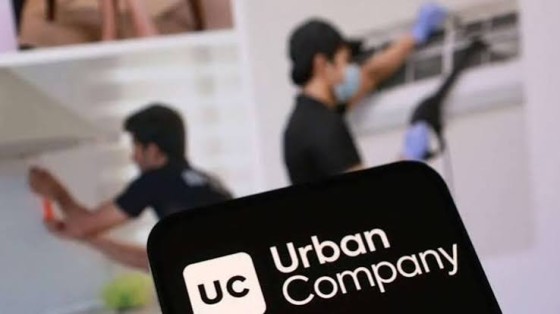
Urban Company Shares Rise After UBS Starts Coverage With Buy Rating and ₹180 Target
Urban Company shares climbed sharply on August 21 after UBS initiated coverage on the home-services platform with a Buy rating and a ₹180 target price, giving the stock one of the most bullish targets among analysts currently tracking the company.
The shares were trading around ₹154.58 during the session, up more than 6%, after touching gains of roughly 8% at one stage. At that level, UBS's ₹180 target implied approximately 16% further upside. (Moneycontrol)
The brokerage's positive view centres on the structural shift of India's fragmented home-services market toward organised digital platforms and the possibility that Urban Company's newer rapid-services business, InstaHelp, could open another meaningful growth opportunity.
UBS Sees ₹180 Target for Urban Company

UBS has initiated coverage with a Buy recommendation and a ₹180 price objective.
The target is above several earlier brokerage estimates and reflects confidence that Urban Company can benefit from accelerating online penetration across India's home-services industry. (NDTV Profit)
Target Implies Further Upside
With the stock trading near ₹155 during the session, the UBS target implied approximately 16% potential upside.
That does not guarantee the shares will reach ₹180.
Brokerage targets are based on assumptions regarding future:
revenue,
profitability,
market share,
and valuation multiples.
Actual performance can differ significantly.
Shares Jump as Much as 8%
Urban Company shares reacted strongly to the new coverage.
The stock rose around 6.25% to ₹154.58 during morning trading, while intraday gains reached approximately 8%. (Moneycontrol)
The rally was especially notable because broader Indian benchmarks were largely flat amid elevated oil prices and global bond-market stress. Reuters reported Urban Company rising 4.4% during morning trade even as the Nifty and Sensex remained almost unchanged. (Reuters)
UBS Sees a Potential ‘Blinkit Moment’
One of the most interesting elements of the UBS thesis is its comparison of India's home-services opportunity with the rapid acceleration previously seen in online grocery and quick commerce.
The brokerage believes the sector may be approaching what it described as a “Blinkit moment,” with consumers increasingly becoming comfortable ordering household services digitally. (Moneycontrol)
The comparison does not mean home services will necessarily develop exactly like quick commerce.
The operating models are very different.
But both depend on changing customer behaviour from offline discovery toward app-based transactions.
India’s Home-Services Market Remains Mostly Offline
Urban Company's long-term opportunity rests heavily on low online penetration.
Earlier brokerage research estimated that Urban Company commands more than 60% of India's organised online home-services market even though digital penetration remains below 1% of the broader home-services industry. (Business Standard)
That combination is strategically attractive.
Urban Company can already hold a dominant position within the online segment while still having a very large offline market available to convert.
Fragmented Offline Market Creates Opportunity
Home services remain dominated by independent professionals and small local businesses.
Customers traditionally find providers through:
personal referrals,
neighbourhood contacts,
or informal listings.
This creates inconsistent experiences.
A digital platform can attempt to standardise:
pricing,
availability,
quality,
and payments.
If consumers increasingly value reliability and convenience, organised platforms can gain share.
Urban Company’s Core Advantage Is Aggregation
Urban Company does not simply employ thousands of professionals directly.
It operates a technology platform connecting customers with trained service professionals across multiple categories.
These can include:
beauty,
cleaning,
repairs,
and home maintenance.
The platform coordinates discovery, booking and service delivery.
That makes Urban Company part marketplace and part operating system for home services.
Trust Is Critical in Home Services
A customer purchasing a product online receives an item at the door.
Home services are different.
A professional often enters the customer's home.
That makes trust especially important.
Platforms can attempt to reduce uncertainty through:
background checks,
training,
ratings,
and standardised service processes.
Urban Company's ability to maintain this trust is central to its competitive advantage.
Standardisation Can Increase Online Adoption
Traditional home-service quality can vary considerably between providers.
A digital platform tries to make the experience more predictable.
Customers can know:
what service they are buying,
approximately how much it will cost,
and when the professional will arrive.
This reduction in uncertainty can encourage repeat use.
Repeat Customers Improve Economics
Customer acquisition can be expensive.
Advertising and discounts often play a role in attracting first-time users.
The business becomes more attractive when customers return without requiring the same acquisition spending.
Home Maintenance Creates Natural Repeat Behaviour
Households repeatedly need services such as:
cleaning,
beauty,
and appliance maintenance.
If customers trust the platform, these recurring requirements can produce strong retention.
That makes repeat frequency an important economic driver.
InstaHelp Could Expand Addressable Market
Urban Company has introduced InstaHelp as a faster home-help offering.
The service is part of the reason analysts have begun comparing the company with quick-commerce businesses.
InstaHelp is designed around substantially faster fulfilment than traditional scheduled home services.
Speed Could Create New Use Cases
A customer may not plan household help several days ahead.
They may need assistance immediately.
Faster availability can transform occasional planned purchases into more frequent convenience-driven usage.
If Urban Company can execute that model efficiently, InstaHelp could significantly expand transaction frequency.
InstaHelp Also Creates Profitability Risk
Rapid fulfilment is operationally demanding.
To offer fast service, the company needs professionals positioned close to demand.
That can reduce utilisation when supply is poorly matched with customer requests.
Earlier analysts have therefore highlighted InstaHelp's unit economics as both an opportunity and a source of risk. (The Financial Express)
Density Is Critical to Rapid Home Services
The economics improve when many customers exist within a compact area.
A professional can complete more jobs while spending less time travelling.
Higher geographic density can therefore improve:
utilisation,
response times,
and earnings.
This is similar to other hyperlocal businesses where network density becomes a major competitive advantage.
Urban Company Could Build Local Network Effects
A stronger customer base attracts more professionals.
More professionals improve availability.
Better availability can attract more customers.
That creates a potential two-sided network effect.
However, the company needs to maintain quality while expanding supply.
Poor service experiences can weaken trust quickly.
Service Professionals Are Central to Platform Quality
Urban Company's growth depends on the workers delivering the service.
The platform needs enough professionals to meet customer demand while ensuring those workers can earn attractive incomes.
If earnings become insufficient, professionals can move elsewhere or operate independently.
The company therefore needs to balance customer prices with provider economics.
Training Can Become Competitive Moat
A platform that trains service professionals can create greater consistency.
Training can cover:
technical skills,
customer service,
and safety.
Better professionals can generate better reviews.
Those reviews encourage more customers.
This strengthens the marketplace over time.
Professional Earnings Matter to Retention
High worker turnover can damage service quality.
Urban Company therefore needs professionals to see enough value in remaining on the platform.
That value can come through:
steady demand,
training,
and access to customers.
The company cannot optimise only for customer convenience.
Provider economics need to remain sustainable as well.
Market Leadership Gives Urban Company Scale Advantage
Urban Company already operates at a meaningful scale within organised home services.
That gives it more transaction data than smaller rivals.
The company can analyse:
demand patterns,
service durations,
and customer behaviour.
This data can improve matching and operational efficiency.
Technology Can Reduce Matching Friction
A platform needs to assign the right professional to the right customer at the right time.
Poor matching increases travel and waiting time.
Algorithms can improve:
scheduling,
routing,
and professional utilisation.
As volumes grow, these improvements can create meaningful margin benefits.
AI Could Improve Demand Forecasting
Artificial intelligence can also help predict when demand will increase.
For example, some service categories may rise around:
weekends,
festivals,
or weather changes.
Better forecasting helps position professionals before demand arrives.
That becomes especially valuable for InstaHelp.
Urban Company Has Expanded Beyond Services
The company has also developed products under its Native brand.
These products broaden the business beyond marketplace commissions.
This introduces another revenue stream.
But physical products carry different economics involving:
inventory,
manufacturing,
and distribution.
The company therefore needs to manage multiple business models simultaneously.
UBS Bull Case Depends on Formalisation
The strongest structural argument for Urban Company is not simply that consumers want home services.
That demand already exists.
The opportunity comes from moving spending from informal providers toward organised platforms.
Formalisation Can Increase Platform Revenue
Every transaction that moves online becomes potentially monetisable.
Urban Company can earn through platform economics while providing greater convenience and predictability.
The larger India's organised home-services market becomes, the greater the company's revenue opportunity.
Urbanisation Supports Long-Term Demand
India's cities continue expanding.
Urban households frequently have:
higher incomes,
smaller family units,
and busier work schedules.
These characteristics can increase willingness to pay for outsourced household services.
That provides a favourable structural backdrop.
Rising Incomes Could Increase Service Spending
As household incomes rise, consumers generally spend more on convenience.
Tasks previously performed personally may be outsourced.
This pattern has already developed in wealthier markets.
India's growing affluent and upper-middle-income population therefore increases the addressable market for Urban Company.
Women's Workforce Participation Could Support Demand
Household-service platforms can become more valuable when more adults work outside the home.
Time becomes scarce.
Consumers may prefer paying for tasks such as:
cleaning,
repairs,
and grooming.
Long-term changes in urban employment patterns could therefore support the market.
Convenience Is Becoming Consumer Category
Urban Company's broader opportunity fits into a major consumer trend.
Indian households increasingly pay for convenience.
Quick commerce delivers products quickly.
Food delivery eliminates cooking or restaurant travel.
Ride-hailing reduces transport friction.
Urban Company applies the same principle to physical household services.
Competition Could Increase as Market Grows
A large opportunity attracts competitors.
Urban Company could face pressure from:
specialised startups,
local providers,
and broader consumer platforms.
Digital marketplaces with existing customer bases could theoretically enter home services.
The company therefore needs to deepen its brand and provider network before competition intensifies.
Local Competition Remains Powerful
Urban Company also competes against something technology businesses often underestimate: informal local relationships.
A household that has used the same electrician or beautician for years may have little reason to switch.
The platform therefore needs to offer materially better:
reliability,
pricing transparency,
or convenience.
Online adoption may consequently take time.
Valuation Remains Important Risk
Not every brokerage is equally bullish.
Motilal Oswal previously initiated coverage with a Neutral rating and ₹125 target, arguing that Urban Company was well positioned for long-term formalisation but that valuations already captured much of the growth potential. (Business Standard)
That contrasts sharply with UBS's ₹180 objective.
The difference demonstrates how sensitive Urban Company's valuation is to assumptions about future growth.
Ambit Has Taken Bearish View
Ambit Institutional Equities previously initiated coverage with a Sell rating and ₹97 target, highlighting competition and concerns around the company's growth trajectory. (Business Standard)
Investors therefore face a wide range of analyst opinions.
That is common for recently listed growth companies where long-term earnings remain difficult to estimate.
Analyst Targets Range Widely
Current research views span from bearish targets below ₹100 to UBS's ₹180 objective.
The difference reflects contrasting assumptions around:
online penetration,
InstaHelp,
and long-term profitability.
This wide dispersion means the market has not reached consensus on Urban Company's mature business economics.
UBS Target Is Highest Among Major Analysts
At ₹180, UBS's target stands among the most bullish publicly reported analyst targets for Urban Company. (NDTV Profit)
That helps explain the strong share-price reaction.
A new analyst recommendation can have particularly large impact when it materially changes the upper end of market expectations.
Stock Had Already Been Gaining
The latest rally was not occurring in isolation.
Urban Company had already recorded strong recent momentum, with the stock gaining in several sessions before UBS's initiation.
NDTV Profit noted that the shares had risen in six of the previous seven sessions following the latest move. (NDTV Profit)
Strong momentum can amplify market reaction to positive research.
Investor Expectations Are Increasing
Higher share prices create a new challenge.
The company now needs future results to support those valuations.
Investors will watch:
revenue growth,
customer retention,
professional supply,
and margins.
Any slowdown could lead to sharp valuation compression.
Profitability Will Become More Important
Growth platforms often receive high valuations while expanding rapidly.
Over time, the market demands evidence that scale converts into profit.
Urban Company needs to demonstrate that customer and professional network expansion creates operating leverage.
The ultimate business test is not gross bookings alone.
It is sustainable cash generation.
InstaHelp Losses Could Delay Margin Expansion
Rapid-service initiatives often require upfront investment.
If InstaHelp expands quickly while remaining loss-making, consolidated profitability could face pressure.
Investors need to determine whether those losses represent temporary investment or structurally weak economics.
UBS's bullish thesis implies confidence that the opportunity justifies near-term spending.
Core Business Can Fund New Experiments
A more mature core home-services business provides Urban Company with an advantage.
Profitable or improving mature categories can help finance newer initiatives.
This reduces dependence on external funding compared with an early-stage startup building rapid home services from scratch.
International Business Adds Another Growth Option
Urban Company has also expanded outside India.
International operations create additional addressable market.
But they introduce complexity involving:
local labour markets,
and customer behaviour.
The company will need to demonstrate that its marketplace model travels effectively across geographies.
India Remains Core Opportunity
Despite international expansion, India remains the most important market.
Low online penetration and Urban Company's established brand provide substantial room for domestic growth.
The company's valuation will therefore continue depending heavily on how quickly Indian consumers move household spending online.
Listing Has Changed Investor Scrutiny
Urban Company is now a public-market company.
That means investors receive regular financial disclosures.
Quarterly performance will increasingly influence the stock.
The company needs to balance long-term investment with public-market expectations for near-term progress.
Markets Will Watch Upcoming Results Closely
After the UBS upgrade, the next earnings reports become more important.
Investors will want evidence supporting the brokerage's optimistic assumptions.
Key indicators could include:
transaction growth,
and profitability.
Strong results could reinforce the ₹180 thesis.
Weak execution could quickly reopen valuation concerns.
Brokerage Ratings Are Opinions, Not Guarantees
Investors should treat analyst recommendations as research rather than certainty.
UBS's Buy rating is based on assumptions about future business performance.
Those assumptions can change.
Competitive conditions can change.
Economic growth can change.
The stock can therefore trade significantly above or below the stated target.
Conclusion
Urban Company shares rallied sharply on August 21 after UBS initiated coverage with a Buy rating and ₹180 target price, one of the most bullish forecasts currently attached to the listed home-services platform.
The stock gained more than 6% to around ₹154.58 during the session and rose as much as approximately 8%, with UBS's target implying roughly 16% potential upside from those levels. (Moneycontrol)
The brokerage's optimism is rooted in a structural thesis: India's enormous home-services market remains overwhelmingly offline, while Urban Company already holds a dominant position within the still-small organised digital segment. UBS believes the category could be approaching a significant acceleration in online adoption. (NDTV Profit)
InstaHelp adds another dimension by attempting to bring rapid fulfilment into household services, potentially increasing service frequency and expanding Urban Company's addressable market.
The opportunity is substantial, but the risks remain meaningful.
Competition, provider economics, InstaHelp losses and a rising valuation all increase the importance of execution. Other brokerages have adopted substantially more cautious views, highlighting how divided analysts remain over the company's long-term profitability. (Business Standard)
Urban Company's next challenge is therefore straightforward: convert India's shift toward organised home services into enough sustainable earnings to justify the increasingly optimistic expectations now embedded in its share price.