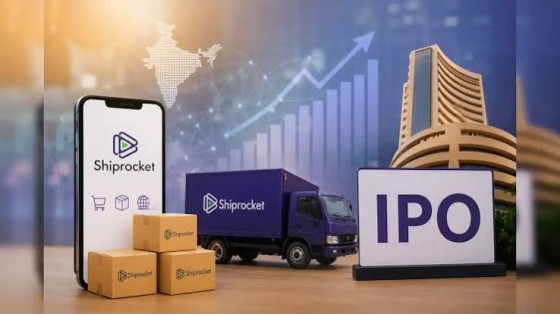
Shiprocket IPO Enters Market Focus as Investors Assess India’s E-Commerce Logistics Opportunity
Shiprocket's initial public offering has moved into market focus as investors assess whether one of India's best-known e-commerce enablement platforms can convert rapid scale, improving operating economics and the expansion of online commerce into sustainable profitability.
The ₹1,617.5 crore public issue opened for subscription on August 12 and is scheduled to close on August 14, with shares offered in a price band of ₹92 to ₹97 apiece. The company is expected to list on the BSE and NSE on August 19. (TradingView)
The IPO provides public-market investors with exposure to a business positioned across e-commerce shipping, fulfilment and technology services used by online merchants and direct-to-consumer brands.
Shiprocket IPO Size Stands at ₹1,617.5 Crore

The offering consists of approximately ₹885.5 crore of fresh shares alongside an offer for sale of roughly ₹732 crore by existing shareholders.
At the upper end of the ₹92-₹97 price band, the IPO implies a company valuation of approximately ₹7,057 crore. (Value Research Online)
The fresh issue is particularly important because those proceeds enter Shiprocket and can be deployed toward its future business requirements.
The offer-for-sale component, by contrast, provides liquidity to existing shareholders.
IPO Remains Open Through August 14
Shiprocket opened its public issue on August 12, giving investors three trading days to participate.
The IPO timetable is:
-
IPO opens: August 12, 2026
-
IPO closes: August 14, 2026
-
Price band: ₹92-₹97 per share
-
Minimum lot: 154 shares
-
Minimum investment at upper band: ₹14,938
-
Expected listing: August 19, 2026 (TradingView)
The issue therefore remains in the subscription phase, making investor demand across different categories one of the most closely watched indicators.
Subscription Builds During Second Day
Shiprocket's IPO was subscribed 56% on its opening day, with retail investors providing meaningful early demand. (Outlook Money)
Subscription subsequently strengthened, with the issue approaching three times subscription during the second day of bidding. (NDTV Profit)
The final subscription numbers on August 14 will provide a clearer indication of institutional and non-institutional investor appetite.
Anchor Investors Provide Early Institutional Backing
Ahead of the public issue, Shiprocket raised approximately ₹727 crore from anchor investors.
Anchor allocations can provide an early indication of institutional interest before an IPO opens to the wider market.
However, anchor participation and overall subscription multiples should not be viewed as guarantees of post-listing performance.
Once trading begins, valuation and operating execution become substantially more important.
Shiprocket Sits Behind India’s Online Commerce Ecosystem
Shiprocket is different from a conventional consumer-facing e-commerce marketplace.
Its technology infrastructure helps merchants manage the operational processes required after an online customer places an order.
The platform connects merchants with logistics and commerce services, allowing businesses to manage shipping and other functions through a common technology layer.
This positions Shiprocket as part of the infrastructure supporting India's broader e-commerce ecosystem.
Logistics Is Critical to E-Commerce Economics
An online transaction is only successful when the product reaches the customer efficiently.
For merchants, logistics influences:
-
Delivery speed
-
Shipping costs
-
Customer satisfaction
-
Return rates
-
Repeat purchases
-
Working capital
Large marketplaces can build sophisticated logistics networks internally.
Smaller online merchants often lack the scale required to negotiate directly with multiple logistics providers or build comparable technology.
Platforms such as Shiprocket seek to solve that problem.
Shiprocket Aggregates Logistics Providers
Rather than depending on a single delivery company, merchants can use Shiprocket's platform to access multiple logistics partners.
This model can provide flexibility around:
-
Pricing
-
Delivery locations
-
Service quality
-
Shipment characteristics
-
Courier availability
Technology can help merchants select appropriate logistics services for different orders.
The platform therefore acts partly as an intermediary between online sellers and physical logistics networks.
D2C Brands Represent Important Customer Segment
India's growing direct-to-consumer sector has created a significant addressable market for e-commerce enablement businesses.
D2C brands frequently sell through:
-
Their own websites
-
Social media
-
Online marketplaces
-
Mobile applications
Operating independently gives brands greater control over customer relationships but also requires them to manage logistics themselves.
Shiprocket provides infrastructure that can reduce this operational burden.
Small Merchants Can Access Larger Logistics Networks
One of the platform model's advantages is aggregation.
A small merchant may ship too few packages to negotiate favourable commercial terms independently.
A platform combining shipments from many merchants can operate at much greater scale.
That scale can potentially improve:
-
Courier access
-
Pricing
-
Technology
-
Service availability
This creates an important value proposition for smaller digital businesses.
Shiprocket Is Expanding Beyond Basic Shipping
The company's longer-term strategy extends beyond domestic parcel aggregation.
Its emerging businesses include services connected with:
-
Fulfilment
-
Warehousing
-
Cargo
-
Cross-border shipping
-
Marketing tools
-
Checkout technology
-
Merchant enablement
Expanding into adjacent services can increase the amount of revenue Shiprocket generates from each merchant.
However, newer businesses can also require additional investment before reaching profitability.
Fulfilment Could Deepen Merchant Relationships
Shipping is only one component of online retail operations.
Merchants also need to store inventory, process orders, package products and coordinate deliveries.
Fulfilment services allow a logistics platform to participate in more of this value chain.
A merchant using both fulfilment and shipping services may become more deeply integrated into the platform.
That can potentially increase customer retention.
Cross-Border Commerce Creates Another Opportunity
Indian businesses increasingly seek customers outside the domestic market.
International e-commerce requires merchants to manage additional complexity involving:
-
International shipping
-
Customs
-
Documentation
-
Delivery tracking
-
Returns
Cross-border logistics services can therefore expand Shiprocket's addressable market beyond domestic parcel delivery.
The opportunity will depend on how effectively the company can build reliable international networks while maintaining competitive pricing.
Revenue Has Expanded Significantly
Shiprocket's total income increased from approximately ₹1,358 crore in FY24 to around ₹2,077 crore in FY26.
Revenue from operations for FY26 was approximately ₹2,024 crore.
The growth demonstrates the increasing scale of the platform as online commerce and merchant activity expand.
However, revenue growth alone does not determine the quality of the investment case.
Profitability remains a central issue.
Losses Have Narrowed Sharply
Shiprocket reported a net loss of approximately ₹79 crore in FY26.
That compares with a substantially larger loss of around ₹595 crore in FY24.
The dramatic reduction demonstrates progress toward improving operating economics even though the company remains loss-making on a reported basis.
Adjusted EBITDA turned positive in FY26 at approximately ₹17.7 crore.
For investors, the key question is whether this improvement can develop into sustainable reported profitability.
Core Business Economics Matter
Shiprocket's mature shipping operation and newer growth businesses can have different profitability profiles.
Investors therefore need to distinguish between:
The economics of the established platform
and
investment being made in emerging businesses.
A company can have a profitable core operation while consolidated earnings remain under pressure because it continues investing heavily in new products.
The success of those investments will determine whether current losses create future value.
Fresh IPO Proceeds Can Support Platform Expansion
A meaningful portion of the fresh issue is intended to fund platform growth.
Investment can include areas such as:
-
Technology infrastructure
-
Marketing
-
Business expansion
-
Product development
For a technology-enabled logistics platform, continued investment is necessary because merchants expect increasingly sophisticated tools and integrations.
However, investors will monitor whether this spending produces adequate incremental revenue.
Debt Reduction Strengthens Balance Sheet
Approximately ₹210 crore of IPO proceeds is expected to be used toward repayment or prepayment of certain borrowings.
Reducing debt can provide several benefits.
It can lower:
-
Interest expenses
-
Financial risk
-
Cash-flow obligations
A stronger balance sheet can also give Shiprocket more flexibility to invest in growth after listing.
Acquisitions Have Helped Build the Platform
Shiprocket has expanded its capabilities partly through acquisitions.
Technology platforms can use acquisitions to add:
-
Products
-
Customers
-
Technology
-
Talent
-
Market access
However, acquisitions introduce integration risks.
Investors will need to evaluate whether Shiprocket can generate adequate returns from acquired businesses rather than simply increasing platform complexity.
Network Scale Can Strengthen the Business Model
Platform businesses can benefit from scale.
As more merchants use Shiprocket, the company can aggregate greater shipping volumes.
Higher volumes can strengthen relationships with logistics providers.
Improved logistics economics can then make the platform more attractive to additional merchants.
This creates the possibility of a reinforcing network effect.
However, the strength of that effect depends on merchant retention and competitive intensity.
Competition Remains Significant
E-commerce logistics is highly competitive.
Shiprocket competes indirectly or directly with:
-
Logistics aggregators
-
Courier companies
-
Marketplace logistics networks
-
Fulfilment providers
-
Technology platforms
Large e-commerce companies can also develop substantial logistics infrastructure internally.
Shiprocket therefore needs to demonstrate that its multi-carrier, merchant-focused model remains valuable despite intense competition.
Logistics Margins Can Be Thin
Parcel delivery is operationally intensive.
The economics involve:
-
Transportation
-
Sorting
-
Last-mile delivery
-
Fuel
-
Labour
-
Returns
Platforms operating between merchants and courier companies need sufficient scale and technology efficiency to generate attractive margins.
This makes contribution margins and operating leverage important indicators for investors.
Returns Are a Major E-Commerce Challenge
Online retail frequently experiences product returns and failed deliveries.
Returns create additional logistics costs because the same product may need to travel through the network multiple times without generating another sale.
Technology that improves:
-
Address accuracy
-
Customer verification
-
Delivery prediction
-
Courier selection
can potentially reduce these costs.
Better returns management can therefore create meaningful value for merchants.
Artificial Intelligence Could Improve Logistics Decisions
AI and machine learning can increasingly support logistics platforms.
Potential applications include:
-
Courier selection
-
Delivery-time prediction
-
Fraud detection
-
Address intelligence
-
Demand forecasting
-
Customer support
At large shipment volumes, even small improvements in operational efficiency can create significant economic benefits.
Technology investment will therefore remain central to Shiprocket's competitive strategy.
India’s E-Commerce Growth Supports Long-Term Opportunity
The broader investment thesis depends heavily on continued expansion of Indian online commerce.
Growth can come from:
-
Rising internet penetration
-
Digital payments
-
D2C brands
-
Smaller-city consumers
-
Social commerce
-
Marketplace expansion
As more businesses sell online, demand for logistics and commerce-enablement infrastructure can increase.
Shiprocket therefore provides investors with indirect exposure to the growth of digital retail without operating a traditional online marketplace.
Tier-II and Tier-III Cities Expand the Market
E-commerce growth is increasingly extending beyond India's largest metropolitan centres.
Consumers in smaller cities are becoming important online shoppers.
At the same time, merchants outside major cities can use digital platforms to sell nationally.
This creates logistics flows in both directions.
Platforms capable of coordinating broad pin-code coverage can benefit as digital commerce becomes geographically more distributed.
India’s ONDC Ecosystem Could Broaden Digital Commerce
Open digital-commerce infrastructure also has the potential to increase the number of merchants participating online.
If more sellers transact across interoperable commerce networks, they will still require logistics and fulfilment services.
Independent logistics-enablement platforms could therefore play an important role in a more decentralised e-commerce environment.
The extent of that opportunity will depend on adoption and transaction growth.
IPO Valuation Becomes Central Investor Question
At the upper end of the price band, Shiprocket is seeking a valuation of roughly ₹7,057 crore. (Value Research Online)
Because the company remains loss-making on a reported net-profit basis, conventional price-to-earnings analysis is not currently meaningful.
Investors instead need to examine metrics such as:
-
Revenue growth
-
Adjusted EBITDA
-
Contribution margins
-
Cash generation
-
Merchant retention
-
Shipment volumes
-
Revenue multiples
The valuation ultimately depends on how much future profitability investors believe the platform can generate.
Grey Market Activity Indicates Positive Sentiment
Unofficial grey-market activity has indicated a premium to the upper IPO price, with reports on August 13 citing a grey market premium of around ₹34 per share. (NiftyTrader)
However, grey-market prices are unofficial and unregulated.
They can change rapidly and should not be treated as reliable forecasts of the actual listing price.
Long-term investors need to focus on business fundamentals rather than expected listing gains.
Public Markets Will Demand Greater Discipline
Becoming publicly listed changes the expectations placed on a technology company.
Investors will expect regular disclosure covering:
-
Revenue
-
Profitability
-
Cash flow
-
Customer economics
-
Capital allocation
-
Business risks
Private companies can prioritise growth for extended periods.
Public markets generally become less tolerant of persistent losses unless there is a credible path toward strong future cash generation.
Path to Profitability Will Be Closely Watched
Shiprocket has already reduced losses significantly.
The next stage is demonstrating that scale can produce sustainable operating leverage.
Investors will want to see revenue grow faster than major operating expenses.
If that occurs, margins can expand as the platform becomes larger.
If costs continue increasing at similar rates to revenue, the economics may remain challenging despite strong topline growth.
What Investors Should Watch
The Shiprocket IPO puts several indicators in focus:
-
Final subscription
-
Institutional demand
-
Final issue price
-
August 19 listing
-
Revenue growth
-
Reported profitability
-
Adjusted EBITDA
-
Shipment volumes
-
Emerging-business losses
-
Debt reduction
-
Merchant retention
After listing, quarterly financial performance will gradually replace IPO subscription statistics as the main driver of investor assessment.
Outlook
Shiprocket's IPO arrives at an important stage in the development of India's digital-commerce infrastructure.
The company has achieved substantial scale, with total income increasing to more than ₹2,000 crore in FY26 while losses have narrowed dramatically from FY24 levels.
Its opportunity is significant because millions of Indian businesses increasingly require logistics, fulfilment and technology infrastructure to participate effectively in online commerce.
The challenge is proving that this scale can translate into durable profitability.
Shiprocket's established shipping platform provides a strong foundation, while newer services offer additional growth opportunities. Those emerging businesses, however, also require investment and create execution risk.
Conclusion
Shiprocket's ₹1,617.5 crore IPO gives public-market investors an opportunity to evaluate one of India's most prominent e-commerce enablement platforms at a time when online retail and D2C commerce continue expanding.
The issue, priced at ₹92 to ₹97 per share, remains open through August 14 and is expected to list on August 19. Investor demand strengthened during the second day of subscription after the offering was 56% subscribed on its opening day. (NDTV Profit)
The long-term investment case extends well beyond the IPO subscription numbers.
Shiprocket must demonstrate that its logistics aggregation model, merchant network and expanding commerce services can produce sustained revenue growth while moving decisively toward profitability.
If it succeeds, the company could become an important infrastructure layer behind India's expanding digital-commerce economy. If profitability remains elusive, investors may question whether rapid platform scale alone justifies the valuation.