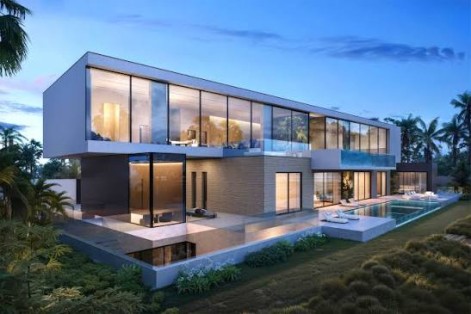
Taj Enters Branded-Villa Segment With Taj Mount Kusur Resort & Villas in Lonavala
Indian Hotels Company Limited has taken the Taj brand into luxury branded villas with the launch of Taj Mount Kusur Resort & Villas near Lonavala, marking a strategic expansion from traditional hotels, resorts and residences into hospitality-managed private villa ownership.
Developed in partnership with Amavi, the integrated luxury development will span approximately 34 acres in the Western Ghats and combine 32 branded private villas with a 100-key Taj resort.
The villas will be offered for sale while also being capable of integration into the resort's inventory through a lease-back programme, creating a model in which buyers can own a private leisure home while relying on professional hospitality management and potentially making the property available through the resort when they are not using it.
Owners will have access to Taj hospitality services including:
concierge assistance,
housekeeping,
maintenance,
and access to the resort's leisure and wellness facilities.
The project represents more than another resort opening for Taj.
It moves one of India's best-known luxury hospitality brands deeper into the growing intersection between:
hospitality,
luxury real estate,
and:
second-home ownership.
Taj Makes Its First Move Into Luxury Branded Villas

IHCL Managing Director and Chief Executive Officer Puneet Chhatwal described Taj Mount Kusur Resort & Villas as the brand's entry into the branded-villa segment.
Taj already operates across:
palaces,
city hotels,
resorts,
safaris,
and residences.
Branded villas extend the portfolio into a different form of luxury ownership in which customers can acquire private real estate while receiving the service standards associated with a major hotel brand.
That distinction is important.
A conventional hotel customer purchases:
temporary accommodation.
A villa owner purchases:
a real-estate asset combined with hospitality services.
For Taj, the model potentially creates a much longer relationship with affluent customers.
Taj Mount Kusur Will Span 34 Acres
The development is planned across a:
34-acre estate
in the Western Ghats.
It will contain:
32 private branded villas
and:
a 100-key Taj resort.
This integrated structure allows the private residences and hotel to share a broader hospitality ecosystem.
Villa owners gain access to resort-style services and amenities.
The resort, meanwhile, sits alongside a permanent community of high-value property owners.
The Villas Occupy a Low-Density Setting
With only 32 villas within the wider estate, the project is positioned around:
privacy,
landscape,
and low-density luxury.
The official project site describes the private villas as being set across approximately 16 acres within the larger 34-acre development.
This is materially different from a conventional high-rise branded residence.
The product is closer to:
a private leisure estate
combined with:
five-star resort infrastructure.
100-Key Taj Resort Forms the Hospitality Anchor
The planned 100-key Taj resort is central to the project's operating model.
Without the resort, the development would essentially be a luxury villa community carrying a hotel brand.
With a functioning resort alongside it, owners gain access to a permanent hospitality operation.
That can support:
food and beverage,
wellness,
housekeeping,
concierge,
maintenance,
and recreational services.
The resort therefore provides the operating infrastructure that makes the branded-villa proposition possible.
Villas Will Be Offered for Sale
Unlike ordinary Taj hotel rooms, the villas are designed for:
private ownership.
Buyers acquire a leisure residence within the development while receiving access to Taj's hospitality ecosystem.
This moves Taj further into the branded real-estate business.
The customer relationship no longer ends at checkout.
It can potentially continue throughout the period of ownership.
Lease-Back Programme Adds a Hospitality Component
One of the most commercially significant features is the:
lease-back programme.
The branded villas can be integrated into the resort inventory through this structure.
The model addresses a common problem in second-home ownership.
Many luxury holiday homes remain unused for substantial portions of the year.
Owners still need to pay for:
maintenance,
security,
housekeeping,
landscaping,
and repairs.
A professionally managed lease-back structure can make the asset more operationally productive when the owner is absent, subject to the programme's contractual terms.
Taj Can Handle the Property While Owners Are Away
The project's proposition places significant emphasis on reducing the operational burden associated with owning a second home.
The official Taj Mount Kusur project material describes services that prepare a residence before the owner arrives and maintain it during periods of absence.
This addresses one of the largest friction points in leisure-home ownership.
Buying a villa can be attractive.
Managing one from another city can be difficult.
Hospitality management turns that problem into a service.
Second Homes Are Becoming Service Products
This represents a broader change in luxury real estate.
Historically, buying a second home meant the owner had to organise:
caretakers,
cleaning,
repairs,
security,
utilities,
and landscaping.
Branded residences increasingly package those functions into the property itself.
The buyer therefore purchases not just:
space,
but also:
convenience.
For wealthy consumers with limited time, convenience can be as important as the physical property.
Taj Brings Brand Trust Into Real Estate
A hotel brand can potentially solve another problem:
trust.
Luxury second-home buyers may be concerned about:
construction quality,
property management,
service standards,
and long-term maintenance.
A recognised hospitality brand can reduce some of that uncertainty by associating the project with an established service reputation.
This is one reason branded residences have become an increasingly important intersection between hospitality and property development.
IHCL Does Not Need to Become a Conventional Homebuilder
The partnership structure is also strategically important.
Taj brings:
brand,
hospitality,
service standards,
and operating expertise.
The real-estate development partner brings:
land,
development capabilities,
and property-market expertise.
This allows the hospitality company to participate in branded real estate without necessarily adopting the same capital-intensive model as a conventional residential developer.
Amavi Is the Development Partner
Taj Mount Kusur is being developed in partnership with Amavi, which positions itself as a hospitality-led real-estate developer.
The project therefore combines two specialised capabilities.
Amavi focuses on:
real estate and second-home development.
Taj contributes:
hospitality management and luxury-brand positioning.
This partnership model can potentially be replicated if the first development proves successful.
Project Targets the Luxury Second-Home Market
Amavi's leadership has positioned the development around changing expectations among second-home buyers.
The underlying proposition is that buyers increasingly want:
privacy,
nature,
space,
and ownership,
without the operational responsibilities traditionally associated with maintaining a holiday property.
This makes hospitality-managed villas particularly relevant.
The owner can potentially use the property as a personal retreat without operating it like a separate household.
Lonavala Provides a Strategic Location
The project is associated with the Lonavala leisure market and is located at Kusur in Maval, Pune district, Maharashtra.
The broader Lonavala region sits between:
Mumbai
and:
Pune,
two of India's largest concentrations of affluent urban consumers.
That location makes it particularly suitable for:
weekend homes,
short leisure stays,
corporate retreats,
and second residences.
Proximity to Mumbai and Pune Supports Repeat Usage
Second homes function differently from destination hotels.
Owners generally want to use them repeatedly.
Accessibility therefore matters.
The project site lists Pune Airport at approximately:
75 kilometres
and Navi Mumbai International Airport at approximately:
120 kilometres, while highlighting road connectivity through the Mumbai-Pune corridor.
These distances are particularly relevant to buyers who may travel to the property multiple times each year.
Private Helipad Is Also Part of the Positioning
The development's official material also lists a:
private helipad.
This reinforces the project's positioning at the upper end of the leisure-home market.
For ultra-high-net-worth buyers, connectivity is not limited to conventional road travel.
Private aviation access can materially reduce travel time.
Western Ghats Setting Is Central to the Product
Taj Mount Kusur is positioned around its natural setting.
The estate offers views across:
lake,
valley,
and Western Ghats landscapes.
This is important because second-home demand is often driven by contrast with urban living.
Mumbai and Pune buyers already have access to premium apartments and city amenities.
A leisure residence therefore needs to offer something different:
space,
quiet,
nature,
and privacy.
Contemporary Barn-Style Architecture Defines the Villas
The villas use:
contemporary barn-style architecture.
Design elements include:
large glass façades
and:
spacious verandahs.
The intention is to connect indoor spaces more closely with the surrounding landscape.
Large glazing can maximise:
natural light
and:
views.
Verandahs extend the usable living space into the outdoors.
Nature Is Being Used as an Amenity
Luxury residential development has traditionally competed through:
clubhouses,
pools,
gyms,
and entertainment facilities.
Taj Mount Kusur also places nature at the centre of the amenity strategy.
The development includes a:
two-acre Wabi-Sabi Central Park.
The park draws inspiration from the Japanese philosophy associated with:
simplicity,
naturalness,
and harmony.
Miyawaki Forest Is Included in the Development
The estate will include a:
Miyawaki forest.
Miyawaki-style planting is designed to create dense native vegetation within relatively compact areas.
In a luxury-development context, this provides both:
landscape value
and:
a stronger nature-oriented identity.
It can also help distinguish the project from more conventional resort landscaping.
Nature Trails and Zen Gardens Extend the Wellness Positioning
Other planned amenities include:
nature trails,
zen gardens,
and:
stargazing decks.
These are less about conventional entertainment and more about:
wellness,
quiet recreation,
and connection with the landscape.
That reflects a broader change in luxury hospitality.
Luxury is increasingly marketed through:
space,
privacy,
wellbeing,
and experiences
rather than physical opulence alone.
Sports Facilities Broaden the Leisure Offering
The estate will also provide:
golf putting greens,
a fitness lawn,
and:
multi-purpose sports courts.
This makes the development suitable for longer stays.
A second home needs to provide enough activities for owners to spend:
weekends,
holidays,
or extended periods
without relying entirely on external attractions.
Club Amavi Adds a Dedicated Social Hub
The integrated development will include:
Club Amavi.
The club is planned to provide:
wellness,
recreation,
dining,
and banquet facilities.
A private club can serve several purposes.
It provides shared amenities for villa owners.
It also creates a social centre for the residential community.
For the developer, it can differentiate the property from stand-alone private villas in the same region.
Taj Hospitality Extends Into Everyday Ownership
The most important feature remains service.
Villa owners are expected to receive access to Taj hospitality including:
concierge,
housekeeping,
and:
maintenance.
This means the Taj brand enters the owner's experience even when they are not staying inside the hotel itself.
That is strategically important.
A branded villa converts hospitality from:
an occasional transaction
into:
an ongoing service relationship.
Concierge Can Remove Friction From Second-Home Usage
Imagine a buyer living in Mumbai.
They decide on Friday morning to spend the weekend at Mount Kusur.
In a conventional second home, someone may need to:
clean the property,
prepare the pool,
stock essentials,
change linen,
and check equipment.
A hospitality-managed residence can coordinate these activities before arrival.
The owner therefore experiences the property more like:
a private hotel
than:
a second household.
Maintenance Is Particularly Valuable for Seasonal Properties
Holiday homes can deteriorate when left unused.
Potential issues include:
humidity,
plumbing problems,
electrical faults,
pest control,
landscaping,
and weather-related maintenance.
Professional management reduces the burden on owners who may live hundreds of kilometres away.
This operational convenience is one of the strongest economic arguments behind branded second homes.
The Model Could Appeal to Wealthy Buyers With Limited Time
High-net-worth consumers often have sufficient capital to buy second homes.
Their scarcer resource may be:
time.
A conventional villa requires active management.
A hospitality-managed villa reduces that responsibility.
The product therefore targets consumers willing to pay a premium not merely for luxury finishes but for:
effortless ownership.
Branded Residences Can Command a Trust Premium
Globally, branded residences frequently sell at premiums to comparable unbranded properties.
The logic is that buyers may assign value to:
brand recognition,
professional management,
service,
design standards,
and resale credibility.
Whether Taj Mount Kusur achieves such a premium will depend on actual pricing and market response.
But Taj's brand equity gives the project a potentially powerful differentiator.
Taj Can Extend Customer Lifetime Value
The strategy also has implications for IHCL.
A hotel guest may stay for:
a few nights.
A villa owner could maintain a relationship with the brand for:
many years.
During that period, the owner may consume:
housekeeping,
food and beverage,
wellness,
concierge,
and other services.
That can deepen customer lifetime value.
Real Estate Can Strengthen Hospitality Loyalty
Ownership also creates a different form of brand loyalty.
Someone who owns a Taj-branded villa is likely to develop a much deeper relationship with the brand than a customer who occasionally stays in a Taj hotel.
That relationship can potentially extend to:
other Taj hotels,
restaurants,
events,
and travel experiences.
Branded residences therefore have strategic value beyond the property itself.
The Villa Segment Broadens Taj's Luxury Portfolio
Taj already has a broad luxury identity spanning:
palaces,
resorts,
safaris,
city hotels,
and residences.
Private branded villas add another product category.
This allows the company to serve affluent consumers across more stages of the travel and ownership journey.
A customer can:
stay at Taj,
holiday at Taj,
and now potentially:
own a Taj-managed leisure home.
Private Villas Have Gained Importance Since the Pandemic
Luxury travel behaviour changed substantially after 2020.
Many affluent travellers developed stronger preferences for:
private accommodation,
larger spaces,
longer stays,
and destinations accessible from major cities.
That increased interest in:
villas,
farmhouses,
and second homes.
Branded villas combine those preferences with the operational reliability of a luxury hotel.
Hybrid Work Also Changed Second-Home Usage
Remote and hybrid working have made it easier for some professionals and entrepreneurs to spend longer periods outside major cities.
A leisure home can therefore function as:
a weekend retreat,
extended holiday residence,
or occasional remote-working base.
That increases potential utilisation compared with a second home used only during traditional holidays.
Lonavala Has Long Been a Second-Home Market
Lonavala already has an established ecosystem of:
private villas,
holiday homes,
resorts,
and weekend rentals.
Taj Mount Kusur therefore enters a proven market rather than attempting to create an entirely new destination.
The differentiator is the combination of:
Taj branding,
professional management,
private ownership,
and resort integration.
Competition Is Not Limited to Other Luxury Hotels
The project competes across several categories simultaneously.
Potential buyers may compare it with:
independent luxury villas,
premium gated second-home projects,
farmhouses,
branded residences,
and resort-linked properties.
This means the competitive set is broader than traditional hospitality.
Taj must demonstrate that its service layer justifies any premium attached to the brand.
Lease-Back Can Improve Asset Utilisation
The lease-back programme could become an important differentiator.
A holiday property may remain empty for:
200,
250,
or even 300 days
in a year.
Integrating the villa into resort inventory can potentially increase utilisation when the owner is absent.
That can create a more economically productive asset, depending on the specific programme terms and actual guest demand.
Buyers Must Still Evaluate the Contractual Structure
A lease-back programme should not automatically be interpreted as guaranteed investment income.
Prospective owners need to understand:
availability rules,
revenue-sharing arrangements,
maintenance charges,
usage restrictions,
tax implications,
and programme duration.
The project's public materials establish the existence of the lease-back model but do not provide a basis for assuming any guaranteed return.
MahaRERA Registration Provides a Regulatory Reference
The official project site lists Mount Kusur Phase I under:
MahaRERA registration PR1261012500787.
The website also states that buyers should rely on the registered project documents and agreement for sale for legally binding specifications and commitments.
That distinction is important for luxury real-estate buyers because marketing visuals and conceptual master plans may evolve.
The Hotel Component Is Proposed Subject to Approvals
The official project disclaimer notes that the hotel development shown is:
proposed and subject to statutory approvals.
This is a material qualification.
The 100-key Taj resort is central to the project's integrated vision, but prospective purchasers should distinguish between the announced development concept and components subject to future statutory processes.
Hospitality-Branded Real Estate Is Growing as an Asset-Light Opportunity
For hotel companies, branded residences can offer attractive economics.
A hospitality group may earn through:
brand licensing,
management,
and service relationships
without necessarily funding the full cost of residential development.
This fits the broader hospitality industry's shift toward:
management contracts
and:
asset-light expansion.
Developers Also Benefit From Hospitality Brands
The developer gains a different advantage.
Attaching a recognised luxury hotel brand can improve:
project differentiation,
buyer confidence,
marketing reach,
and potentially pricing power.
The partnership can therefore create value for both sides.
The developer gains brand credibility.
The hotel company gains access to real-estate economics and long-term service relationships.
India’s Wealth Creation Supports the Category
India's growing population of:
entrepreneurs,
senior executives,
professionals,
and wealthy families
is expanding the addressable market for luxury leisure homes.
As wealth rises, discretionary spending increasingly moves beyond:
primary residences
toward:
experiential real estate.
Second homes in destinations accessible from major cities can benefit from that shift.
Luxury Is Moving From Possessions Toward Experiences
The concept also fits a broader change in luxury consumption.
Affluent customers increasingly value:
privacy,
wellness,
nature,
service,
and time
alongside conventional material luxury.
A branded villa attempts to package all of these elements into a single asset.
The property is simultaneously:
a home,
a hospitality experience,
and:
a leisure destination.
Taj Mount Kusur Could Become a Template for Future Projects
The strategic importance of Taj Mount Kusur extends beyond 32 villas.
If the model proves commercially successful, Taj could potentially apply similar branded-villa concepts to other leisure destinations.
India has numerous markets with comparable characteristics:
proximity to affluent cities,
strong leisure demand,
natural settings,
and existing second-home ecosystems.
The first project can therefore serve as a test case for a broader category.
Destination Selection Will Be Critical
Not every luxury destination is suitable for branded villas.
The strongest markets generally combine:
accessibility,
scarce attractive land,
year-round appeal,
and sufficient affluent demand.
Lonavala has several of these characteristics because of its position between Mumbai and Pune.
Future projects would need similarly strong location economics.
Branded Villas Could Create a New Growth Layer for IHCL
For IHCL, conventional hotel growth is primarily measured through:
rooms,
properties,
occupancy,
and management contracts.
Branded real estate introduces additional dimensions.
The company can expand brand reach without measuring growth only through hotel-room inventory.
That makes villas and residences potentially valuable extensions of the hospitality platform.
The Brand Must Protect Service Consistency
There is also reputational risk.
When a hospitality brand appears on a private residence, owners expect:
consistent quality.
Problems involving:
maintenance,
construction,
service,
or property management
can affect perceptions of the hotel brand itself.
Taj will therefore need to ensure the ownership experience matches the expectations created by its hospitality reputation.
Owners Will Expect Hotel-Level Responsiveness
A hotel guest experiencing a problem can contact the front desk.
A villa owner may expect similar responsiveness throughout the year.
That means property management must function continuously.
Service quality during periods when the owner is absent can be just as important as service during a stay.
This makes operational execution central to the branded-residence model.
The Resort and Villas Must Function as One Ecosystem
The long-term success of Taj Mount Kusur will depend on how seamlessly the private and hotel components work together.
Villa owners should feel they have:
privacy
without:
isolation.
They need access to resort amenities without feeling like ordinary hotel guests inside their own residential environment.
Achieving that balance is one of the key design challenges in integrated branded developments.
Taj Is Extending Hospitality Beyond the Hotel Room
The broader strategic message is clear.
Luxury hospitality companies increasingly want to participate in more of the customer's lifestyle.
The relationship no longer needs to begin at:
check-in
and end at:
checkout.
Through branded residences and villas, hospitality can extend into:
ownership,
property management,
wellness,
dining,
and long-term leisure.
Taj Mount Kusur represents IHCL's latest move in that direction.
Conclusion
The launch of Taj Mount Kusur Resort & Villas marks an important expansion of Taj's luxury strategy as the brand enters the branded-villa segment through an integrated hospitality and second-home development in Maharashtra.
Developed with Amavi, the project spans approximately 34 acres in the Western Ghats and combines 32 private branded villas with a planned 100-key Taj resort.
The villas will be sold to private owners while offering access to Taj-managed services including concierge, housekeeping and maintenance. A lease-back programme will also allow participating villas to be integrated into the resort inventory.
The project reflects a broader shift in luxury real estate.
Affluent buyers increasingly want the:
privacy and permanence of a private home
combined with:
the convenience and service of a five-star hotel.
For Taj, that creates an opportunity to extend its customer relationship from occasional hotel stays into long-term property ownership.
For Amavi, the Taj brand provides a globally recognised hospitality layer to differentiate a second-home development in one of western India's established leisure markets.
The commercial test will be whether buyers place sufficient value on that combination of:
ownership,
professional management,
resort access,
nature,
and brand trust.
If Taj Mount Kusur succeeds, the project's significance could extend far beyond Lonavala.
It could provide a model for Taj to take its luxury hospitality brand into a wider network of branded villas and leisure residences across India's growing high-end second-home market.