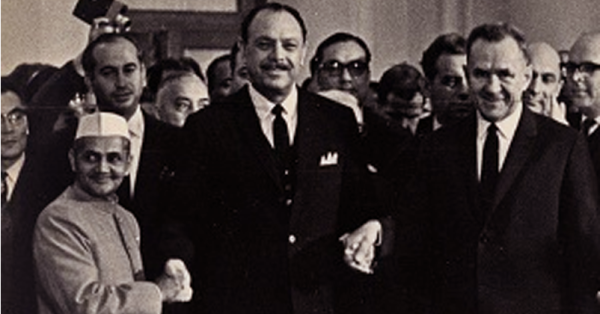
The Tashkent Agreement, signed on January 10, 1966, marked the end of the brutal 1965 Indo-Pakistani War, yet it remains one of the least remembered episodes in South Asian diplomatic history. Brokered by the Soviet Union during the height of the Cold War, this peace accord brought Indian Prime Minister Lal Bahadur Shastri and Pakistani President Ayub Khan to the negotiation table in Tashkent (now in Uzbekistan).
Though the agreement halted the bloodshed, its ambiguous terms and tragic aftermath — including Shastri's sudden death — have rendered it a largely forgotten yet crucial chapter in the complex narrative of India-Pakistan relations.
The Background: A War Over Kashmir
The 1965 war erupted primarily over Kashmir, triggered by Pakistan's Operation Gibraltar, an attempt to infiltrate forces into Jammu and Kashmir to foment rebellion. The conflict quickly escalated into full-scale warfare, with fierce battles fought across the western front, particularly in Punjab and Rajasthan.
Despite heavy casualties and losses on both sides, neither India nor Pakistan emerged as a clear victor. International pressure, especially from the United States, Soviet Union, and United Nations, mounted for an immediate ceasefire, leading to a diplomatic push for a formal peace settlement.
Key Features of the Tashkent Agreement
-
Withdrawal to Pre-Conflict Positions:
-
Both India and Pakistan agreed to pull back their forces to positions held before August 5, 1965 — essentially restoring the status quo ante.
-
-
Restoration of Diplomatic Relations:
-
Both countries committed to normalizing diplomatic and economic ties, including the return of High Commissioners to New Delhi and Islamabad.
-
-
Non-Interference in Internal Affairs:
-
A pledge to refrain from interfering in each other's domestic matters was made, aiming to prevent future conflicts sparked by internal unrest.
-
-
Promotion of Peaceful Coexistence:
-
Both sides vowed to discuss and resolve future disputes through peaceful means and direct bilateral talks.
-
-
Commitment to the United Nations Charter:
-
The agreement reaffirmed adherence to the UN Charter principles, emphasizing respect for sovereignty and territorial integrity.
-
The Tashkent Summit: A Fragile Truce
Held under the mediation of Soviet Premier Alexei Kosygin, the talks in Tashkent were tense and protracted. Both leaders faced immense domestic pressure: Shastri from critics demanding a tougher stance against Pakistan, and Ayub Khan from a military establishment humiliated by battlefield losses.
In the end, both sides agreed to compromise — but not without resentment. Many in India felt the agreement gave away strategic gains made during the war, while in Pakistan, Ayub Khan was criticized for capitulating without achieving tangible results in Kashmir.
The Sudden Tragedy: Shastri’s Death
Just hours after signing the agreement, Prime Minister Lal Bahadur Shastri tragically died of a heart attack in Tashkent. His unexpected death cast a long shadow over the accord, fueling conspiracy theories and political instability back home.
For many Indians, Shastri’s passing became intertwined with a sense of unfinished business regarding the war’s outcome and the concessions made at Tashkent.
Why the Tashkent Agreement Is Often Forgotten
-
Overshadowed by Tragedy: Shastri’s death shifted public focus away from the agreement itself.
-
Lack of Lasting Impact: The Tashkent Agreement restored the pre-war boundaries but failed to address the underlying Kashmir dispute, leading to continued hostilities in subsequent years.
-
Subsequent Conflicts: The 1971 India-Pakistan War and the Simla Agreement later took center stage in Indo-Pakistani relations, pushing Tashkent further into historical obscurity.
Long-Term Significance
Despite its short-term achievements, the Tashkent Agreement left many issues unresolved. However, it set critical diplomatic precedents:
-
It marked the first major Soviet engagement in South Asian peace efforts, influencing regional geopolitics during the Cold War.
-
It highlighted the challenges of achieving lasting peace between India and Pakistan without addressing the core Kashmir dispute.
In a broader sense, it demonstrated the limits of externally mediated peace efforts when deep-rooted animosities persist.
Conclusion
The Tashkent Agreement of 1966 was a brave but ultimately incomplete attempt to halt one of the bloodiest conflicts between India and Pakistan. While it succeeded in ending active hostilities, its failure to resolve the deeper issues meant that peace remained fragile.
Remembered more for the tragedy surrounding Lal Bahadur Shastri’s death than for its diplomatic content, the Tashkent Agreement stands as a sobering reminder of how fleeting peace can be when deeper wounds are left unhealed.