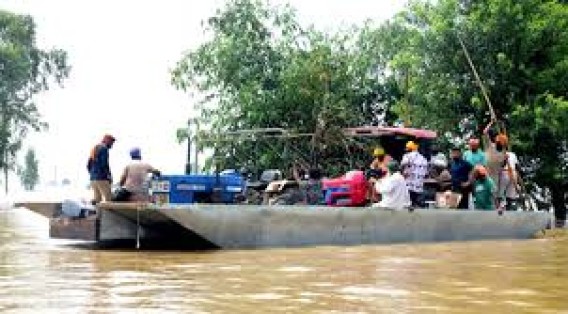
Prime Minister Narendra Modi is scheduled to visit the flood-hit regions of Himachal Pradesh and Punjab, aiming to assess the extensive damage caused by recent flash floods and landslides and announce urgent relief measures. These natural disasters have severely impacted infrastructure, agriculture, and residential areas, leaving local communities struggling to cope with the aftermath.
Himachal Pradesh, known for its hilly terrain, is highly susceptible to flash floods and landslides during intense monsoon rains. Recent heavy downpours led to sudden flooding in multiple districts, washing away roads, bridges, and essential infrastructure. In Punjab, the overflowing rivers and waterlogged areas caused severe disruption to farming activities, damaging crops and displacing families.
During his visit, PM Modi is expected to conduct aerial surveys of both states, a step aimed at gaining a comprehensive understanding of the affected areas. The aerial assessment allows authorities to identify the most critical zones, ensuring relief operations are deployed efficiently. It also provides the Prime Minister with firsthand insight into the scale of destruction, enabling faster and more effective decision-making regarding the allocation of aid.
In addition to surveying the damage, the Prime Minister is anticipated to announce robust relief packages for the affected regions. These packages are likely to include immediate financial assistance for displaced families, compensation for damaged property, and support for rebuilding infrastructure, including roads, bridges, schools, and healthcare facilities. Authorities are also expected to initiate programs for long-term rehabilitation, focusing on restoring livelihoods, particularly for those dependent on agriculture and small businesses.
Local administrations in both states have been actively engaged in rescue and relief operations. Emergency shelters have been set up for displaced residents, and teams are distributing food, water, and medical aid to the hardest-hit communities. PM Modi’s visit underscores the central government’s commitment to supplementing these efforts and coordinating closely with state authorities to ensure that relief reaches the most vulnerable populations.
Experts highlight that the increasing frequency and intensity of flash floods and landslides in India’s hilly and riverine regions underscore the need for comprehensive disaster management strategies. PM Modi’s visit emphasizes not only immediate relief but also long-term planning, including improved drainage systems, early warning mechanisms, and sustainable infrastructure development to mitigate the impact of future disasters.
Communities in Himachal Pradesh and Punjab have welcomed the Prime Minister’s intervention, expressing hope that the relief measures will expedite recovery and provide the necessary support to rebuild lives disrupted by the floods. The coordinated efforts of the central and state governments aim to restore normalcy swiftly while ensuring that affected families receive comprehensive assistance.
The Prime Minister’s engagement also serves as a reassurance to citizens that the government remains proactive in managing natural disasters. By combining direct assessment, strategic planning, and rapid deployment of resources, PM Modi’s visit reflects a holistic approach to disaster management. The relief initiatives are expected to provide immediate support, rebuild essential infrastructure, and reinforce the resilience of local communities against future climatic challenges.
In conclusion, PM Modi’s visit to Himachal Pradesh and Punjab marks a crucial step in addressing the devastation caused by flash floods and landslides. The combination of aerial surveys, targeted relief packages, and long-term rehabilitation plans is designed to ensure that affected residents receive prompt aid while building sustainable systems to reduce the vulnerability of these regions. The government’s focus on rapid response and community support reflects a broader commitment to disaster preparedness and resilience, offering hope to thousands of families striving to recover from one of the most challenging monsoon seasons in recent years.