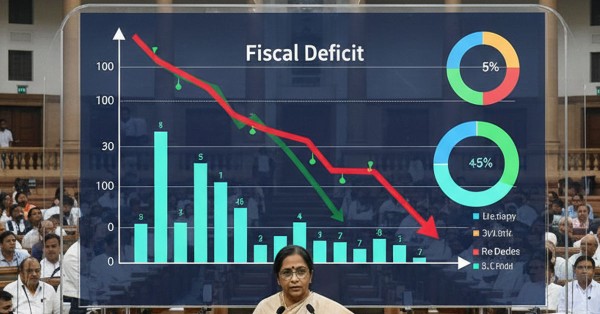
Budget 2026 enshrines fiscal prudence as growth enabler, pegging deficit at 4.5% of GDP (down from 4.9%) on FRBM glide path to 3% by 2029. Balancing capex ambition with consolidation, it signals credibility to markets and ratings agencies.
Revenue buoyancy drives narrative: direct taxes +12%, GST +15% via base broadening, evasion curbs. Dividend windfalls from RBI/PSUs add buffers. Disinvestment targets ₹2 lakh crore via IPOs, minority stakes.
Capex sustained at 3.2% GDP (₹11.1 lakh crore), prioritising infra multipliers over populist revenue spend (capped at 70%). Dividend-revenue spend ratio improves to 1:1.
Borrowing calendar prudent: G-Secs ₹14.1 lakh crore, T-bills managed for liquidity. MSS recalibrated post-RBI surpluses. States get ₹23 lakh crore (50-year record), additional borrowing linked to power reforms.
Debt sustainability: Centre's 57% GDP trajectory declines via growth outpacing interest costs. Interest:GDP at 3.8%, freeing space for development.
FRBM escape clauses limited to 0.5%, with independent fiscal council oversight. Medium-term framework mandates escape justification.
Contingency funds: ₹50,000 crore for shocks, climate events.
Tax reforms contribute: faceless assessments boost compliance +2% GDP. Digital GST plugs leakages.
Expenditure rationalisation: 10% subsidy convergence via DBT; PSE dividend mandates; PPP monetisation ₹1 lakh crore.
Macro assumptions realistic: 10.5% nominal growth, 4.2% CPI, 2.1% fiscal slippage buffer.
Global context: amid Fed cuts, rupee stable; forex reserves $650bn cushion.
Market implications: 10-year G-Sec yields steady at 6.8%; FII inflows via relaxed ECB norms.
States incentivised: ₹1 lakh crore grants for reforms in power, urbanisation.
For citizens: lower EMIs via stable rates; businesses: capex certainty.
Challenges—income uncertainty, monsoon risks—mitigated by elastic revenues, contingent liabilities cap.
Success metrics: primary surplus, debt:GDR decline, rating upgrade path.
Budget 2026 proves fiscal discipline amplifies growth, not constrains it.