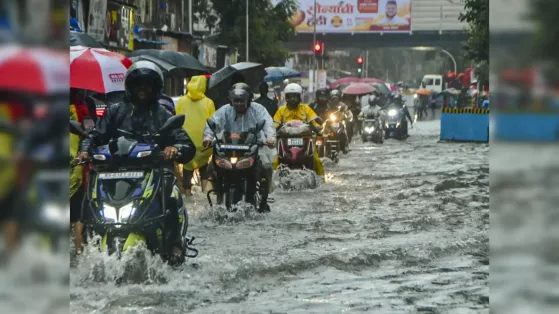
Maharashtra Hit by Heavy Rains, Red Alerts Issued
Maharashtra is in the grip of a severe weather crisis as heavy rains lash multiple districts, prompting red alerts and extensive rescue efforts. The India Meteorological Department (IMD) has flagged Mumbai, Palghar, Thane, Raigad, Nashik, and Pune among the worst-affected zones with warnings of flooding, landslides, and flash floods.
Over the past 48 hours, at least 10 people have perished in rain-related incidents across the state. Among them, four deaths were confirmed in Nashik, where a few were caused by structural collapse; two each occurred in Dharashiv and Ahilyanagar; and one each in Jalna and Yavatmal.
As the disaster unfolds, more than 11,800 people have been evacuated from flood-prone and low-lying areas and sheltered in relief camps across districts. In Palghar, authorities shut down schools preemptively to protect children and prevent on-road exposure.
Rescue and Relief Operations
Relief and rescue operations are being carried out by the State Disaster Response Force (SDRF), National Disaster Response Force (NDRF), the Indian Army, along with municipal agencies. The Army has rescued over 170 stranded individuals in Marathwada via air operations, using helicopters to evacuate people from rooftops in submerged villages. In Solapur alone, 4,002 people have been brought to safety, while 6,500 are staying in relief camps.
To manage the escalating floodwaters, several dam gates have been opened. Notably, Jayakwadi dam in Marathwada has released heavy inflows, contributing to rising levels in the Godavari River downstream. Officials are closely observing Bhatsa Dam in Thane, which has shown a significant rise in water levels.
Transportation infrastructure is under duress: roads are washed away or submerged, bridges threatened, and certain routes cut off. Rail services have been disrupted in parts of Marathwada, with trains diverted due to waterlogging on tracks. The flow of essential supplies, medical aid, food, and fodder is being hampered in many remote areas.
Weather Outlook & Alerts
The IMD warns of continued heavy to very heavy rainfall over the next 24 to 48 hours, especially in ghat regions, coastal zones, and river catchments. Red alerts remain active in Mumbai, Palghar, Nashik, and nearby districts; orange alerts have been extended for Thane, Raigad, Pune and adjacent zones. Authorities have urged residents to avoid travel, stay indoors, and avoid routes passing close to rivers or through unstable terrain.
Those living near slopes, hillsides, riverbanks, or low-lying zones are especially vulnerable. Evacuation orders remain in effect in many municipalities. The administration has also issued warnings against taking shelter under trees, entering drain outlets, or ignoring official advisories.
Impact on Agriculture & Economy
The deluge has inflicted serious damage on Maharashtra’s agricultural landscape. In Marathwada alone, more than 18 lakh hectares of farmland have been submerged. Several livestock perished during the floods. In Latur, two lives were lost; in one incident, a smallholder was swept away.
In addition to crop losses, waterlogging and erosion are expected to affect planting cycles for the upcoming seasons. The state government has already sanctioned a ₹2,215 crore relief package for rain-hit farmers. The urgency of financial aid is magnified by loss of the sowing window and breaches in rural infrastructure.
As supply chains strain, vegetable prices are poised to rise sharply in markets, given disruption in transport and damaged produce.
Challenges & Risks
One of the key challenges in disaster zones is ensuring timely information dissemination. Misinformation or rumours can create panic; hence officials have warned against spreading false alerts.
Structural vulnerabilities in urban and rural regions are being tested. In hilly or sloped areas, the risk of landslides looms large, while urban drainage systems are straining under the volume of water. The continuous stress may expose weak retaining walls, poorly maintained embankments, and inadequate flood defenses.
Power outages and damages to electric infrastructure have been reported, particularly where fallen trees or flooding impacted lines. Communication blackouts in submerged areas further complicate coordination among rescue teams.
Government & Administrative Response
The Maharashtra government, led by Chief Minister Devendra Fadnavis, has reviewed the situation and directed relief operations across multiple districts. Deputy Chief Minister Eknath Shinde held district-level reviews, especially in Thane and Palghar, ordering immediate relocation of vulnerable residents and ensuring control rooms remain functional 24/7.
Relief distribution centers, medical camps, food supply lines, water sanitation units, and fodder stores have been activated. The state is coordinating with humanitarian NGOs and organizations like Akshaya Patra and Naam Foundation for logistical support in food and aid supply.
Looking Ahead & Lessons Learned
Maharashtra’s current catastrophe reinforces the critical need for climate adaption infrastructure, resilient urban planning, and community awareness. Drainage systems must be upgraded, water reservoirs managed proactively, and hill slope stabilization undertaken in vulnerable zones.
Early warning systems must be robust and accessible, especially in remote areas. Community-based disaster preparedness programs, such as evacuation drills and localized response training, would reduce casualties in future events.
In addition, environmental protection—preserving forests, wetlands, and natural drainage basins—plays a key role in reducing flood risk. Urban development should curb encroachment on natural waterways.
Conclusion
Maharashtra is facing one of its harshest rainstorms in recent memory, with multi-district devastation, loss of life, widespread displacement, and damage to livelihoods. As the skies continue to pour, the coming days will test the resilience of administrative machinery, rescuers, and communities alike. Timely coordination, transparent communication, and targeted relief efforts will determine how effectively the state can mitigate further losses and restore stability.