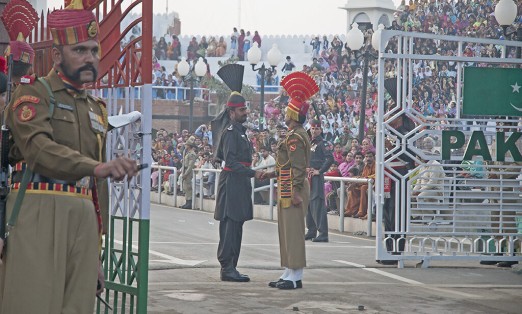
The turbulent relationship between India and Pakistan is one of the most complex and volatile in modern international politics. Since their painful separation in 1947, the two countries have fought wars, engaged in countless border skirmishes, and witnessed devastating acts of terrorism. Yet, amid the cycles of hostility, both sides have made periodic efforts to build trust through Confidence Building Measures (CBMs) — small but significant steps meant to reduce tensions and prevent conflict.
But after decades of initiatives, promises, and setbacks, one question remains: Can India and Pakistan ever truly trust each other?
The Origin of Confidence Building Measures
Confidence Building Measures were first introduced during the Cold War to prevent nuclear conflicts between the United States and the Soviet Union. Borrowing from this model, India and Pakistan began their own CBMs in the late 20th century, recognizing that direct communication and limited cooperation could help prevent full-scale wars.
One of the earliest examples was the Agreement on the Prohibition of Attack against Nuclear Installations signed in 1988, under which both countries agreed to annually exchange lists of their nuclear facilities.
Over time, CBMs expanded into multiple areas — military, cultural, economic, and humanitarian.
Major CBMs Between India and Pakistan
Some of the most notable CBMs include:
-
Hotline Between Military Commanders: Established in 1971 and upgraded over time to ensure rapid communication during crises.
-
Bus Services: The Delhi-Lahore Bus Service, inaugurated in 1999, became a symbol of people-to-people contact.
-
Ceasefire Agreements: A significant ceasefire agreement was established in 2003 along the Line of Control (LoC) in Kashmir.
-
Trade Initiatives: Efforts to open border trade routes like the Wagah-Attari border for limited trade exchanges.
-
Humanitarian Measures: Facilitated family reunions, prisoner exchanges, and pilgrim visits to religious sites across the border.
Despite these initiatives, breakthroughs have been fragile and easily reversed after terror attacks or political changes.
Why Trust Has Been So Elusive
Several factors have consistently undermined trust between India and Pakistan:
-
Terrorism:
Major terror attacks — like the 2001 Indian Parliament attack, the 2008 Mumbai attacks, and the 2016 Uri attack — originating from Pakistani soil have deeply eroded Indian trust. -
Kashmir Dispute:
The unresolved conflict over Jammu and Kashmir remains the central source of friction, leading to militarization and mutual suspicion. -
Military Influence in Pakistan:
India often perceives Pakistan’s civilian governments as weak, with real power resting with the military and intelligence agencies, who are less inclined toward peace. -
Public Sentiment and Media:
In both countries, hostile media narratives and nationalist politics make it risky for leaders to advocate for reconciliation. -
Broken Promises:
Past peace efforts — like those during the Agra Summit (2001) or the Lahore Declaration (1999) — fell apart after subsequent betrayals, reinforcing the belief that agreements are unreliable.
Can Future CBMs Succeed?
For CBMs to be truly effective between India and Pakistan, they must go beyond symbolic gestures and address the core sources of distrust:
-
Terrorism must be decisively addressed. Without credible action against terror groups operating from Pakistani territory, India is unlikely to invest deeply in trust-building.
-
Transparent, verifiable actions are critical. Any agreement must include clear accountability mechanisms.
-
People-to-people contact needs to be depoliticized and expanded, including more cross-border cultural, academic, and business exchanges.
-
Backchannel diplomacy — secret and informal negotiations — may prove more fruitful initially than high-profile summits, which tend to raise public expectations too high.
Additionally, regional stability and international pressure could act as catalysts, encouraging both sides to prioritize peace over provocation.
Conclusion: A Long and Winding Road
True trust between India and Pakistan remains elusive — but not impossible. History shows that while CBMs alone cannot resolve deep-rooted political conflicts, they can create breathing space and lower the temperature during crises.
The future depends on whether leaders on both sides can summon the vision and political courage to move beyond cycles of hostility. Trust-building between India and Pakistan will not come through grand gestures alone; it will require consistent, courageous, and verifiable action — and above all, a mutual recognition that peace serves both nations far better than perpetual conflict.
In a region home to over a billion people, even small steps toward trust are worth pursuing — because the alternative is simply too dangerous.