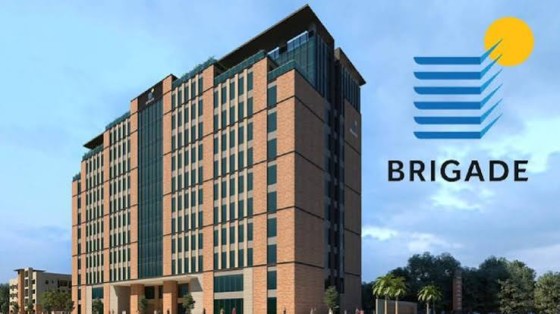
Brigade Enterprises Seeks Shareholder Approval to Raise Borrowing Limit to ₹10,000 Crore
Brigade Enterprises is seeking shareholder approval to double its borrowing limit to ₹10,000 crore as the Bengaluru-based real estate developer prepares additional financing capacity for an expanding pipeline of residential, commercial and other development projects.
The proposal forms part of the agenda for the company's 31st Annual General Meeting scheduled for August 13, 2026. Brigade currently has shareholder-approved borrowing powers of up to ₹5,000 crore, a limit established at its 2018 AGM. (NSE India)
The company has said the higher ceiling is intended to provide flexibility for future growth and expansion rather than representing an immediate plan to borrow the entire ₹10,000 crore.
Brigade Proposes Doubling Existing Borrowing Limit

The special resolution seeks to increase the board's borrowing authority from ₹5,000 crore to ₹10,000 crore.
The proposed ceiling would allow Brigade to raise funds from a broad range of sources, including:
-
Banks
-
Financial institutions
-
Non-convertible debentures
-
Bonds
-
External commercial borrowings
-
Other debt instruments
The borrowing could be secured or unsecured and raised in one or more tranches depending on the company's capital requirements. (NSE India)
Current Approved Limit Has Been in Place Since 2018
Brigade's existing ₹5,000 crore borrowing authority was approved by shareholders at the company's 23rd AGM in August 2018.
Since then, the scale of Brigade's development portfolio and land pipeline has expanded materially.
The company is therefore seeking a larger financing framework capable of supporting the next phase of development.
The proposal does not automatically create new debt. It authorises the board to borrow up to the revised ceiling as and when required.
Total Borrowings Stood at ₹3,007 Crore at FY26-End
Brigade disclosed that total borrowings stood at ₹3,007 crore as of March 31, 2026.
Of this amount, approximately ₹2,436 crore was linked to lease-rental-discounting loans backed by securitised rental receivables. (NSE India)
This distinction is important because lease-rental-discounting debt is generally supported by recurring income from completed commercial properties rather than depending entirely on future project sales.
Land Pipeline Drives Future Capital Requirements
Brigade has cited its substantial development pipeline as one of the key reasons for seeking greater borrowing flexibility.
The company has more than 57 million square feet of land-bank area expected to be developed over the coming years.
It also intends to continue replenishing that land bank as existing projects are launched, with annual land additions equivalent to around 15 million square feet of developable area contemplated under its growth plans. (NSE India)
Such expansion can require significant upfront capital before projects begin generating cash flows.
Real Estate Growth Requires Large Funding Capacity
Property development is inherently capital intensive.
Developers typically need capital for:
-
Land acquisition
-
Joint-development payments
-
Construction
-
Approvals
-
Infrastructure
-
Marketing
-
Working capital
Even when customer collections fund part of construction, developers generally need substantial liquidity before projects reach meaningful sales and collection milestones.
A larger borrowing ceiling can therefore provide flexibility during periods of accelerated expansion.
Brigade Continues Adding Residential Projects
Brigade has remained active in acquiring and developing residential opportunities across Bengaluru and other southern Indian markets.
Recent additions have included land parcels in Whitefield and Kanakapura Road as the company expands its premium housing pipeline. (Brigade Group)
Residential development can require significant capital because land purchases often occur well before final project revenue is realised.
Maintaining financing capacity therefore becomes particularly important during periods of aggressive land acquisition.
Bengaluru Remains Central to Brigade Strategy
Bengaluru remains one of Brigade's most important markets.
The city continues to generate demand across:
-
Premium housing
-
Commercial offices
-
Retail
-
Hospitality
-
Mixed-use developments
Technology-sector employment, global capability centre expansion and infrastructure development continue to support the city's broader real estate market.
Brigade's established presence gives it access to multiple segments of this opportunity.
Commercial Assets Add Recurring Cash Flow
Unlike developers focused almost entirely on residential sales, Brigade has exposure to income-generating commercial assets.
Office and retail properties can generate recurring rental income.
This creates a different financing profile because stabilised rental assets can potentially support long-term borrowing structures such as lease-rental discounting.
Recurring rental income can therefore provide balance-sheet support alongside residential cash flows.
Lease Rental Discounting Forms Major Part of Debt
The fact that ₹2,436 crore of Brigade's ₹3,007 crore FY26-end borrowings related to lease-rental discounting highlights the importance of its commercial portfolio. (NSE India)
LRD financing typically involves borrowing against contracted rental income from completed properties.
For real estate companies, this can be an efficient way to monetise predictable cash flows without selling the underlying assets.
However, investors still need to monitor overall leverage and debt-service obligations.
Shareholders Also Asked to Approve Asset Charges
Brigade is separately seeking shareholder approval to create mortgages, charges, hypothecation or other liens over company assets for borrowings within the proposed ₹10,000 crore limit.
This resolution accompanies the increase in borrowing powers and provides the legal authority required to secure debt against company assets when necessary. (NSE India)
The two resolutions therefore work together:
Higher borrowing authority + authority to create security for that borrowing.
₹1,500 Crore NCD Proposal Is Separate
Brigade is also seeking approval to issue up to ₹1,500 crore of non-convertible debentures through private placement.
This is separate from the ₹10,000 crore overall borrowing ceiling.
The NCD issuance would remain within the broader borrowing authority and could be completed in one or more tranches during the permitted period. (NSE India)
The distinction matters because the ₹10,000 crore figure represents maximum borrowing powers, while ₹1,500 crore is a specific proposed debt-issuance authorization.
Brigade Has Become a Large Corporate Under SEBI Framework
The company said it now qualifies as a Large Corporate under the applicable SEBI debt-fundraising framework after receiving an AA (Stable) long-term credit rating from ICRA.
Under the framework cited in Brigade's AGM notice, qualifying large corporates are required to raise a prescribed portion of eligible incremental borrowing through debt securities.
Brigade said the proposed NCD authorization is intended partly to support compliance with that requirement. (NSE India)
NCDs Could Diversify Funding Sources
Non-convertible debentures can provide an alternative to conventional bank loans.
For developers, diversified funding sources can offer advantages such as:
-
Longer maturities
-
Different investor pools
-
Flexible repayment structures
-
Reduced dependence on banks
-
Better liability management
The actual economics will depend on market yields, credit spreads and investor demand at the time of issuance.
Higher Borrowing Limit Does Not Mean Immediate Leverage Surge
One of the most important distinctions for investors is that shareholder approval for a ₹10,000 crore borrowing ceiling does not mean Brigade plans to immediately borrow ₹10,000 crore.
The resolution increases the maximum authority available to the board.
Actual borrowing will depend on:
-
Project requirements
-
Land acquisitions
-
Cash generation
-
Interest rates
-
Debt-market conditions
-
Management's capital allocation
Investors should therefore distinguish authorised capacity from actual balance-sheet debt.
Revised Borrowing Capacity Would Equal 1.58 Times Net Worth
Brigade stated that the proposed ₹10,000 crore borrowing powers would represent approximately 1.58 times the company's net worth as of March 31, 2026. (NSE India)
This provides shareholders with a useful reference point for understanding the scale of the proposed authority relative to the company's equity base.
Again, this ratio refers to the permitted borrowing ceiling rather than actual leverage.
Real Estate Developers Need Capital Flexibility
Growth-focused property companies often require the ability to move quickly when attractive land opportunities arise.
A developer may need funding before:
-
Customer collections begin
-
Construction finance becomes available
-
Joint-development structures are finalised
-
Asset monetisation occurs
Having adequate approved borrowing capacity allows management to evaluate opportunities without repeatedly returning to shareholders for incremental authorization.
Interest Rates Remain Important
The economics of Brigade's future borrowing will depend partly on interest rates.
Lower borrowing costs can improve project returns and make new acquisitions more attractive.
Higher rates can:
-
Increase finance costs
-
Reduce project margins
-
Affect housing affordability
-
Raise refinancing expenses
Real estate companies therefore need to balance growth opportunities against the cost of carrying additional debt.
Residential Pre-Sales Can Reduce Funding Needs
Strong residential pre-sales can help developers fund construction through customer collections.
This can reduce dependence on external borrowing.
Developers with strong brands and rapid project sales may therefore be able to maintain high growth without proportionately increasing debt.
For Brigade, pre-sales momentum will remain an important indicator alongside borrowing levels.
Land Acquisitions Can Increase Capital Intensity
Brigade uses both outright land purchases and joint-development agreements.
These structures have different financing implications.
Outright acquisitions typically require more upfront capital but provide greater ownership of project economics.
Joint-development arrangements can reduce initial cash requirements because landowners participate in project revenue or area sharing.
The mix between these structures can materially affect future borrowing requirements.
Commercial Development Requires Longer Capital Cycles
Office and retail projects can require larger upfront capital commitments and longer timelines than residential developments.
Unlike residential projects, where customer advances can fund a portion of construction, commercial assets may need to be largely completed before generating rental income.
This can increase financing requirements during the development phase.
Once stabilised, however, these assets can create recurring cash flows.
Hospitality Adds Another Capital-Intensive Segment
Brigade also has exposure to hospitality through its group structure.
Hotels typically require substantial upfront capital and can take time to reach mature operating performance.
Brigade Hotel Ventures has also announced significant investment plans for hospitality expansion, illustrating the broader capital requirements across the group's real estate ecosystem. (Brigade Group)
Balance-Sheet Discipline Will Remain Critical
A larger borrowing authorization provides flexibility but also increases the importance of financial discipline.
Investors will monitor:
-
Net debt
-
Debt-to-equity
-
Interest coverage
-
Cash flows
-
Residential collections
-
Rental income
-
Project-level returns
Debt can accelerate growth when deployed into profitable projects, but excessive leverage can increase risk during property-market downturns.
Shareholder Approval Is Required Under Companies Act
The proposal is being placed before shareholders as a special resolution under Section 180(1)(c) of the Companies Act, 2013.
Brigade is also seeking approval under Section 180(1)(a) to create security over company assets within the borrowing limit. (NSE India)
These provisions require shareholder authorization when borrowing or asset-security powers exceed specified corporate thresholds.
AGM Includes Several Other Important Resolutions
The August 13 AGM also includes resolutions relating to:
-
Final dividend
-
Director reappointments
-
₹1,500 crore NCD authorization
-
Brigade Employee Stock Option Plan 2026
-
Cost auditor remuneration
The AGM therefore represents an important governance event beyond the borrowing-limit proposal. (NSE India)
What Investors Should Watch
Brigade Enterprises' proposed borrowing expansion puts several indicators in focus:
-
Shareholder approval
-
Actual debt raised
-
₹1,500 crore NCD issuance
-
Land acquisitions
-
Residential pre-sales
-
Construction pipeline
-
Rental cash flows
-
Interest costs
-
Net debt
-
Project launches
The key issue will be how much of the additional authorized capacity Brigade actually uses and the returns generated from that capital.
Outlook
Brigade Enterprises' proposal to double borrowing powers reflects the scale of its future development ambitions.
With more than 57 million square feet of land-bank area expected to be developed and plans to replenish project inventory over time, the company wants greater flexibility to combine internal cash generation, equity and debt financing. (NSE India)
The larger ceiling could support expansion without implying that leverage will immediately rise to the maximum permitted level.
For investors, the quality of capital deployment will matter more than the size of the approved borrowing limit itself.
Conclusion
Brigade Enterprises is asking shareholders to increase its borrowing authority from ₹5,000 crore to ₹10,000 crore as it prepares for a larger development pipeline across residential and income-generating real estate.
The company had ₹3,007 crore of total borrowings as of March 31, 2026, meaning the proposed resolution substantially expands financing flexibility rather than immediately doubling existing debt. (NSE India)
A separate proposal allows Brigade to raise up to ₹1,500 crore through privately placed NCDs within the overall limit. (NSE India)
The strategic rationale is clear: Brigade wants sufficient capital capacity to develop its existing land bank, replenish future project inventory and pursue growth opportunities.
For shareholders, the central question will be whether management can use that flexibility while preserving balance-sheet discipline and generating attractive returns from new investments.